The traditional marketing tech stack is undergoing a seismic shift. For years, growth teams have treated AI as a sophisticated search engine—a place to ask questions or generate a single social post. But as we move toward 2025, the competitive advantage has shifted from simple "chat" interfaces to autonomous agentic workflows. This isn't just a marginal improvement; it represents a fundamental change in how go-to-market (GTM) strategies are executed at scale using models like Claude 3.5 Sonnet.
By transitioning from reactive prompts to proactive agents, senior executives and growth leads are seeing a radical impact on their bottom line. Data suggests that marketers utilizing agentic systems report an ROI up to 98% higher than those relying on standard chat assistants. This performance boost is driven by autonomous budget management, real-time campaign optimization, and the ability to treat your marketing funnel like a codebase.
Why Agentic Systems Deliver 98% Higher ROI
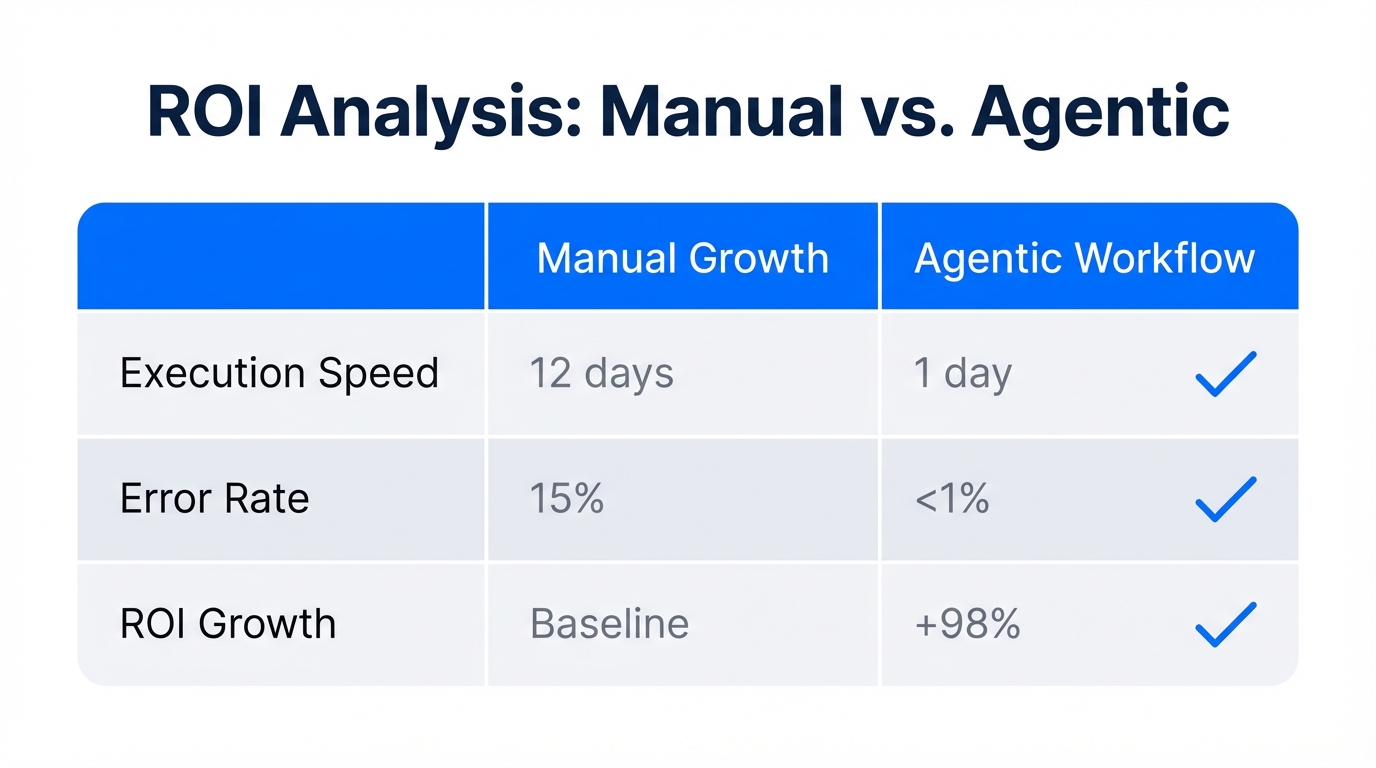
Standard AI chat assistants require constant babysitting. You prompt, you wait, you copy-paste, and you repeat. Agentic systems, powered by tools like Claude Code, operate differently. They use Plan Mode to outline complex, multi-step tasks before executing them through specialized sub-agents. This autonomy allows for autonomous budget management that reacts faster than any human operator could.
This shift is part of a broader trend toward "Vibe Marketing," where technical founders and lean growth teams treat their marketing stack as code. By operating directly from the terminal, marketers can achieve a 300x increase in speed for complex tasks like multi-landing page optimization or cross-channel performance analysis.
"The transition from one-off prompts to agentic execution is the difference between hiring a researcher and hiring an executive partner who manages the budget while you sleep."
The 75% Efficiency Gain: Reclaiming the Marketing Calendar
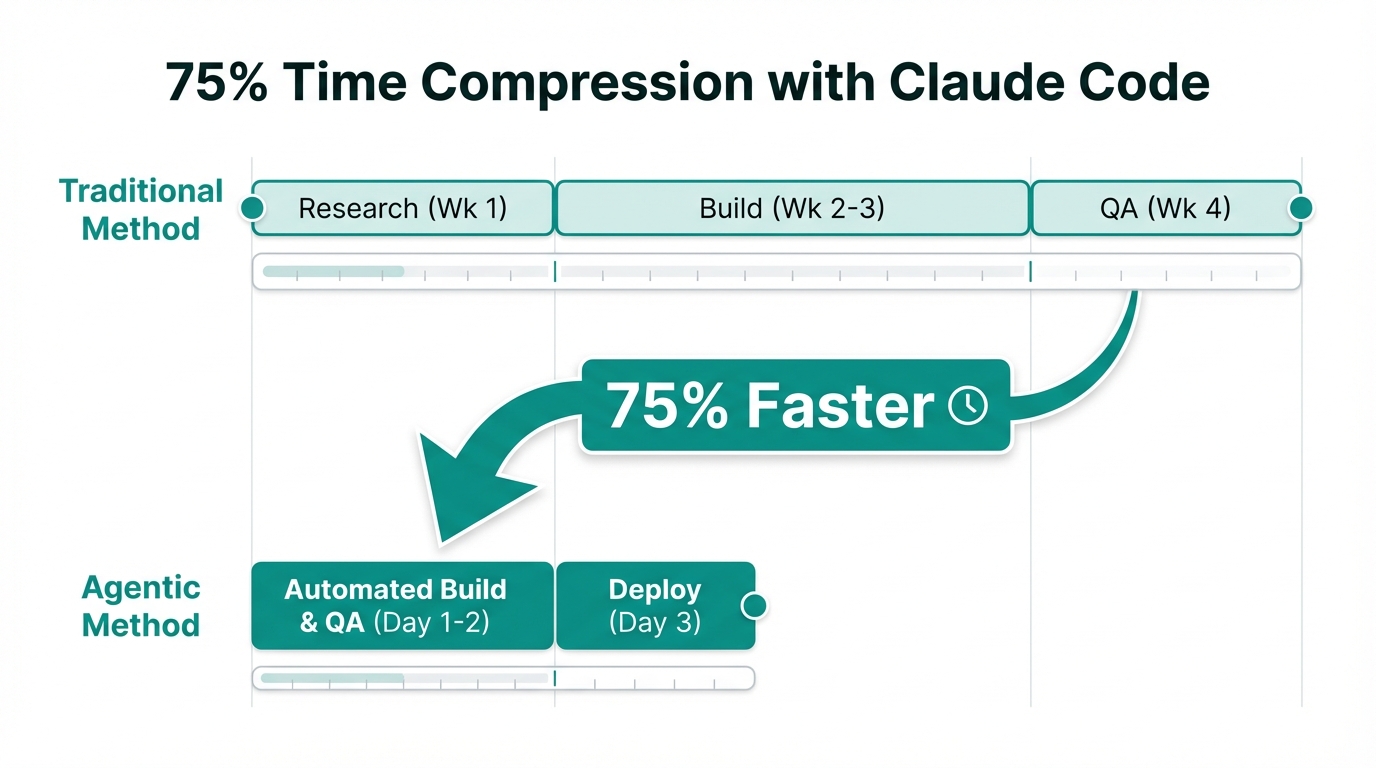
The most immediate impact of adopting Claude Code and agentic workflows is the compression of time. Early adopters are reporting a 75% reduction in time spent on repetitive marketing tasks. Workflows that previously occupied an entire 8-hour workday—such as comprehensive content audits or keyword research—are being compressed into 2-hour autonomous sessions.
Consider the speed-to-market implications. Growth marketers at Anthropic have used these systems to reduce ad copy creation from 30 minutes per ad to just 30 seconds. This isn't just about doing things faster; it's about the ability to test 60x more variations in the same timeframe, leading to faster data maturity and GTM strategy automation.
The Impact of Model Context Protocol (MCP)
A critical component of this efficiency is the Model Context Protocol (MCP). This open standard allows Claude Code to securely connect to live advertising data from Google, Meta, and Snapchat without the friction of manual CSV exports. By removing the data-entry bottleneck, agents can perform autonomous budget management based on live, second-by-second performance metrics.
Structuring Your Team: The 'Junior Developer' Analogy
To successfully integrate agentic AI, leadership must rethink the role of the growth marketer. Experts suggest treating AI agents as "junior developers". In this framework, the human marketer acts as the architect or lead engineer, providing strategic clarity while the agent handles the boilerplate execution.
| Task Type | Human Marketer (The Architect) | AI Agent (The Junior Dev) |
|---|---|---|
| Strategy | Defining ICP & Core Narrative | Executing cross-channel pivots |
| Creative | Setting Brand Voice & Guidelines | Generating 50+ RSA Headlines |
| Analysis | High-level Budget Allocation | Real-time Bid Adjustments |
| Discovery | Identifying New Market Opportunities | Bulk Influencer & Creator Sourcing |
This structural shift levels the tactical playing field. When everyone has access to high-speed execution, true differentiation comes from strategic clarity. Platforms like Stormy AI streamline creator sourcing and outreach, allowing marketers to find the right creators and data points to feed into these high-velocity agentic loops, ensuring the "Junior Dev" is working on the most high-impact targets.
"Automation has leveled the tactical playing field; true differentiation now comes from strategic clarity rather than bid adjustments."
Platform-Specific Automation Strategies
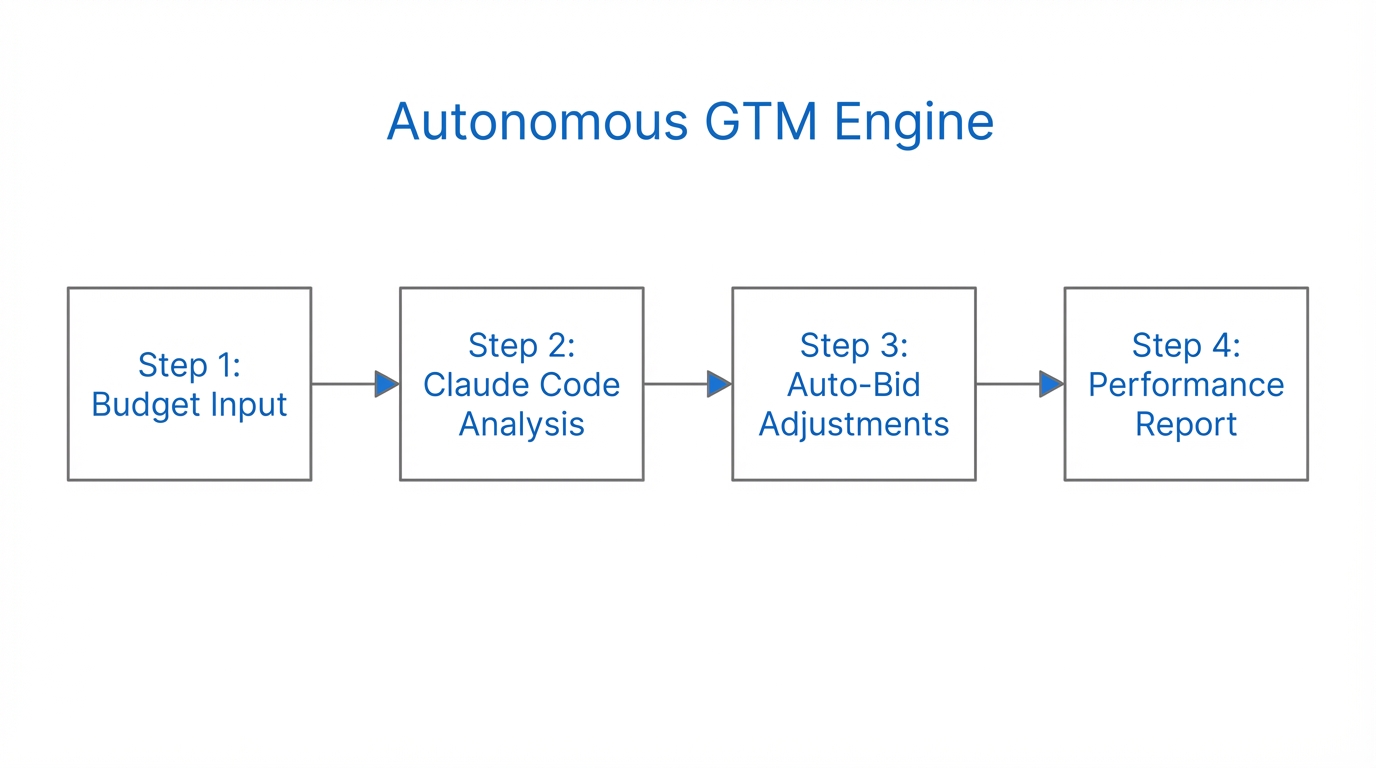
Modern GTM teams are using specialized tools to extend Claude Code's capabilities across the major advertising networks. This is where marketing agent efficiency moves from theory to production.
- Google & Meta Ads: Using tools like the Claude Ads Audit Tool, teams can run over 190 automated PPC checks. This replaces manual auditing with instantaneous, code-driven feedback.
- Snapchat Ads: By integrating the Snapchat Ads MCP Server, growth leads can query performance metrics like Swipe-ups and ROAS using natural language directly from the terminal.
- LinkedIn Ads: Workflows can be automated to "hook the network, sell the ICP" by allowing agents to access LinkedIn Marketing Solutions and post history to maintain a consistent brand tone across campaigns.
In one notable case study, an autonomous experiment allowed an agent to manage a $1,500 Meta Ads budget with zero human input. The agent handled everything from ICP research to publishing ads via the API, proving the viability of autonomous budget management for lean teams.
Cost-Saving Strategies: Sonnet vs. Haiku
A common mistake in GTM strategy automation is the inefficient use of high-intelligence models for low-complexity tasks. To maximize AI marketing ROI, growth leads must implement a tiered model strategy. Using the flagship Claude 3.5 Sonnet for everything leads to unnecessary "token waste."
By optimizing model selection, teams can maintain high performance while reducing the overhead of running autonomous agents 24/7. This is essential for scaling Claude Code for business growth without ballooning the operational budget.
Future-Proofing Your GTM Strategy for 2025
We are approaching a tipping point. By late 2025, it is estimated by McKinsey that over 50% of senior executives will be using AI agents for data reporting and growth insights. Those who continue to treat AI as a mere chatbot will find themselves outpaced by competitors who have automated their entire execution layer.
As you scale these automated funnels, remember that the quality of your inputs determines the quality of your output. When your agentic system needs to find the next generation of UGC creators or influencers to fuel its creative testing, leveraging Stormy AI can streamline that discovery process, providing the raw talent data your autonomous agents need to thrive.
The era of manual growth marketing is ending. By adopting agentic workflows today, you aren't just saving time—you are building a self-optimizing growth engine that delivers 98% higher ROI and prepares your brand for the fully autonomous future of digital advertising.