In the high-stakes world of B2B services, the difference between a struggling freelancer and a $2.5 million agency often comes down to a single spreadsheet. When Carl Hughes founded Draft.dev, he didn't start with a flashy landing page or a massive ad budget. Instead, he relied on a systematic relational framework that turned a small circle of professional contacts into a global content powerhouse. By 2026, his approach has become the definitive playbook for B2B client acquisition, proving that even in an era of AI-driven automation, the most valuable currency is still human trust.
The '50-Person Spreadsheet' Framework: Relational Sales in 2026
Carl explains how studying successful businesses helped him build the Draft.dev networking strategy.
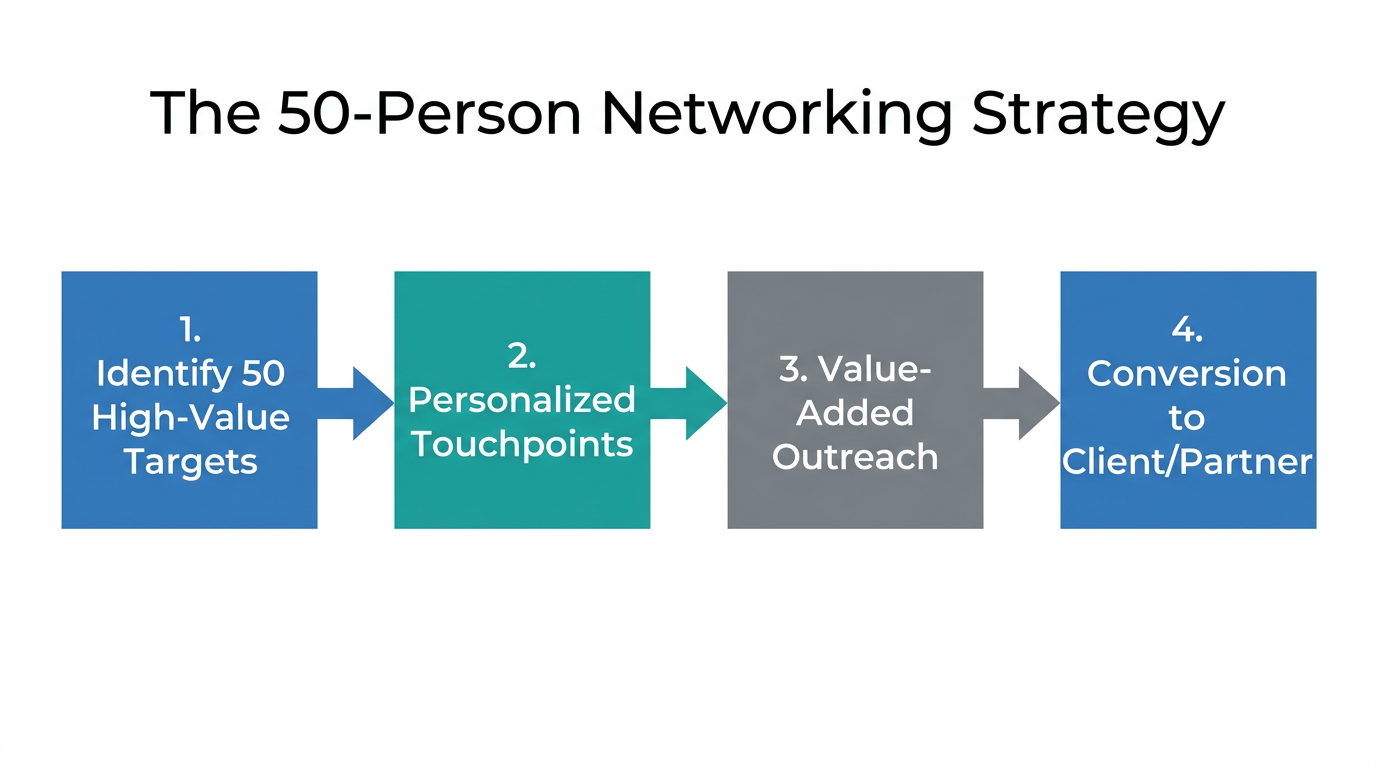
Most founders treat networking as a reactive task—something they do only when the pipeline looks thin. Hughes, however, treats networking as a core operational process. His strategy revolves around a simple spreadsheet containing 50 high-value professional contacts. These aren't just names; they are strategic nodes in his industry who he commits to contacting on a rotating, weekly basis.
In his interview with Starter Story, Hughes noted that his first 5 to 10 enterprise clients came exclusively from this list. By setting a weekly reminder to reach out to a handful of people for a quick email catch-up or a virtual coffee, he built a networking strategy for founders that scales with the business. In 2026, where digital noise is at an all-time high, this personal touch is what separates premium providers from commodity vendors.
"That network list has been one of the most powerful things in my career. It literally got me my last two startup jobs and it got me started with Draft.dev."
Beyond the Personal Brand: The 1/3 Growth Split
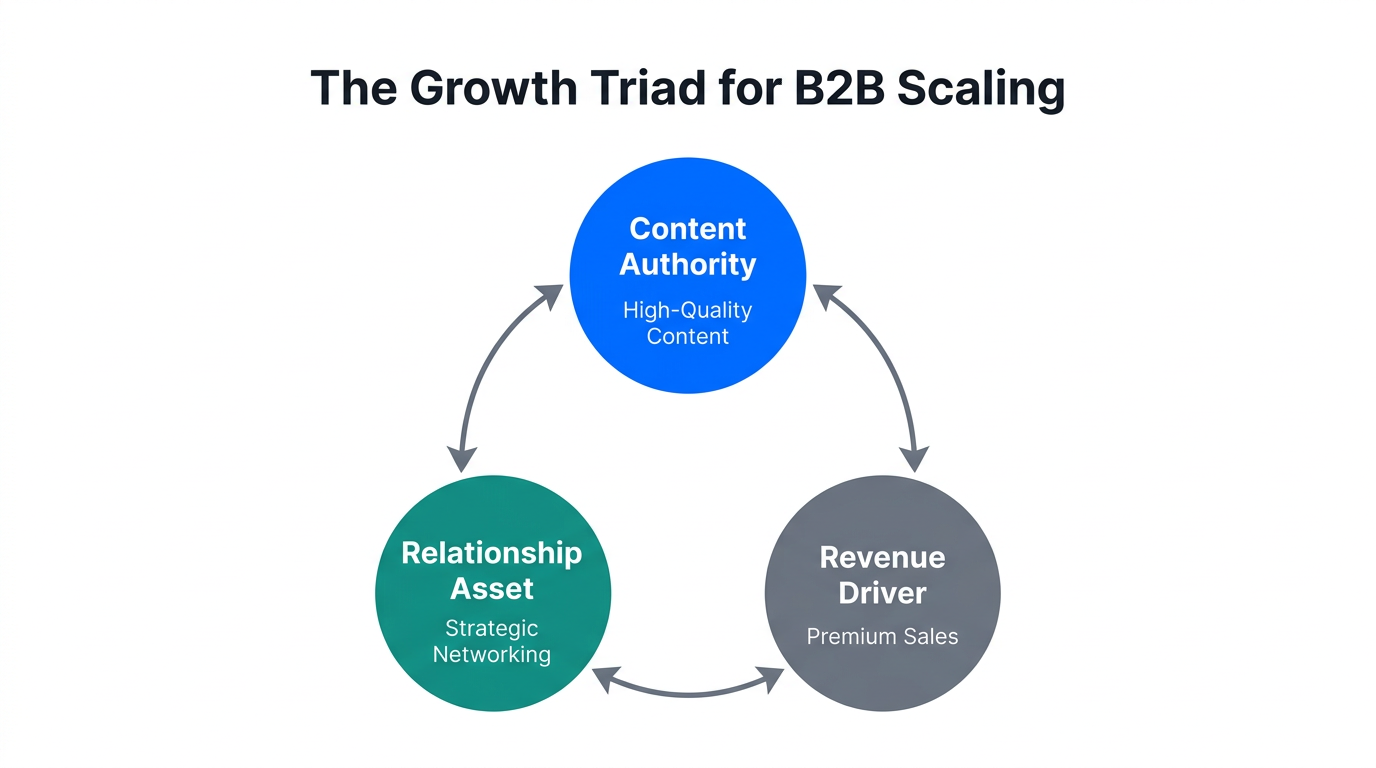
A common trap for agency founders is becoming the "face" of the business to the point where they cannot exit the sales process. Hughes avoided this by diversifying his growth into three distinct channels. This referral marketing for agencies model ensures that if one channel dips, the others sustain the revenue.
| Growth Channel | Weight | Primary Strategy |
|---|---|---|
| Referrals & Word of Mouth | 33.3% | Existing clients and former marketing managers moving to new roles. |
| Organic Search & Social | 33.3% | Technical SEO content and high-authority LinkedIn thought leadership. |
| Cold Outreach | 33.3% | Highly targeted, personalized emails to VPs of Marketing and DevRel. |
By splitting growth this way, Draft.dev reached a $2.5 million run rate within just two years. While technical SEO content on platforms like LinkedIn builds long-term authority, platforms like Stormy AI can help founders identify the right creators and influencers to partner with to amplify that organic reach even further. Leveraging multichannel attribution is no longer optional in 2026; it is a requirement for survival.
The Cold Outreach Strategy for High-Ticket Technical Services
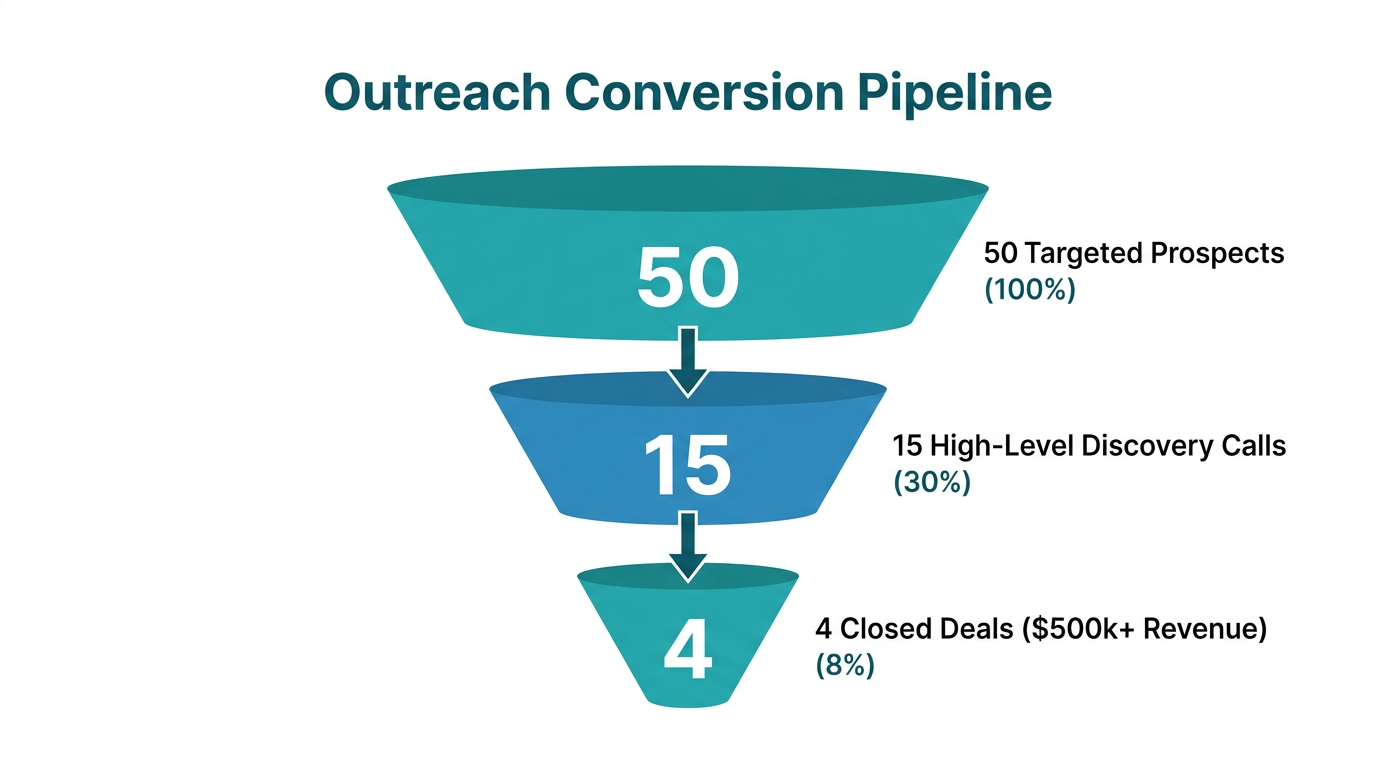
In 2026, generic cold emails are instantly flagged as spam. For cold outreach for high-ticket services to work, it must be hyper-personalized and focused on solving a specific, high-cost problem. Hughes’ team targets companies like Cloudflare and Dropbox—organizations that need to reach a technical audience but struggle to find engineers who can write.
The Draft.dev sales process works because it leads with value rather than a pitch. Their outreach often references specific technical gaps in a prospect's current content library. To manage this at scale, many modern agencies use CRM platforms to track deal stages, but they rely on specialized AI tools to find the decision-makers in DevRel. For instance, discovering niche technical influencers for collaborative campaigns can be streamlined using Stormy AI, which identifies creators based on natural language prompts.
"We've always positioned ourselves as the premium provider in this niche. We don't do a lot of discounting or one-off trials."
Commanding Authority: Premium Positioning and Social Proof
Learn why avoiding discounts and focusing on high-value clients is key for premium positioning.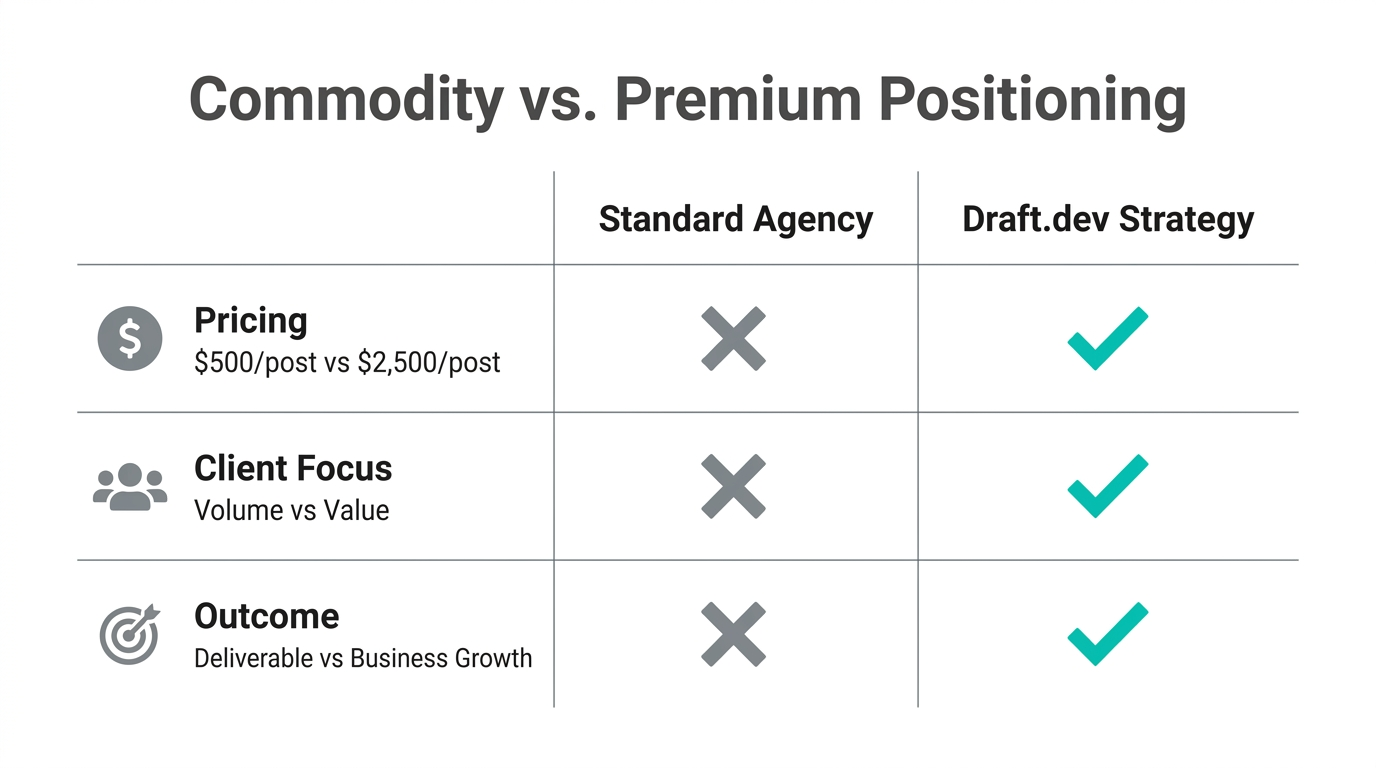
One of the most radical aspects of the Draft.dev strategy is their refusal to compete on price. In a market flooded with cheap AI-generated content, Hughes doubled down on Premium Positioning. By requiring quarterly commitments and refusing one-off trials, they attract higher-quality clients who are invested in long-term results.
- High-Quality Talent: Draft.dev employs practicing software engineers as writers, ensuring technical accuracy that generic agencies can't match.
- Rigorous Tech Reviews: Every piece of content is vetted by a full-time staff engineer, creating a moat of quality.
- Social Proof: By showcasing work for brands like Redpanda, they leverage authority to bypass the "budget" conversation entirely.
Skipping the Growth Curve: Entrepreneurship Through Acquisition
Carl discusses his vision for growth by acquiring existing products to scale his business.After scaling Draft.dev, Carl Hughes didn't just start another company from scratch. He turned to Entrepreneurship Through Acquisition (ETA). This involves buying an existing small business that already has product-market fit, allowing the founder to skip the "struggle years" of the first 24 months.
As detailed in the Starter Story interview, Hughes acquired a second business to diversify his portfolio. This strategy is gaining massive traction in 2026 for founders who have already built a successful "engine" and want to apply it to a new niche without the risk of starting at zero. It allows for rapid scaling via secondary brands while leveraging the operational expertise gained from the first venture.
Conclusion: The 2026 Playbook for Agency Founders
Building a $2.5 million business isn't about working harder; it’s about building systems that prioritize relationships. Whether it's maintaining your 50-person spreadsheet, diversifying your growth channels, or positioning your service as a premium necessity, the goal is to move from a "solopreneur" mindset to an "owner" mindset. By focusing on technical niches and high-ticket clients, you can create a business that not only generates millions but also runs without your daily intervention. Start today by opening a spreadsheet, listing your top 50 contacts, and sending the first three emails—the path to $2.5M begins with a single reach-out.