In 2026, the barrier to entry for building software has effectively hit zero. We have officially entered the era of the "commodity product," where any developer (or non-developer) can use Cursor AI or Windsurf AI to clone a functional SaaS MVP in a single weekend. The technical "moat" that once protected Silicon Valley giants has evaporated, replaced by a much more human-centric competitive advantage: distribution.
If you can build anything in five minutes, then the value of what you built is significantly lower than the value of who you can show it to. This shift has birthed a new breed of entrepreneur—the "solopreneur engineer"—who prioritizes audience building over architectural purity. One of the most striking examples of this is Alex Finn, who scaled his app, Creator Buddy, to $300,000 ARR in just months without writing a single line of manual code. By leveraging AI-native development environments and a "distribution-first" marketing engine, he proved that in the current landscape, your network is your only true defense against obsolescence.
The Death of the Technical Moat in 2026
For decades, the "moat" was the code. It was the proprietary algorithm, the complex infrastructure, or the years of specialized engineering labor. Today, that framework is dead. As Alex Finn noted in his viral Starter Story interview, "Knowledge and product is no longer the moat. The moat is your distribution."
When anyone can prompt a sophisticated Next.js application into existence, features become interchangeable. If you launch a successful tool, a competitor can use an AI agent to scrape your UI, understand your logic, and ship a "v2" by Monday morning. Distribution protects you from clones because while a competitor can steal your code, they cannot steal your trust, your 100k+ follower base, or your direct line to the customer's inbox.
"Someone goes out and builds Creator Buddy 2.0, the exact same app in 5 seconds, but they have 10 followers, I'm going to outsell them in circles."
Leveraging the X Algorithm: The 100K Follower Foundation
Learn how to leverage X's algorithm to drive traffic to your application.
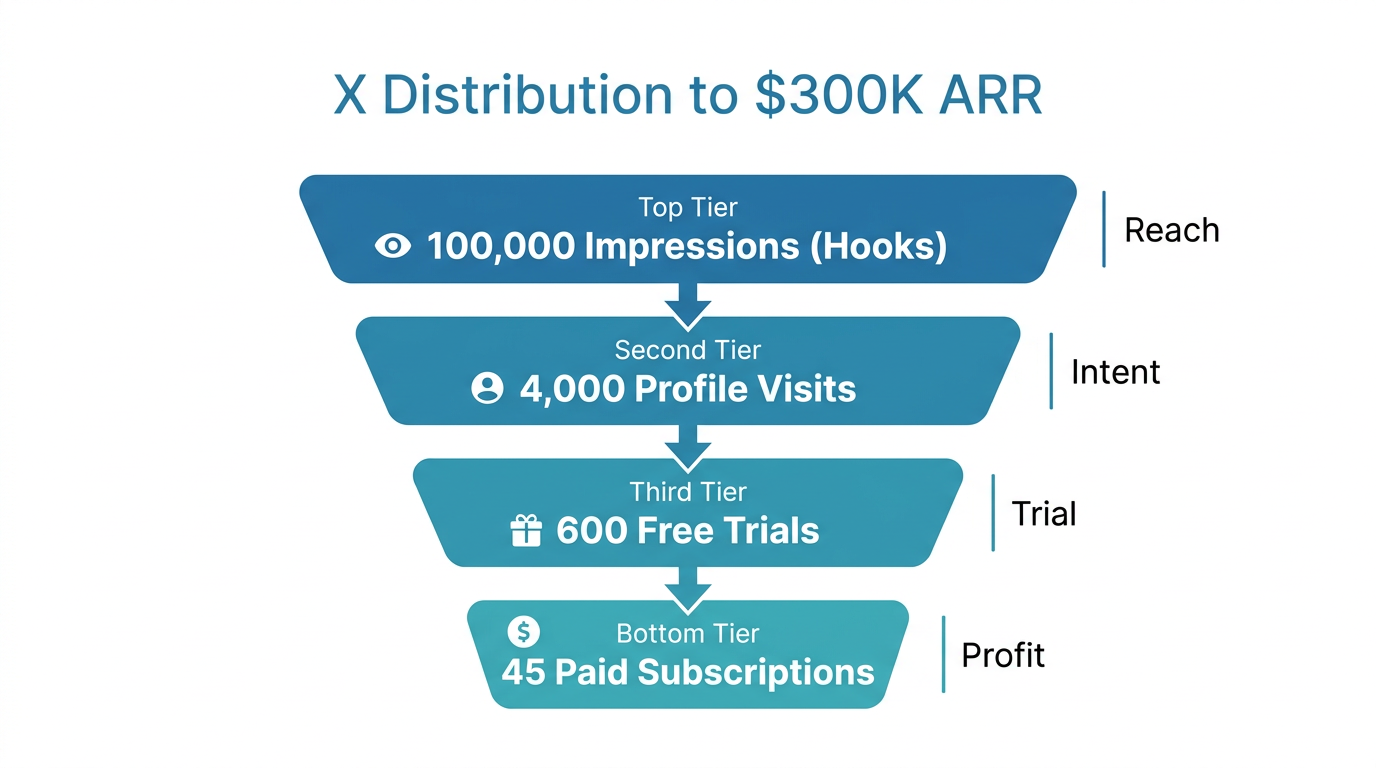
The foundation of Alex Finn's $300k ARR success wasn't a secret API; it was a viral thread on the X algorithm. In early 2023, when Elon Musk open-sourced the X algorithm code, Finn analyzed the GitHub repository and translated the complex logic into actionable content. The result? A retweet from Musk, engagement from Mark Cuban, and a massive influx of followers.
This distribution-first approach allowed him to build in public with an built-in feedback loop. When it came time to launch Creator Buddy, he didn't need to spend thousands on Google Ads. He already had hundreds of people ready to buy on "minute one."
The 2026 Playbook for Audience Growth:
- Form Strong Opinions: Don't just share facts; share an angle. Finn's success came from forming opinions on how the X algorithm actually functions.
- Build in Public: Share the screenshots of your Cursor AI prompts. Show the bugs, not just the wins. This builds authenticity that AI-generated brands can't replicate.
- Leverage Micro-Moments: Use tools like Stormy AI to identify high-quality creators in your niche who can amplify your message. While Finn used his own audience, many successful 2026 founders use AI-powered discovery to find "nodes" in the creator economy to kickstart their distribution.
From Cursor to Windsurf: Choosing Your AI Dev Environment
How to build high-quality software using Cursor without a traditional engineering background.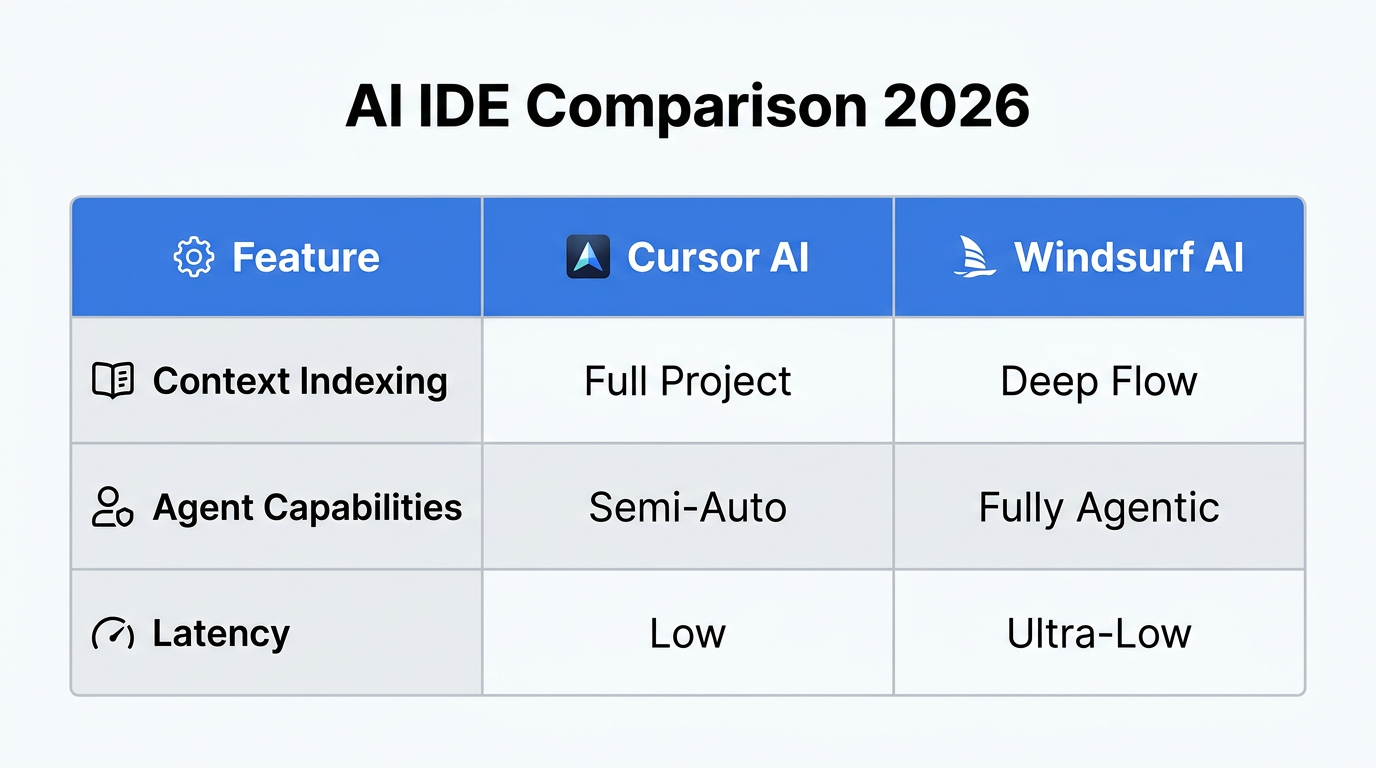
To maintain a high ship speed, you need to choose the right AI-native IDE. While Cursor AI was the pioneer, many power users are shifting toward Windsurf AI in 2026. The reason? Contextual awareness and "Agentic" flow.
Finn noted that during his build, he felt Cursor's "IQ" occasionally dipped, leading him to switch to Windsurf to maintain his momentum. The secret to using these tools effectively isn't being a "prompt engineer"; it's being a Micro-Task Manager.
| Feature | Old School (Manual) | AI-Native (2026) |
|---|---|---|
| Code Writing | Manual syntax typing | Agentic code generation (Windsurf/Cursor) |
| Problem Solving | Stack Overflow / Documentation | Micro-step decomposition via ChatGPT-o3 |
| Ship Speed | Months for MVP | Days (or hours) for MVP |
| Debugging | Manual log analysis | AI context-aware auto-fixing |
The Micro-Step Framework
To build complex features like Creator Buddy's "AI Brain Dump" without bugs, follow this 2026 development framework:
- Deconstruct: Take your big idea to ChatGPT and ask it to break the feature into the smallest possible micro-steps.
- Execute: Feed those micro-steps one by one into Windsurf AI. Build the input box first, then the button, then the API connection.
- Verify: Never move to step two until step one is functionally perfect. This prevents "AI hallucination debt" from piling up.
"The smaller you can break down your challenges, the better your results will be... you'll actually get done a lot more and a lot faster because you're not going to run into bugs."
The 80% Margin Model: Scaling with Minimal Overhead
A look at the total operational costs and profit margins for modern AI startups.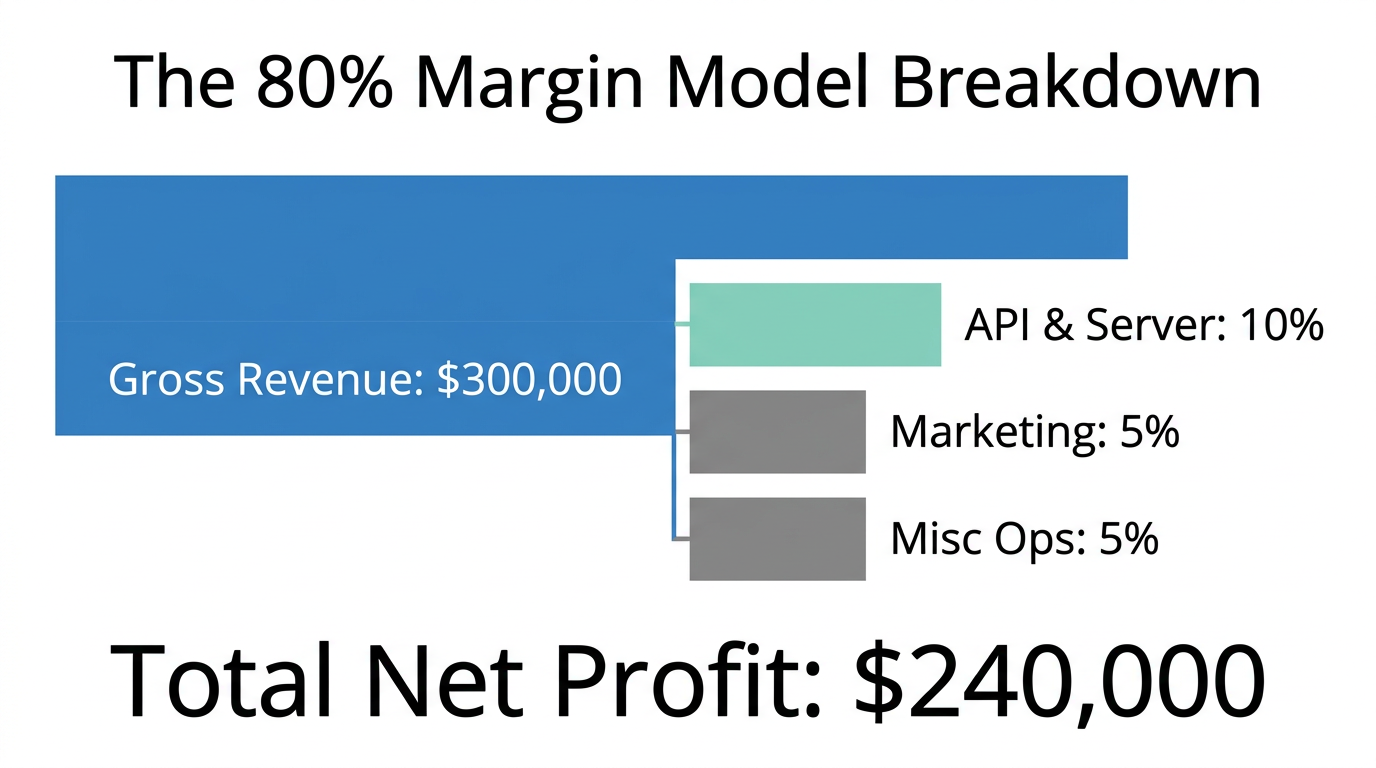
One of the most revolutionary aspects of the creator-led SaaS model in 2026 is the financial efficiency. By using a lean tech stack and zero employees, founders like Finn are maintaining 80% profit margins on $25,000 in monthly revenue. Even with heavy data costs (like the $5,000/month X API fee), the lack of payroll makes the business incredibly resilient.
The 2026 Lean Tech Stack:
- Hosting: Vercel for Next.js ($20/mo)
- Database: Supabase for seamless data management ($20/mo)
- Email: Resend for transactional and marketing emails.
- Intelligence: Claude and GPT-o3 APIs for the product's "brain."
- Marketing/Discovery: Stormy AI for identifying UGC creators and managing automated outreach sequences.
The "Figure It Out" Mindset
Advice on how to navigate the challenges of building and shipping new products.The final component of this moat isn't technical or financial—it's psychological. In the 9-5 world, employees are trained to wait for specialized help (the "landing page guy" or the "QA team"). In the AI era, that waiting is a death sentence. The 2026 founder operates in "Figure It Out" mode.
If the landing page needs a redesign, you don't hire a consultant; you ask an AI agent to analyze high-converting competitors and generate the code. If your launch breaks (as Finn's did on day one), you don't panic; you use your Windsurf AI agent to patch the bugs in real-time while communicating transparently with your audience.
"Instead of having that gut instinct... 'I'm going to hire a consultant,' I'm just going to go to AI and just figure it out."
Conclusion: Building Your Distribution Moat
The success of Creator Buddy proves that the path to $300k ARR in 2026 is paved with attention, not just code. By leveraging AI to handle the "building" (using tools like Cursor AI) and focusing your human energy on "distribution" (building a community on X or YouTube), you create a business that is remarkably hard to kill.
Your 2026 Action Plan:
- Identify a personal challenge: Solve your own problem so you are your first customer.
- Build a distribution engine early: Start tweeting or creating content months before you have a product.
- Adopt AI-native tools: Master Windsurf AI to keep your development costs low and your ship speed high.
- Stay Lean: Aim for 80%+ margins by avoiding premature hiring.
In a world where everyone can build, the winner is the one who is known. It's time to stop overthinking and start building your distribution moat.