For years, the marketing funnel has ended with a whimper: the static lead generation form. You spend thousands of dollars on Google Ads or Meta Ads, drive traffic to a beautifully designed landing page, and then ask your potential customer to perform the digital equivalent of filing taxes. We have accepted high drop-off rates as an industry standard, but the reality is that static forms create friction that modern consumers simply won't tolerate. The shift toward conversational AI lead generation is not just a trend; it is the total disruption of how brands capture and qualify intent.
The Death of the Static Form: Why Friction is Killing Your Funnel
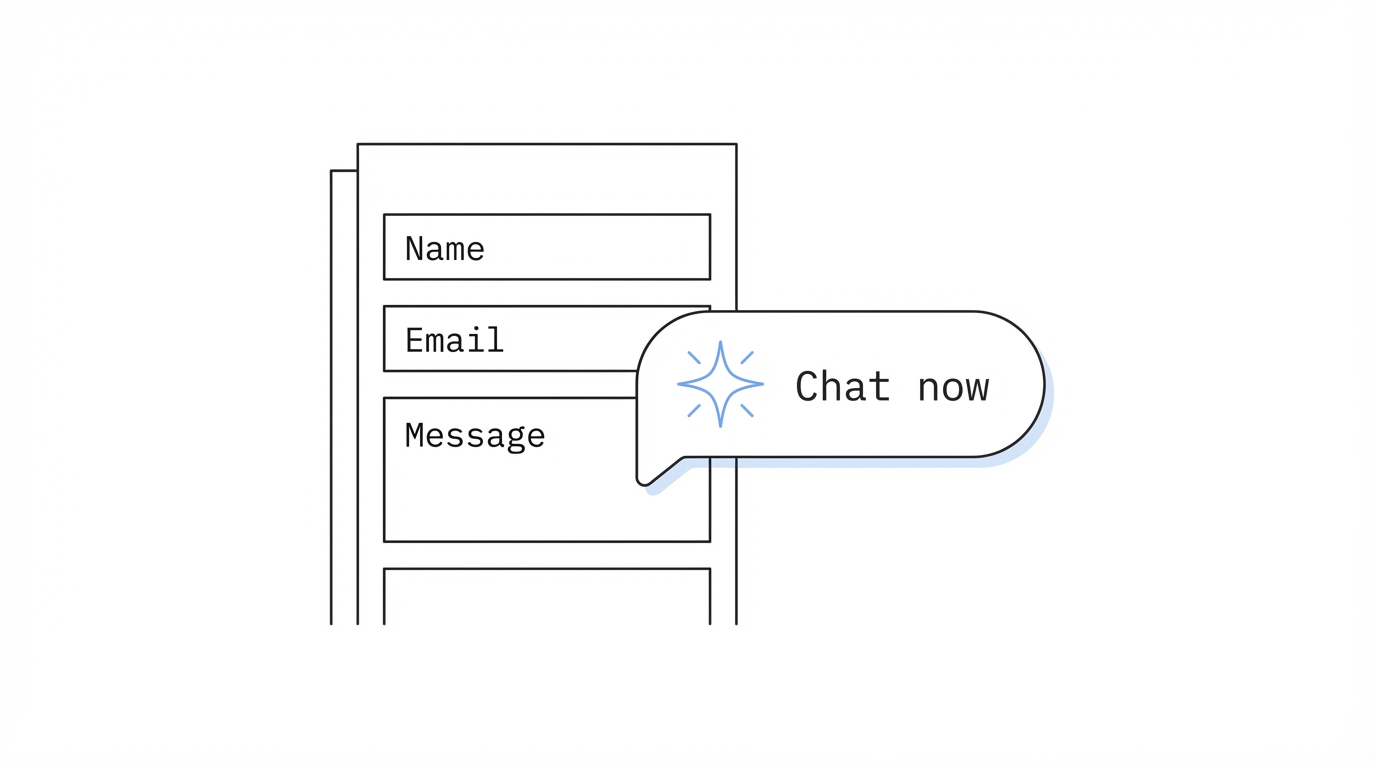

In a recent deep dive into the future of the web, Guillermo Rauch, founder of Vercel, noted that forms are the "most underrated fundamental particle of the internet." Every significant transaction—from buying a house to signing up for a newsletter—starts with a form. Yet, the traditional lead form is a relic of the early web. It is rigid, impersonal, and daunting. When a user sees a list of ten empty boxes, their cognitive load spikes, and the "back" button becomes the most attractive option on the screen.
Traditional marketing automation software has tried to solve this with "progressive profiling," but this often feels like pulling teeth over several visits. The fundamental problem remains: static forms are a one-way interrogation. Conversational AI flips this script by turning a chore into a dialogue. Instead of a "daunting list of a hundred questions," as Rauch puts it, we are moving toward interfaces that empathize with the user's journey. By minimizing the "pixels" the user has to process and focusing on one interaction at a time, brands can significantly reduce bounce rates.
Bridging the Gap: The Typeform Philosophy Meets LLMs
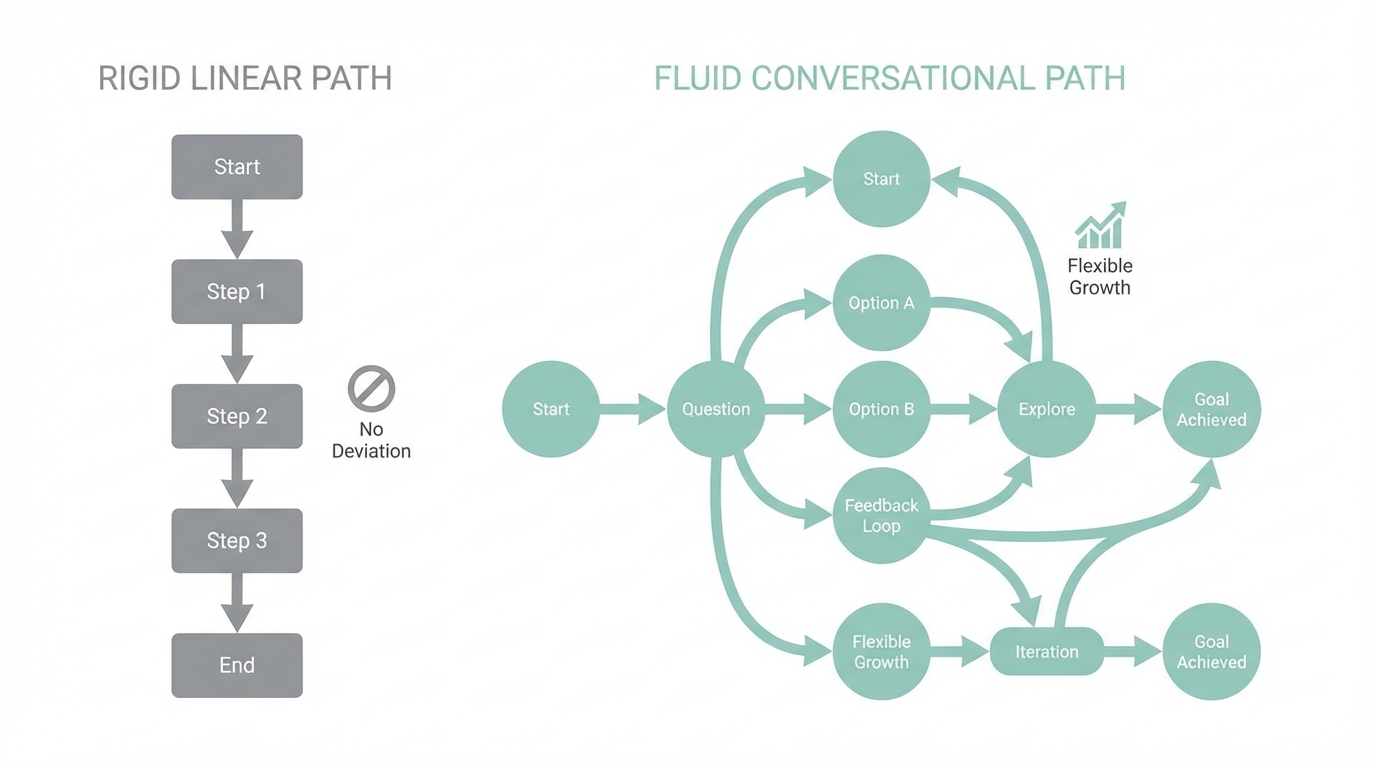
To understand the leap we are making, we have to look at Typeform. They revolutionized the industry by introducing the "one question at a time" philosophy. This simple change maximized the chance of success by narrowing the user's focus. However, even Typeform is ultimately a linear path. If a user provides an answer that suggests they are a high-value enterprise lead, a standard form cannot immediately pivot its line of questioning to dig deeper.
This is where AI lead qualification takes over. An AI form builder doesn't just display questions; it listens. If a user mentions they are looking for "enterprise-grade security" in a chat-based intake, the LLM can instantly branch the conversation to ask about specific compliance needs like SOC2 or HIPAA. This dynamic follow-up mirrors the experience of talking to a high-performing sales development representative (SDR) rather than a static piece of HTML. By combining the sleek UI of modern form builders with the reasoning capabilities of models from OpenAI or Anthropic, marketing teams can capture more signal with less friction.
Generative UI: Building Interfaces That Morph in Real-Time
One of the most exciting concepts emerging from the world of "vibe coding" is Generative UI. This is the idea that the interface itself should change based on what the user says. During a session on V0, Vercel’s generative UI tool, it was demonstrated that the future of AI conversational interfaces is the "intertwining of chat and rich UI components."
Imagine a lead intake for a real estate app. When the user says, "I'm looking for a home in San Francisco," the chat doesn't just reply with text. The UI could split in half, displaying an interactive map on the right and the chat on the left. If they ask about pricing, a dynamic chart could appear. This is AI-native interface design: the UI is not a pre-built box, but a fluid response to user input. For marketers, this means you can provide instant value within the intake process itself, rather than forcing the user to wait for a follow-up email. This level of engagement is why AI-powered marketing intake is seeing conversion rates that traditional forms can't touch.
Qualifying Leads with LLMs: Real-Time Triage and Prioritization


The greatest fear for any marketing team is "garbage in, garbage out." If you make a form too easy to fill out, you get flooded with low-quality spam. If you make it too hard, you lose your best prospects. Lead qualification AI solves this paradox. By using an LLM to triage requests in real-time, you can keep the entry point simple while still gathering deep intelligence.
Instead of asking a user to select their budget from a dropdown, you can let them describe their project. The AI can then parse that unstructured data to determine if they meet your Ideal Customer Profile (ICP). As Rauch notes, Vercel uses similar experiments to handle the "insane amount of input" they receive. They need more information to prioritize, but a chatbot can ask for that follow-up context naturally. If the AI detects a high-value lead, it can even trigger an instant booking link or escalate the chat to a live human agent. This ensures your sales team is only spending time on the highest-value opportunities while providing a white-glove experience for VIPs.
When managing creator-led campaigns or influencer outreach at scale, this kind of automated vetting is crucial. For example, teams using Stormy AI can source thousands of potential creators and then use conversational intake forms to vet them for brand alignment and engagement quality automatically. This allows you to scale your influencer marketing efforts without hiring an army of coordinators to manually review every application.
Step-by-Step Implementation: Building Your AI Lead Engine
Transitioning from a Typeform alternative to a fully AI-native intake system is more accessible than ever, thanks to open-source frameworks. Here is a playbook for building an enterprise-grade conversational form:
Step 1: Define Your Data Structure
Identify the specific "tokens" of information you need (e.g., email, company size, pain points). Instead of building a rigid path, you are defining the goal of the conversation for the AI.
Step 2: Use an AI SDK
Frameworks like the Vercel AI SDK allow you to build chat interfaces that can call "tools." A tool could be a lead-capture function that updates your CRM or a Generative UI component that shows the user a personalized ROI calculator.
Step 3: Implement "Generative" Triage
Set up your LLM to act as a gatekeeper. Program it to be friendly and helpful but instructed to only "complete" the form once all critical data points are gathered. This ensures 100% data integrity without the friction of mandatory form fields.
Step 4: Connect Your Ecosystem
Ensure your conversational interface is piped directly into your marketing automation software or CRM. Tools like Stormy AI can manage the "post-intake" relationship, tracking creator collaborations and campaign performance once the initial lead has been qualified.
The Future of the "Deepest Research" Intake
We are entering an era where the limit is your ideas, not your technical constraints. The concept of "deep research" as an intake tool is a prime example. Instead of a simple contact form, imagine offering a potential client a comprehensive AI-generated report on their industry in exchange for their details. The AI conducts the research, provides the value, and qualifies the lead all in one session.
As we move toward a web that is "all content and everything is computer," the distinction between a "form" and an "app" will disappear. Your marketing intake will become a bespoke digital assistant that lives at a unique URL, ready to serve and sell simultaneously. The brands that stop interrogating their users with static boxes and start engaging them in meaningful, AI-driven dialogue will be the ones that win the battle for attention and conversion in 2025 and beyond.
Final Takeaways for Modern Marketers
The disruption of the lead form is inevitable. To stay ahead, start by deleting unnecessary fields and experimenting with conversational AI lead generation. Focus on fewer pixels and more context. Whether you are building a custom solution using Next.js or using an AI form builder, the goal remains the same: reduce friction and increase value. By treating every lead intake as a dynamic conversation, you transform your marketing from a series of hurdles into a seamless, high-converting journey.