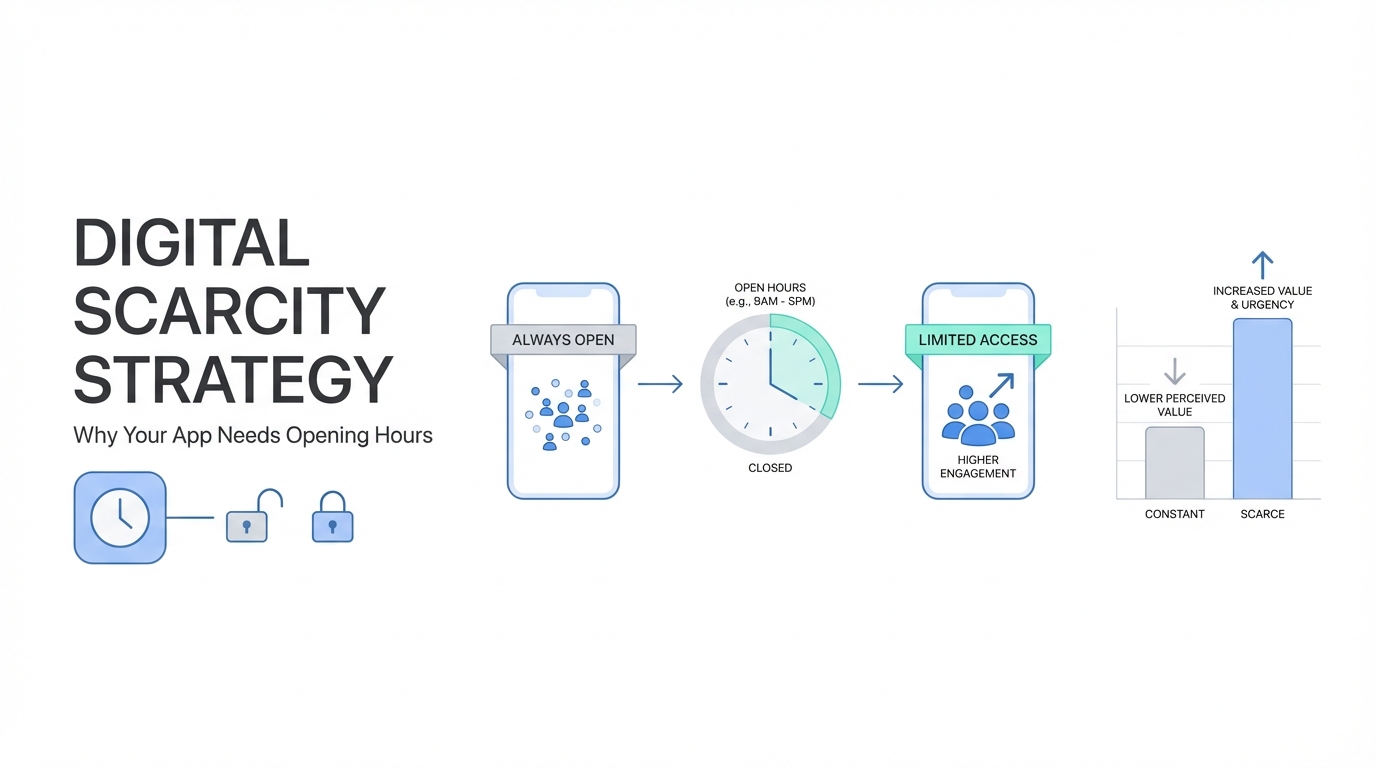
The internet never sleeps, and that is precisely why your users are exhausted. We live in an era of hyper-availability where every piece of content, every tool, and every distraction is accessible 24/7. This on-demand culture has led to a phenomenon known as decision fatigue. When everything is available at any time, nothing feels particularly urgent or special. To combat this, a new movement is emerging in product development: digital scarcity marketing. By intentionally introducing constraints—like digital opening hours or ephemeral interfaces—developers are finding they can drive higher engagement and deeper user loyalty than their always-on competitors.
The Rise of Appointment-Based Software

In the physical world, scarcity is a fact of life. You can’t visit your local grocery store at 3:00 AM, and your favorite breakfast spot doesn't serve eggs at midnight. These physical constraints create natural rhythms in our lives. In the digital world, however, we’ve spent two decades trying to eliminate every barrier. The result? A clinical, cold experience where apps feel like utilities rather than destinations. As 37signals co-founder Jason Fried recently noted, there is a certain warmth missing from modern software that only mystery and surprise can restore.
One of the most successful examples of appointment-based software was HQ Trivia. At its peak, millions of people stopped whatever they were doing to log into an app at the exact same time. It wasn't just about the cash prizes; it was about the shared experience. It felt like linear television for the mobile age. When something happens in real-time and isn't archived, it creates a "had to be there" moment. This is a powerful app retention tactic because it transforms a routine digital interaction into a high-stakes social event.
How to Implement Digital "Opening Hours"
Implementing exclusive software access through timed windows is a direct counter-attack to on-demand fatigue. Imagine a platform where the content only refreshes once a day at noon GMT. This creates a global phenomenon where users across different time zones anticipate a specific moment. This is a core pillar of FOMO marketing for startups. If a user knows that a video lesson on how to sketch a room or a three-minute recipe is only available for a tiny window and will never be archived, their attention is absolute.
This model moves away from the traditional ad-supported grind. Instead of fighting for Google Ads placement in a crowded feed, the product becomes the event. A brand could buy the "opening hours" of a URL for an entire day, turning the ad into the primary destination. By removing the ability to rewind or save, you force the user to be present. In an age of multitasking, forced presence is the ultimate luxury. Startups looking to replicate this should look at tools like Once.com, which challenges the SaaS status quo by offering software that you buy once and own, rather than subscribing to an endless, always-on service.
Using Ephemerality to Foster Creativity
Why is it that some of our best ideas come in the shower? It’s not just the water; it’s the ephemerality of the medium. When you sketch an interface idea on a steamy shower door, you know it will disappear in 45 seconds. This low-stakes environment removes the fear of failure that often paralyzes creators when they face a permanent digital canvas. Ephemeral content strategy isn't just for social media stories; it can be an entire product philosophy.
Fried describes a "Shower Door" app concept where the screen fogs up, allowing users to draw with their fingers before the image fades away. The goal isn't to create a masterpiece to be shared on Meta Ads Manager; it's to provide a perpetual refreshing sketchboard. This is the "Margarita Pizza" of product design: simple ingredients (steam, touch, sound) executed with Naples-level quality. By making the content temporary, you encourage playfulness. In the current software landscape, which Fried argues has become "too serious," bringing back the hobbyist ethos through temporary tools can make the internet feel "weird" and exciting again.
Limited Edition Software: The Patek Philippe Model
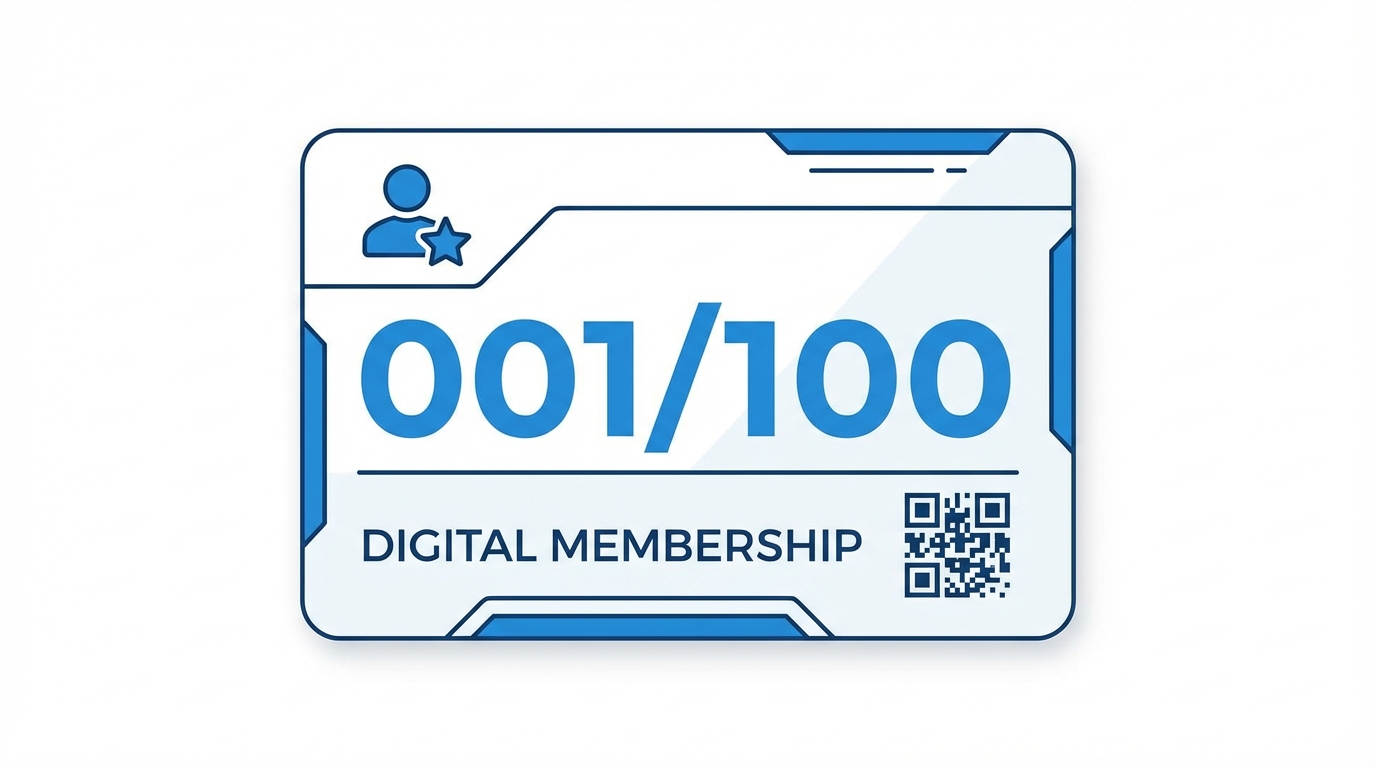
We are used to limited edition sneakers and watches, but the idea of limited edition software is still largely unexplored. High-end watch brands like Patek Philippe create value by discontinuing models after a certain period, even if they are still popular. This supports a collector community and ensures that the items hold their value. Software can follow a similar path. Instead of trying to scale an app to a billion users, what if you limited it to the first 1,000 downloads?
While the Apple App Store rules often make artificial limits difficult, the spirit of the Patek Philippe scarcity model can be applied through exclusive software access. You could discontinue an app after it reaches a certain maturity, leaving it only on the phones of the "early believers." This creates a sense of digital ownership that is rare in the cloud-based world. When people feel like they have something that others cannot get, they become vocal advocates for the brand. This is a highly effective app retention tactic because the app becomes a status symbol, much like a vintage car or a rare piece of art.
Marketing the "Weird": Finding the Right UGC Creators
If you are building an app based on digital scarcity marketing, traditional performance marketing might not be enough. You need User-Generated Content (UGC) that captures the feeling of being there. Because these apps rely on FOMO and mystery, you need creators who can articulate the "vibe" of the product rather than just listing its features. This is where modern influencer discovery becomes essential.
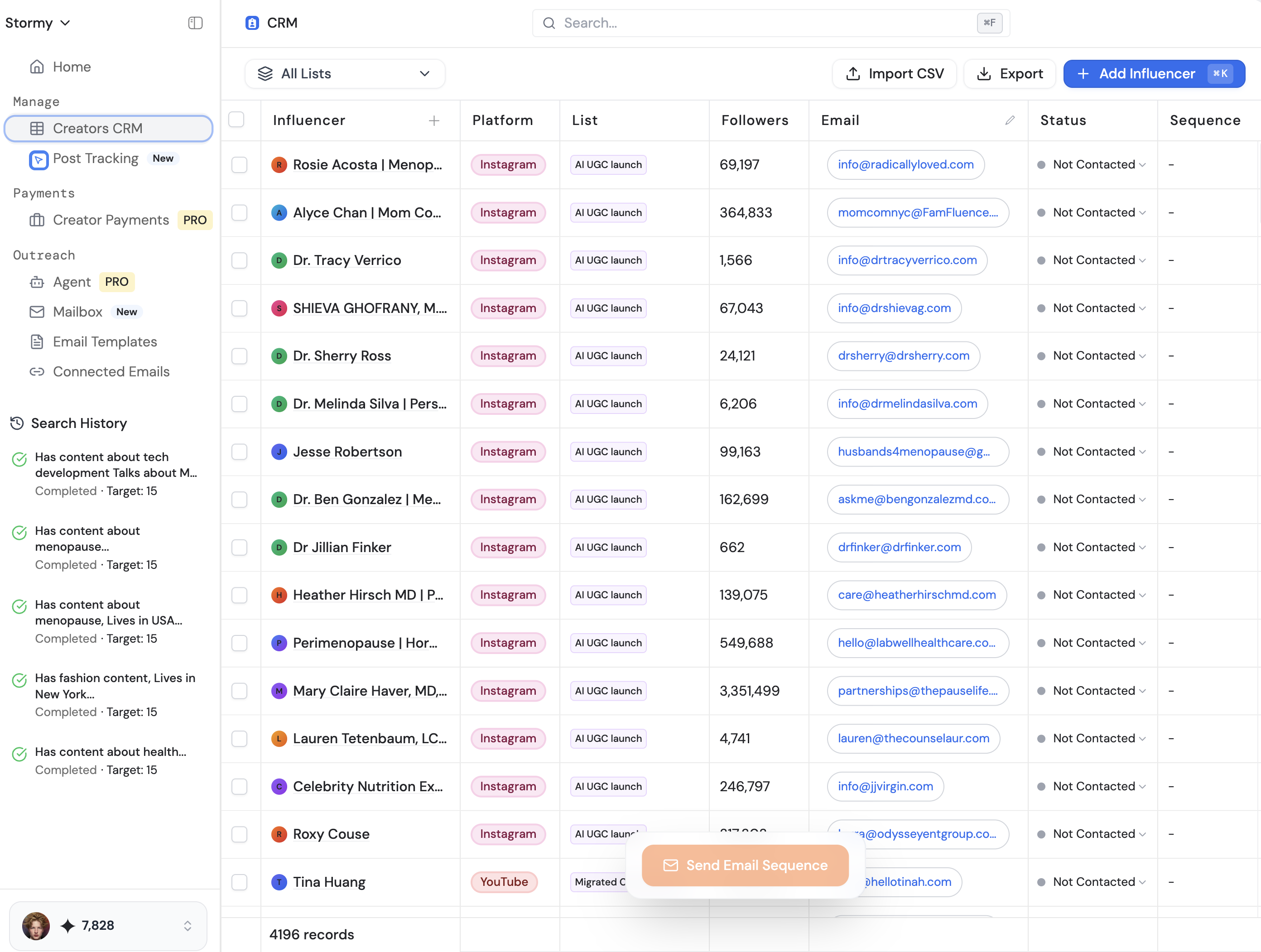
To successfully launch a scarcity-based app, brands must find creators who specialize in niche, aesthetic, or high-concept content. Using tools like Stormy AI, marketers can search for creators who have a history of promoting "weird" or innovative software. Stormy’s AI-powered discovery allows you to filter for influencers who resonate with early adopters and tech enthusiasts. Once you've identified the right partners, managing those relationships through a creator CRM ensures that your scarcity-based campaign remains coordinated and impactful across TikTok, Instagram, and YouTube.
Step-by-Step: Creating an Appointment-Based Experience
Ready to move away from the always-on grind? Follow this playbook to build digital scarcity into your product strategy:
Step 1: Identify Your "Noon GMT" Moment
Define a single moment in the day when your app becomes "active." This could be a daily reset, a live video broadcast, or a mystery scratch-off event. Consistency is key; users should know exactly when to tune in to avoid missing out. Use a project management tool like Basecamp to coordinate the global launch times and marketing assets.
Step 2: Eliminate the Archive
Resistance to archiving is the hardest part of ephemeral content strategy. You must resist the urge to save everything for later viewing. If a user misses the three-minute window, they should feel the loss. This temporary nature is what builds the habit of checking in daily. Whether it's a sketch on a virtual shower door or a limited-time ad coupon, the value lies in its expiration.
Step 3: Gamify the Probability
Introduce variable rewards. In the scratch-off app model, only a small percentage of users (say, 5%) win a prize. You can even make the probability of winning a function of time—those who engage the moment the app "opens" get a slightly higher chance of winning. This creates a rush of traffic and a spike in app retention.
Step 4: Focus on Analog Interactions
Leverage the hardware of the smartphone to make the experience feel tactile. Instead of just clicking a button, require users to scratch the screen, blow into the microphone to clear dust, or shake the device. These physical interactions bridge the gap between the digital and analog worlds, making the app feel more like a "cozy" tool and less like a clinical interface.
Conclusion: Making the Internet Weird Again
The future of digital scarcity marketing isn't about being restrictive for the sake of it; it's about acknowledging that unlimited access often leads to limited interest. By reintroducing opening hours, ephemeral canvases, and limited editions, we can move software back toward its hobbyist roots. This approach doesn't just benefit the user by reducing noise; it benefits the developer by creating a highly engaged, loyal community that values every minute spent inside the app.
Whether you're building a scratch-off advertising platform or a simple sketching tool that disappears with the steam, the goal is the same: to create a memorable moment. As we look to the next decade of software, the most successful apps won't be the ones that are available everywhere, all the time. They will be the ones that make you feel like you just had to be there. Start experimenting with these app retention tactics today, and don't be afraid to make your corner of the internet a little bit weirder.