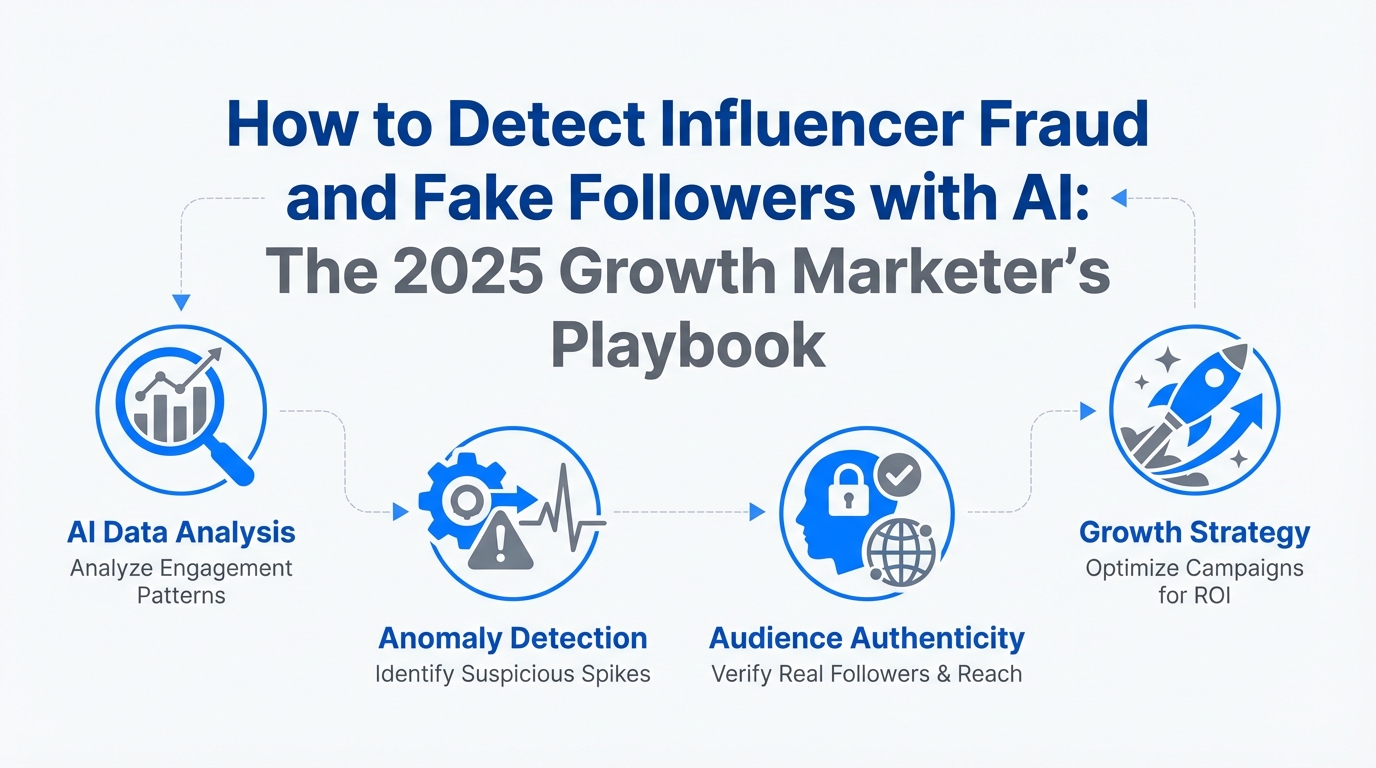
In the high-stakes world of performance marketing, the most dangerous enemy is the one you can’t see. As we enter 2025, the creator economy has matured, but so has the sophistication of digital deception. Influencer fraud is estimated to cost businesses $1.3 billion annually, a staggering figure that represents wasted budgets, skewed data, and diluted brand equity. For growth marketers, the challenge is no longer just finding the right face for a campaign—it is ensuring that face belongs to a creator with a genuine, human audience. This guide provides a strategic playbook for using AI influencer marketing signals to perform a comprehensive fake follower audit and safeguard your influencer marketing ROI.
The Billion-Dollar Drain: The State of Influencer Fraud in 2025
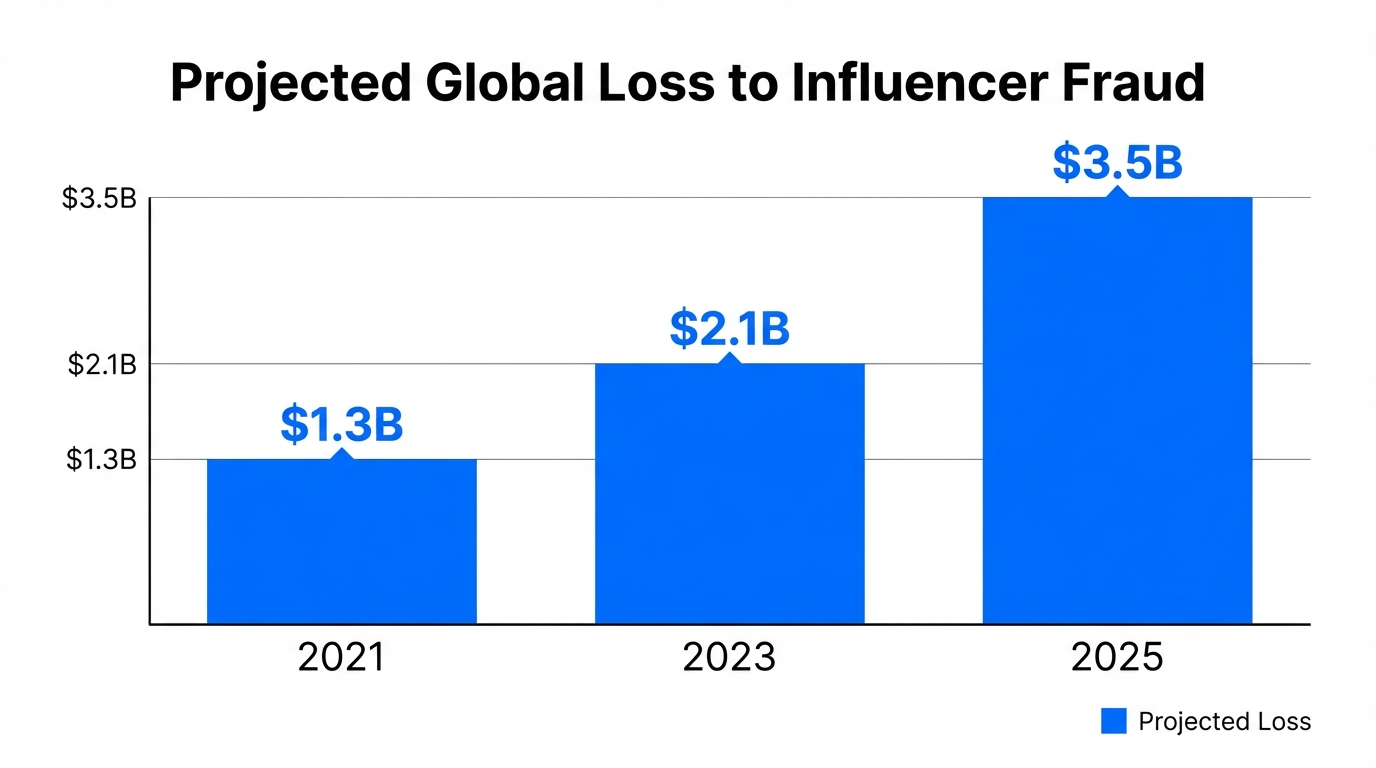
The landscape of social media has shifted from simple bot accounts to complex, AI-driven ecosystems of deception. According to research from The Payments Association, the financial impact of fraud is not just a rounding error; it is a systemic leak in the marketing funnel. By late 2025, fake followers on platforms like Instagram are expected to increase by 60%, while TikTok is projected to host nearly 950 million fake accounts. This epidemic of inauthenticity means that a standard follower-count-based approach to hiring is effectively obsolete.
The "half-fake" reality is now the industry standard. Data suggests that between 49% and 55% of all Instagram influencers have engaged in some form of artificial inflation, such as participating in engagement pods or purchasing follower batches. On average, 14.1% of Instagram followers are inactive or bot-controlled, but this number spikes to 23% for mega-influencers with over a million followers. To combat this, brands are turning to advanced audience analysis to verify every dollar spent.
Behavioral Pattern Recognition: Spotting the Unnatural Spike
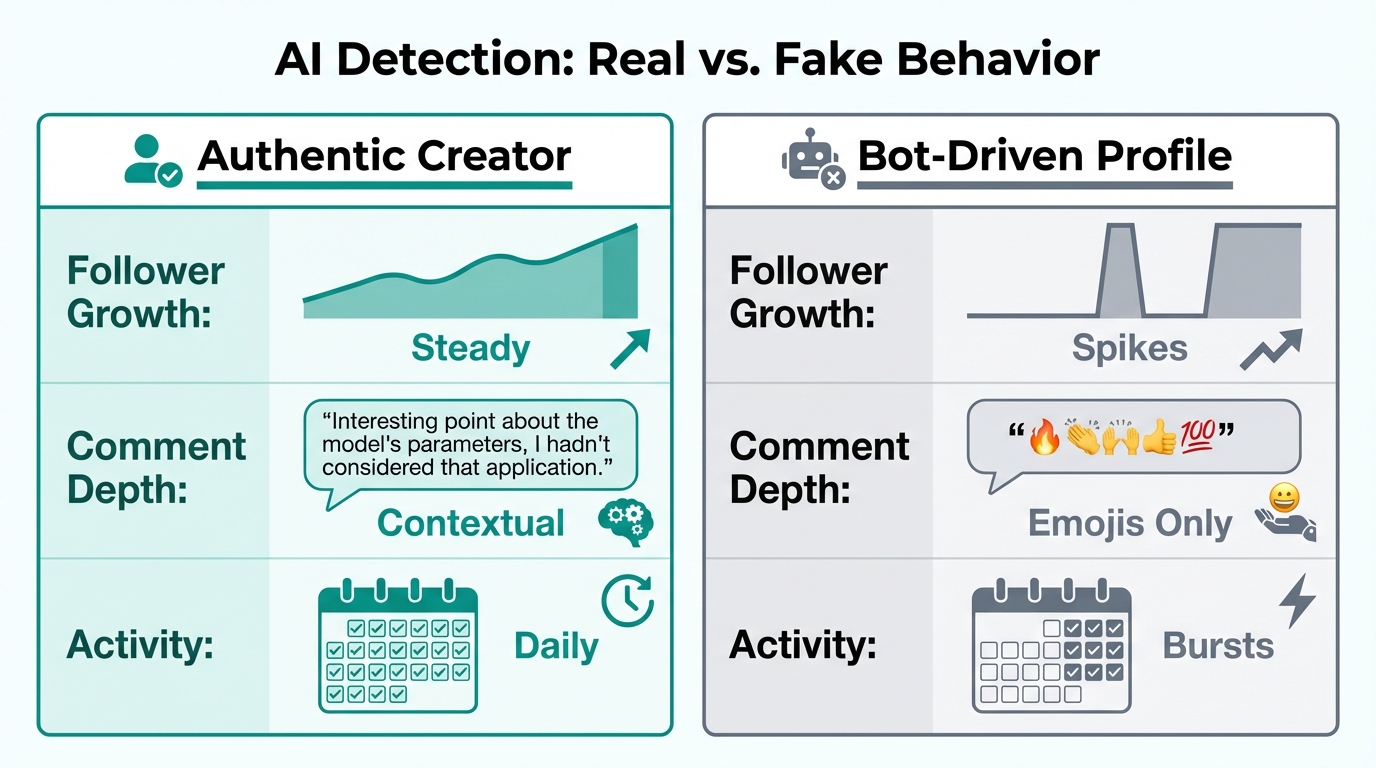
The most basic form of influencer fraud detection involves monitoring the velocity of follower growth. Human growth is typically gradual, punctuated by specific viral moments or media mentions. In contrast, bot-driven growth often appears as a vertical spike followed by a plateau or a steady decline (the "churn" effect). AI-powered creator discovery platforms use behavioral pattern recognition to identify these anomalies with surgical precision.
When an influencer uses bots to "follow-unfollow" thousands of users to trick them into following back, it leaves a distinct digital fingerprint. AI tools flag this behavior by cross-referencing follower growth with content frequency. If a creator gains 50,000 followers in 48 hours without a corresponding viral video or a major mention in Luxury Daily or other trade publications, the system triggers a fraud alert. Real growth has a story; fraudulent growth has a script.
"The goal is to use AI as a super virtual assistant, filtering through thousands of creators to find those with truly clean data that translates into real business value."Marketers should also look for "engagement pods"—groups of influencers who agree to comment on each others' posts to trick the algorithm. While these comments are from "real" accounts, they are not from potential customers. AI detects these by mapping interaction frequency between specific groups of accounts. If the same 50 accounts are always the first to comment on every post, regardless of the niche, you are likely looking at an artificial engagement loop.
Natural Language Processing: Auditing the Comment Section
Sophisticated fraudsters have moved beyond simple "nice post!" comments. They now use agentic AI to create realistic personas that autonomously engage in conversations. However, even the most advanced bots struggle with natural language processing (NLP) over time. AI auditing tools scan thousands of comments to detect repetitive "bot-speak" patterns that human eyes might miss during a quick scroll.
- Contextual Relevance: Does the comment actually relate to the specific content of the video, or is it a generic compliment?
- Sentiment Uniformity: Is the sentiment too perfect? Real humans have diverse, sometimes messy ways of communicating. 100% positive, emoji-heavy sentiment is often a red flag.
- Temporal Analysis: Do the comments arrive in a massive burst within seconds of posting, or do they trickle in naturally over hours?
By using NLP to perform a fake follower audit, marketers can identify the "authenticity crisis" highlighted by industry experts at Aithor. If the engagement isn't context-aware, it isn't driving ROI. Using tools like Stormy AI can help source and manage UGC creators at scale while filtering out these low-quality interactions before you ever send an outreach email.
| Metric | Manual Auditing (High Risk) | AI-Powered Auditing (Low Risk) |
|---|---|---|
| Follower Growth | Spot-checks on profile pages | Historical trajectory mapping |
| Engagement | Checking total likes/comments | NLP sentiment & relevance analysis |
| Audience Quality | Subjective visual assessment | Audience Quality Score (AQS) |
| Network Transparency | None | Audience Topology Analysis |
Audience Topology: Mapping the Genuine Network
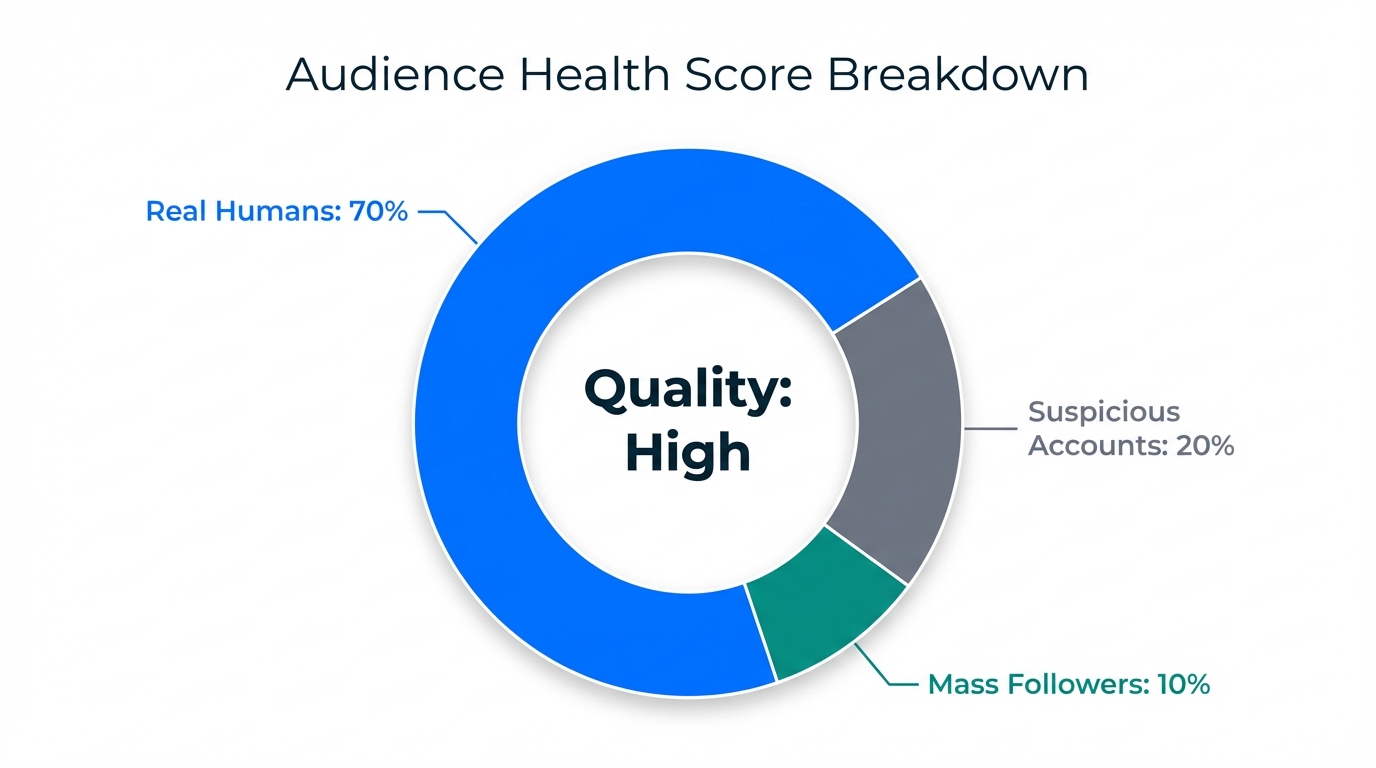
Beyond looking at the creator, AI now looks at the followers of the followers. This is known as audience topology analysis. A genuine creator is the center of a diverse web of interests. Their followers should be connected to other real people, brands, and interests across the platform. Fraudulent accounts, however, often exist in "fraud clusters." These are groups of bots that are heavily interconnected with each other but have zero connection to the broader social ecosystem.
AI maps these clusters to see if a creator's audience is a dead-end street. If a large percentage of an influencer's audience is only connected to other flagged accounts, the audience quality score will plummet. This level of vetting is critical for brands that want to avoid "brand erosion," a risk that AI Certs warns can happen when automated personas replace human authenticity. Genuine influence is about the quality of the network, not just the number of nodes.
The 2025 Growth Marketer's Playbook for Fraud Prevention
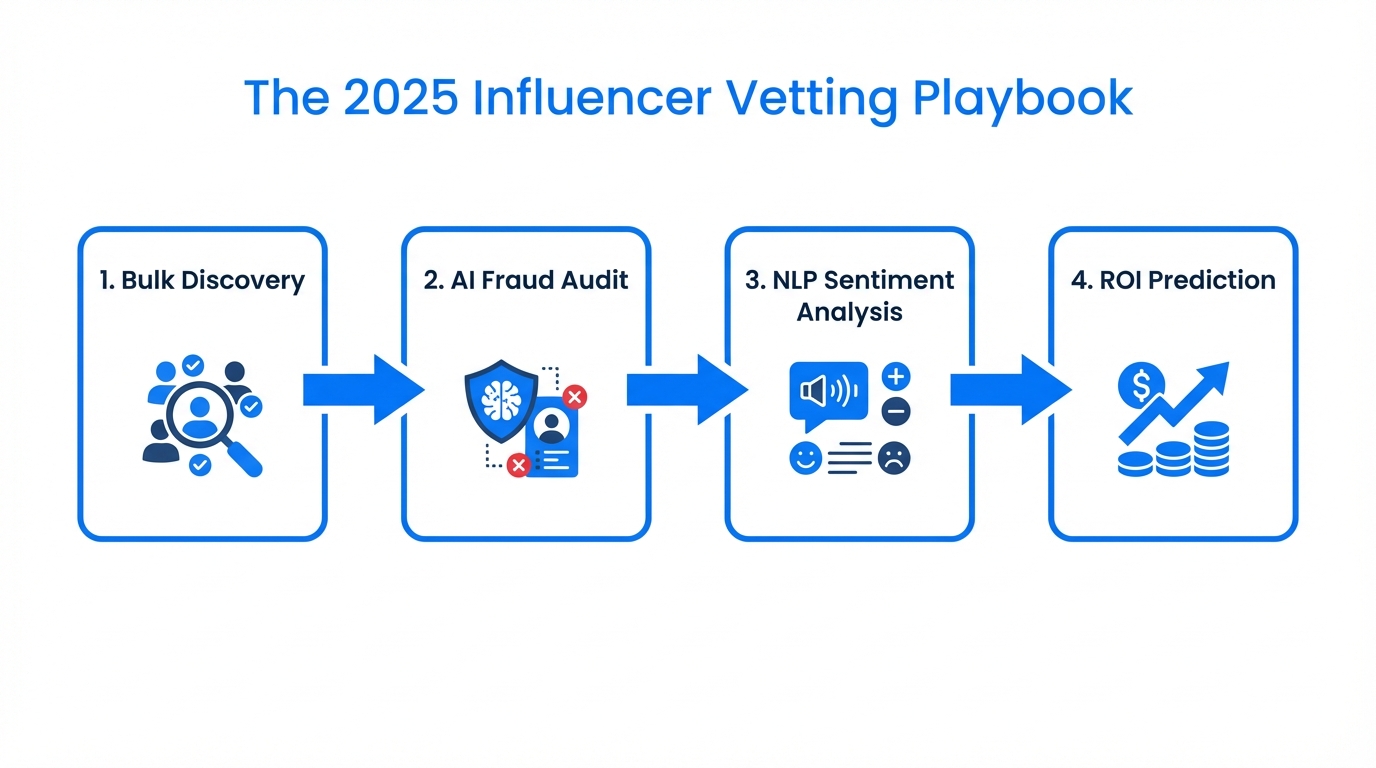
To maximize your influencer marketing ROI, follow this systematic vetting process for every new partnership. Do not rely on intuition; rely on data-driven safeguards.
Step 1: Demand API-Verified Data
Never accept static screenshots of "insights" from a creator. Screenshots are easily manipulated with basic design tools like Canva. Instead, use an AI-powered detection tool that pulls real-time data directly from social platform APIs. This ensures you are looking at the actual performance metrics, not a photoshopped version of success.
Step 2: Benchmark the Audience Quality Score (AQS)
Before moving to a contract, check the creator’s AQS. A healthy creator should have at least 80% real, active followers. If the score falls below 70%, the "cost per engagement" is effectively 30% higher than it appears on paper. Platforms like Stormy AI provide deep audience demographics and engagement rate analysis to help you vet these numbers in seconds.
Step 3: Analyze the Virtual vs. Human Mix
In 2025, we are seeing a rise in virtual influencers. While these CGI entities—like Lil Miquela—offer a 100% brand-safe environment, they must be tracked differently. When Prada utilized a virtual takeover for Milan Fashion Week, they used AI to track the demographics of every "real" human who engaged with the digital content. Ensure you know if you are hiring a human or an AI persona and that the human engagement behind the post matches your target market.
"In 2025, the most valuable currency isn't followers—it's attention that can be verified as human."Common Pitfalls to Avoid in the Detection Process
Even seasoned marketers fall into traps when rushing a campaign. Avoid these common mistakes to keep your funnel clean:
- Over-indexing on Follower Count: Hiring a mega-influencer without checking their bot percentage can lead to a 0% conversion rate. A micro-influencer with 50,000 real fans will always outperform a celebrity with 5 million bots.
- Ignoring Negative Sentiment: High engagement isn't always good. AI-powered sentiment analysis can tell you if the 1,000 comments on a post are fans or people criticizing the creator. A partnership with a controversial figure can damage your brand faster than a bot can follow you.
- Skipping the "Follow-Unfollow" Check: Look for a saw-tooth pattern in follower growth. This indicates the creator is using automation to churn through followers, which results in a low-attention, low-loyalty audience.
Conclusion: Protecting the Future of Your Brand
As the barrier to entry for creating "fake influence" drops due to accessible AI tools, the barrier for detecting it must rise accordingly. Success in 2025 requires growth marketers to move past vanity metrics and embrace a fake follower audit as a standard operating procedure. By combining behavioral pattern recognition, NLP, and audience topology analysis, you can ensure that your influencer marketing ROI remains protected.
The era of "spray and pray" influencer marketing is over. The future belongs to those who use AI-powered discovery and vetting to build relationships with genuine creators. Whether you are running app install campaigns or launching a new e-commerce product, your strategy must be built on a foundation of verified, human connection. Start by auditing your current roster and demand transparency from every partner you bring into your growth ecosystem.