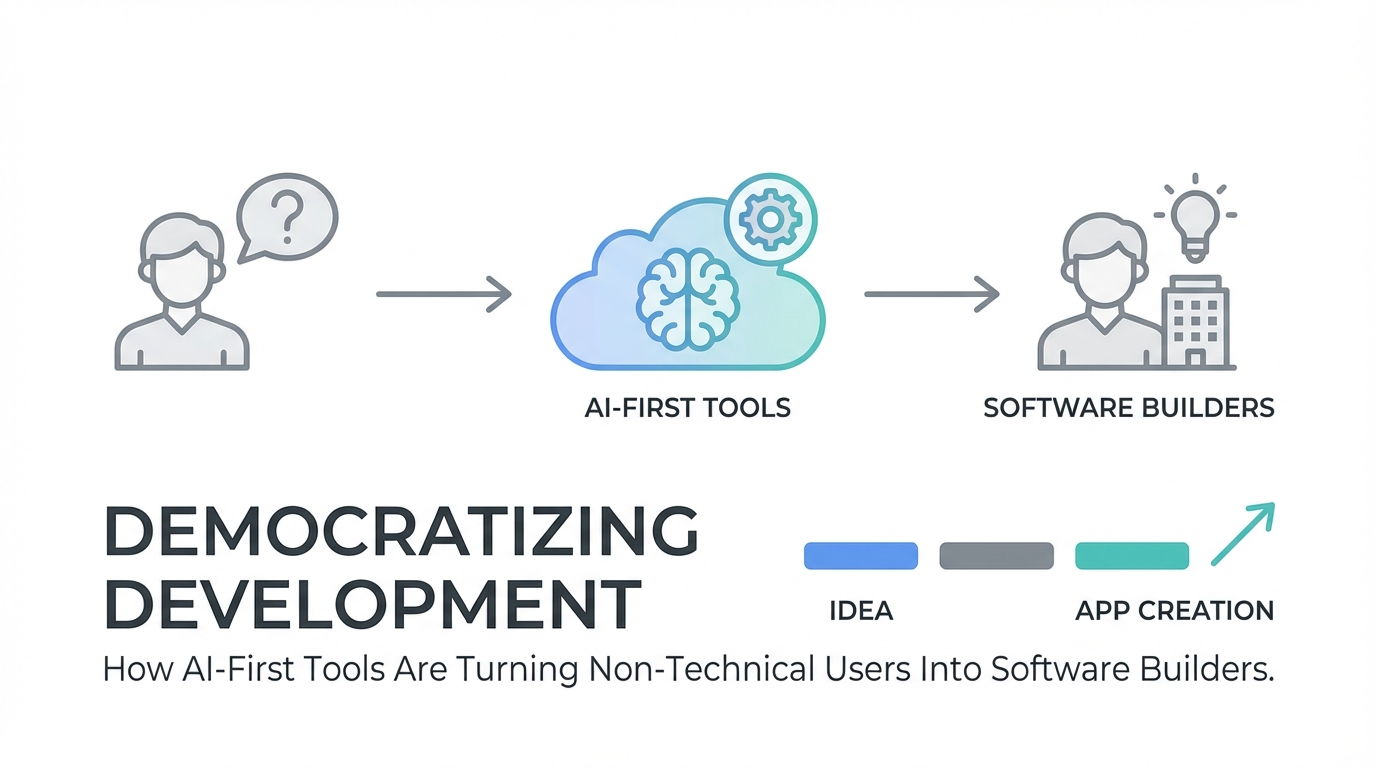
For decades, the path from a brilliant idea to a functional software product was guarded by a formidable gatekeeper: technical expertise. If you couldn't write code, or didn't have the capital to hire those who could, your vision remained trapped in a notebook or a slide deck. However, we are currently witnessing a seismic shift in the industry. The barrier to entry hasn't just been lowered; it has effectively vanished. A new generation of AI-first tools is democratizing development, transforming product managers, designers, and even sales professionals into 'builders' capable of launching production-ready applications in minutes.
The Shift from 'No-Code' to 'AI-Generated Code'
To understand where we are going, we must look at where we started. The initial 'no-code' movement was defined by visual abstractions—drag-and-drop interfaces that allowed users to build logic through blocks. While revolutionary, these platforms often had 'ceilings' where the abstraction broke down, requiring a developer to step in for complex integrations or custom UI. The emergence of ChatGPT and other Large Language Models (LLMs) fundamentally changed this dynamic by introducing natural language as the primary interface for creation.
The real breakthrough occurred when models evolved from simply writing snippets of code to understanding full application architectures. Developers at StackBlitz noticed this shift early on. While traditional web development environments could take hours or even days to set up locally, the integration of advanced models like Anthropic's Claude 3.5 Sonnet allowed for the creation of tools like bolt.new. These no-code AI tools don't just abstract the code; they generate it, debug it, and deploy it, allowing a user to go from a text prompt to a live URL in seconds. This marks the transition from 'building with blocks' to 'building with intent.'
The Bolt.new Phenomenon: A Case Study in Velocity

The story of Bolt.new serves as a masterclass in rapid prototyping for startups. Facing a stagnating business model, the team at StackBlitz pivoted in a 90-day 'beast mode' sprint. They realized that while developers loved their environment, there was a massive, untapped market of non-technical users who wanted to create. When they launched Bolt.new with a single tweet, the results were staggering. In its first week, the product added $1 million in Annual Recurring Revenue (ARR). Within eight weeks, that number skyrocketed to $8 million.
This velocity was driven not just by developers, but by a diverse group of users who had previously been excluded from the software creation process. The simplicity of a single text box and a submit button proved that the future of software development lies in accessibility. By leveraging the latest advances in AI, the team proved that build apps with AI is no longer a futuristic concept—it is the current standard for high-growth tech companies.
Empowering the 'Non-Tech' Builder: The Sales Professional’s Story
The most compelling evidence of this democratization is found in the users themselves. During the initial surge of Bolt.new, the team discovered a customer who didn't fit the typical 'Silicon Valley' profile. He was a sales professional from Dallas with no engineering background. His goal wasn't to build a unicorn startup, but to create a donation website for his daughter, who was facing a medical condition. Using AI for non-technical founders, he was able to build a functional, beautiful site that would have traditionally required thousands of dollars and weeks of negotiation with a freelance developer.
This is the true power of no-code AI tools. It empowers individuals to solve hyper-local, personal, or departmental problems without waiting for 'IT' to prioritize their request. Whether it is a designer creating a portfolio, a PM building a tracking tool, or a father building a donation site, the identity of the 'software builder' has permanently expanded. In this new era, your ability to articulate a problem is more important than your ability to write syntax.
Identifying Indie Hacker Opportunities with Rapid AI Prototyping
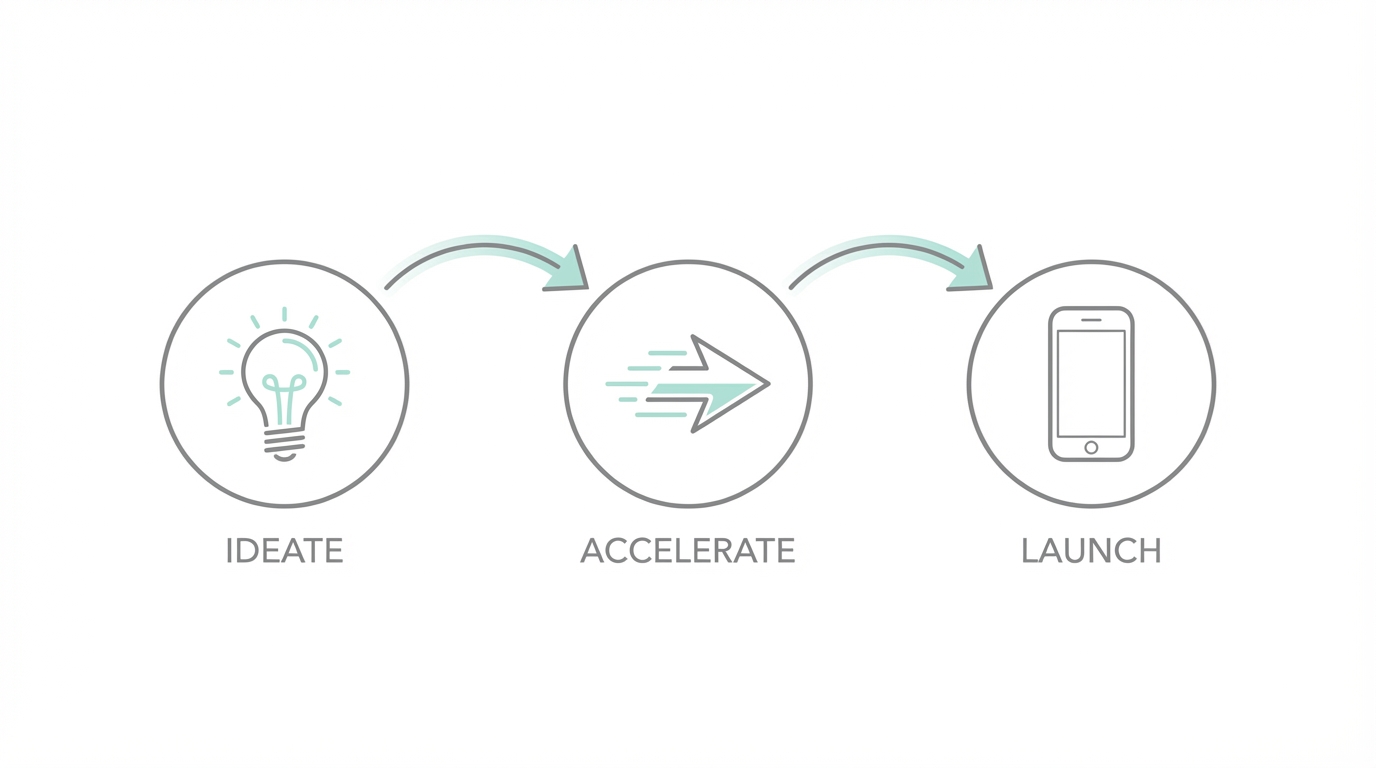
For entrepreneurs, this shift has birthed a new era of 'Indie Hacking.' Historically, the 'Minimum Viable Product' (MVP) took months to build. Now, an MVP can be a 'Minimum Viable Prompt.' Tools that allow you to build apps with AI enable founders to test market hypotheses with almost zero capital expenditure. You can build a directory of products, a specialized CRM, or a niche marketplace in an afternoon, launch it on Google Ads or social media, and see if there is actual demand before ever writing a line of custom code.
Once these applications are built, the next challenge is distribution. For many of these 'builder' tools, growth is driven by creator-led marketing. This is where tools like Stormy AI become essential. Once you have used AI to build your product, you can use Stormy AI's AI-powered search and discovery to find the exact UGC creators or influencers who can help you reach your target audience. Whether you are looking for fitness creators in LA or tech reviewers on TikTok, managing that outreach through a unified Creator CRM ensures that your rapidly built product gets the visibility it deserves.
The New Workforce Essential: AI Literacy
As these tools become ubiquitous, the definition of 'technical skill' is being rewritten. Industry leaders and venture capitalists alike are noticing that AI literacy is becoming a non-negotiable skill. As one prominent investor noted, companies 'are not going to hire people who don't know how to use the tools anymore.' If you are a non-technical professional, learning how to leverage AI for non-technical founders is the single best way to future-proof your career.
The future of software development is a world where the 'human-in-the-loop' focuses on product strategy, user experience, and creative direction, while the AI handles the heavy lifting of code generation and infrastructure. This doesn't mean engineers are obsolete; it means they are being elevated to architects who oversee complex systems, while 'builders' handle the functional applications that run our daily lives and businesses.
Playbook: Implementing AI-Assisted Internal Tools
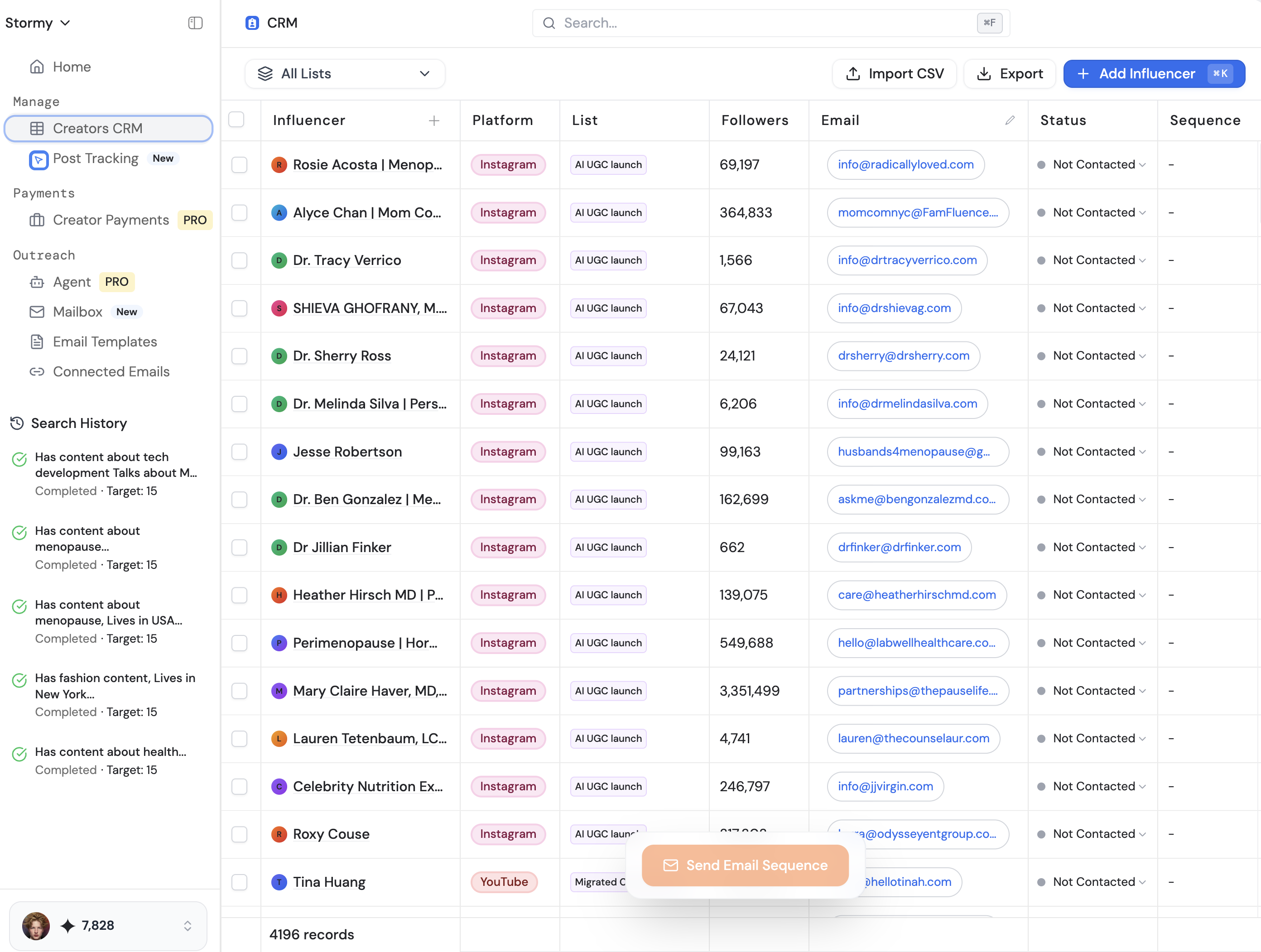
For companies looking to empower their employees to build their own tools, a structured approach is necessary. Follow this playbook to implement no-code AI tools within your organization:
Step 1: Identify Friction Points
Look for departmental tasks that are currently handled via messy spreadsheets or manual email threads. These are prime candidates for custom internal apps.
Step 2: Choose Your Stack
Select an AI-first builder platform. Tools that offer one-click deployment are preferable for non-technical teams to avoid the 'deployment gap.'
Step 3: Define the Data Schema
Even without coding, you must understand what data you need to track. Ask the AI to 'Create a database schema for a project management tool' to get started.
Step 4: Prompt and Iterate
Start with a broad prompt and then use 'conversational editing' to refine the UI. If the design is 'ugly,' as early AI models often were, specify the aesthetic (e.g., 'Use Tailwind CSS with a clean, modern aesthetic').
Step 5: Secure and Scale
Once a tool is built, ensure it integrates with your existing workflows. For marketing teams, this might mean connecting your new tool to a platform like Stormy AI to manage the creator relationships and post-tracking that will drive your campaigns forward.
The Dawn of the Builder Era
We are entering a period where the only limit to software creation is human imagination. The story of Bolt.new and the success of AI for non-technical founders prove that the 'democratization of development' is not a marketing slogan—it is a financial and cultural reality. By embracing no-code AI tools, we are unlocking a massive wave of innovation from people who were previously sidelined. Whether you are an indie hacker, a corporate professional, or a parent with a mission, the tools to build the future are now in your hands. It is time to stop being a user and start being a builder.