When we discuss the titans of the artificial intelligence revolution, names like Sam Altman or Elon Musk dominate the headlines. However, there is a founder whose influence arguably precedes them both—a man whose 20-year conviction in the power of Artificial General Intelligence (AGI) set the stage for everything we see today. That founder is Demis Hassabis. As the co-founder and CEO of DeepMind, Hassabis has transitioned from a child chess prodigy to a global tech leader, moving with a singular focus that most entrepreneurs can only dream of. His story, recently chronicled in the documentary The Thinking Game, offers a masterclass in mission-driven leadership and the 'fierce nerd' archetype that defines modern technological breakthroughs.
The 'Fierce Nerd' Archetype: Technical Mastery Meets Extreme Competitiveness

Demis Hassabis is the embodiment of what venture capitalist Paul Graham calls a 'fierce nerd.' This isn't just about being smart; it’s about combining world-class technical expertise with an unapologetic drive to win. Hassabis’s journey began not in a boardroom, but at a chess table. By the age of six, he was winning under-eight championships in Europe. By his early teens, he was the second-highest-ranked player in the world for his age group. This background in elite gaming is the foundation of the entrepreneurial mindset he brought to DeepMind. For Hassabis, AI wasn't just a research project; it was the ultimate 'thinking game.'
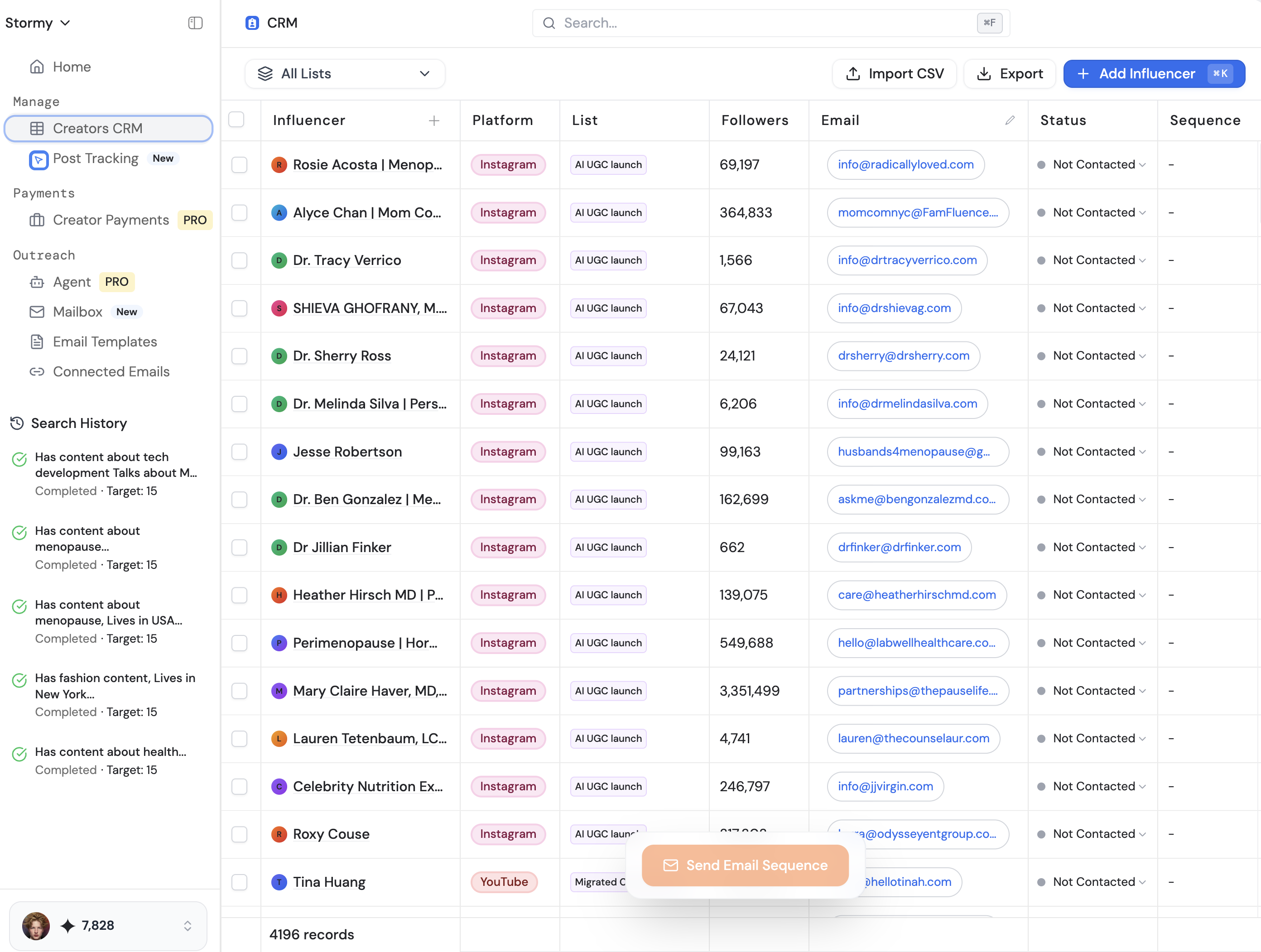
This competitiveness is a recurring theme in the AI founder stories that define our era. Whether it is mastering the complex math of neural networks or winning a game of foosball against colleagues, the 'fierce nerd' operates with the belief that every problem has a solution if you are simply determined enough to find it. This mindset is critical for any founder looking to disrupt established industries. If you are currently looking to scale a brand or app, tools like Google Ads can provide the reach, but it takes a 'fierce nerd' perspective to optimize the UGC strategies and data analytics required to truly dominate the competition. By leveraging an AI search engine like Stormy AI, founders can instantly find creators who match their specific niche across TikTok, Instagram, and LinkedIn using simple natural-language prompts. This blend of high-level strategy and granular execution is what allowed DeepMind to eventually catch the attention of the world's most powerful investors.
Mission Over Money: Prioritizing Time Over Multi-Billion Dollar Exits
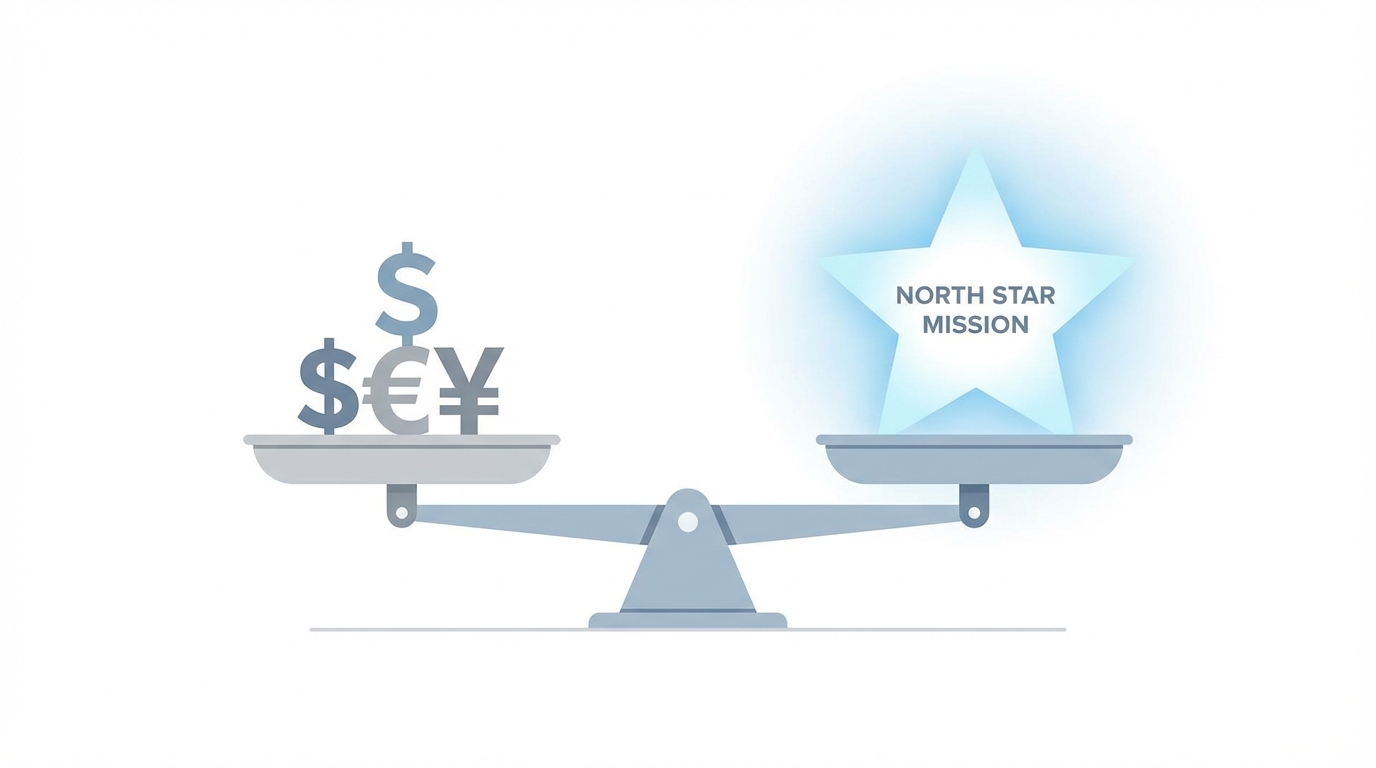
One of the most striking lessons from the DeepMind history is Hassabis’s decision to prioritize his mission over immediate financial gain. In 2014, Google acquired DeepMind for approximately $500 million (400 million pounds). At the time, many of the company’s investors were hesitant to sell, believing they could hold out for a multi-billion dollar valuation. Hassabis, however, viewed the acquisition as a means to an end. To him, the deal wasn't about the money; it was about securing the resources and the time to solve AGI within his lifetime.
This perspective is a fundamental pillar of mission-driven leadership. Hassabis famously argued that if he could gain five extra years of progress toward his goal by selling early, those five years were worth more than any incremental billion dollars. This trade-off—trading potential future wealth for current velocity—is a decision few founders have the courage to make. In the world of mobile app marketing, this is akin to focusing on long-term user retention and AI-powered creator discovery over short-term vanity metrics. Platforms like Stormy AI help founders find the right influencers to build that long-term brand equity, much like how Hassabis sought the right partners to build his life's work. By using Stormy AI to identify UGC creators who align with a core mission, app developers can build the same kind of sustainable growth that DeepMind achieved by focusing on its 'last invention' goal.
The 20-Year Conviction: Holding the Line Before the World Believes
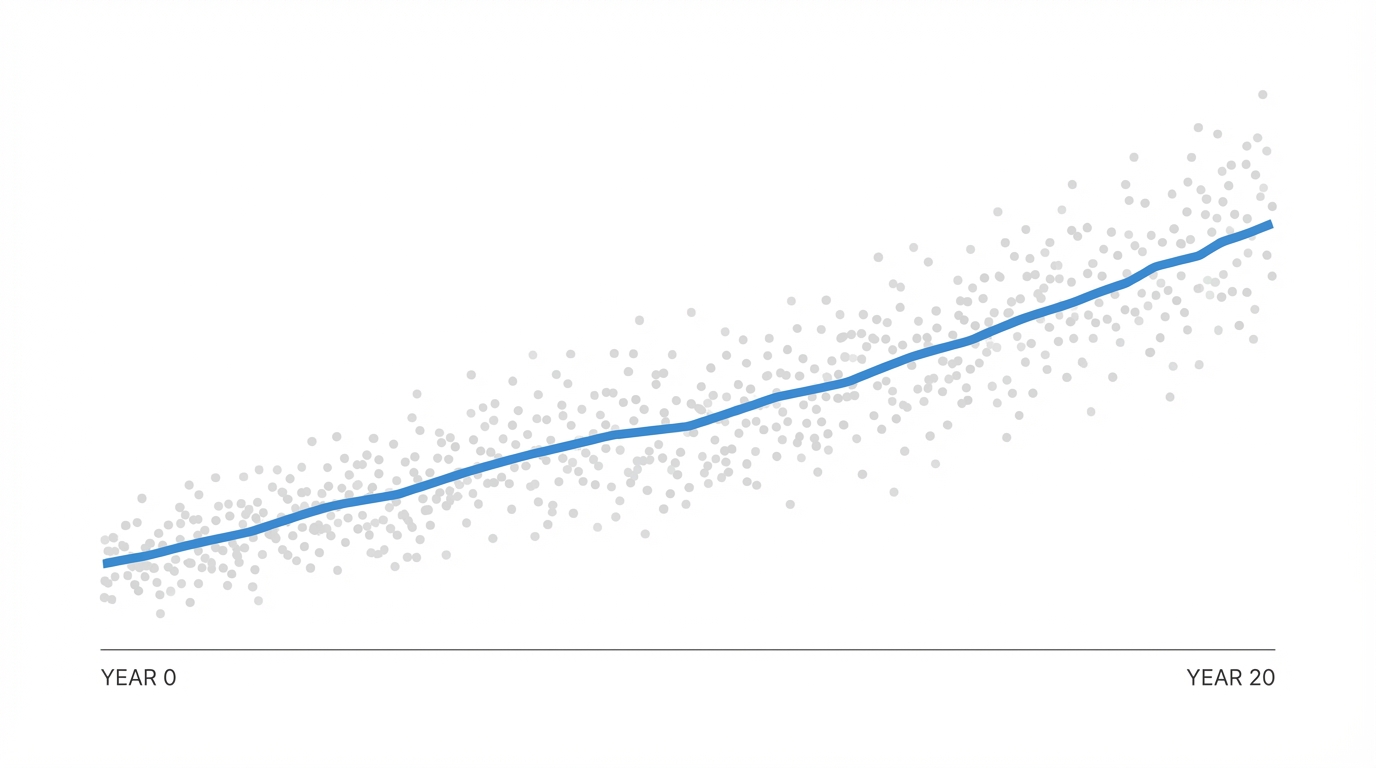
Long before 'AI' was a buzzword in every Silicon Valley pitch deck, Hassabis was obsessed with it. Throughout the 90s and early 2000s, AI was often dismissed as a 'sci-fi topic' with no commercial viability. Hassabis didn't care. He spent a gap year at age 16 working at Bullfrog Games, where he built the AI logic for the smash hit Theme Park. Even then, he was implementing autonomous character logic that simulated human behavior, such as guests puking on roller coasters if they ate too many burgers. This was early AI research disguised as game development.
Hassabis’s conviction allowed him to secure backing from some of the most contrarian minds in tech. Peter Thiel became DeepMind's first major backer, followed closely by Elon Musk. These investors didn't back DeepMind because it had a clear path to revenue; they backed it because Hassabis convinced them that AGI would be the 'last invention' humans would ever need to make. This level of conviction is rare. It requires a founder to be comfortable being 'wrong' for a long time before they are suddenly, spectacularly right. For developers running Apple Search Ads or scaling on Meta Ads Manager, the lesson is clear: long-term success often requires ignoring the noise and sticking to a data-driven strategy that others might not yet understand.
The Thinking Game: Why Games are the Perfect Testing Ground
Hassabis’s leadership style is deeply rooted in the idea that games are the ultimate training ground for intelligence. This philosophy led DeepMind to tackle increasingly complex challenges, starting with simple Atari games like Pong. The goal was to build a 'childlike' AI that could learn the rules of any game without prior human knowledge. The results were staggering: after 500 games, the AI was not only competitive but unstoppable.
This path led to the historic 'Move 37' in the match between AlphaGo and Lee Sedol. For those unfamiliar with DeepMind history, Move 37 was a moment where the AI made a move so novel and creative that no human expert would have ever suggested it. It was a 'Sputnik moment' for the AI industry, proving that machine intelligence could move beyond pattern matching and into the realm of original strategy. This level of creative problem-solving is what Stormy AI brings to the influencer marketing space, using AI-powered search and analytics to help brands find UGC creators who can deliver original, high-performing content for mobile app ads. Just as AlphaGo found a new way to win at Go, modern brands must use AI tools to find new ways to connect with their audience.
Resourcefulness Over Resources: The Tony Robbins Framework
A key element of the Demis Hassabis biography is his incredible resourcefulness. Early in his career, when he lacked the massive compute power of a company like Google, he relied on his ability to convince the smartest people in the world to join his mission. This aligns with the framework often cited by Tony Robbins: the only resource you truly need is resourcefulness. If you are determined, creative, and persistent enough, you will find the capital, the talent, and the technology needed to succeed.
Hassabis proved this when DeepMind pivoted from games to science. The 'protein folding' problem had plagued biology for 50 years. Using AI-assisted science, DeepMind’s AlphaFold reached 90% prediction accuracy in a single year, effectively solving a challenge that thousands of researchers had failed to crack for decades. This breakthrough led to the creation of Isomorphic Labs, a company dedicated to using AI to 'solve all disease' and revolutionize drug discovery. This is the ultimate example of resourcefulness—taking a technology developed for games and applying it to the most fundamental problems of human existence.
The J-Curve of Progress
Founders must understand the 'J-Curve' of progress that Hassabis mastered. When implementing a new AI strategy or pivoting a company's focus, performance often drops initially as the team learns the new system. Hassabis noted that his team would often get worse before they exploded through to a new level of achievement. This is a vital lesson for anyone managing app marketing campaigns. When you switch from traditional ads to a UGC-heavy strategy via Stormy AI, you might see a temporary period of adjustment. However, the high-quality creator data and AI insights eventually lead to a massive improvement in ROI, much like AlphaFold’s jump from 30% to 90% accuracy.
Playbook: Identifying Your 'Last Invention' Mission
For founders and marketers looking to emulate Hassabis’s success, here is a three-step playbook for identifying and executing a mission-driven strategy:
Step 1: Define Your 'Last Invention'
What is the one technology or strategy that, if solved, makes everything else easier? For DeepMind, it was AGI. For a mobile app founder, it might be an AI-powered recommendation engine or a perfect ASO (App Store Optimization) strategy. Identify the core 'inflection point' that will change your industry forever.
Step 2: Optimize for 'Thinking Time'
Don't just chase the next funding round or exit. Ask yourself if your current path is maximizing your velocity toward your mission. Hassabis sold to Google not to retire, but to work harder. Surround yourself with tools and partners that buy you more time to focus on what matters most.
Step 3: Embrace Creative Constraints
Hassabis didn't force creativity; he provided constraints and then gave his team the 'shower time' needed to make connections. Whether you are building a new AI model or designing a UGC creator campaign, set clear boundaries but allow for the creative 'Move 37' moments that drive true innovation. Using Stormy AI, brands can automate the outreach and management of these creators, giving the team more time to focus on high-level strategy.
Conclusion: The Future is Built by Those Who See It First
The entrepreneurial mindset of Demis Hassabis is defined by a rare combination of technical genius and relentless focus. By viewing AI as the ultimate 'thinking game' and prioritizing his mission over all else, he has positioned DeepMind at the center of the most important technological shift in human history. Whether you are building the next drug discovery platform or scaling a mobile app through AI-powered influencer marketing, the lessons are the same: maintain your conviction, prioritize your time, and never stop playing the game. As we move further into the era of computational biology and automated intelligence, the founders who succeed will be those who, like Hassabis, realized decades ago that the only limit to our progress is the quality of our thinking.