Solving the Dark Social Problem in 2026: Using Northbeam and Triple Whale for Multi-Channel Attribution
Learn how to solve the dark social problem in 2026 using Northbeam marketing mix modeling and Triple Whale attribution to track the hidden 20% of sales and ROI.
In 2026, the digital advertising landscape has undergone a tectonic shift. The old methods of tracking conversions—relying on fragile third-party cookies and fragmented platform dashboards—have officially crumbled. Today, growth marketers are facing the "Dark Social" crisis: a reality where up to 20% of purchases are influenced by creators, PR, and word-of-mouth recommendations that traditional pixels simply cannot see. To survive in this environment, elite eCommerce brands are moving beyond basic tracking and into the era of agentic analytics and AI-driven Marketing Mix Modeling (MMM).
The financial stakes are massive. The global AI-enabled eCommerce market has reached a valuation of $9.01 billion in 2025 and is on a trajectory to hit $64.03 billion by 2034, according to DemandSage. Brands that fail to illuminate their "dark data" aren't just losing visibility; they are losing the 10% to 30% revenue uplift that comes with AI-driven personalization and optimized spend, as noted by Reveation Labs. This article explores how modern brands are using Northbeam and Triple Whale to build a bulletproof attribution stack in 2026.
The Death of Third-Party Cookies and the Rise of AI-Driven MMM
By 2026, third-party cookies have become an artifact of a bygone era. Privacy regulations like the GDPR and browser-level blocking have rendered the traditional "last-click" model obsolete. In its place, Marketing Mix Modeling (MMM) has emerged as the gold standard for high-growth brands. Unlike pixels, which attempt to follow an individual user, MMM uses advanced statistical algorithms to correlate spend across all channels—including offline and top-of-funnel social—with total revenue.
"2025 was the year where dark data lit up. In 2026, AI has transformed our ability to reason about and leverage enterprise-wide unstructured data to drive growth."
This shift is driven by necessity. 84% of eCommerce businesses now rank AI as their highest strategic priority, according to Cubeo AI. Without a sophisticated model that accounts for the "halo effect" of social media and influencer marketing, brands often make the mistake of cutting spend on channels that appear underperforming but are actually driving massive downstream conversions. This is where Northbeam marketing mix modeling provides a necessary "Single Source of Truth."
Northbeam: Unifying Omnichannel Data Across Meta, TikTok, and Amazon
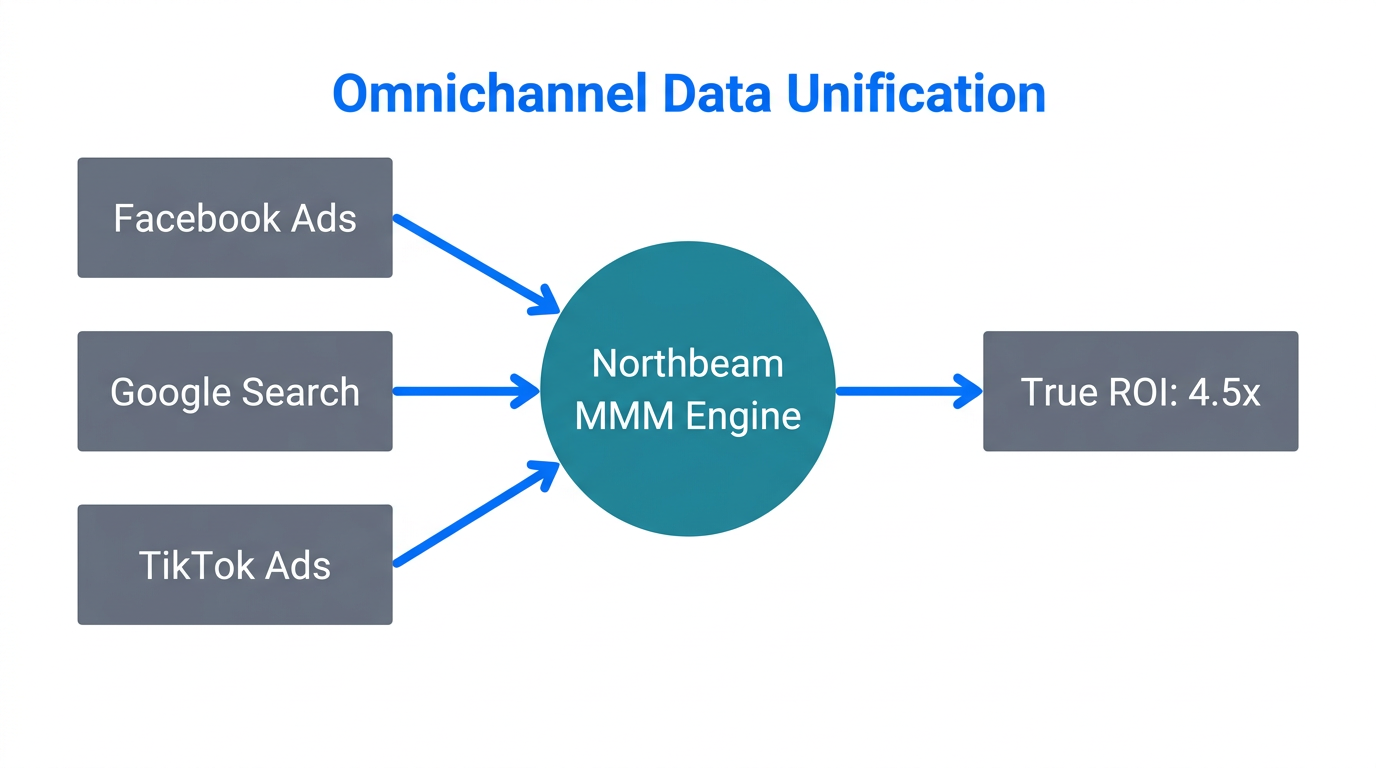
For enterprise-level brands, the challenge isn't just tracking one store; it's unifying data across a complex ecosystem. Northbeam excels by aggregating data from Meta Ads Manager, TikTok Ads, and Google Ads into a single dashboard. This allows growth teams to see how a view on TikTok might lead to a search on Google and an eventual purchase on Amazon three weeks later.
Using cross-channel attribution AI, Northbeam helps marketers understand the incremental value of every dollar. This is critical for omnichannel scaling. For example, the brand Oatly successfully scaled its U.S. operations by unifying Shopify and Amazon data, gaining instant access to recurring revenue insights that were previously siloed, as detailed by Glew. Northbeam takes this a step further by offering "what-if" scenarios that predict the revenue impact of budget shifts before they happen.
| Feature | Northbeam (Enterprise MMM) | Triple Whale (SMB/Mid-Market) |
|---|---|---|
| Core Methodology | Advanced Statistical MMM | First-Party Pixel + AI Attribution |
| Best For | Omnichannel (Amazon + DTC) | DTC-focused (Shopify/TikTok) |
| AI Interface | Predictive Revenue Modeling | Moby AI (Conversational Agents) |
| Implementation | High (Requires Data Cleanup) | Fast (Plug-and-Play) |
Triple Whale: Capturing Hidden Conversion Paths with First-Party Pixels
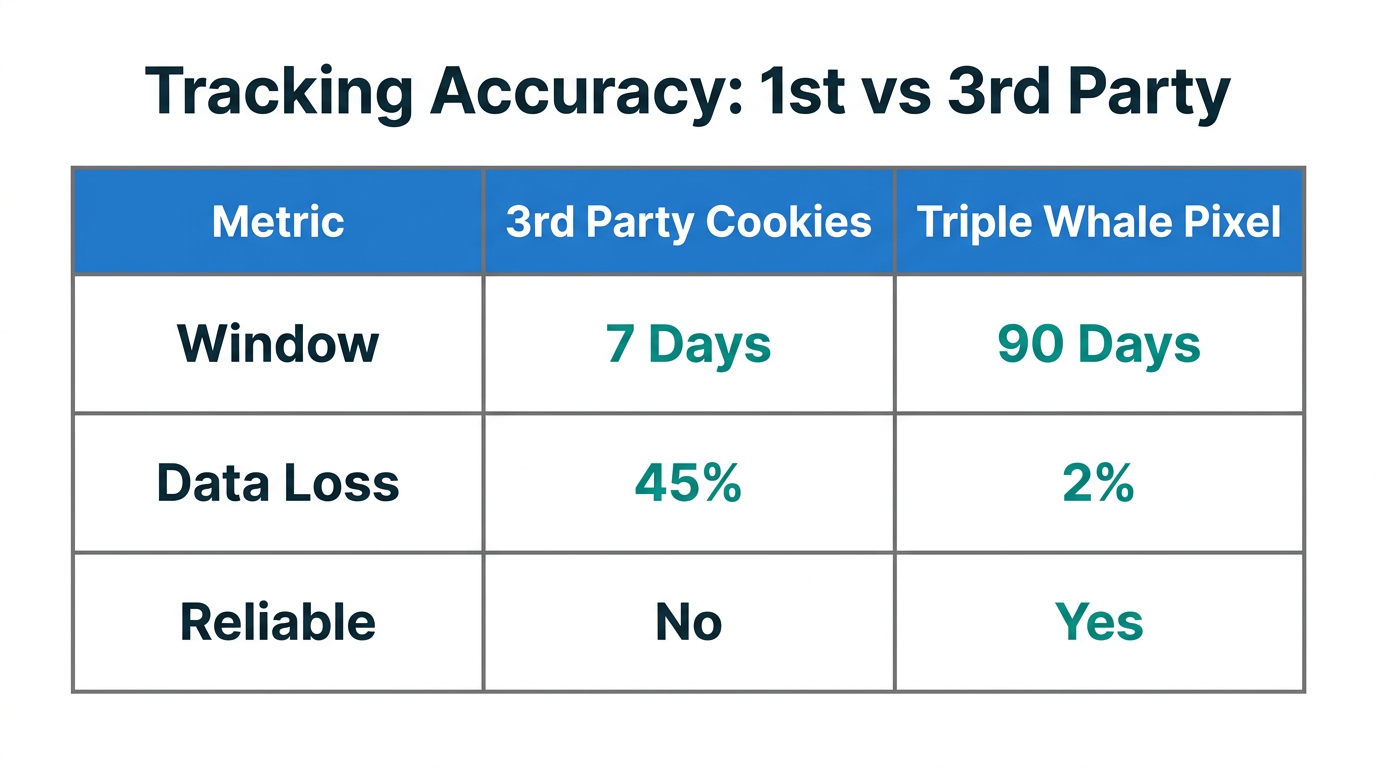
While Northbeam looks at the big picture through MMM, Triple Whale attribution 2026 focuses on the granular path to purchase via its proprietary first-party pixel. By bypassing third-party restrictions, Triple Whale allows brands to see the exact touchpoints—from an initial influencer post to an email sign-up via Klaviyo—that lead to a sale.
One of the most powerful features in the 2026 version of Triple Whale is Moby, an agentic AI digital teammate. eCommerce managers no longer need to build manual spreadsheets in Excel; they can simply ask Moby, "Which influencer campaign had the highest LTV over the last 90 days?" and receive a generated report in seconds. This natural language querying (NLQ) reduces purchase completion time by 47% and increases overall efficiency, as noted by Anchor Group.
A notable success story is the brand Travelpro, which used Triple Whale to uncover hidden PR influences on their sales, resulting in a 24% increase in marketing efficiency and saving 40% of their reporting time. You can read the full breakdown in the Travelpro case study.
"By 2026, every eCommerce manager will have a team of agents—finance, supply chain, and marketing agents—working autonomously in the background to optimize ROI."
Leveraging the Influencer Impact: Where Stormy AI Meets Attribution
In 2026, the primary driver of "Dark Social" traffic is the creator economy. Influencers on Instagram and TikTok create brand awareness that often results in direct searches or "view-through" conversions that are notoriously difficult to track. To solve this, brands must pair their attribution tools with a powerful discovery and management platform.
Platforms like Stormy AI streamline creator sourcing and outreach, allowing brands to find the right UGC creators and manage the entire relationship—from AI-personalized emails to automated follow-ups—in one place. By using Stormy AI to identify high-quality influencers and Triple Whale to track the resulting first-party data, brands can finally close the loop on creator ROI. This synergy is what allows brands like Saint + Sofia to achieve a CAGR of over 50% by identifying which products and creators are truly driving acquisition value, according to Conjura.
The 2026 Attribution Audit Playbook: Step-by-Step
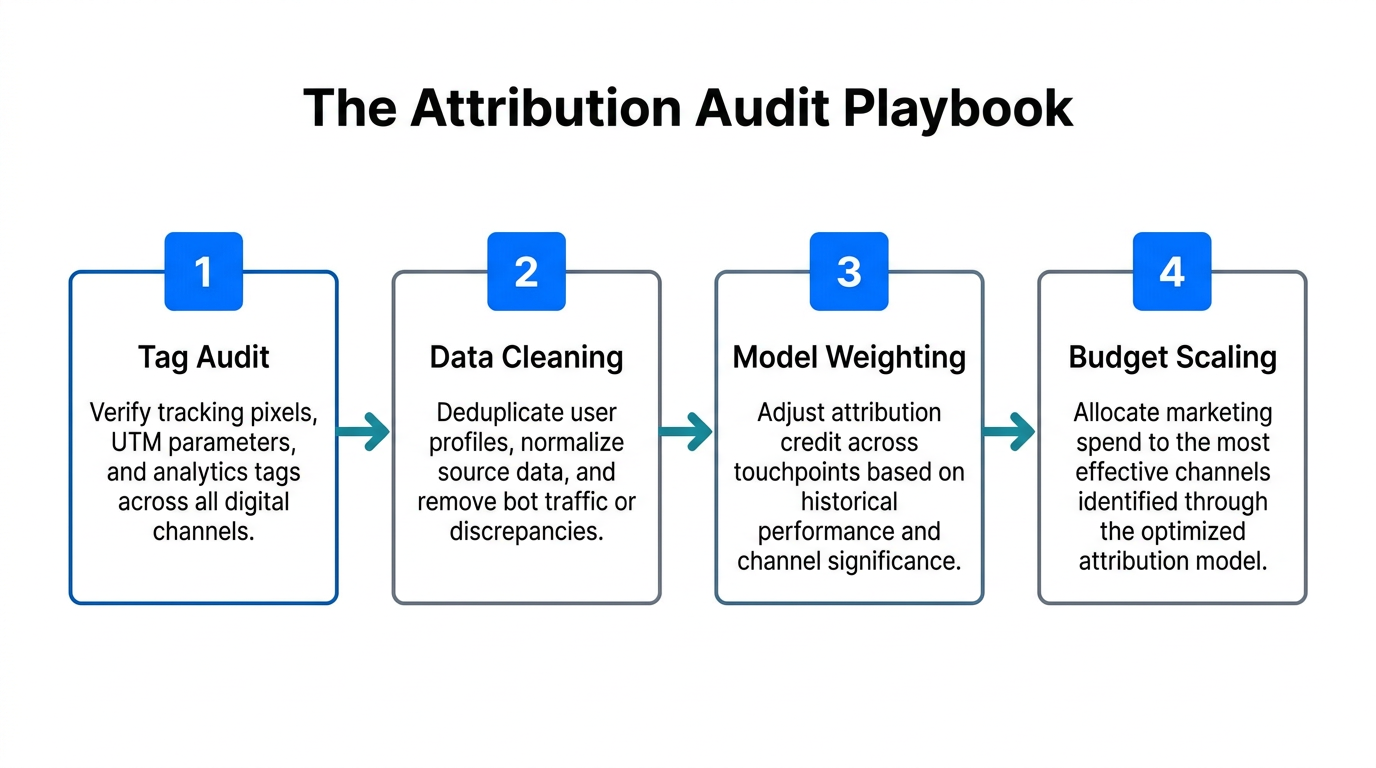
Tracking ecommerce dark data analytics requires more than just installing a tool; it requires a rigorous weekly workflow to ensure narrative confidence in your data. Use this playbook to conduct weekly attribution audits:
- Step 1: Clean the Metric Layer. Ensure your data is standardized before feeding it into AI. If your Meta campaigns use "FB_Ads" while your Shopify uses "Facebook," the AI will struggle to find patterns.
- Step 2: Run a "What-If" Scenario. Use Northbeam or Triple Whale's predictive modeling to ask: "If I cut spend on brand search by 20%, what is the predicted impact on total revenue?"
- Step 3: Analyze Unstructured "Dark Data." Use AI to analyze customer reviews and voice memos for sentiment trends that traditional BI tools miss, as suggested by Google Cloud.
- Step 4: Reallocate Based on Incrementality. Move budget from high-ROAS, low-incrementality channels (like retargeting) to the top-of-funnel creator campaigns that the MMM model proves are driving long-term growth.
Common Mistakes to Avoid in 2026
Even with the best tools, many brands stumble when trying to implement marketing ROI tracking in 2026. According to industry experts, the most common pitfall is Data Siloing—purchasing an AI tool that doesn't talk to your existing stack, such as Shopify, Stripe, or your CRM. This leads to fragmented insights and what many call "vendor lock-in."
Furthermore, human validation remains essential. While AI is excellent at telling clean stories, it can sometimes "hallucinate" or oversimplify complex attribution issues. Growth teams must still validate the "why" behind the data. As Ritu Jyoti from IDC advises, brands should move from "waterfall projects" to a "use-case approach"—build a minimum viable product, realize ROI, and then expand.
Conclusion: Building Your 2026 Growth Stack
The dark social problem isn't going away, but it is solvable. By combining the enterprise-level power of Northbeam marketing mix modeling with the granular first-party insights of Triple Whale attribution 2026, eCommerce brands can illuminate the hidden paths to purchase that their competitors are missing.
Success in 2026 requires a prescriptive approach to analytics. It’s no longer enough to know what happened; you must use AI to determine what will happen and which levers to pull to maximize your return. By integrating these attribution tools with a robust creator management platform like Stormy AI, you can ensure that your influencer marketing is not just a line item, but a measurable engine for sustainable growth. The future of eCommerce belongs to those who can see in the dark.