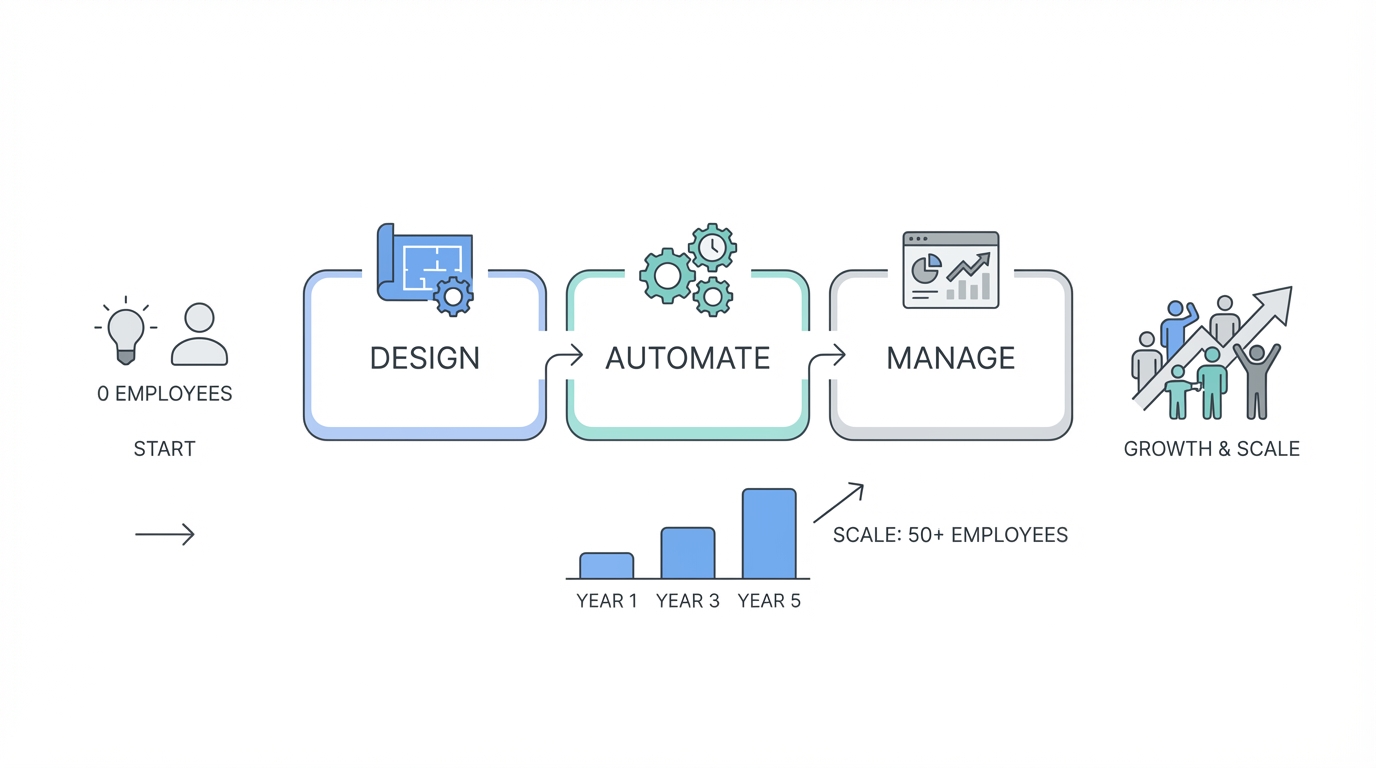
Scaling a business from a solo operation to a 50-person team is a feat most founders struggle to achieve in a decade. However, Hunter Hammonds, the founder of Assembly, managed to launch four separate million-dollar businesses in just four months. This rapid growth isn't a result of luck; it’s the product of a refined agency operations management system designed to handle high-velocity growth without the typical founder burnout. By utilizing a specific structure for his week and a unique philosophy on operational chaos, Hammonds has created a blueprint for anyone looking at scaling a startup quickly.
The DAM Framework: Decisions, Actions, and Messages
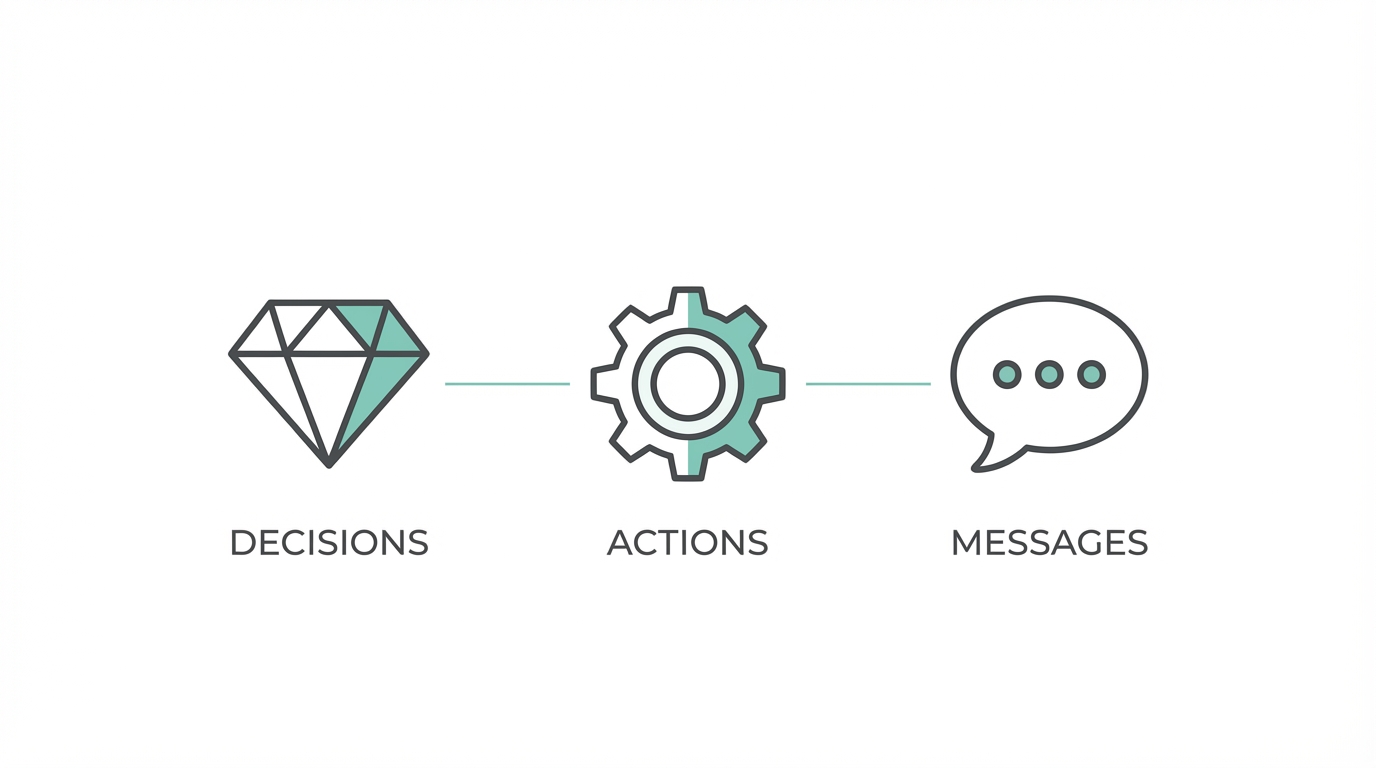

The core of Hammonds' productivity is what he calls the DAM Framework. Most founders fail because they try to do everything at once—answering emails, making strategic pivots, and executing tasks in a disorganized jumble. The DAM Framework solves this by siloing the workweek into three distinct pillars: Decisions, Actions, and Messages. This business management system allows a founder to manage multiple high-growth entities without losing focus.
On Mondays (Decisions), Hammonds reviews the vast amounts of data provided by his teams. This is the day for high-level strategy. He looks at contribution margins, customer churn, and growth metrics to decide exactly what the next move should be for each business in the portfolio, from HeyFriends to Off Menu. Making these decisions early in the week prevents the "decision fatigue" that often plagues CEOs by Wednesday.
When making these high-stakes decisions, having the right data is non-negotiable. For brands working with creators, Stormy’s influencer analysis provides the same level of deep-dive vetting that Hammonds uses to ensure his partnerships are built on solid ground. Just as Hammonds vets his business models for product-audience fit, Stormy allows you to detect fake followers and engagement fraud before you commit your budget.
Tuesdays (Actions) are dedicated to the heavy lifting. Based on Monday’s decisions, Hammonds executes the tasks that only he can do. This might involve refining a productized service model or finalizing a partnership agreement. Finally, Wednesdays (Messages) are for communication. This is when he relays those decisions and actions to his team of 50+, ensuring everyone is aligned and moving in the same direction.
The 'Break and Fix' Philosophy: Scaling Through Chaos

Many founders are paralyzed by the fear of making mistakes, leading them to build slowly and meticulously. Hammonds takes the opposite approach, which he calls the "Break and Fix" philosophy. To achieve scaling a startup quickly, he advocates for moving at a speed that inevitably creates a "wake of chaos." You move fast, break everything, and then—only after you've hit your growth targets—do you stop to clean up the operations.
In the last four months, Assembly has grown from three people to over 50. To reach that scale, Hammonds admits they had to cut corners. However, the goal was to reach a million-dollar run rate within the first 30 days of each launch. By prioritizing growth over perfect systems in the initial phase, they were able to capture market share in crowded spaces like YouTube editing and short-form content. Once the revenue was secured, they entered a "clean it all up" phase to stabilize the agency operations management.
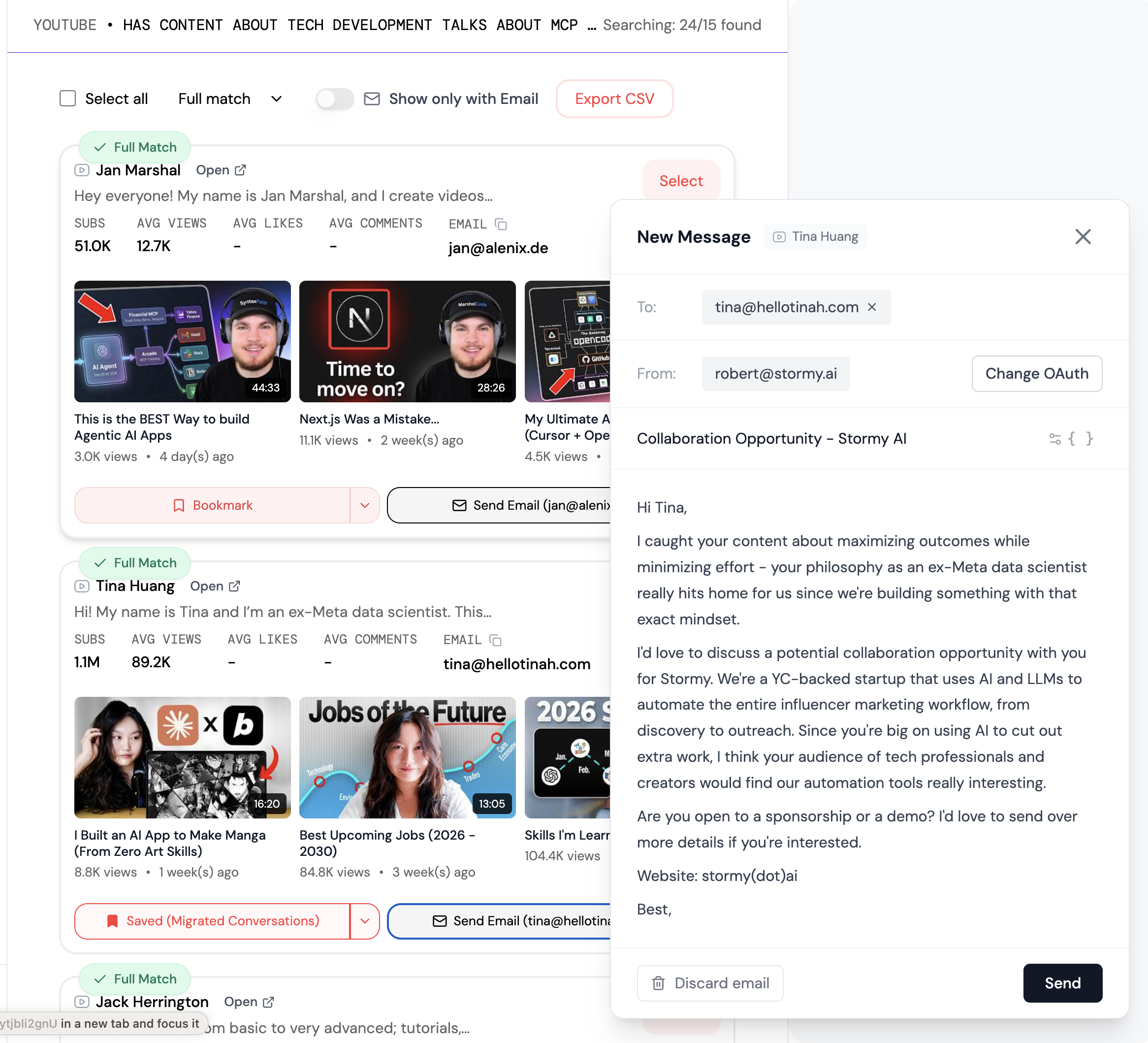
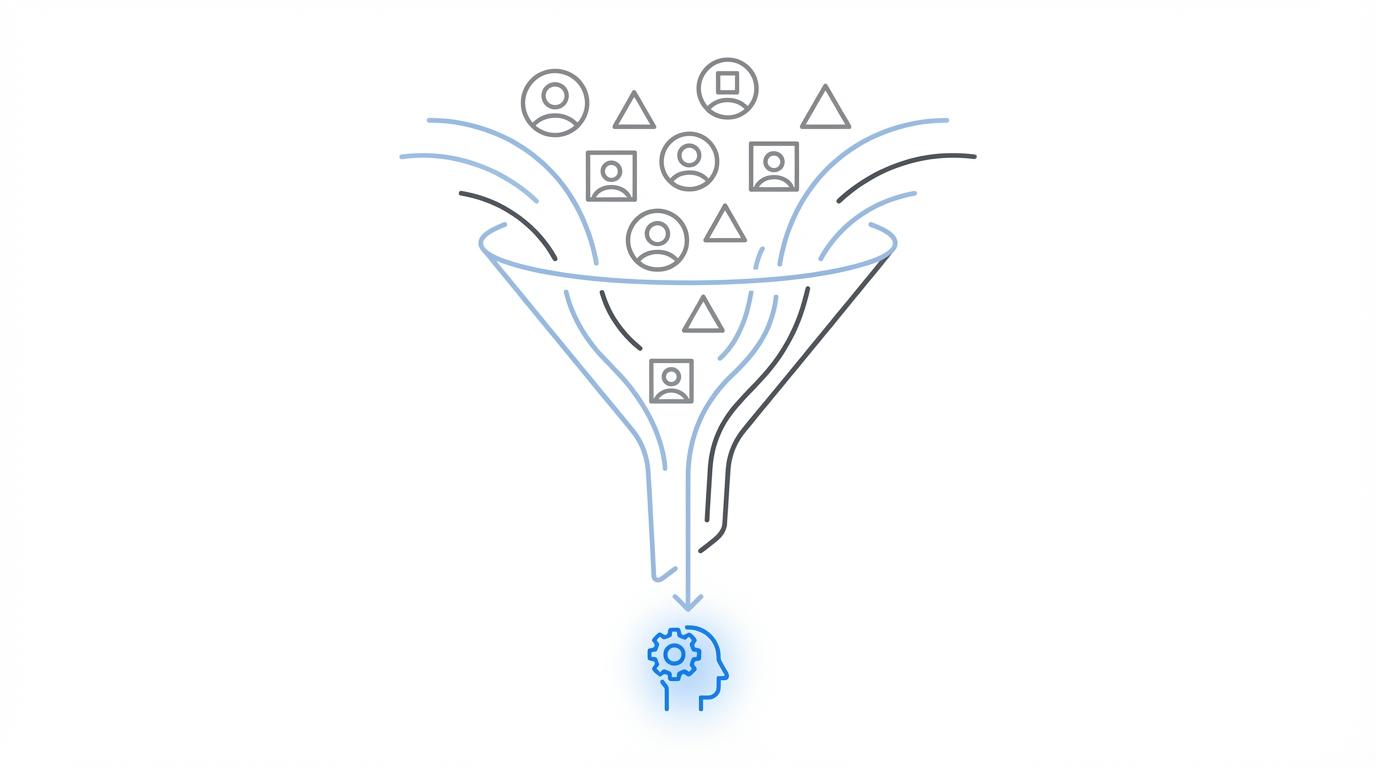
For brands trying to keep up with this kind of pace, manual discovery of partners is too slow. Stormy’s AI search allows brands to find creators across TikTok, YouTube, and Instagram in seconds using natural language prompts, effectively removing the bottleneck of discovery so you can focus on the "breaking and fixing" that actually moves the needle.
Recruiting at Speed: A Remote Team Hiring Strategy
Scaling to 50+ employees in a matter of months requires a robust remote team hiring strategy. Hammonds doesn't rely on traditional job boards alone. Instead, he focuses on two main levers: referral incentives and generous employer branding. When a company like Viral Cuts needs to hire 50 video editors rapidly, they turn to their existing high-performers.
By offering significant referral bonuses, they turn their current staff into a recruiting engine. This ensures a baseline level of quality because current employees are unlikely to refer someone who will make their own jobs harder. Furthermore, Hammonds focuses on being a "generous employer," providing high-end compensation and a clear value proposition to talent. This builds a culture where people are okay with the "ambiguity" of a fast-scaling startup.
Managing a massive influx of talent and creator partners can quickly become an administrative nightmare. This is where a business management system like Stormy’s creator CRM becomes essential. It allows you to track every interaction, negotiation, and payment in one place, mirroring the organized communication style Hammonds uses to keep his 50+ employees in sync.
Managing Deep Work: Protecting the Founder’s Time
While the first half of the week is dedicated to the DAM framework, the second half is dedicated to the founder's mental health and long-term vision. Thursdays are reserved for calls—talking to other CEOs, helping with sales, and external networking. Fridays are for deep work and writing. This structure is essential for avoiding the burnout that previously forced Hammonds into a six-month sabbatical.
During deep work sessions, Hammonds focuses on the "Phase 2" of his businesses. He treats productized services as Phase 1—a high-margin cash flow machine. But the ultimate goal is to use that cash to fund software and SaaS products. Without protected time for deep work, a founder stays stuck in the day-to-day operations of the service business and never makes the leap to more scalable products.
By compartmentalizing his week, Hammonds ensures that he is always working on the business rather than just in it. This is a critical distinction for anyone looking to master agency operations management.
The Productized Service Playbook

If you are looking to launch your own high-growth business, Hammonds recommends starting with a productized service. Here is the step-by-step playbook:
Step 1: Identify a Crowded Market
Don't look for a blue ocean. Look for a market that is already crowded and proven. If there are many competitors, it means there is high demand. Hammonds looks for spaces where he can provide a concierge, high-end experience that stands out from the budget options.
Step 2: Find Product-Audience Fit
The secret weapon of Assembly is partnering with creators who already have distribution. For example, partnering with Ali Abdaal for a YouTube agency worked because Ali’s audience already trusts him for YouTube advice. This removes the need for expensive cold acquisition in the early days.
Step 3: Define a Clear, Transactional Value Prop
Avoid "unlimited" packages. Instead, offer a clear result for a clear price. For example, $10,000 a month for six high-quality videos. This makes the service easy to sell and easy to operationalize. Clear expectations lead to higher customer lifetime value even if churn is present.
Step 4: Automate the Outreach
Once the model is proven, you need to scale the outreach. An autonomous AI agent can handle the heavy lifting of finding and contacting potential partners or clients. Stormy’s AI outreach can send hyper-personalized emails and handle follow-ups while you sleep, allowing you to maintain the "Messages" part of the DAM framework without manual labor.
Conclusion: Scaling with Intention
Scaling from 0 to 50 employees isn't just about hiring; it's about building a business management system that can survive the growth. By using the DAM Framework to organize your week, embracing the "Break and Fix" philosophy to move fast, and viewing services as a launchpad for SaaS, you can build a diversified, high-revenue portfolio. Remember, the goal is to build a business, not just a job for yourself. As you scale, leverage tools like Stormy AI to automate discovery and access deep post tracking and campaign analytics, allowing you to focus on the high-level decisions that drive seven-figure growth.