The Customer Pain-Point Playbook: How to Build a Content Flywheel That Converts
Learn how to build a high converting content strategy using a content marketing flywheel fueled by real customer pain points instead of viral trends.
In the high-stakes world of digital growth, most marketers are chasing a ghost: the viral hit. We pour resources into high-production videos and trendy TikTok sounds, hoping the algorithm smiles upon us. But as many founders discover too late, a million views doesn't always translate to a thousand dollars in the bank. The most effective organic growth strategy isn't built on the whims of a social media platform; it is built on the foundation of solving specific, recurring problems. This is the logic behind the "Content Flywheel," a methodology that turns customer agony into a sustainable, high-converting revenue engine. By shifting focus from broad reach to deep utility, brands can stop guessing and start building assets that pay dividends for years.
The Viral Fallacy vs. Customer Pain Point Marketing

There is a fundamental disconnect in modern marketing between "visibility" and "conversion." We often assume that the wider the top of the funnel, the more revenue will drip out of the bottom. However, high-volume, viral content frequently fails to convert because it lacks specificity. It attracts "tourists"—people interested in entertainment rather than solutions. In contrast, customer pain point marketing targets the "resident"—the user who is actively struggling with a bottleneck in their workflow and is ready to pay for a way out. This is the core philosophy that helped Vikash, the founder of Bulk Mockup, scale his Adobe Photoshop plugin to $12,000 in Monthly Recurring Revenue (MRR) by solving one tiny, painful problem: the manual labor of mockup creation.
According to Starter Story, Vikash’s success didn't come from trending hashtags. It came from identifying that a task taking 30 to 60 minutes could be reduced to two minutes. This is a high converting content strategy because the intent of the viewer is already aligned with the product's value proposition. When a user searches for a specific fix on Google or YouTube, they aren't looking for a show; they are looking for a tool.
Consider the math of a targeted content asset. Vikash shared an example of a video with only 370 views over four months. In the world of vanity metrics, that’s a failure. However, those 370 views resulted in three new customers, adding $45 to his MRR. Over the lifetime of that customer, a single low-view video generates hundreds, if not thousands, of dollars. This is the essence of a content marketing flywheel: creating assets that might not trend today but will convert tomorrow, and the day after that.
The 4-Step Framework for Harvesting Customer Pain

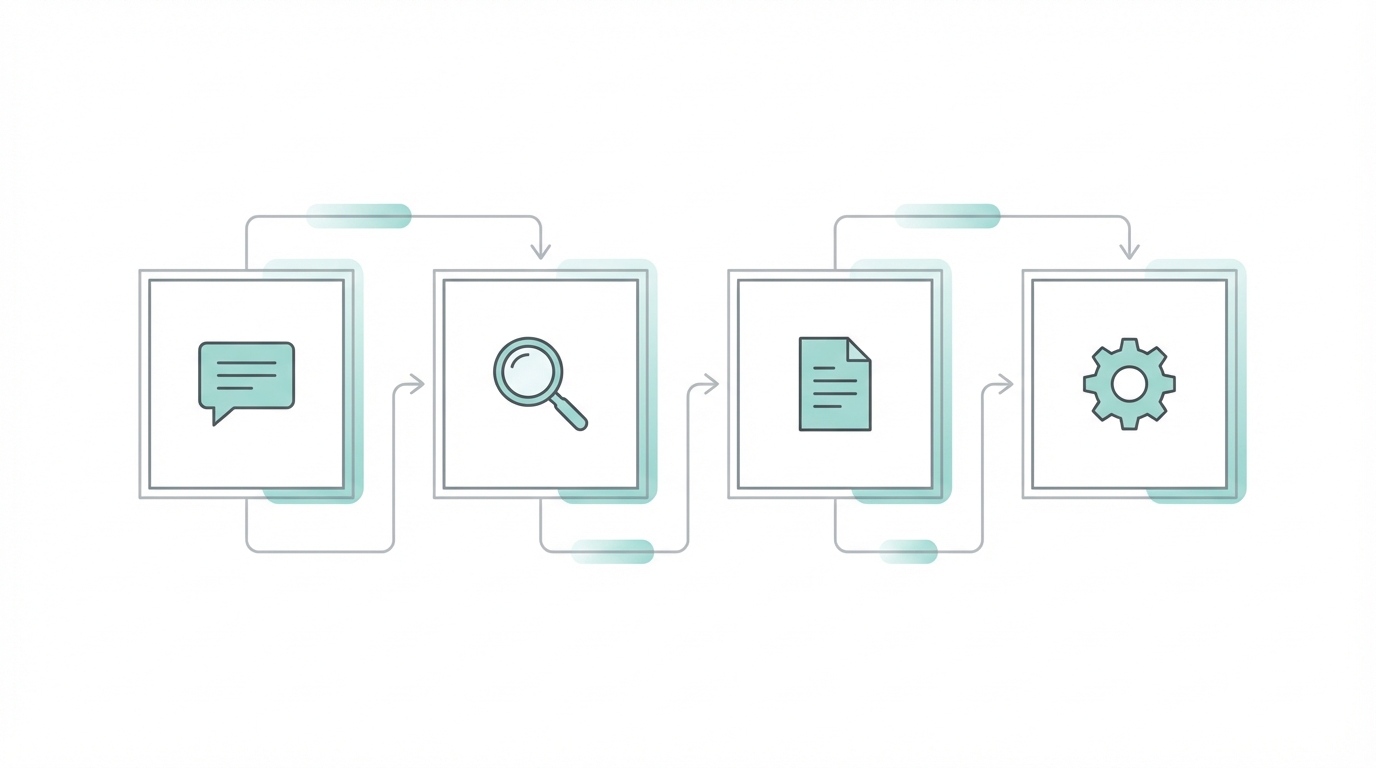
The most common hurdle for founders and marketing teams is how to find content ideas that actually move the needle. The mistake is brainstorming in a vacuum. Instead, you should be "harvesting" pain from the places where your customers are already venting. Stormy AI is an all-in-one AI search engine that helps brands identify these niches by analyzing creator data across TikTok, Instagram, and YouTube, but you can also build your own internal listening post using these four touchpoints.
1. Community Mining
Your customers are talking to each other long before they talk to you. They are on Reddit, niche forums, and professional networks like Upwork or Freelancer.com. The goal isn't to sell; it's to observe. Look for phrases like "How do I...", "Why is it so hard to...", or "Is there a tool for..." Vikash discovered his entire business model by noticing clients on Upwork were hiring virtual assistants just to manually create mockups. He didn't invent a need; he found a pre-existing pain and automated the solution.
2. The Onboarding Response Loop
The moment a user signs up for your trial or newsletter is when their pain is most acute. Use this window to ask one simple question: "What is the biggest challenge you're facing right now that you'd like a custom tutorial for?" This transforms your onboarding sequence into a research department. By promising a solution via tools like Intercom or email, you not only get high-quality content ideas but also build immediate 1-on-1 trust with your user base.
3. Support Interaction Recordings
Every support ticket is a content brief in disguise. Instead of just replying with text, record a video response using a tool like Loom. These recordings capture the "edge cases"—the specific problems that standard keyword research tools often miss. Over time, these videos can be polished and uploaded as public assets. If one customer had the problem, dozens more are likely searching for the same solution on Google. To further automate your insights, Stormy AI can analyze competitor content to see which solutions are resonating most with audiences.
4. YouTube Comment Analysis
Go to your competitors' videos or general industry tutorials. Don't look at the video content—look at the comments section. Unresolved questions and objections in the comments are a goldmine. If a popular video leaves a user confused, that confusion is your opportunity to create high converting content that addresses that specific gap. Use Notion to catalog these objections and turn them into a content calendar.
Turning Support Interactions Into High-Value Video Assets
The bridge between a support call and a marketing asset is shorter than you think. For mobile app developers and SaaS founders, the "educational support" model is a powerful organic growth strategy. When a user reaches out with a struggle, the standard response is to fix it and move on. The flywheel approach is to record the solution. This is particularly effective for UGC (user-generated content) styles of marketing.
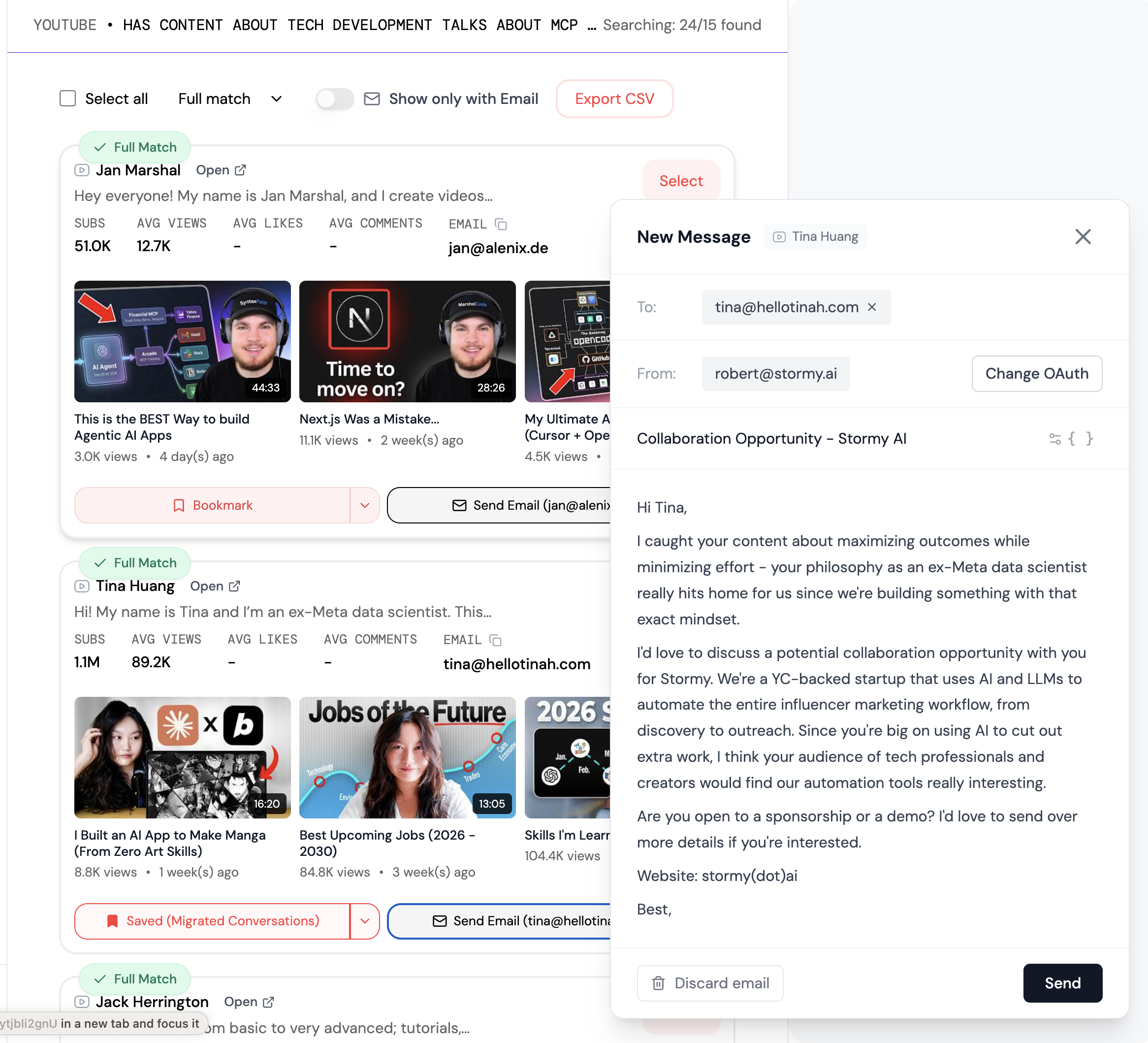
By treating support as an education channel, you create a library of real-world use cases. For instance, if you're marketing a mobile app, capturing a screen-recording of a specific feature solving a user's problem is more authentic than a polished ad. Brands looking to scale this often use Stormy AI to find UGC creators who can take these raw support insights and turn them into high-performing video ads. With Stormy, you can even set up an autonomous AI agent to handle the outreach and follow-ups with these creators automatically.
Vikash’s tech stack for this is lean but effective. He uses tools like cal.com to schedule calls and records them to find the "hidden gems" of customer frustration. These recordings don't need high production value. In fact, a raw, screen-shared solution often feels more trustworthy to a customer who is in "problem-solving mode." The goal is to be helpful, not flashy.
The Compounding Effect of 'Long-Tail' Content Assets

The beauty of a content marketing flywheel is that it leverages the compounding nature of SEO. While a social media post has a shelf life of about 24 to 48 hours, a YouTube video optimized for search can rank for years. Interestingly, industry statistics show that a significant portion of views on some high-performing channels come directly from Google Search rather than the YouTube homepage. This is because Google often prioritizes video tutorials for "how-to" queries.
To maximize this, you must optimize your video assets for search intent. This means including your primary how to find content ideas keywords in the title, the first 30 seconds of the transcript, and the description. This ensures your content captures users at the exact moment their pain point is most pressing. Unlike Meta Ads or Apple Search Ads, where you pay for every click, these organic assets provide recurring monthly revenue without additional ad spend. For deeper analysis, Stormy AI can track your video performance across platforms to monitor exactly which "how-to" assets are driving the most engagement.
Step-by-Step Playbook: Setting Up Your Automated Feedback Loop

Building an automated loop ensures that your organic growth strategy doesn't stall when you get busy. Follow these steps to turn customer feedback into a self-sustaining content machine.
Step 1: Centralize the Pain Repository
Create a dedicated database in Notion or a similar tool. Every time a support agent, founder, or community manager encounters a specific customer struggle, it must be logged with the exact phrasing the customer used. Using the customer's own language is vital for SEO and resonance.
Step 2: Implement the 'Video First' Support Rule
Encourage your team to use screen-recording tools for any support ticket that requires more than two paragraphs of explanation. These raw videos are your "minimum viable content." Before they are sent to the customer, they should be tagged by the specific problem they solve.
Step 3: Monthly Content Audit
Once a month, review the repository. Look for clusters—problems that have been mentioned more than three times. These clusters are your highest priority for public content. This is where you move from 1-on-1 support to 1-on-many marketing. While legacy tools like Captiv8 or Tagger can provide some data, a modern platform like Stormy AI allows you to instantly vet creators who specialize in those specific problem clusters using AI-powered quality reports.
Step 4: Optimize for Search and Rank
Take your clustered problems and create a polished version of the solution. Upload these to YouTube with a focus on searchability. Ensure you are linking to your product—whether it's on Gumroad or your own site—within the first two lines of the description.
Conclusion: Building for the Long Term
The content marketing flywheel is not a get-rich-quick scheme. It is a commitment to being the most helpful resource in your niche. By harvesting real-world customer pain, you create a high converting content strategy that bypasses the noise of the viral treadmill. Whether you are a solo founder building a plugin or a mobile app developer looking for better app install campaigns, the secret is the same: be obsessed with your customer's problem.
As you scale, remember that the quality of your insights determines the quality of your growth. Using Stormy AI to find creators who understand this "problem-first" approach can accelerate your reach while managing your entire workflow inside a built-in creator CRM. Stop chasing views, and start solving problems. Your MRR will thank you.