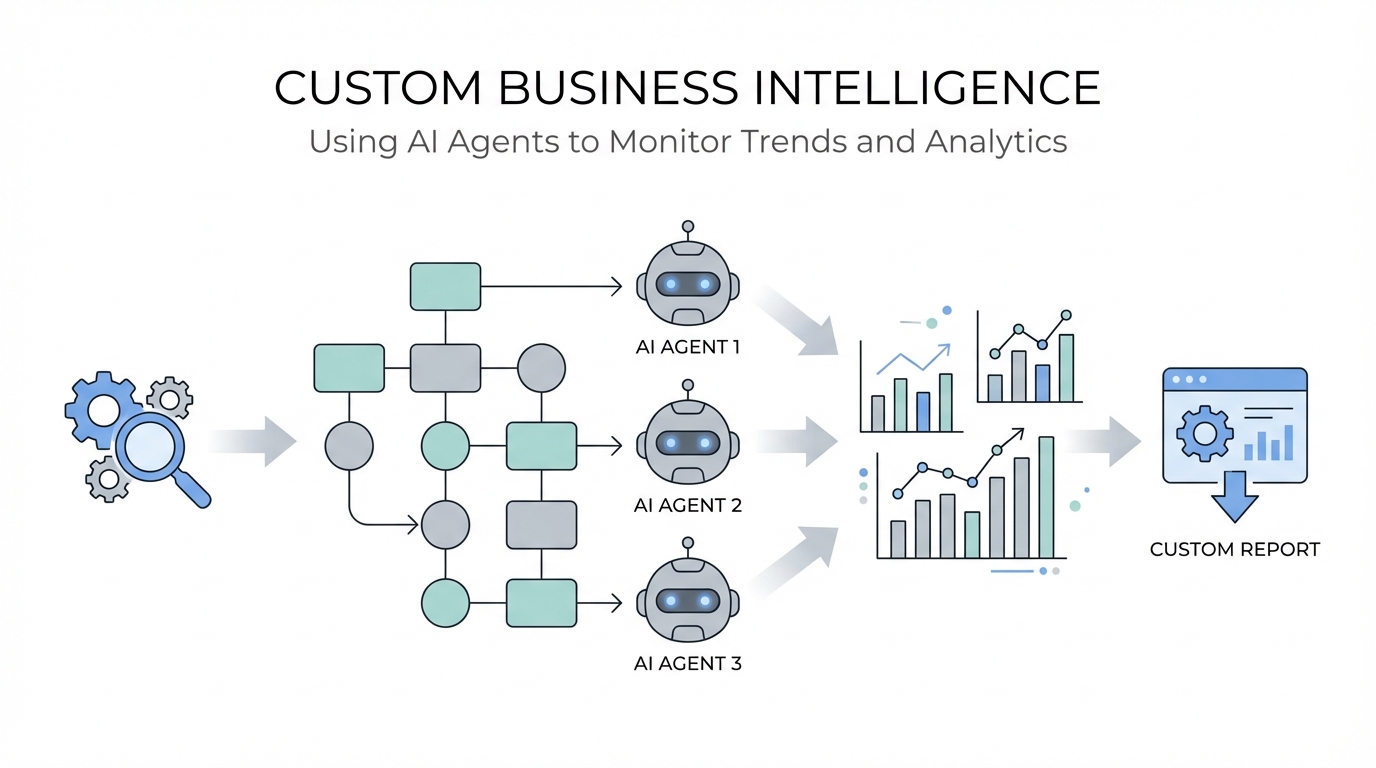
For years, the gold standard of data-driven business was the dashboard. We were told to build complex visualizations in Tableau or Google Data Studio, then spend our mornings clicking through tabs to see if our metrics were trending in the right direction. But as the volume of data grows, the dashboard has become a burden. Entrepreneurs are now suffering from "dashboard fatigue," where the effort required to check the data often outweighs the value of the insights gained. We are entering the era of automated business reporting, where we no longer go to the data; the data, processed and summarized by AI monitoring agents, comes to us.
The End of the "Beautiful Mind" Workflow
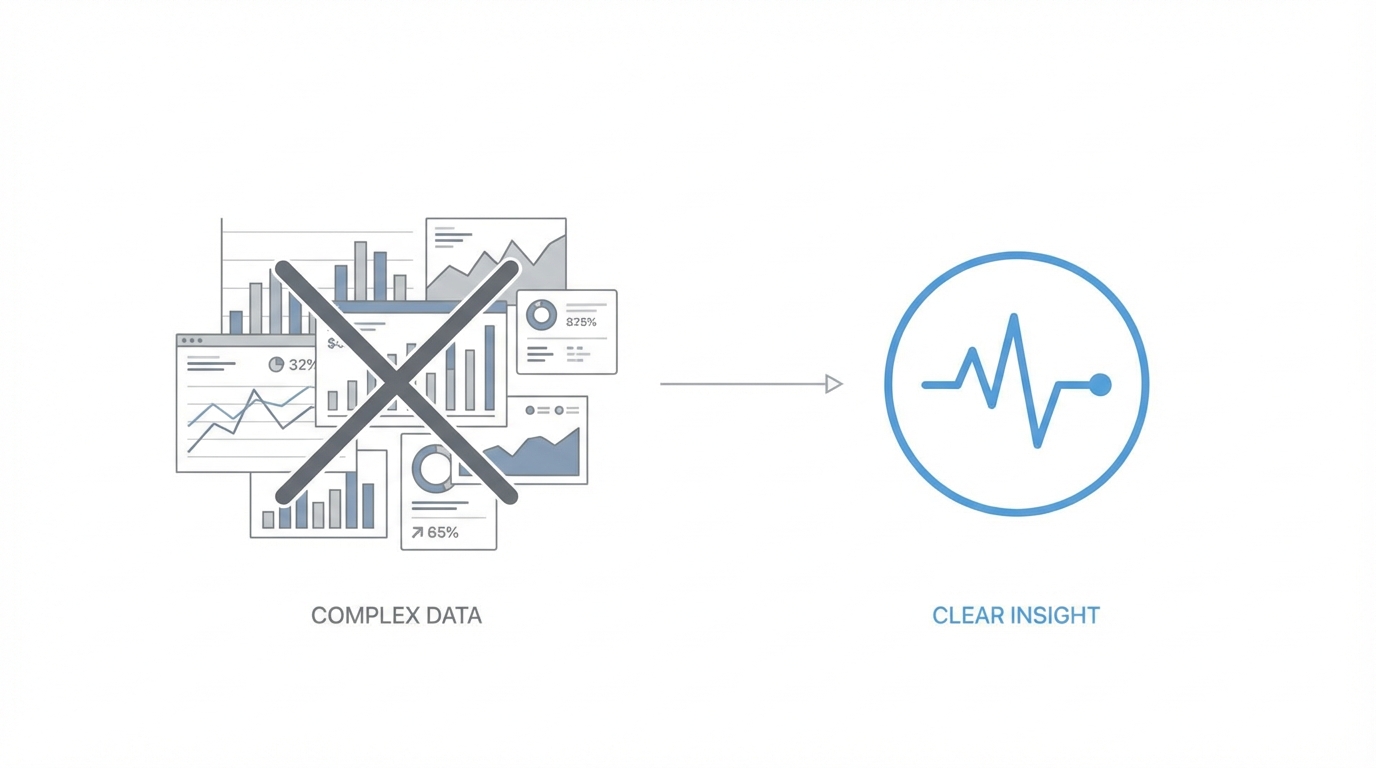

If you have ever tried to automate your business intelligence using legacy tools like n8n, you likely ran into the "Beautiful Mind" problem. These platforms require users to build incredibly complex, sprawling node charts that look more like a conspiracy theorist’s corkboard than a productive business tool. While powerful, the learning curve is so steep that most solopreneurs give up before they ever see a single automated business report. As Todd, the founder of String.com, points out, the future lies in "vibe coding"—using plain English prompts to generate these complex back-end connections automatically.
By shifting from visual flowcharts to natural language processing, business owners can describe what they want to monitor (e.g., "Tell me if people are complaining about our checkout page on X") and let the AI build the underlying infrastructure. This approach removes the dependency on a pre-defined registry of triggers and actions. Instead of waiting for a developer to build a specific integration, AI monitoring agents can now write their own code to bridge the gap between disparate data sources.
The 'Watchdog' Agent: Real-Time Trend Tracking

One of the most immediate use cases for trend tracking tools is monitoring niche communities like Hacker News or X (formerly Twitter). For a startup founder, being the first to respond to a thread about your industry or a competitor can be the difference between a viral growth moment and a missed opportunity. Traditionally, this required keeping a browser tab open or setting up clunky RSS alerts that lacked context.
A "Watchdog" agent built on a platform like String works differently. Instead of just pinging you when a keyword appears, the agent can be prompted to analyze the context of the mention. For example, if you are monitoring the term "MCP" (Model Context Protocol), the agent doesn't just send a link. It can summarize the article, perform sentiment analysis to tell you if the community is reacting positively or negatively, and even draft a clever response based on your company’s perspective.
This replaces the need for a dedicated social media intern. The agent monitors the feed 24/7, filters out the noise, and delivers a curated notification to Slack only when the content is actually relevant to your business goals. This is a prime example of how AI monitoring agents are shifting the role of the entrepreneur from "data gatherer" to "decision maker."
Beyond Standard Integrations: The Power of Codegen
The biggest limitation of legacy automation tools is the "integration registry." If a tool isn't officially supported by Zapier, you're usually out of luck unless you're a developer. This is where custom business intelligence agents powered by "codegen" (code generation) change the game. When an agent encounters an API that isn't in a standard registry, it can actually read the API documentation and dynamically write the code necessary to fetch that data.
This is critical for complex platforms like Google Analytics (GA4) or specialized SEO tools. For instance, if you want to track a specific custom dimension in GA4 that isn't exposed in a standard dashboard, a codegen agent can write a script to query that exact data point. This capability allows for Google Analytics AI automation that goes far beyond simple traffic reports, pulling in deep-funnel metrics that actually drive revenue.
Case Study: Monitoring Google Postmaster Statistics
Sender reputation is the lifeblood of any email-heavy business. If your domain gets flagged by Gmail, your deliverability plummets, and your revenue follows. Monitoring this via Google Postmaster Tools is notoriously manual; there is no simple "alert" button for when your reputation drops from 'High' to 'Medium.'
By building a custom business intelligence agent, you can automate this entire process. The agent can be programmed to:
- Query the Google Postmaster API every morning at 8:00 AM.
- Fetch statistics for the last seven days.
- Identify any anomalies or "penalty box" signals (like a sudden spike in spam reports).
- Send a Slack notification only if the metrics deviate from the norm.
This type of automated business reporting ensures that you only spend time on your sender reputation when there is actually a problem to fix, rather than manually checking a dashboard every day just to see that everything is "fine."
The Daily Summary Agent: From Raw Data to Actionable Reports
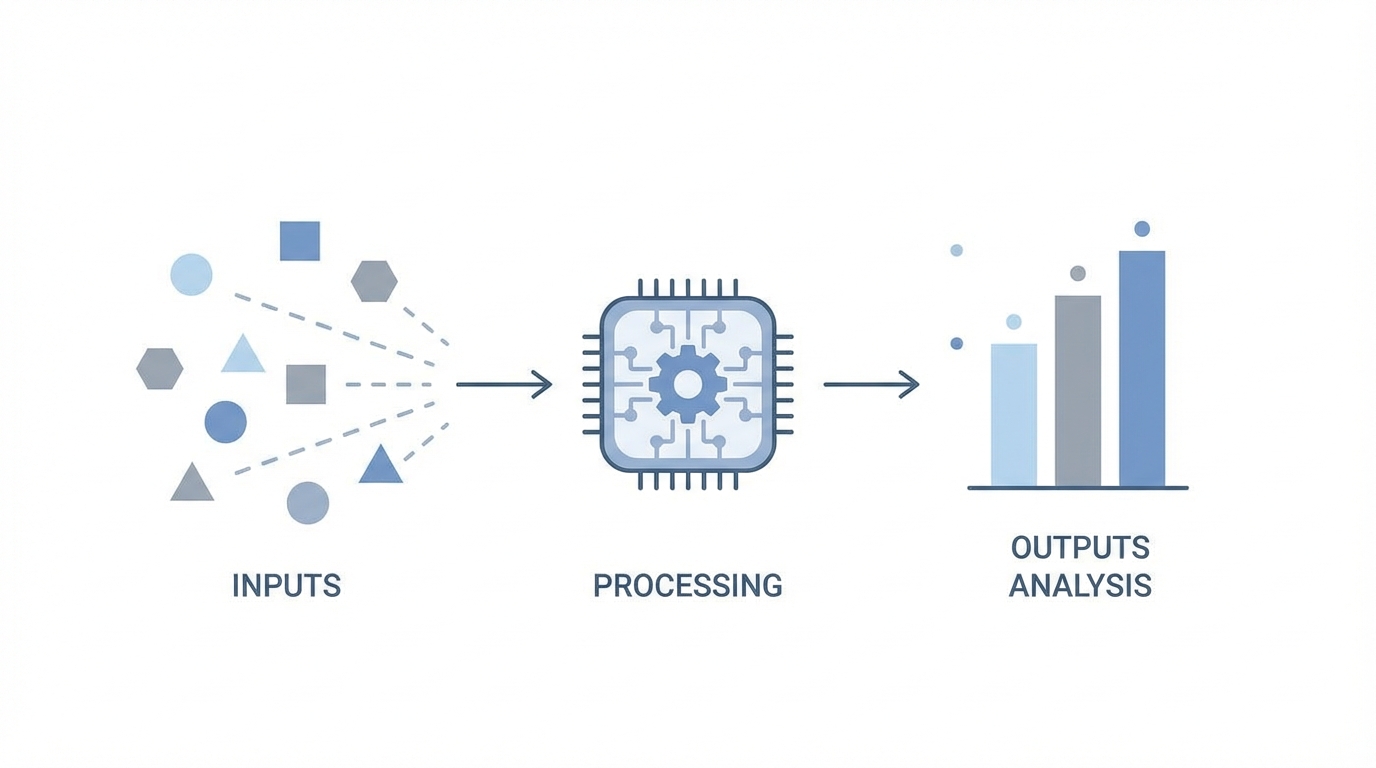
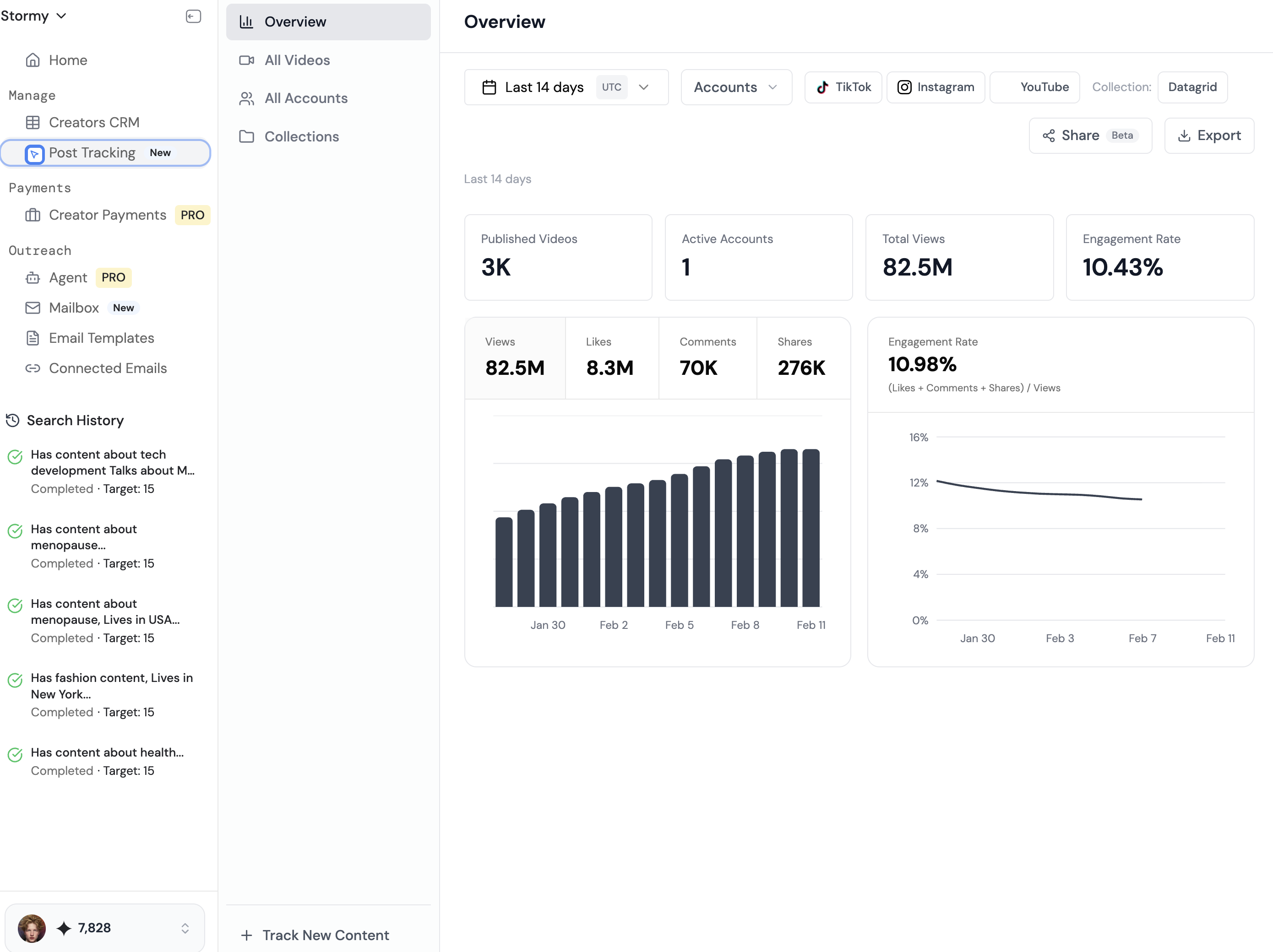
Data without context is just noise. The most effective AI monitoring agents don't just dump raw data into a channel; they transform it into a formatted report that looks like it was written by a human analyst. For marketing teams, platforms like Stormy AI streamline creator sourcing and outreach by summarizing complex performance data into actionable lists. This involves a multi-step process that can now be handled entirely through natural language prompting.
Step 1: Data Extraction
The agent pulls data from multiple sources, such as Stripe for revenue, Google Ads for spend, and Shopify for inventory levels. By using a platform with "batteries included" AI credits, the agent can access high-level models to process this data without you needing to manage individual OpenAI API keys.
Step 2: Processing and Analysis
Raw JSON data is converted into a readable summary. The agent looks for trends: "Revenue is up 12% today, but the customer acquisition cost on Meta Ads has doubled in the last 4 hours." This level of custom business intelligence is what allows small teams to compete with large corporations that have dedicated data science departments.
Step 3: Formatting and Delivery
Finally, the agent converts the analysis into a polished format. This might be a clean HTML email sent via Gmail or a bulleted summary in a Google Doc for your weekly review. The key is that the end product is ready for consumption immediately, requiring zero manual clicks from the entrepreneur.
Autonomous Agents vs. Automated Tasks
As you begin your journey with AI monitoring agents, it is important to understand the hierarchy of automation. Most tools on the market today only handle "tasks."
- Tasks: Single, linear actions (e.g., "When I get an email, save the attachment to Dropbox").
- Automations: Trigger-action pairs that can involve logic but are still predictable (e.g., "If a new blog post is published, write a LinkedIn summary and notify me").
- Autonomous Agents: Goal-oriented entities that have access to a suite of tools and can decide which steps to take to reach a goal (e.g., "Monitor our competitors and suggest a counter-campaign whenever they launch a new product").
The real power of custom business intelligence agents lies in that third category. For example, in the world of influencer marketing, finding the right partners is a constant grind. While tools like Stormy AI can help source and manage UGC creators at scale, an autonomous agent can go a step further. It could monitor your GA4 traffic, notice a dip in a specific demographic, and then use Stormy AI to discover creators who over-index in that exact audience, all while you sleep.
Getting Started: Solving the "Operational BS"
The biggest mistake entrepreneurs make when starting with AI monitoring agents is trying to automate their entire sales cycle on day one. AI agents are currently in their "first inning," and while the potential is massive, the reliability isn't 100% yet. The most successful builders start by automating what Todd calls "operational BS." [Source: Ben Tossell's AI insights]
Identify the tasks you spend 15 minutes a day or an hour a week doing that you absolutely hate. Perhaps it's checking your Google Postmaster stats, or summarizing your company’s mentions on Reddit, or tracking the performance of your latest TikTok campaign. Start by building a "Watchdog" for those specific, low-risk tasks. Once you experience the "dopamine hit" of an agent successfully recovering from an error and delivering a high-quality report, you will understand exactly where to push the boundaries of complexity.
As the foundational models behind these agents improve, the gap between an "idea guy" and a "successful founder" will continue to shrink. The competitive advantage will no longer be who can build the most complex dashboard, but who can deploy the most effective AI monitoring agents to manage the complexity for them. By leveraging tools for automated business reporting and trend tracking, you can stop being a data entry clerk for your own company and start being the architect of its growth.