In 2026, the barrier between an idea and a $20,000-per-month mobile app has effectively vanished. We are living in the era of the "AI-Engineer"—solo founders who leverage tools like Cursor to build production-grade software in weeks rather than years. But as development speed accelerates, the bottleneck has shifted from building to distribution. The story of Ethan, a 19-year-old founder who scaled his app, Cut Coach, to five figures in monthly revenue, provides the ultimate app go-to-market strategy for the modern entrepreneur. By focusing on a painful, hyper-niche problem and leveraging creator-led growth, Ethan proved that you don't need a viral hit to build a sustainable empire.
The Niche-First Philosophy: Solving High-Stakes Problems
Why dominating a specific niche is the most effective way to beat the competition.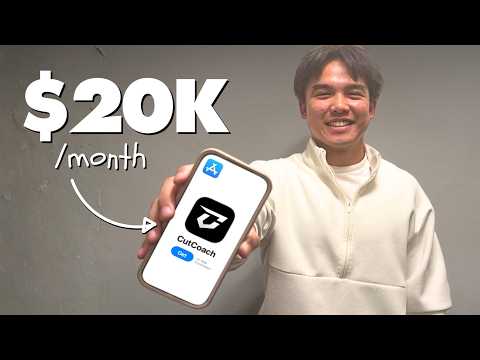
Most founders fail because they try to build the next Facebook or TikTok—apps for everyone that ultimately serve no one. The 2026 playbook dictates the opposite: solve a "tiny" problem for a very specific community. Ethan’s success with Cut Coach stemmed from his background as a national wrestling champion. He understood the visceral pain of weight cutting—a high-stakes ritual where missing weight by even a fraction of a pound means disqualification and immense social pressure.
When your product solves a high-intent problem, you don't need millions of views. As Ethan noted in his research, his organic videos would often receive only 200 to 500 views but still result in 10 to 15 high-intent downloads. That is a 5-10% conversion rate, nearly unheard of in general consumer software. This scaling app revenue strategy relies on identifying these pockets of "high-pain" users who are underserved by massive, horizontal platforms like Cal AI or MyFitnessPal.
"You don’t need to go viral to make $20k a month; you just need to be the only solution for a community that can’t afford to fail."
Building at Warp Speed: The Cursor Stack
Leveraging Cursor's AI capabilities to build and ship mobile applications at record-breaking speeds.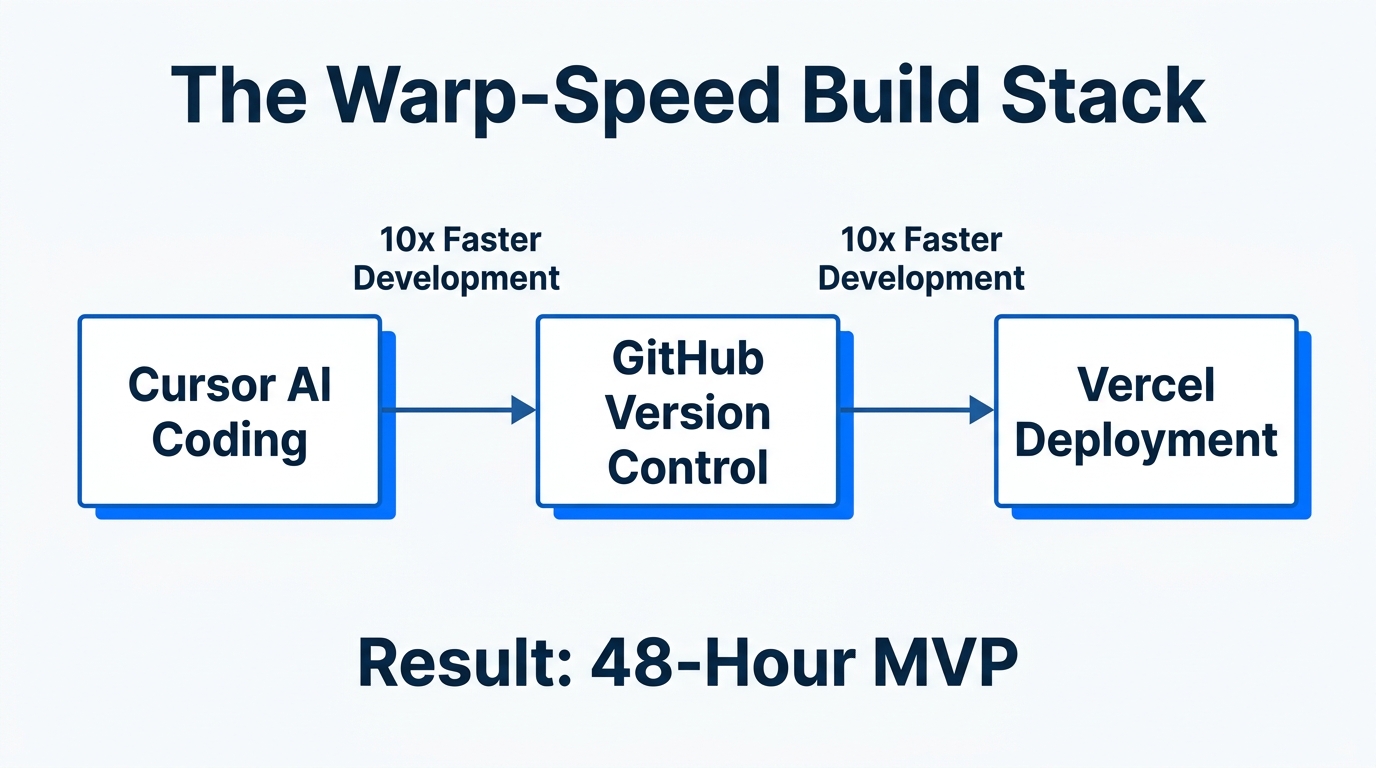
In the current landscape, user acquisition for startups begins during the development phase. By using AI-native tools and ChatGPT, founders can iterate on feedback in real-time. Ethan’s build process is a masterclass in modern efficiency. He didn't spend months on a backend; he used Supabase for his database, Vercel for hosting, and the OpenAI API to power the core "science-based protocols" of the app.
The technical stack of a $20k/month niche app in 2026 typically looks like this:
| Layer | Tool Recommendation | Purpose |
|---|---|---|
| IDE / Coding | Cursor | AI-native code generation and iteration |
| Backend / DB | Supabase | Instant Auth, Database, and Edge Functions |
| Monetization | RevenueCat | Managing in-app subscriptions and paywalls |
| Analytics | Mixpanel | Tracking user behavior and retention cohorts |
| AI Engine | OpenAI API | Generating personalized user protocols |
One critical lesson from Ethan’s journey was the pivot from coach-facing to athlete-centric. Initially, the app was designed for coaches to give plans to athletes. However, the friction was too high. By using AI to generate the plans directly for the athletes, he removed the middleman and increased the app's utility. This iterative product-led growth is only possible when your development tool allows you to ship a complete redesign in a matter of weeks.
The 2026 Influencer Outreach Playbook
The shift from organic content to a high-impact strategy powered by influencer marketing.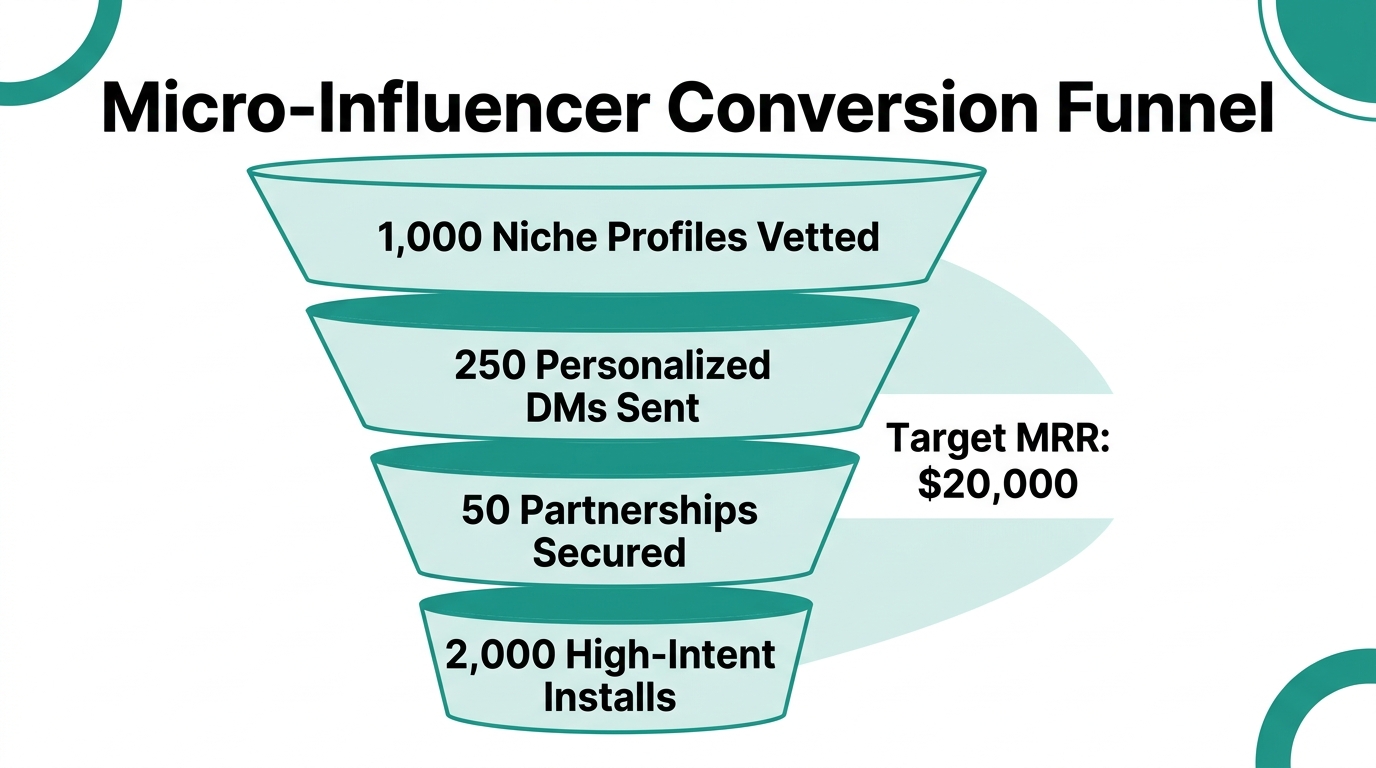
Once the MVP (Minimum Viable Product) is validated through local beta testing—like Ethan did at his wrestling club—the next step is creator-led growth. In 2026, the "mega-influencer" is often less effective for niche apps than the high-intent micro-influencer. These are creators with 5,000 to 50,000 followers who have built deep trust within a specific subculture (e.g., Brazilian Jiu-Jitsu, competitive cheerleading, or powerlifting).
To find these creators, Ethan suggests scrolling through niche-specific hashtags on TikTok and Instagram. For founders who want to scale this process, platforms like Stormy AI allow you to search for these creators using natural language prompts and automate the outreach at scale, which is essential for hitting the volume required to find winning partnerships.
The 90% "Yes" Rate DM Script
In 2026, influencers are tired of generic brand deals. To secure a 90% "Yes" rate, your influencer outreach playbook must focus on authenticity and shared passion. Here is the script template inspired by Ethan’s approach:
"Hey [Name]! Love your recent video on [Specific Topic]. I’m a former [Niche Athlete/Hobbyist] and I actually built an AI tool called [App Name] using Cursor to solve the [Specific Pain Point] we all face. I’d love to give you free lifetime access to see if it helps your training. If you like it, maybe we can figure out a way to show your audience? No pressure at all—just a fan of your content!"
This script works because it establishes you as a peer rather than a corporate entity. It offers immediate value (lifetime access) and positions the partnership as an organic discovery rather than a paid shill.
Paid Ads as an Efficiency Multiplier
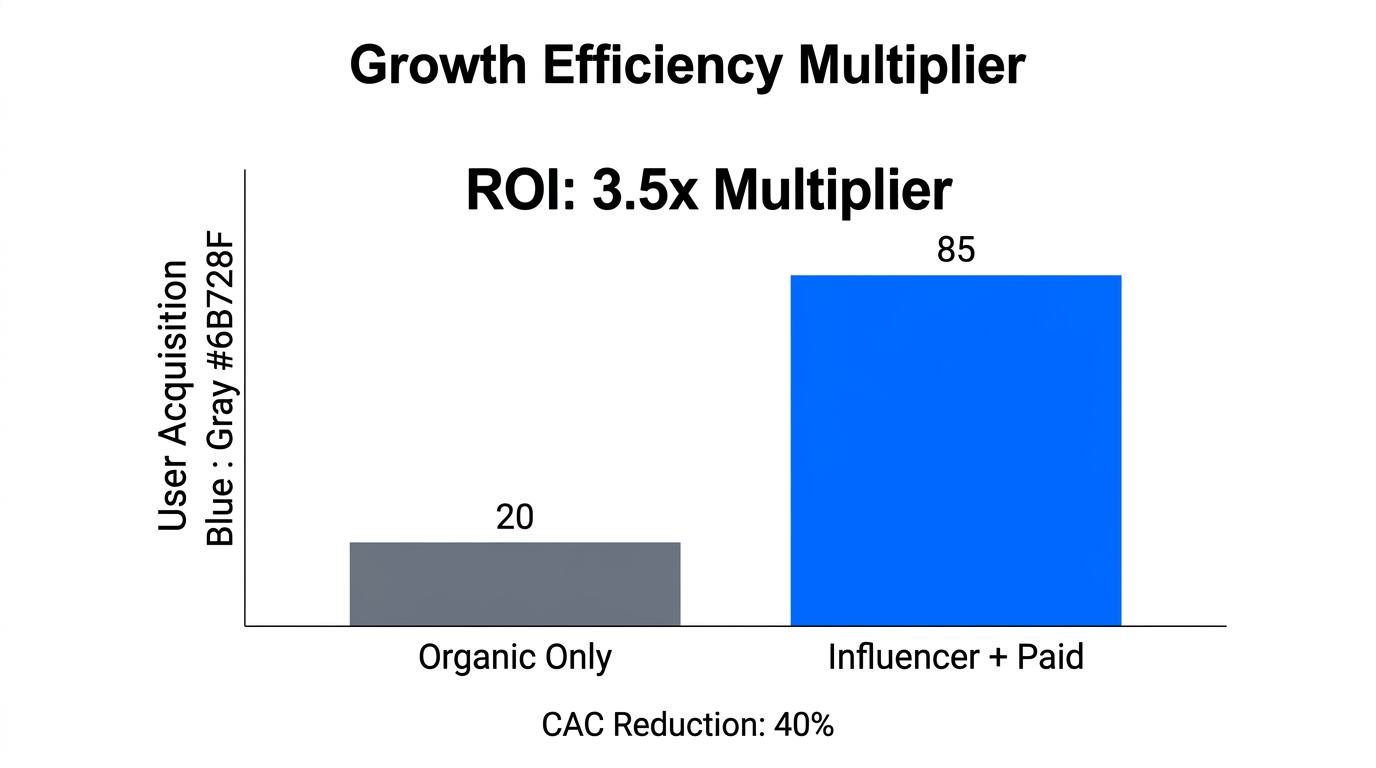
The final stage of the app go-to-market strategy is turning winning influencer content into paid ads. Ethan discovered that once an influencer’s organic video performed well, putting ad spend behind it on TikTok Ads Manager or Meta Ads Manager scaled his revenue exponentially. This is the "Efficiency Multiplier" effect.
Instead of trying to create "perfect" ads in a studio, use the raw, authentic User-Generated Content (UGC) from your creators. These videos don't look like ads; they look like recommendations from a trusted friend. In 2026, the algorithm prioritizes watch time and engagement over production value. By leveraging campaign tracking tools to monitor which influencer posts are generating the most buzz, you can identify exactly which assets to put your budget behind.
"Paid ads aren't for finding your audience; they are for pouring gasoline on the fire that your micro-influencers already started."
Iterative Growth: From $20k to $100k
Scaling from $20,000 per month to six figures requires a relentless focus on data-driven iteration. Use RevenueCat to run A/B tests on your paywall pricing. Ethan found that in high-stakes niches like wrestling, users are often price-insensitive if the solution is guaranteed. Underlining the importance of science-based protocols in your marketing copy can justify a premium price point compared to generic fitness apps.
As you scale, continue to use Mixpanel to monitor where users drop off in the onboarding flow. Does the AI take too long to generate a plan? Is the meal logging too cumbersome? Use Cursor to fix these friction points daily. The 2026 founder doesn't have a "launch day"; they have a "launch year" of continuous, AI-assisted improvements.
Conclusion: Your 2026 App Blueprint
The journey from college dropout to $20k/month founder isn't a matter of luck; it's a matter of leverage. By combining the technical leverage of Cursor with the social leverage of creator-led growth, anyone can dominate a niche category. Scaling app revenue in 2026 is about finding the smallest possible viable audience and solving their biggest possible problem.
If you're ready to start your journey, focus on your hobbies, identify a pain point that makes you (and others) frustrated, and start building. Use platforms like Stormy AI to find the partners who will tell your story to the world, and don't stop iterating until your product becomes the "science-based protocol" your community can't live without.