The traditional image of a startup founder involves a cluttered desktop with thirty browser tabs open: one for Google Ads, another for accounting, several for Meta Ads Manager, and a dozen more for internal documentation. But a new shift is occurring. We are entering the “era of the idea guy,” where the ability to orchestrate complex systems via a single interface is more valuable than manual execution across fragmented platforms. This transition represents a fundamental evolution in the lean startup framework: moving away from SaaS dashboard fatigue and toward running a business programmatically through an Integrated Development Environment (IDE) like Cursor.
For non-technical founders, Cursor is no longer just a tool for writing code; it is becoming the central command center for a go-to-market strategy and business operations automation. By leveraging Model Context Protocols (MCPs) and the principles of ‘vibe coding,’ entrepreneurs can now manage finance, design, marketing, and sales directly from their editor. This approach transforms the founder from a manual laborer into a system architect, allowing for unprecedented scale with a skeletal team.
The Shift: LLM as the Interface for Business Operations
The core philosophy of this modern approach is that LMs are the new browser. Instead of navigating the menu hierarchies of various software-as-a-service (SaaS) tools, founders are now using Large Language Models (LLMs) to interact with their business data. This is made possible by Model Context Protocols (MCPs), which act as a standardized interface between the LLM and third-party apps.
"LMs are the new browser. Instead of clicking through dashboards, we are moving toward an era where work is performed programmatically through a single text interface."When you use Cursor as your primary interface, you bypass the friction of context switching. Whether you need to pull a website traffic report or generate a new sales template, you do it within the same environment where your AI business stack resides. This programmatic approach ensures that data doesn't just sit in silos; it becomes actionable context that informs every other part of your operations.
The Financial Command Center: Programmatic Accounting
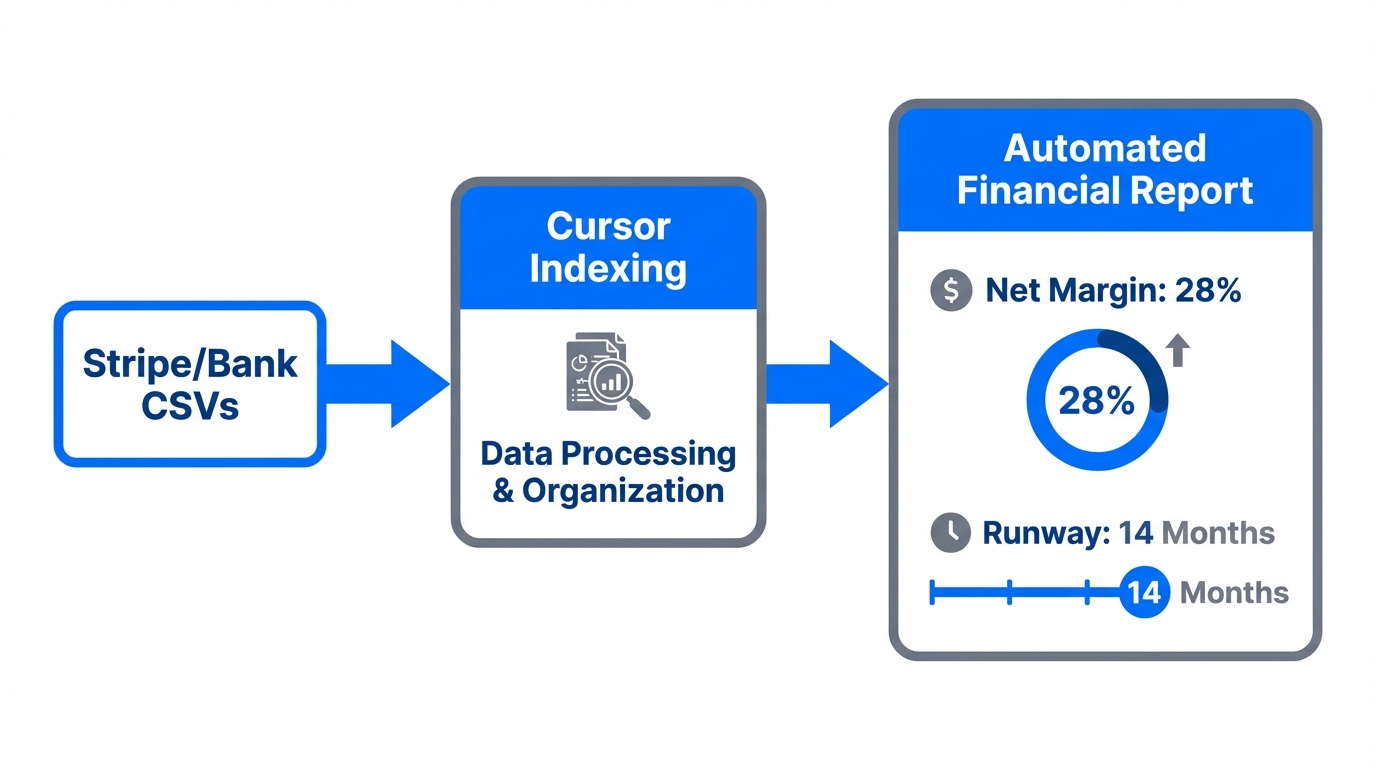
One of the most time-consuming aspects of the lean startup framework is financial oversight. Traditionally, this requires logging into tools like Xero or Shopify, navigating to reports, and manually exporting data. In a Cursor-led workflow, your accounting becomes programmable.
By connecting a Xero MCP to Cursor, a founder can simply type a natural language prompt to generate a profit and loss report for the previous month. The AI connects to the API, retrieves the ledger data, and formats it instantly. Beyond simple reporting, this system allows for automated billing. You can generate quotes and invoices for vendors with a single sentence, significantly speeding up the procurement process. This isn't just about saving minutes; it's about eliminating the cognitive load associated with administrative tasks.
Automating GTM Documentation and System Architecture
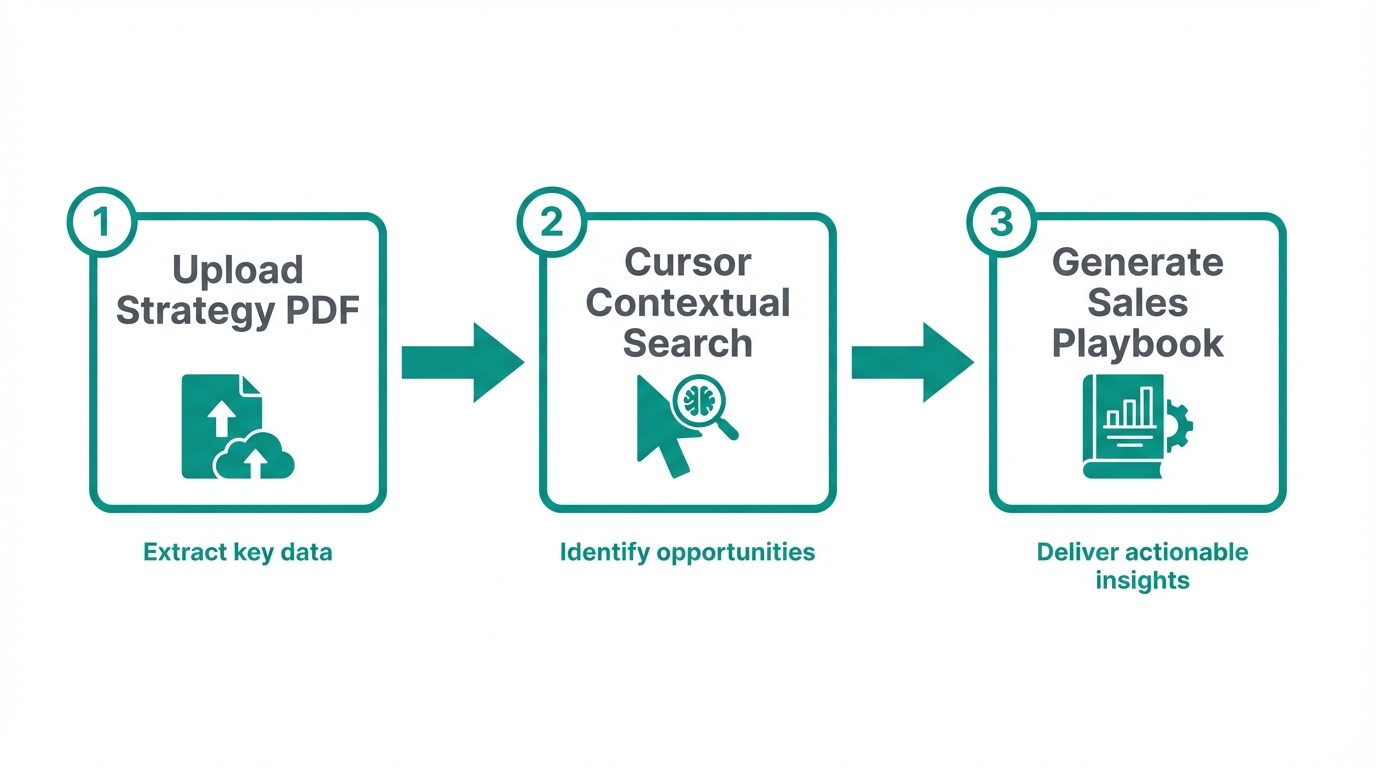
A successful go-to-market strategy requires clear documentation, from Product Requirement Documents (PRDs) to technical architecture diagrams. Historically, these were manual tasks performed in Notion or Asana. Within Cursor, founders can use specialized agents to generate these assets in seconds.
Generating PRDs and Mermaid Diagrams
Using a custom ‘PRD Mode’ in Cursor, you can define your project goals and have the AI map out the entire directory structure and data flow. For complex processes, such as the user journey from a TikTok Ads campaign to a conversion, you can generate Mermaid diagrams. These visual flows help both the founder and the AI agents understand the underlying logic of the business without manual drawing.
| Task | Traditional Method | Cursor Workflow |
|---|---|---|
| PRD Creation | 2-4 hours of manual writing | 5 minutes via AI agent prompt |
| System Flow | Manual drawing in Figma/LucidChart | Instant generation via Mermaid.js |
| QA Testing | Manual browser clicking | Automated agents using Playwright |
"Architecture is context. By using Mermaid diagrams, we provide AI agents with the visual logic they need to execute tasks without human hand-holding."UX Feedback and Real-Time Growth Analysis
Scaling a startup also requires constant iteration on the product. Using tools like Playwright, founders can command Cursor to navigate to their landing page, take a screenshot, and perform a UX audit. This creates a closed-loop system where the AI analyzes the visual layout, compares it against conversion data, and suggests immediate code changes.
For example, if analytics show a high bounce rate from users in a specific region, you can ask Cursor to analyze the landing page's above-the-fold content. Integrating these insights with creator-led marketing efforts is essential. When you discover influencers via platforms like Stormy AI, you can use Cursor to generate specific landing page variants tailored to those creators' audiences, automating the personalization of your funnel.
Building a 'Founder OS' Folder
To make this system work, you need to treat your business context like code. This involves building a “Founder OS” directory within Cursor that houses all your GTM, sales, and analytics context. This folder should include:
- .txt Context Files: Comprehensive documents describing your ICP, product pricing, and brand voice.
- MCP Configurations: Secure connections to your CRM data or analytics dashboards.
- Keyword Data: SEO targets and content templates for your AI business stack.
By housing these files in one place, you provide the LLM with a “long-term memory” of your business operations. When you ask it to write a sales email or an SEO article, it doesn't hallucinate; it references your specific business logic. This is where business operations automation truly scales, as the AI becomes an expert on your specific startup.
Sales and Marketing: From Research to Execution
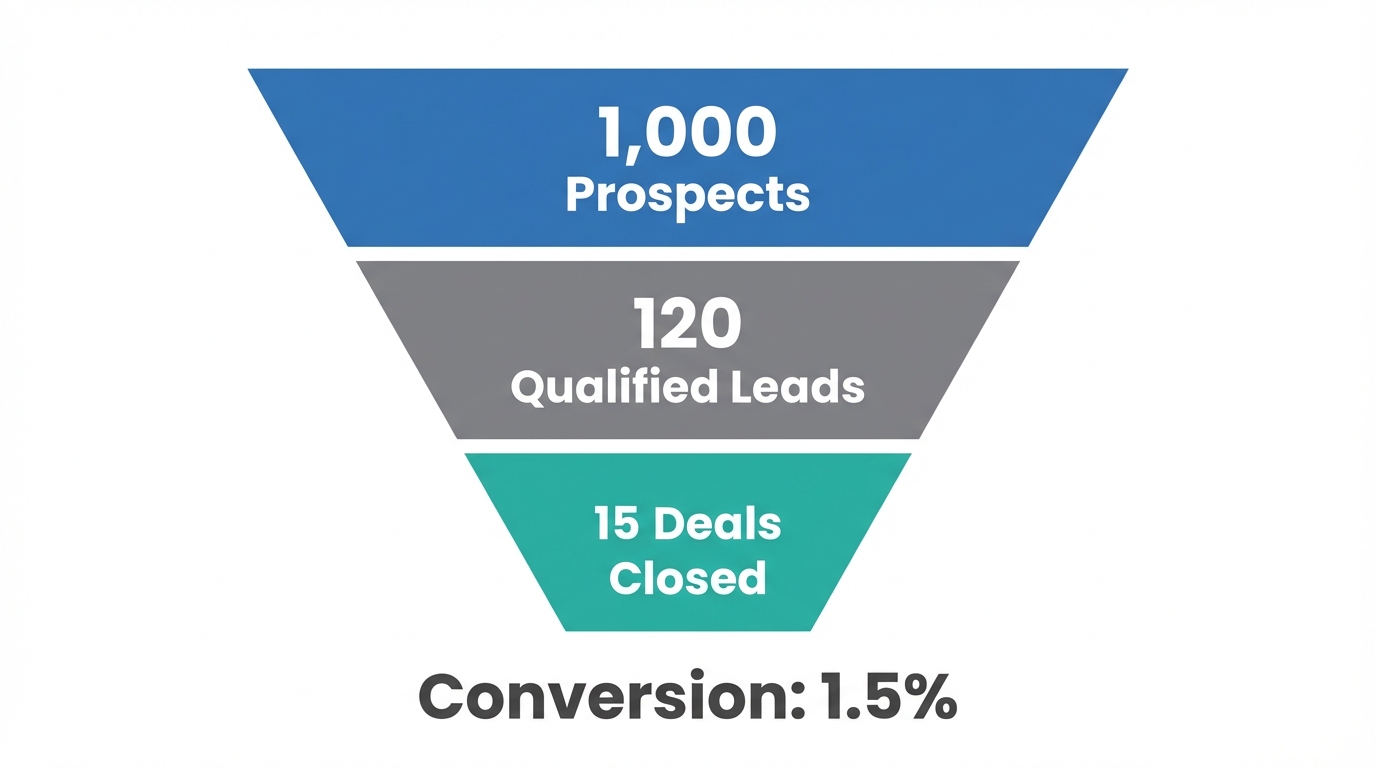
The final piece of the Cursor for founders puzzle is outbound sales. Using the Perplexity MCP, you can perform deep research on industry trends or competitor weaknesses without leaving the editor. This research can then be piped directly into your content generation or outreach scripts.
When it comes to creator partnerships, which are vital for user-generated content (UGC) and app install campaigns, platforms like Stormy AI can help source and manage UGC creators at scale. Once the creators are identified, you can use Cursor to generate hyper-personalized outreach sequences based on their specific content style, ensuring a much higher response rate than generic templates.
Why 'Vibe Coding' is the New Standard
The term ‘vibe coding’ might sound informal, but it describes a sophisticated high-level orchestration of AI. For the non-technical founder, it means focusing on the intent and the outcome rather than the syntax. You are the architect; the AI is the driver. This mindset shift is what allows a single person to manage a business that would have previously required a 10-person operations team.
By mastering the terminal, understanding how to install MCPs, and structuring your business context properly, you can scale a lean startup with virtually zero overhead. The goal is simple: spend less time clicking buttons in SaaS dashboards and more time defining the strategy that the AI executes.
The Future of the Programmable Founder
Running a startup in 2025 and beyond is about efficiency. By adopting an AI business stack centered around Cursor, you move from manual management to programmatic growth. You can automate your finance, UX analysis, and GTM documentation, all while maintaining a lean headcount. The ROI on this approach isn't just measured in dollars, but in the speed of iteration. In the world of startups, the fastest to iterate wins. It's time to stop browsing your business and start vibe coding it into existence.