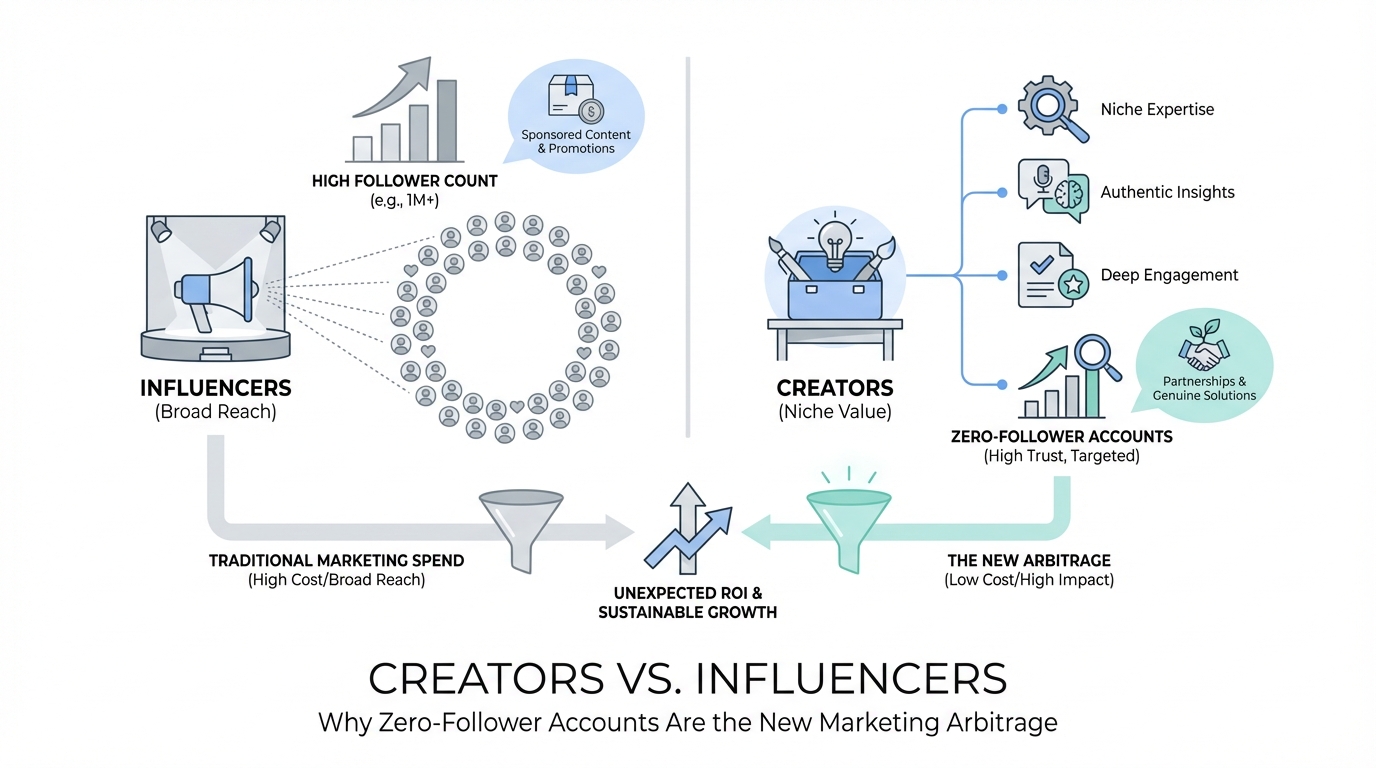
For the better part of a decade, marketing teams have been obsessed with a single metric: follower count. The logic was simple—more followers meant more reach, which meant more revenue. But the internet has fundamentally shifted. We have transitioned from the social graph, where content is served based on who you follow, to the interest graph, where content is served based on what you actually enjoy. This shift has created a massive gap in the market—a social media marketing arbitrage where creators with zero followers can outperform celebrities with millions of fans.
The Death of the Social Graph and the Rise of the Interest Graph
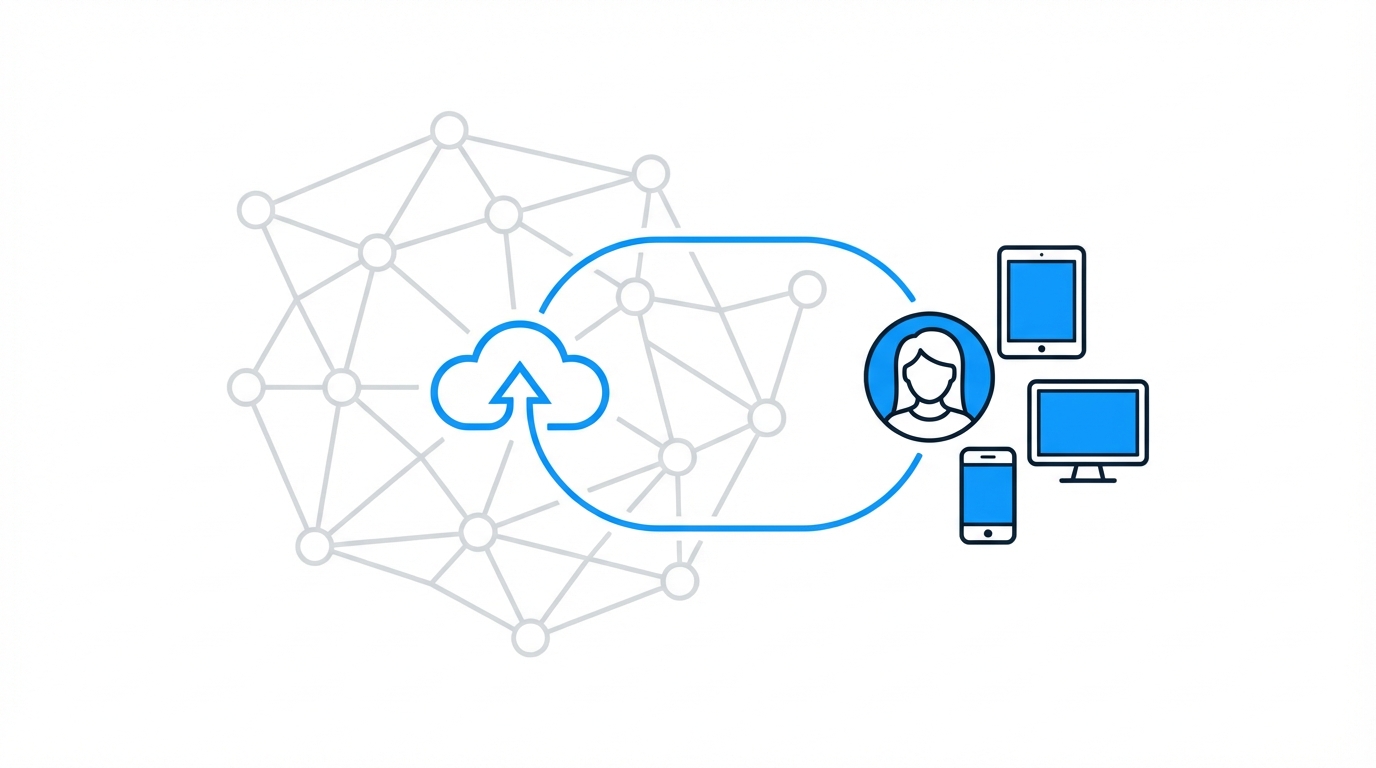
Legacy social media was built on connections. If you followed a brand or a person on Facebook, you saw their posts. But today, the tiktok algorithm for business and consumer use has flipped that model upside down. Platforms now function as a decentralized discovery engine. They don't care who you are or how many followers you have; they only care if your content can keep a user’s attention for more than three seconds.
This is why you see "brain rot" content or raw, unpolished videos consistently outperforming high-budget studio productions. The algorithm is designed to optimize for time on platform. If a video from a brand-new account about a niche productivity app keeps people watching, TikTok and Instagram Reels will push it to millions. This is the core of the new marketing arbitrage: you no longer have to pay for an existing audience; you only have to pay for the creation of content that the algorithm wants to distribute for free.
The Math of Marketing Arbitrage: Influencers vs. Creators
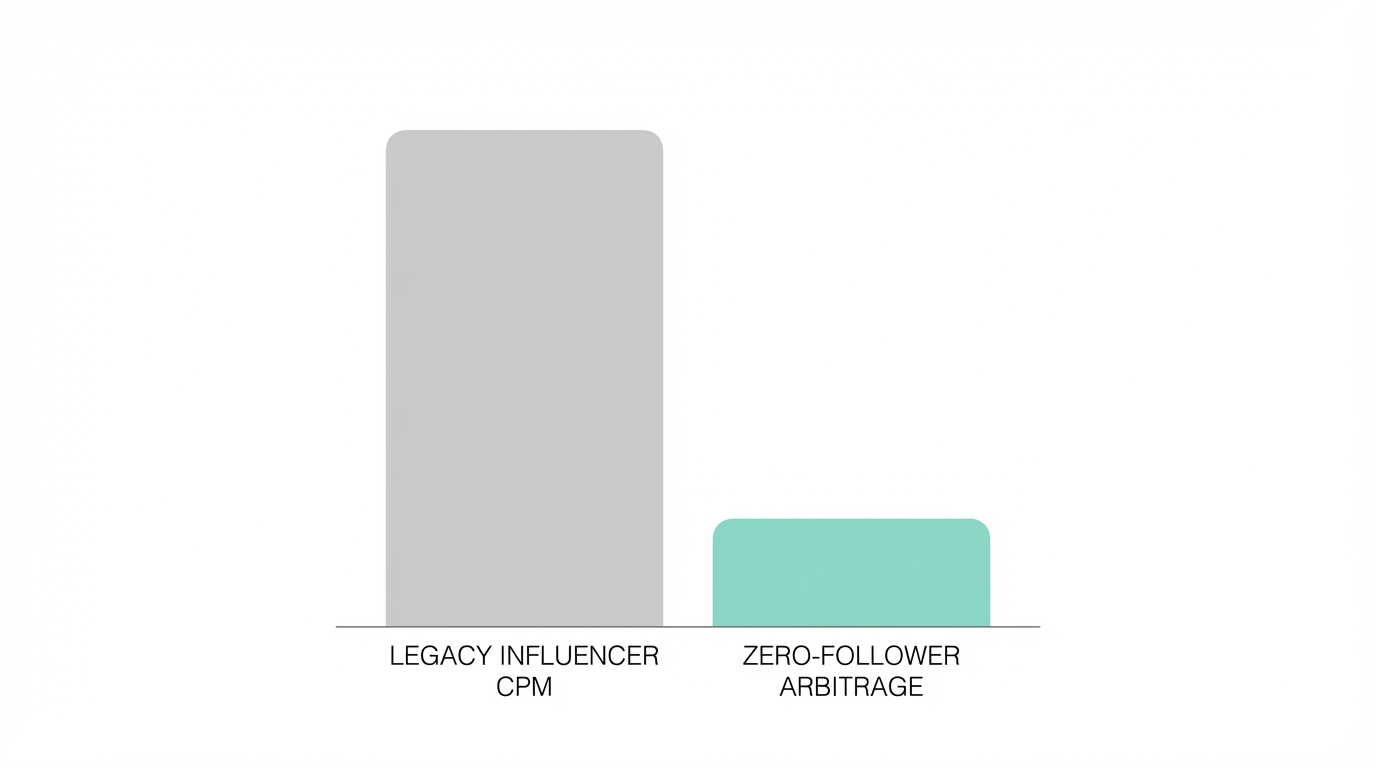

To understand the influencer marketing roi shift, we have to look at the numbers. Let’s compare a traditional influencer deal with a modern creator retainer. In a traditional scenario, you might pay an influencer with 100,000 followers $2,000 for a single post. Because of declining organic reach on social graphs, that post might only garner 30,000 views. If the content doesn't hit the algorithmic lottery on that one specific day, your $2,000 investment is gone.
Now, consider the creator model. Instead of paying for a follower base, you hire a creator for a $900 monthly retainer to produce one video per day across multiple platforms. This gives you 30 "at-bats" per month. If 10% of those videos find their way onto the For You Page—a standard hit rate for decent content—you are looking at a much higher probability of virality. In aggregate, those 30 videos might generate 500,000 impressions. When you calculate the cost per thousand impressions cpm, the creator model comes out to roughly $1.80, whereas the influencer model sits at $66.00.
By spreading your budget across decentralized accounts, you are creating massive surface area for your brand. This is especially effective for B2C applications and mobile apps where the "killer feature" can be explained in 15 seconds. For those looking for new startup directions, platforms like Idea Browser highlight how these data-driven trends are shaping the next generation of consumer apps.
Why Raw, 'Vibe-Coded' Content Beats Studio Quality
There is a growing trend often called "vibe coding" or raw content creation. Brands are moving away from the "Red Camera" aesthetic and toward the "iPhone 5s" aesthetic. Why? Because users have developed an internal filter for ads. When a video looks too polished, the brain recognizes it as a commercial and triggers a scroll-away response. However, content that looks like it was edited in CapCut or natively within the TikTok app feels like a recommendation from a friend.
Effective ads today feel like flyers, not billboards. A billboard is a passive interruption in a town square; a flyer is a value-add recommendation handed to you by someone you (theoretically) trust. For companies like Focus Tree, this strategy has been the engine behind scaling to millions of users. They don't use high-production ads; they use creators who understand the specific visual language of their niche.
Digital Gravity: Building Surface Area for Your Brand
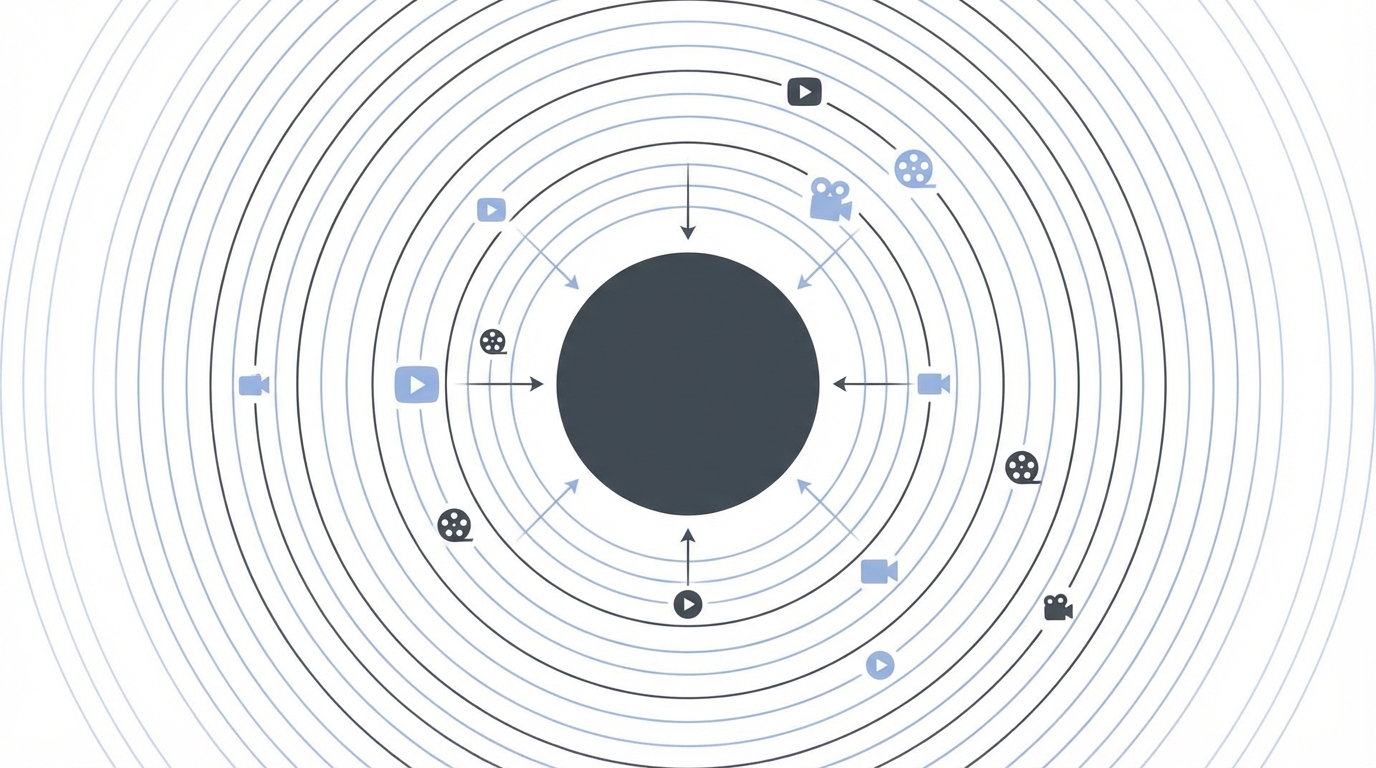
In the world of creator vs influencer marketing, the goal is to create what we call "Digital Gravity." This is the concept of having so many decentralized accounts talking about your brand that you become an unavoidable part of the cultural conversation within your category. Even for B2B companies or API providers, this top-of-funnel awareness is critical.
When you have five to ten creators each posting daily, you aren't just getting views—you are getting data. You can see which hooks, which visual styles, and which calls-to-action are resonating. This compound learning effect allows you to iterate faster than any traditional creative agency could. Modern AI platforms like Stormy AI can help source and manage these UGC creators at scale, allowing brands to find the right faces for their category without manually scrolling for hundreds of hours.
Measuring the Invisible: Branded Search Lift


One of the biggest complaints about short-form video is that it’s hard to track direct attribution. However, the real ROI often shows up in Branded Search Lift. When a video goes viral, people don't always click the link in the bio; they go to Google or Amazon and type in the brand name. To measure this, marketing teams should monitor Google Search Console to see if queries containing the brand name spike following a viral hit.
In e-commerce, the lift is even more dramatic. A successful TikTok campaign can lead to a direct increase in search volume on marketplaces like Amazon, proving that short-form content is the ultimate top-of-funnel awareness tool. By tracking these spikes alongside your video release schedule, you can quantify the true impact of your creator network beyond just vanity metrics like likes and shares.
The 4-Step Creator Management Playbook
Executing this strategy requires a shift from "campaign management" to "talent management." Here is the playbook for building a creator-led marketing engine:
Step 1: Identify Your Creators
Don't look for the biggest names; look for the most consistent creators in your niche. You want people who already understand the visual language of your target audience. Using an AI-powered platform like Stormy AI, you can search across TikTok, Instagram, and YouTube to find creators by niche and engagement quality, then reach out to them instantly with personalized emails.
Step 2: Negotiate the Retainer
Offer a per-video or monthly retainer model rather than a one-off fee. A common starting point is $900 per month for one video per day. This provides the creator with stable income and provides the brand with the volume necessary to trigger the algorithm.
Step 3: Track and Analyze
Use tools like Shortimize or Viral App to track the performance of every video across every creator. Look for "outliers"—videos that perform significantly better than the account's average. Research tools like Virulo or Sandcastles AI can also help you find viral formats that are already working in your category so your creators can remix them.
Step 4: Scale the Winners
When a creator hits a home run, don't just let the organic views fade. Take that specific video and turn it into a paid ad. If it worked organically, it is highly likely to have a lower CPM and higher conversion rate when put behind a Meta Ads Manager or TikTok Ads budget.
Turning Viral Hits into High-Converting Paid Social
The ultimate goal of this arbitrage is to find your next winning ad creative for pennies on the dollar. Traditional ad agencies will charge tens of thousands of dollars to produce a single "hero" ad. With a creator network, you are essentially running a giant R&D lab. You are testing 30, 60, or 100 different creative angles every month.
Once you identify a winner, you can put ad spend behind it with confidence. This strategy reduces the risk of paid social because you aren't guessing what will work—you are simply scaling what has already worked. This synergy between organic reach and paid amplification is how modern brands are dominating the attention economy without the massive budgets of the past.
Conclusion: The Era of the Creator
The transition from influencer marketing to creator-led marketing is more than just a change in terminology; it is a change in the fundamental math of customer acquisition. By prioritizing volume, raw aesthetic, and algorithmic discovery over follower counts and high production, brands can unlock a level of reach that was previously reserved for the world’s largest corporations. Start small, find your first few creators, and focus on building your brand’s digital gravity one video at a time.