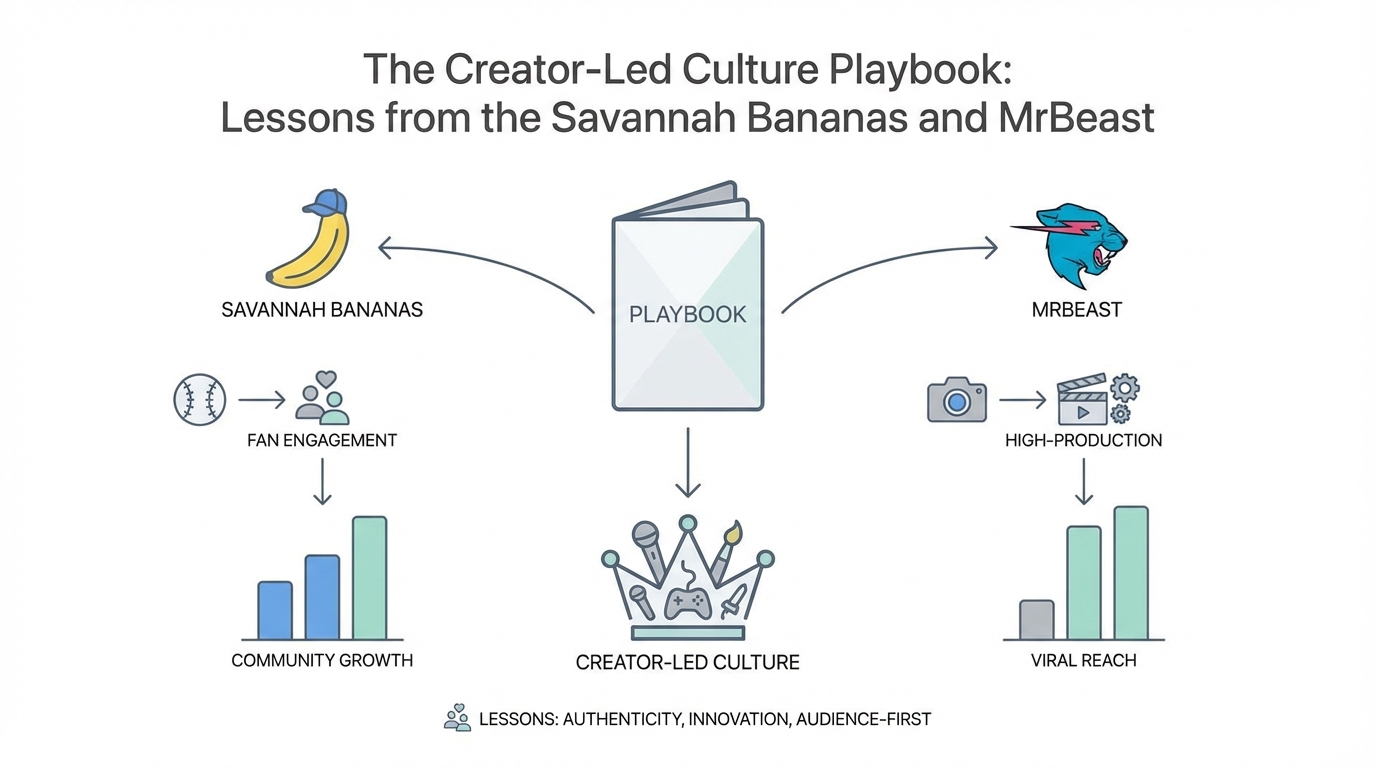
In the world of high-growth brands, there is a fundamental shift happening: the move from corporate-mandated values to a creator-led culture. We recently saw this in action at a unique gathering—what some call the "billionaire’s basketball camp" in Greenville, North Carolina. When 17 private jets descend on a small town for a two-day retreat hosted by the likes of MrBeast and top NBA owners, you know the lessons aren't coming from a textbook. This event wasn't about networking in suits; it was about intensity as a strategy and the "Show, Don't Tell" philosophy that separates viral successes from stagnant corporate entities. If you want to transform your brand into a culture-first powerhouse, you need to stop writing values on walls and start treating your organization like a high-stakes production.
Why Generic Values Fail and 'Culture as an Action Word' Succeeds
Most companies treat culture as a set of static, generic words. They put "Integrity" or "Excellence" on a plaque and wonder why their employee engagement ideas never seem to take root. The truth is that for world-class founders, culture is an action word. It is not something you have; it is something you do, every single day, with a level of intensity that borders on the obsessive.
Take Matt Ishbia, owner of the Phoenix Suns and CEO of United Wholesale Mortgage. Ishbia didn't build a company that generates $2 billion in annual profit by sitting in a 10,000-foot-level visionary meeting. He built it by living in the details. Ishbia walks the floor of his company every single day, searching for three problems to fix on the spot. By solving 1,000 bottlenecks a year, he ensures his organization remains a well-oiled machine. This is the influencer marketing mindset applied to corporate leadership: if you aren't removing the friction for your "audience" (your employees), you aren't leading.
To truly drive customer experience innovation, leaders must bridge the gap between vision and execution. We see this often when helping brands use Stormy AI to discover creators with natural-language AI search; the most successful partnerships aren't with those who have the best "values," but those who have the highest intensity of execution. This intensity is the strategy. It means being on the ground floor, whether that's restocking shelves at Target yourself or calling an IT tech to fix a salesperson's laptop the moment you hear about the glitch.
The 'Plus-the-Experience' Framework: Lessons from the Savannah Bananas
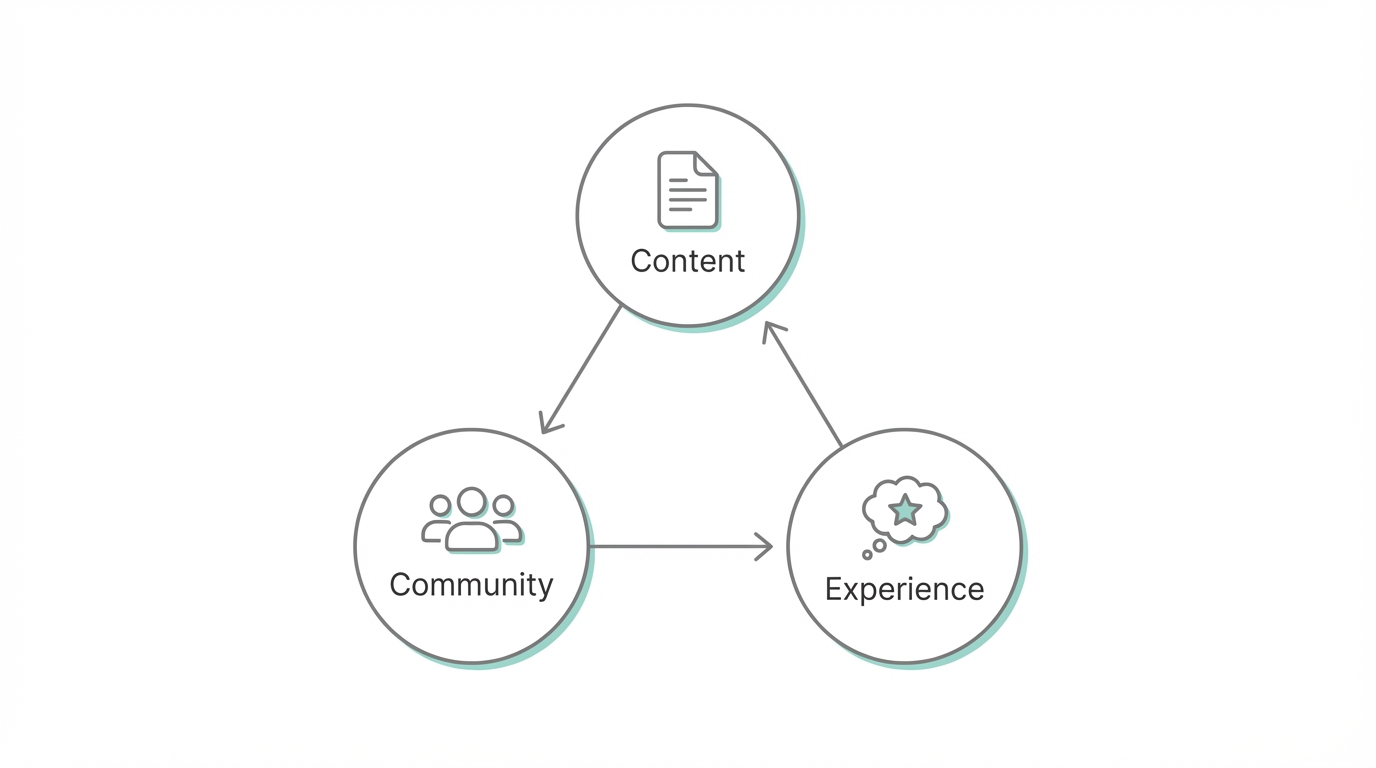
Jesse Cole, the founder of the Savannah Bananas, has achieved the impossible: he made minor league baseball—something historically overlooked—the hottest ticket in sports. With a 3 million person weight list and more social media followers than the New York Yankees, Cole's success is a masterclass in brand storytelling strategy. His secret? The "Plus-the-Experience" framework.
Cole believes that you cannot expect your employees to deliver a magical experience to customers if you have never delivered a magical experience to your employees. This is why he doesn't just "tell" his players to put on a show; he shows them what a show feels like from day one. He understands that if you want a minimum-wage employee to treat a customer like a guest, you must first treat that employee like a star. This is the same logic we use when we help brands use Stormy AI to reach creators with automated, personalized outreach; the energy of the creator must be mirrored by the energy of the brand.
The Savannah Bananas apply this by "plussing" every interaction. If the standard is a 10/10, they aim for an 11. They use internal events to train external excellence. By the time a player steps onto the field in front of 80,000 fans, they have already been the beneficiary of a "show" put on by the front office. They know what customer delight feels like because they have felt it themselves. This internal-first approach is what builds employee advocacy that no amount of paid advertising can replicate.
Applying the MrBeast 'Once-in-a-Lifetime' Energy to 'Boring' Industries
It’s easy to look at MrBeast or a baseball team and say, "Of course they have a cool culture, their product is entertainment." But the real company culture examples that matter are those found in "boring" industries like mortgages, insurance, or logistics. The excuse that your industry is "too serious" for innovation is, quite frankly, a lie.
MrBeast creates a "once-in-a-lifetime" feeling because he treats every production like the only one that matters. He makes his team feel like they are part of something unstoppable and special. You can bring this same energy to an insurance brokerage by changing the "Big Why" behind the product. As Jesse Itzler famously points out, we only have a few "bricks of gold" (years) left in our lives. If you are selling a notepad or a calendar, you aren't just selling office supplies; you are selling a tool to help someone be intentional with their life.
When you shift your mindset from "selling a commodity" to "serving a mission," your marketing becomes more effective. You might start using tools like Google Ads or Meta Ads Manager not just to push products, but to tell a story. Even at the Billionaire Basketball Camp, Jimmy (MrBeast) didn't just give a tour; he set up a full production so the guests could play a game. He provided an experience that money couldn't buy, even for billionaires. That is the level of customer experience innovation every brand should strive for.
The Playbook: Creating a 'First Day Orientation' That Builds Advocacy
If you want to build immediate employee advocacy, you must rethink the first 24 hours of an employee’s tenure. Most orientations are "zombie walks" through HR manuals. A creator-led orientation is a production. Here is how to do it:
Step 1: Set the Stage Before They Arrive
Don't just send an email with a parking pass. Create anticipation. Jesse Cole replaced standard cars with a special bus and a police escort for a 1,200-foot trip. Why? To tell the players, "You are a star, and we treat you like one." In your business, this could mean a personalized welcome video from the CEO or a curated package of "insider" gear delivered to their home a week early.
Step 2: The Grand Entrance
When the Savannah Bananas players arrived, they were greeted with fireworks and the entire staff cheering with signs. They entered the stadium to see a motivational video of their childhood selves. The lesson: You need to make your new hires feel the weight of their potential. Use LinkedIn professional discovery tools to research their background and celebrate their unique journey during the welcome ceremony.
Step 3: Show Them the 'Show'
Don't just talk about your values; live them. If your value is "Speed," have their entire tech stack, Apple Search Ads access, and internal accounts ready and logged in before they even sit down. If your value is "Creativity," give them a problem to solve in the first hour. Show, don't tell.
Measuring the Non-Linear ROI of Goosebumps
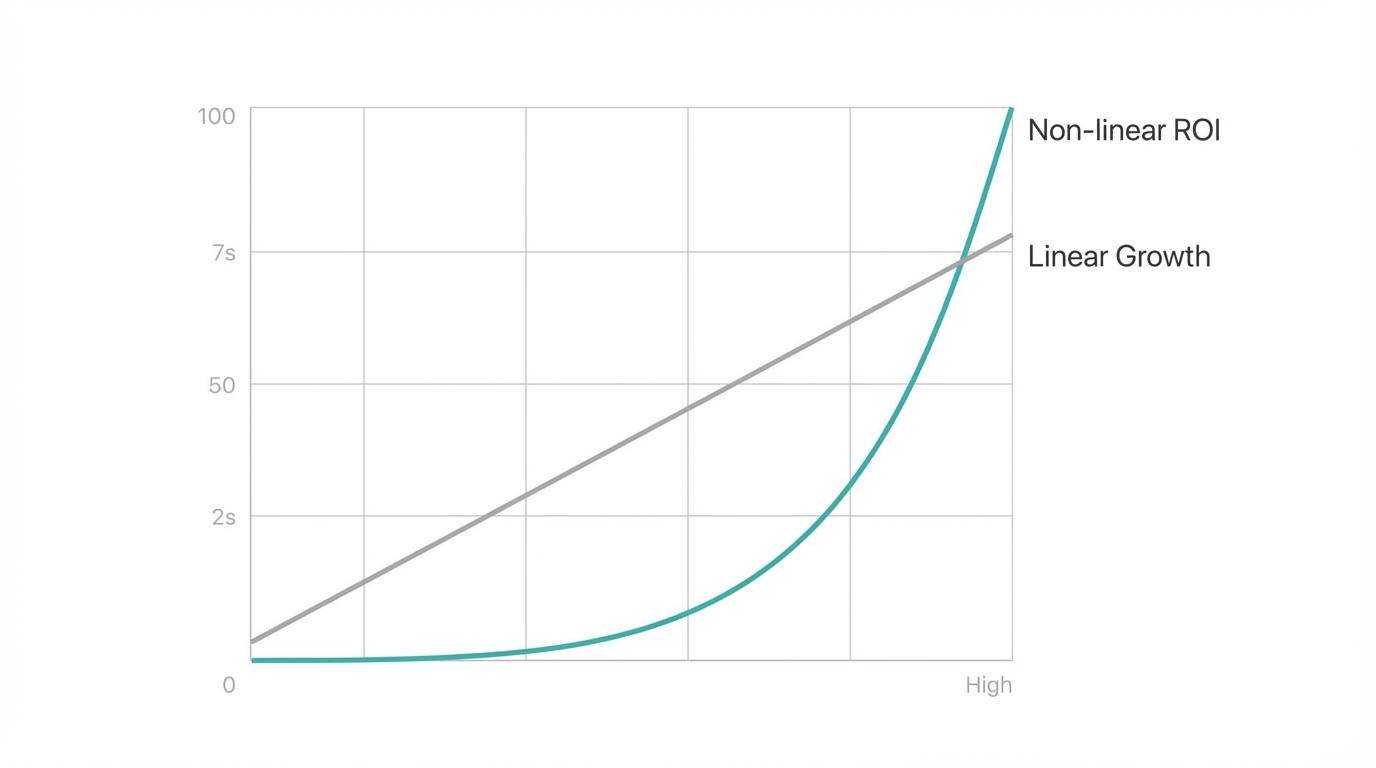
One of the hardest parts of investing in culture is justifying the cost. Fireworks, police escorts, and elaborate orientations don't "math out" on a traditional Excel sheet in the first quarter. This is non-linear ROI. The ROI of employee goosebumps is found in the retention of top talent, the reduction in recruiting costs, and the organic word-of-mouth marketing your team does for you.
When employees feel they are part of a "once-in-a-lifetime" ride, they give a "once-in-a-lifetime" level of effort. This is exactly how creators grow their audiences on platforms like YouTube; they invest in the viewer's emotional journey, not just the algorithm. Brands should do the same. When you use Stormy AI to analyze creators and detect fake followers, you’ll see that the ones with the highest engagement are those who prioritize the "feeling" of their community over pure production volume.
Walt Disney famously said, "You can't top pigs with pigs," referring to his refusal to just make sequels to his "Three Little Pigs" short. He knew that originality and reinvention were the only ways to stay relevant. In the same way, your culture cannot just be a "sequel" to what everyone else is doing. It must be a fresh, design-led experience. Whether it's Joe Gebbia (founder of Airbnb) redesigning government paperwork or using Stormy AI to manage creator relationships in a centralized CRM, the ROI comes from being the only ones who care this much.
Conclusion: The Future is Creator-Led
Building a world-class culture requires more than just good intentions; it requires intensity, design-led thinking, and a willingness to put on a show. Whether you are managing a team of five or a corporation of 10,000, your goal is to remove the bottlenecks to greatness and replace them with moments of genuine delight. By adopting an influencer marketing mindset, you turn your employees into advocates and your customers into fans. Start today by looking for your first "bottleneck" and solving it with the same intensity you'd use to launch a viral video. The "Show" starts now.