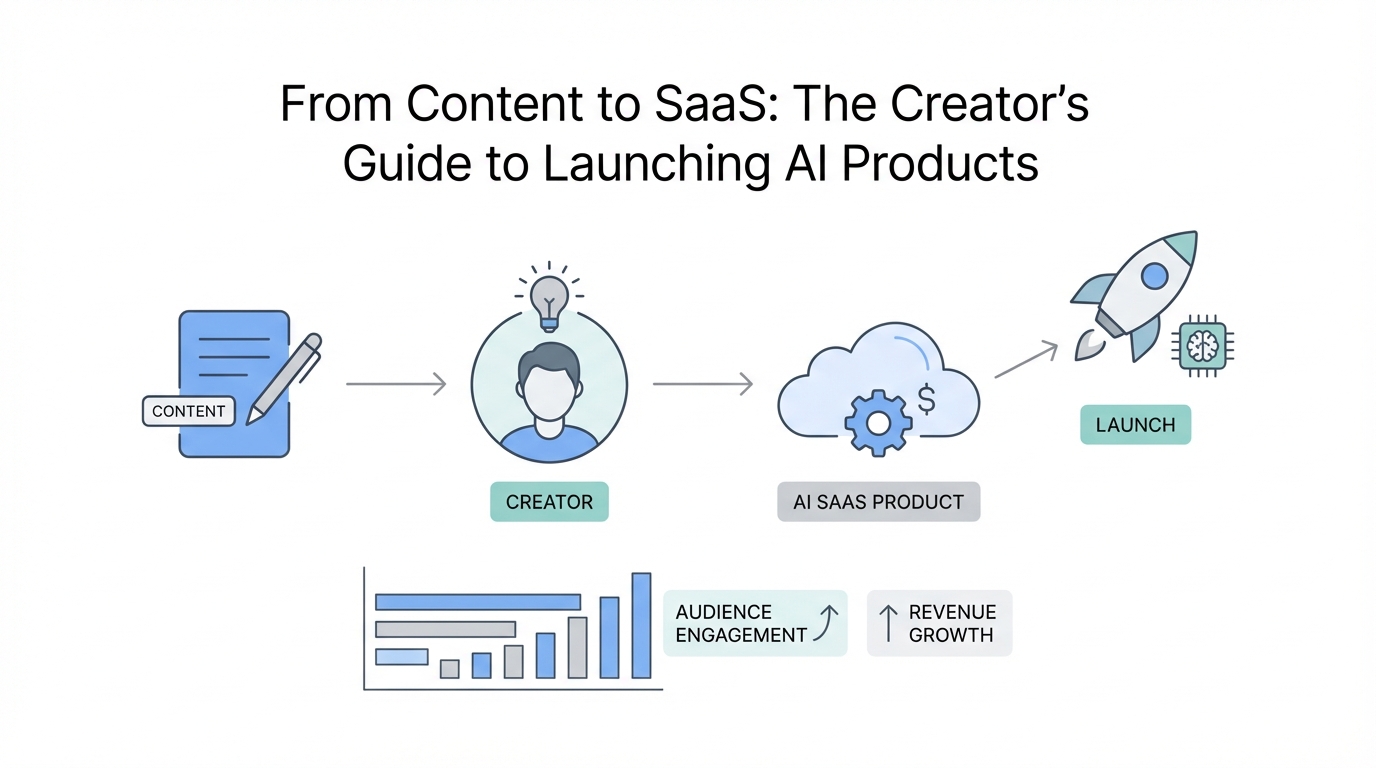
For years, the standard playbook for creators was simple: build an audience, sell sponsorships, and maybe launch a course. But the landscape has shifted. The rise of Large Language Models (LLMs) has introduced a new frontier where distribution is 50% of the battle and the remaining 50% is about solving specific friction points with software. Creators are no longer just the billboard; they are becoming the product owners. By moving from selling ads to owning the software, they are unlocking significantly higher Lifetime Value (LTV) and building defensible assets in the AI era.
The Distribution Advantage: Why Creators Win in AI
In the current AI landscape, the underlying technology is becoming a commodity. Whether you use GPT-4, Claude, or Llama, the raw power of AI is accessible to everyone. The real moat isn't just the code—it's the ability to reach the end user. As Trung Phan notes, building an audience is a form of super high-leverage work that compounds over time. When you have a dedicated following, you bypass the most expensive part of any SaaS startup: the customer acquisition cost (CAC).
During the COVID-19 pandemic, a group of creators including Sahil Bloom, Sean Puri, and Sam Parr formed what they called the "100K Club." Their goal was simple: share tactics to scale their Twitter audiences to 100,000 followers. Today, those same creators have millions of followers combined. This creator led growth model allowed them to launch ventures ranging from newsletters to multi-million dollar software companies via platforms like the My First Million podcast. The lesson for aspiring founders is clear: build the room before you try to sell the furniture. If you can get into the "top 1%" of mindshare in your niche, your distribution becomes your unfair advantage.
Beyond Ad Revenue: The LTV Advantage of SaaS
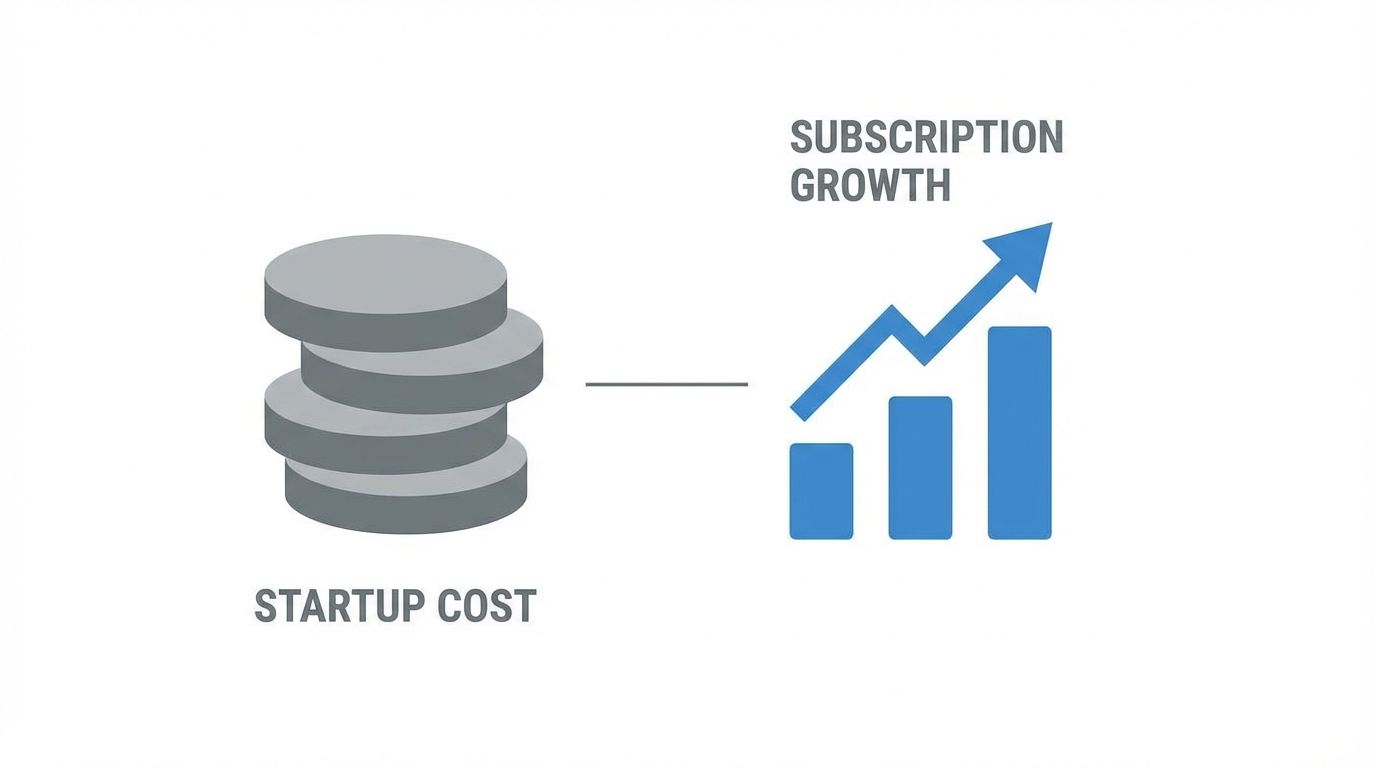
While selling ads in a newsletter or podcast provides immediate cash flow, it lacks the scalability and asset value of a software-as-a-service (SaaS) model. When a creator launches a product like Barely AI, they shift from a linear income model to a compounding one. Ads are a one-time transaction; a subscription is a relationship. The monetizing a personal brand through software means that every new follower isn't just a pair of eyes—they are a potential recurring customer.
Consider the visual strategies used by creators like Jack Butcher, who emphasizes that the benefits of audience building accrue most heavily at the end of the journey through his Visualize Value framework. In the beginning, the growth curve looks flat and pointless, but as you hit an inflection point, your ability to plug in products you own becomes exponentially more valuable than renting out your space to third-party advertisers. By owning the product, you control the pricing, the user experience, and the data, which ultimately leads to a higher exit valuation if you ever decide to sell.
Identifying 'Thin Wrapper' Wins in a Commoditized World
There is a common criticism in tech that many AI startups are just "thin wrappers" around OpenAI. However, for creators, being a thin wrapper is actually an opportunity for superior UX and convenience. Most users don't want to learn complex prompt engineering; they want a single button that solves their specific problem. Greg Isenberg and Trung Phan argue that convenience is often the ultimate selling point.
The success of early AI tools wasn't necessarily because they had better models than ChatGPT, but because they integrated into the user's workflow more effectively. Whether it's a Chrome extension found on the Chrome Web Store that works where you work or a keyboard shortcut that summarizes text instantly, the winner isn't always the one with the most parameters—it's the one that is the most convenient to use every day. For those exploring ai software development for beginners, the goal shouldn't be to build the next foundational model, but to build the best interface for a foundational model.
Solving Your Audience's Friction Points
The best ai startup ideas come from looking at the daily annoyances your audience faces. For writers, it’s the transition between the creative "flow state" of drafting and the analytical "drag" of copy editing. Trung Phan built Barely AI specifically to handle the editing tasks he found cognitively draining. By using AI to copy-edit his own work, he solved a personal pain point that thousands of other writers shared.
Another powerful use case is the "Good Cop/Bad Cop" dynamic in business communications. A viral example involved using AI to draft an "oofy" email to a vendor who owed over $109,000. While the creator could have written the email themselves, the mental barrier of being the "bad guy" often causes delays. AI removes that emotional friction, allowing founders to be more effective. If your audience is constantly asking for advice on a specific task—whether it's legal drafting, design feedback, or data analysis—that is your signal to build an AI solution.
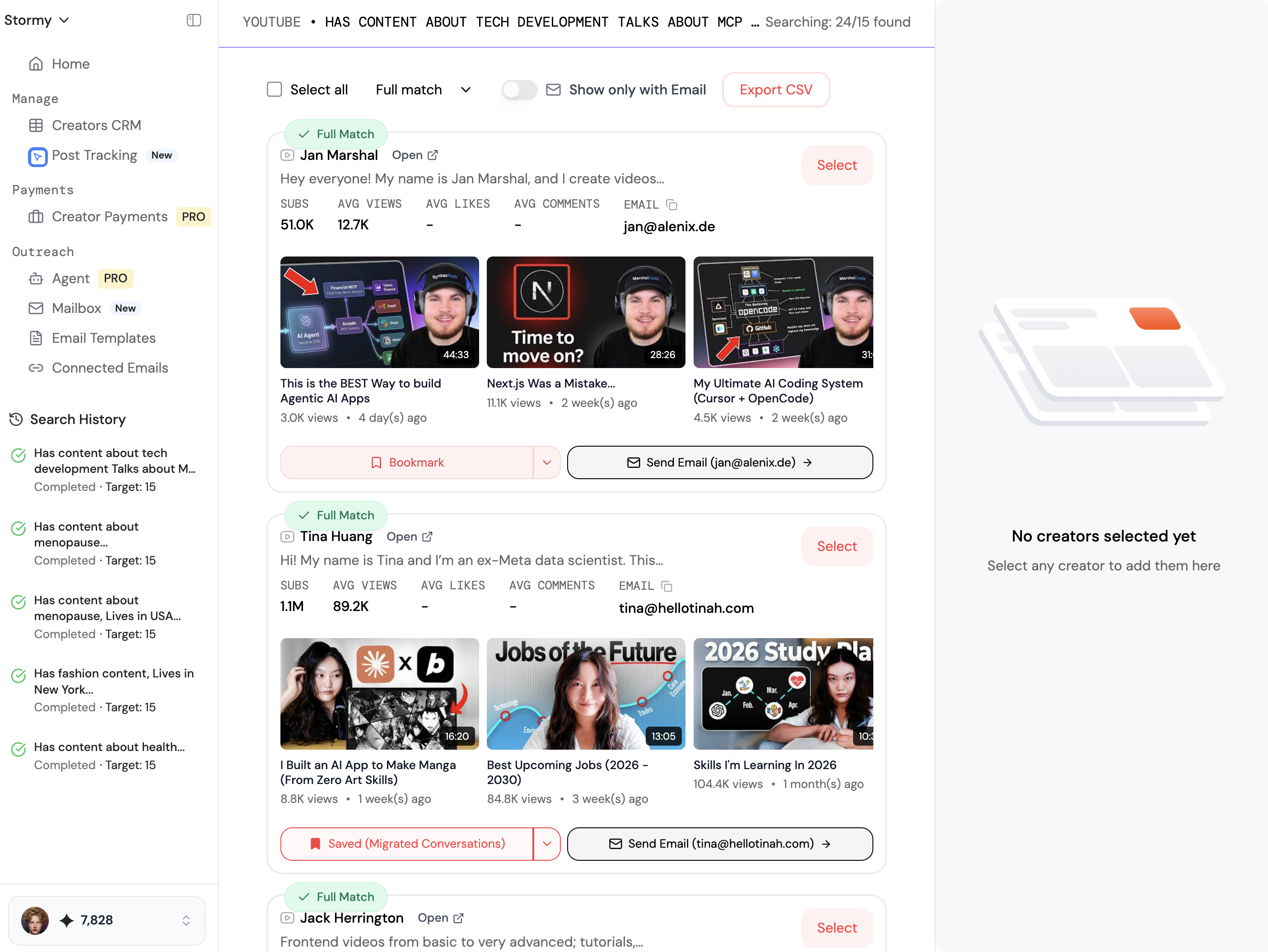
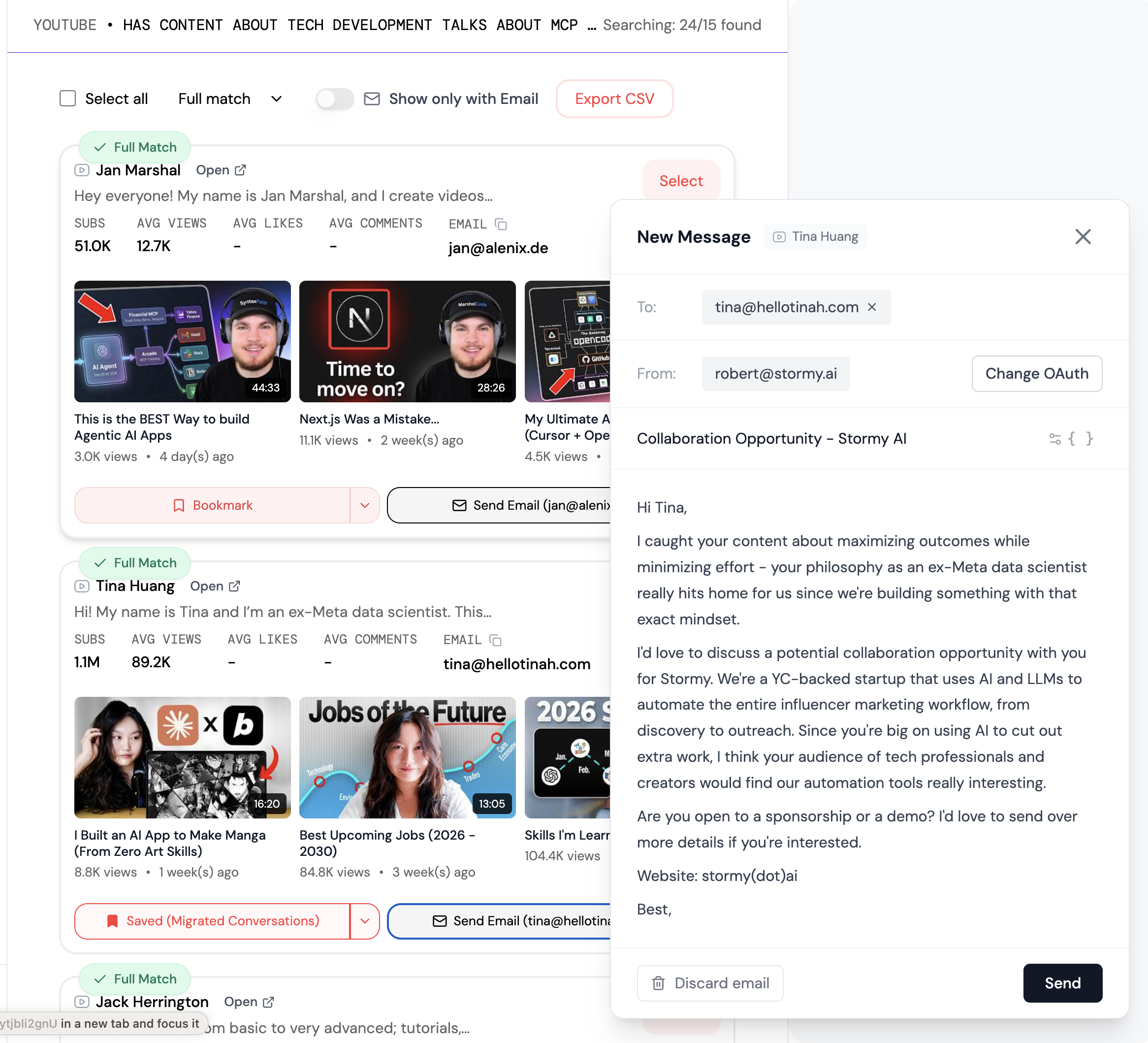
Managing these creator-customer relationships requires a system. Platforms like Stormy AI allow brands to discover the right creators for their niche and manage those relationships through a dedicated CRM, ensuring that when you do launch a software product, you have the right partners to amplify your reach.
The International Unlock: AI as a Global Equalizer
One of the most underrated aspects of the AI revolution is the 'International Unlock.' According to the EF English Proficiency Index, there are roughly 2-3 billion people who use English as a second language to conduct business. For these individuals, the barrier to global competition isn't their intelligence or work ethic—it's the nuance of the English language. As Michael Saylor famously noted, everything you sell is more valuable in English, and everything you buy is cheaper.
AI provides a multiplier for non-native English speakers. It allows a business owner in Vietnam or Brazil to write professional, high-converting cold emails that sound like they were written by a native speaker. This massive unlock is a primary driver for the global adoption of tools like You Probably Need a Robot. If you are building AI software, don't just look at the US market. The real opportunity might be in evening the playing field for the billions of people who want to participate in the global digital economy but have been held back by linguistic barriers.
A Playbook for Launching Your AI Product
If you are ready to move from content to SaaS, follow this clear saas distribution strategy to ensure a successful launch:
Step 1: Build in Public
Start by sharing your own struggles with a specific task. Use AI tools publicly and show the results. This builds trust and authority before you ever ask for a credit card number. Many founders use the Build in Public philosophy to validate interest in the solution.
Step 2: Start with a 'Micro' Use Case
Don't try to build an all-in-one productivity suite. Identify one high-frequency, high-friction task (like summarizing meeting notes or drafting invoices) and build a simple, beautiful interface for it. Focus on the UX above all else.
Step 3: Leverage Your Distribution
When you launch, don't just post a link. Tell a story about the problem the tool solves. Use your email list and social channels to drive the initial surge of users. For those looking to scale further, using Stormy AI can help you identify and outreach to other creators in your niche who can help promote your tool through hyper-personalized AI-generated outreach.
Step 4: Focus on Retention via Convenience
The hardest part of SaaS isn't the signup; it's the daily active usage. Ensure your tool is where your users already are—whether that's a mobile app, a browser extension, or a Slack integration. The more integrated you are, the higher your retention will be.
The Future of Creator-Led SaaS
The transition from content creator to software founder is the natural evolution of the digital economy. As AI continues to lower the technical barriers to entry, the value of trust and distribution will only increase. By identifying thin wrapper opportunities that prioritize user convenience and solving the deep-seated friction points of a global audience, creators can build sustainable, high-growth businesses. Stop just renting your audience to other brands—start building the tools they actually need. The era of the solopreneur AI unicorn is just beginning, and the room is wide open for those who have already built the distribution.