For the better part of a decade, the peak of creator success was defined by the lucrative brand deal. You built an audience, you signed a six-figure contract with a vitamin gummy brand, and you repeated the cycle until the algorithm changed or your relevance faded. But as we move through 2026, the paradigm has shifted. We are witnessing the birth of Owner Marketing, a new era where the world’s top creators are no longer content being the 'face' of someone else’s product. Instead, they are leveraging their distribution power to acquire, turn around, and scale 'unsexy' physical businesses. The goal is no longer a temporary sponsorship; it is long-term equity in assets that don't rely on a creator’s face to function.
The Death of the Sponsored Post: Welcome to Owner Marketing
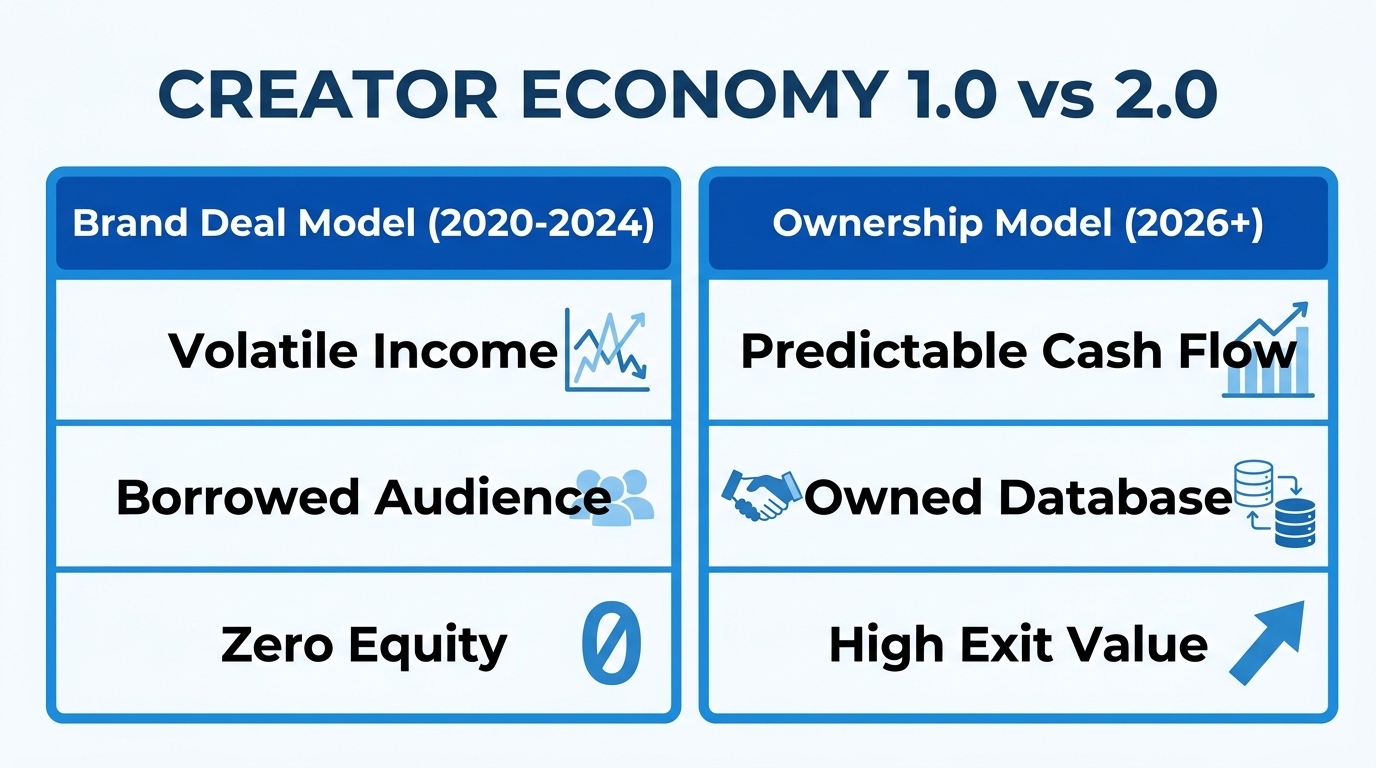
In 2026, the TikTok Ads Manager is crowded, and consumer fatigue with 'sponsored' content is at an all-time high. Creators have realized that while they are great at generating attention, they are essentially renting that attention to brands for pennies on the dollar. The creator economy trends 2026 show a massive move toward influencer business ownership as a hedge against platform volatility.
"You aren't a business owner if you're just a line item in someone else's marketing budget. Real wealth in 2026 is owning the supply chain, not just the shoutout."
This shift is driven by the realization that personal brands have a shelf life. By moving into business acquisitions, creators are building entities that can be sold, franchised, or passed down—assets that produce cash flow even when the creator stops posting. This is the transition from 'influencer' to 'industrialist.'
Beyond the Cody Sanchez Dream: The Reality of 'Dan the Bagman'
Social media often sells the dream of 'passive' business ownership: buy a laundromat, hire a manager, and watch the money roll in while you sip a latte. However, the reality of influencer marketing vs business acquisition is much grittier. Take the story of Cody Sanchez protégé 'Dan the Bagman,' a former tech executive who stepped away from the Silicon Valley 'rich on paper' trap to buy a company called Fleet Packaging.
Dan didn't buy a software-as-a-service (SaaS) startup. He bought a 15-year-old packaging distributor that makes the bags you see in malls. It was 'unsexy,' but it was real. He acquired the business for $3.4 million, using an SBA loan and a forgivable seller note. He only put $200,000 of his own savings down—effectively putting his house and his wife’s 401k on the line to bet on himself. In 2026, this 'boring' bag company did $13.8 million in revenue and generated $1.7 million in profit.
The 'Financial Colonoscopy'
Acquiring a business isn't as simple as clicking 'buy' on a marketplace. It involves what Dan calls a 'financial colonoscopy.' Banks and brokers will scour every aspect of your life and the business’s history. For creators used to the fast-paced world of digital deals, the 4-6 month due diligence process can be a 'pit of despair.' You move from high excitement to low knowledge, and eventually, if you're lucky, to high knowledge and high profit. To navigate this, many creators use tools like BizBuySell or Searchfunder.com to find retiring boomers who have no heirs interested in taking over the family trade.
| Metric | Traditional Influencer Model | Owner Marketing Model (Acquisition) |
|---|---|---|
| Revenue Consistency | Lumpy / Contract-based | Recurring / Asset-based |
| Scalability | Limited by creator's time | Unlimited via operations |
| Exit Strategy | None (Brand dies with creator) | High (Multi-million dollar sale) |
| Day-to-Day | Content creation | Strategic management & systems |
The 'Secretary Problem': How to Vet 100 Businesses Before Buying
 28:25
28:25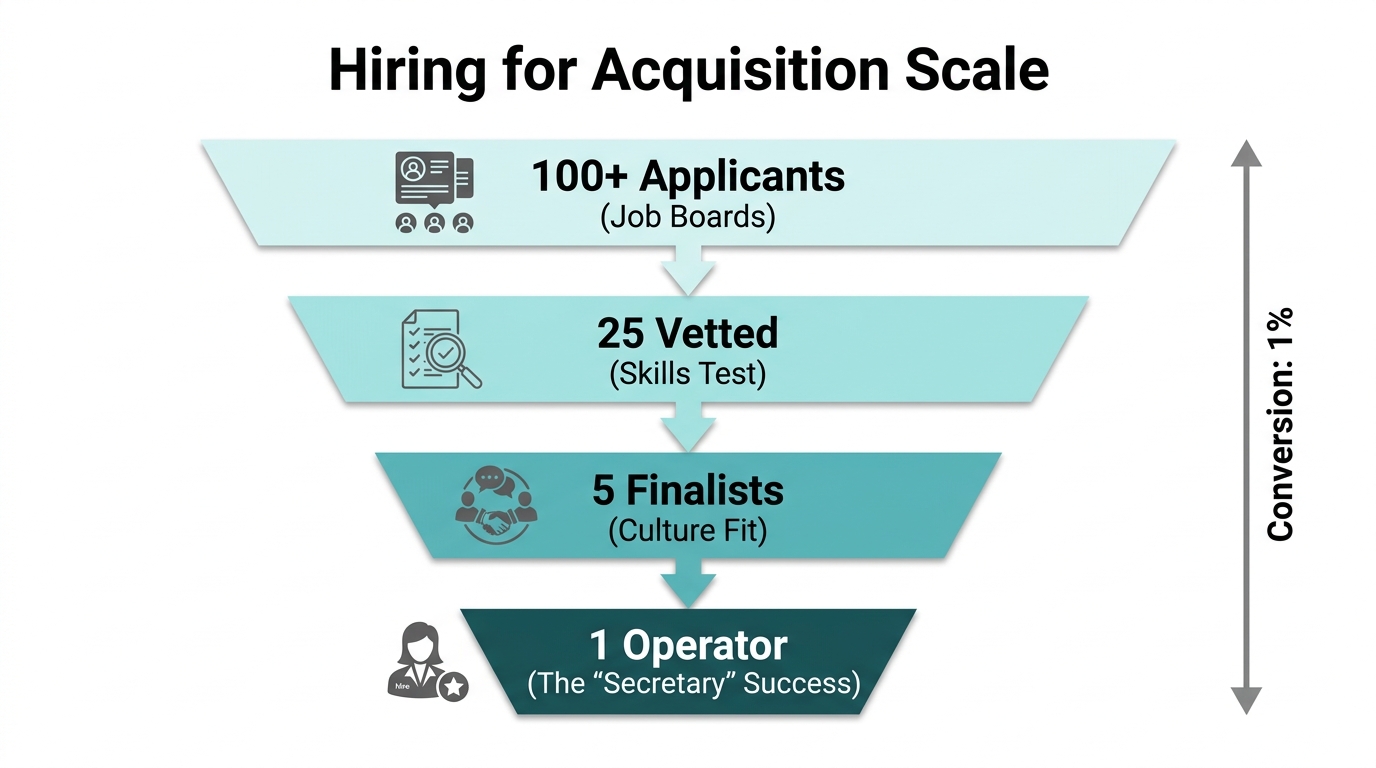
One of the biggest mistakes creators make when entering the world of unsexy business ideas is falling in love with the first P&L they see. In mathematics, there is a concept called the Secretary Problem (or the 37% rule). When you are interviewing candidates—or in this case, looking at businesses—you should spend the first 37% of your search just looking and gathering data without pulling the trigger.
If you plan to look at 100 businesses on Acquire.com, you don't buy any of the first 37. You use them to set a benchmark for what 'good' looks like. After that, you pull the trigger on the first business that is better than the best of the first 37. This prevents you from 'buying a job'—a small business that only nets $100k a year but requires 60 hours of your time—and ensures you are buying a true asset.
"Most bad decisions in business acquisition come from fatigue. You stop following your principles because you just want the search to be over."
The 'Teenager-Proof' Business Model: Why Kids' Entertainment is King in 2026
73:03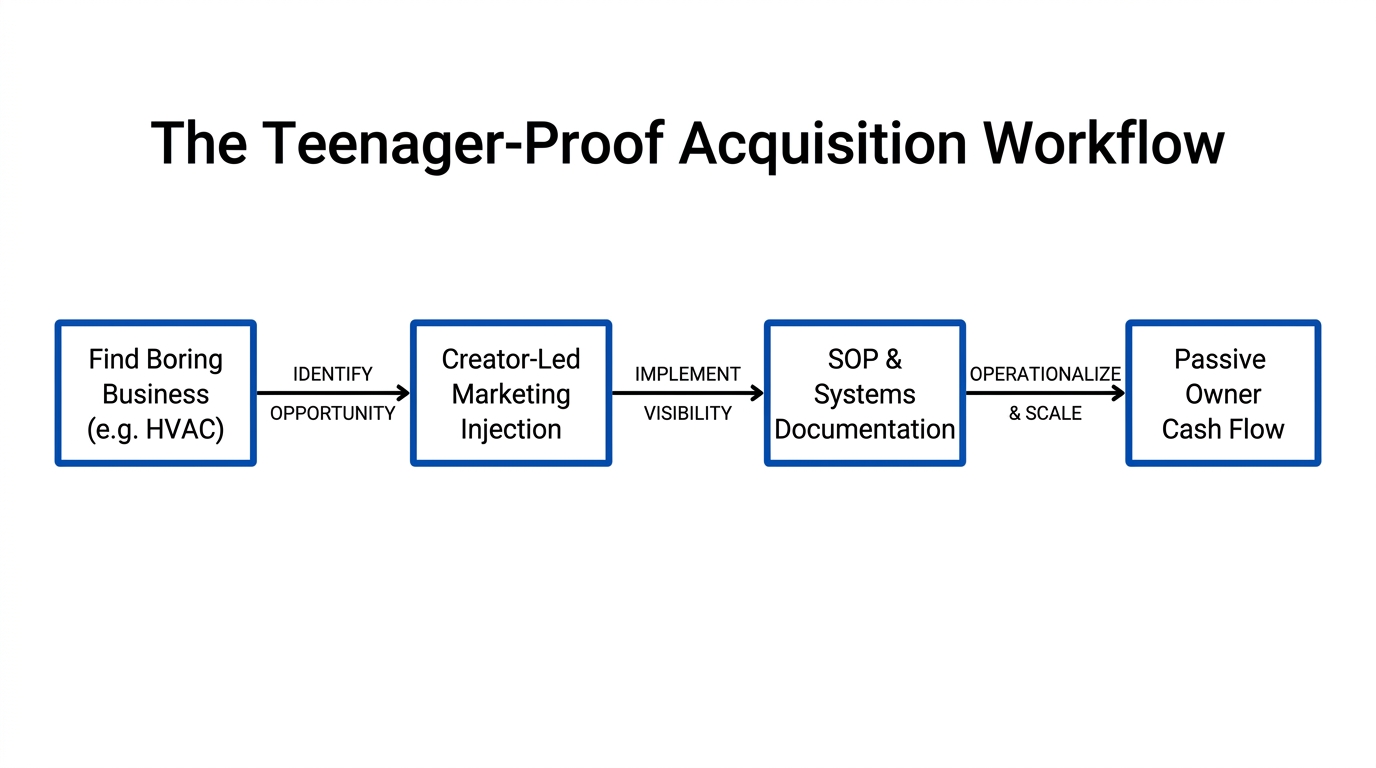
As creators look for creator-led brand building opportunities that don't require their face, they are gravitating toward sectors that are 'teenager-proof.' A teenager-proof business is one where the operations are so simple that a 17-year-old can run them with a basic checklist. In 2026, the biggest play in this space is out-of-home entertainment.
Laser Tag, Pickleball, and Trampoline Parks
Physical venues like laser tag arenas, climbing gyms, and trampoline parks are booming. Why? Because they are AI-proof. You cannot 'digitize' the experience of a kid's birthday party or a competitive pickleball match. These businesses often have 97% occupancy in shopping centers because people are desperate for sober, social, and physical experiences post-2025.
- Scalability: Once the system is built, you can replicate it in any suburb.
- Low Labor Cost: Most of the staff are students, keeping overhead manageable.
- Ancillary Revenue: Vending machines, arcade games, and food/beverage create multiple streams of high-margin income.
Creators are using their massive reach to drive local demand to these centers. Instead of promoting a third-party app, they are telling their followers to visit 'their' climbing gym. Using platforms like Stormy AI, creators can even analyze local market demographics to see which 'unsexy' niches are underserved in specific zip codes before they make an offer.
Identifying 'Trouble as Opportunity' with Social Analytics
One of the most valuable frameworks for creators in 2026 is the idea that trouble is opportunity. When a massive player like Party City goes out of business, it doesn't mean the demand for balloons has vanished. It means the supply has shrunk while the demand remains constant. Savvy creators look for these 'troubles' in local markets using social listening and search data.
For example, if you see a local business with terrible reviews but a high volume of search intent, that is a prime acquisition target. The 'hair' on the deal—the bad management, the outdated tech, the lack of a Shopify presence—is exactly what you can fix with your marketing expertise. You aren't just buying a business; you are buying a 'fixer-upper' that you can 10x by simply applying modern growth tactics.
The Anti-AI Hedge: Why Physical Distribution is the Safest 2026 Asset
56:24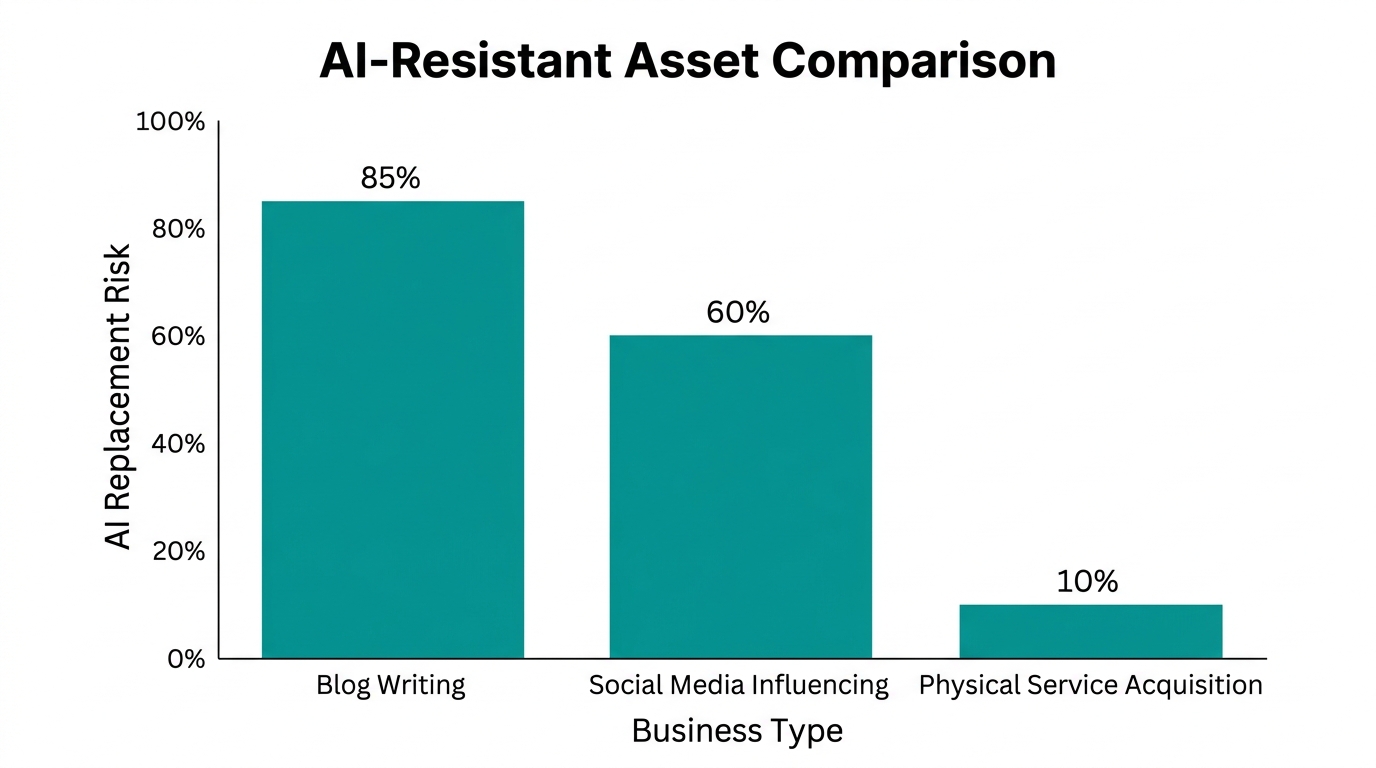
As AI continues to commoditize digital content and SEO services, physical B2B distribution and local services have become the safest brand-building assets. A business that owns a fleet of trucks, a warehouse full of packaging materials, or a network of physical medical transport vans is protected from the volatility of the digital world.
Physical distribution creates a 'moat.' It is difficult for a new competitor to suddenly build a warehouse or secure government contracts for elderly transport. Creators who invest in these areas are effectively building a fortress around their wealth. They use digital tools to optimize the physical world, creating a hybrid model that is remarkably resilient.
"AI won't be cremating anyone or fixing a burst pipe anytime soon. If you want a business that lasts a century, find something that people physically need."
Conclusion: Making the Leap from Creator to Owner
The creator economy 2.0 is about maturity. It is about moving beyond the dopamine hit of a viral post and toward the satisfaction of a profitable P&L statement. By leveraging tools like Stormy AI for market analysis and platforms like Acquire.com for discovery, influencers are proving that their greatest skill isn't just taking photos—it's understanding how to move people toward a goal.
If you are a creator looking to build a legacy in 2026, the playbook is clear: Stop selling the dream and start buying the reality. Look for the unsexy, the boring, and the physical. Find the 'trouble' and turn it into your opportunity. The era of the influencer is over; the era of the creator-owner has begun.