The 2026 e-commerce environment is defined by what experts call the "Algorithmic Era," a landscape where AI agents and automated systems handle the majority of purchasing decisions. With global ad spend projected to surpass $1 trillion for the first time this year, digital ads now represent 68.7% of that total investment according to Dentsu. For Shopify merchants, the challenge isn't just about showing up; it's about achieving Creative Velocity. Brands that fail to iterate fast enough are being buried by rising costs, while those implementing autonomous creative systems are seeing a massive 27% drop in Customer Acquisition Cost (CAC). This guide breaks down the 2026 playbook for mastering Shopify ads optimization and building a resilient, mobile-first growth engine.
The 2026 Creative Playbook: Implementing Autonomous Systems
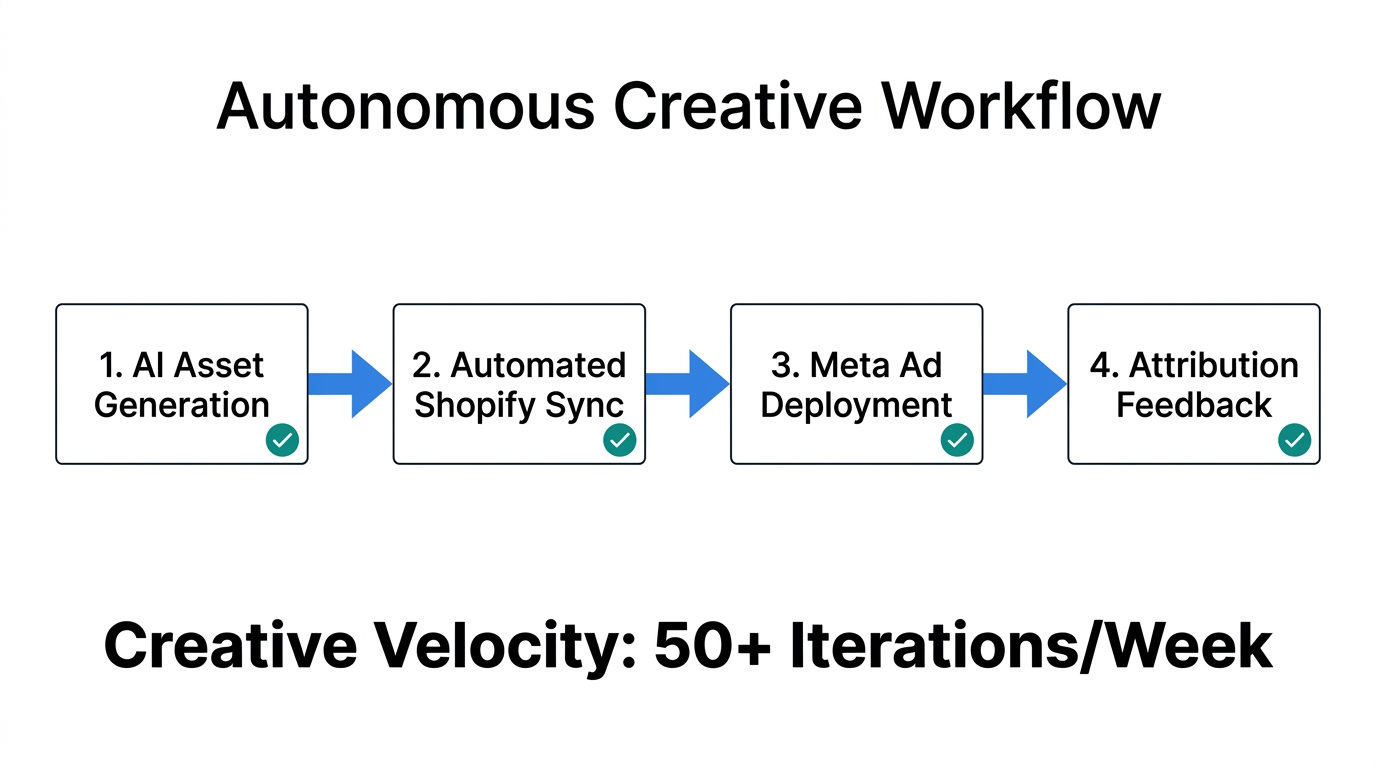
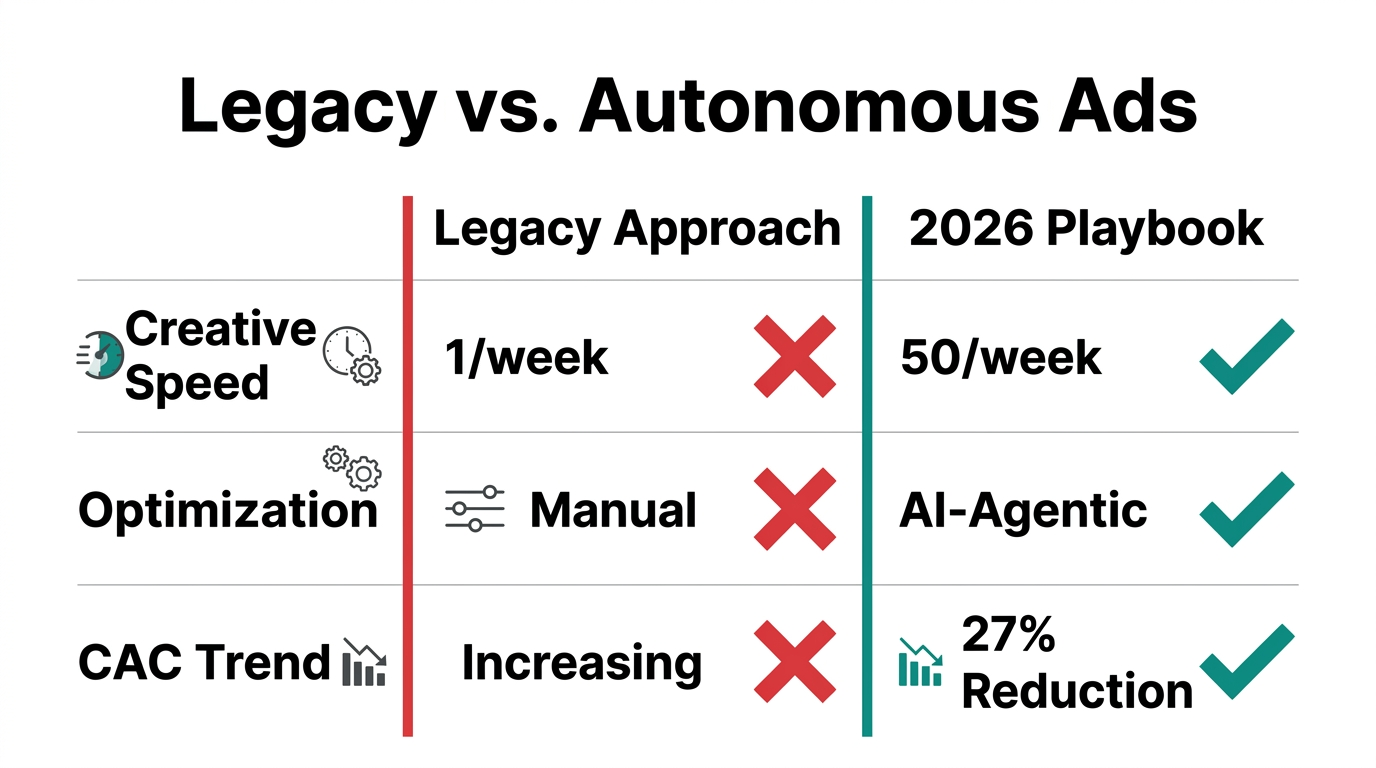
In 2026, manual creative production is a bottleneck that modern brands can no longer afford. We have shifted from simple AI automation to "AI Elevation," where agentic systems move beyond acting as tools to acting as full-scale operators. According to the Digital Marketing Institute, these agents now perform end-to-end workflows like budget reallocation and creative testing without requiring constant human prompts. To stay competitive, your Shopify store must transition to a weekly autonomous creative cycle.
To feed these autonomous systems, brands are increasingly relying on high-quality User-Generated Content (UGC). Platforms like Stormy AI have become essential for discovery, allowing brands to find creators who fit specific niche demographics in seconds. By sourcing fresh creator content and plugging it into an AI iteration engine, you ensure your Shopify ads optimization efforts are fueled by data-backed creative rather than guesswork.
Statistical Proof: Why Weekly Cycles are Non-Negotiable
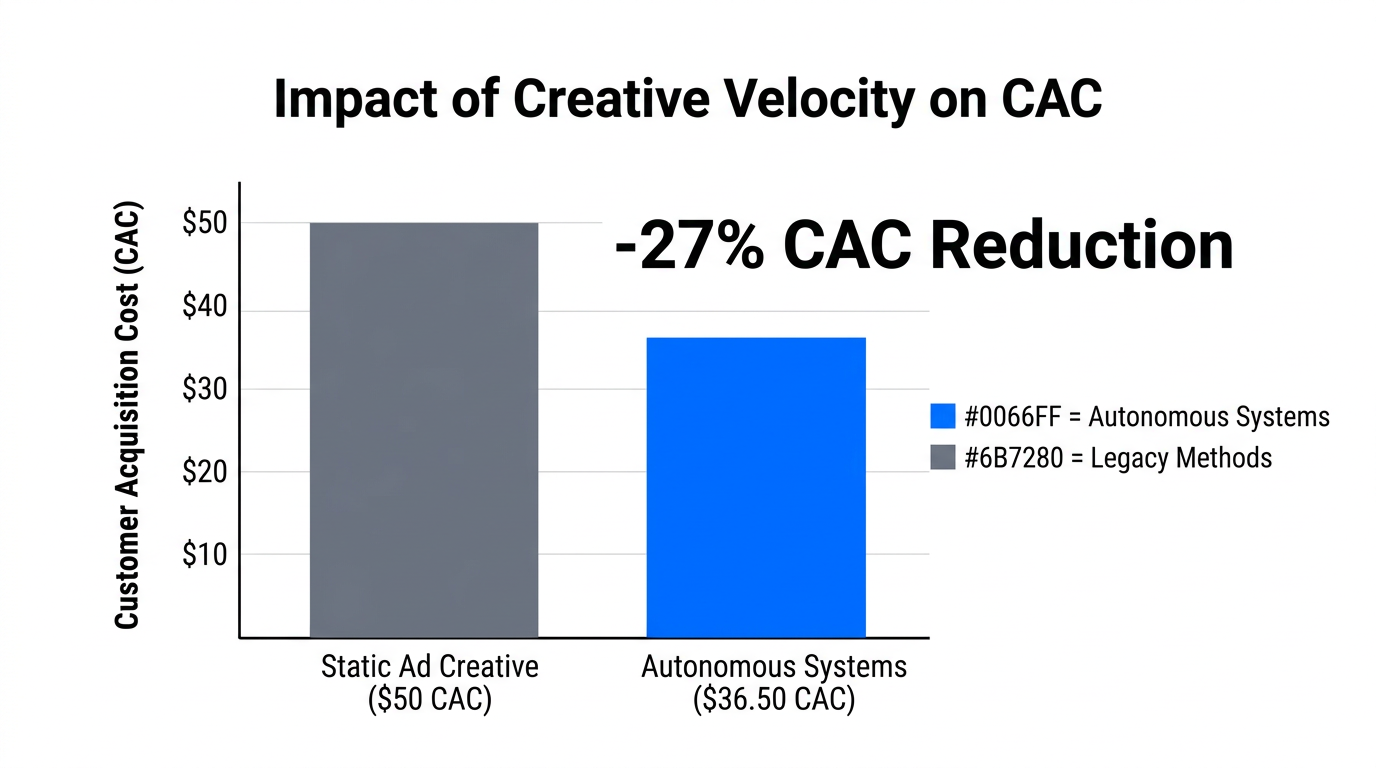
The correlation between creative refresh rates and profitability is clearer than ever. Research from If This Then Data indicates that brands moving to weekly creative testing cycles see an average 27% reduction in CAC. This is because programmatic buying now captures between 83% and 87% of all digital ad dollars (SEOLHR), and these algorithms crave fresh signals to find your target audience.
"In 2026, the winner isn't the brand with the biggest budget, but the brand with the highest Creative Velocity—the ability to turn data into fresh, high-performing ads every 7 days."
| Strategy Component | Manual/Traditional (2024) | Autonomous/Agentic (2026) | Impact on CAC |
|---|---|---|---|
| Creative Refresh | Every 4-6 weeks | Every 7 days | High Reduction | Testing Method | A/B split testing | Multi-armed bandit AI | Moderate Reduction | Ad Management | Manual bidding | Meta Advantage+ / PMax | High Efficiency |
Mobile-First Conversion Tactics for 2026
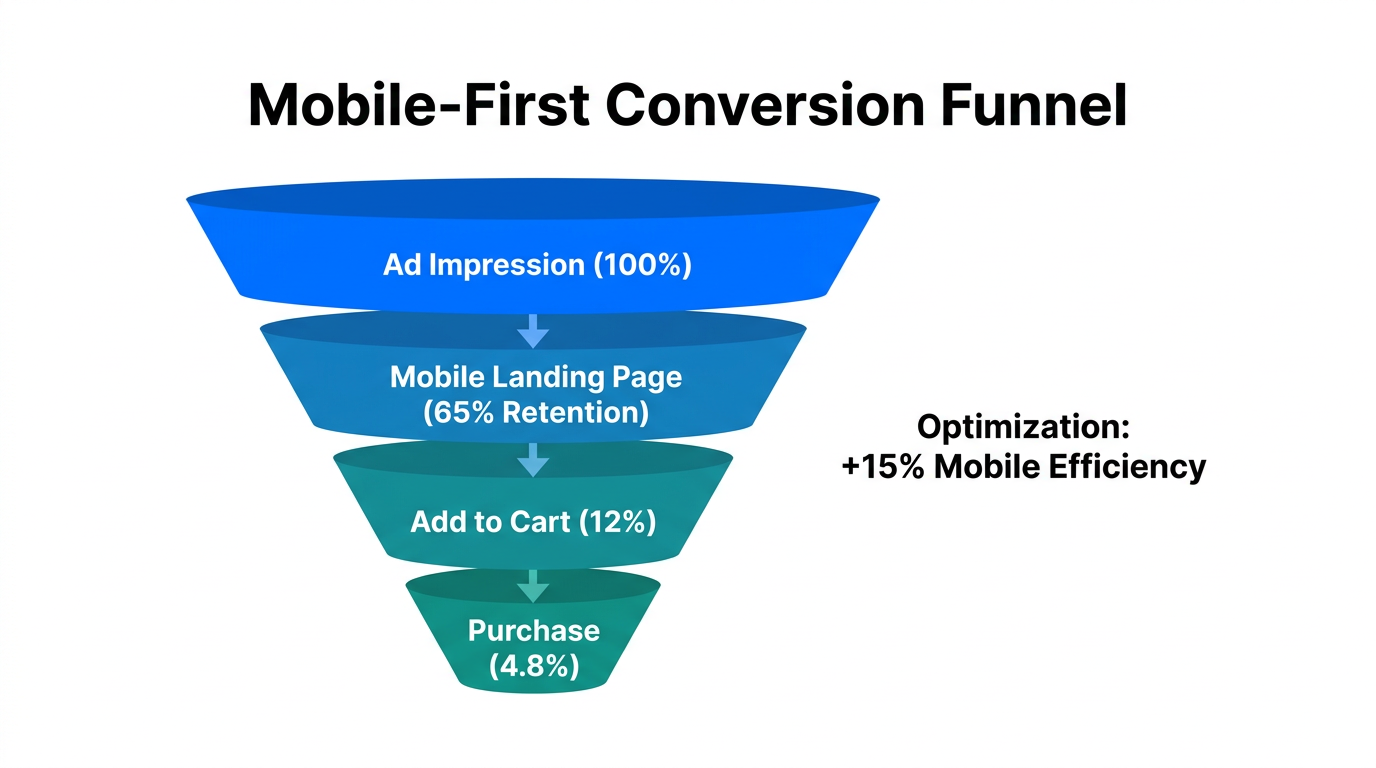
Mobile dominance is no longer a trend—it is the baseline. Mobile-first traffic now accounts for 79% of all Shopify store visits, according to TechnologyChecker. However, many brands still suffer from a "conversion gap," where mobile rates lag behind desktop (1.2% vs. 1.4%). Closing this gap is the most direct path to Shopify conversion rate optimization.
The 44x44 Pixel Rule
In 2026, user experience (UX) is a direct ranking factor for ad quality scores. One of the most common mistakes is designing for desktop and simply "checking" the mobile view. To avoid "fat-finger" bounce rates, all interactive elements—specifically Add-to-Cart buttons—must be at least 44x44 pixels, a standard long championed by Apple's Human Interface Guidelines (Rablab). This provides enough surface area for comfortable thumb navigation, significantly reducing friction in the mobile checkout flow.
The 3-Second Speed Threshold
Speed is a feature. Data from Halothemes shows that page load times exceeding 3 seconds increase bounce probability by 90%. Merchants should be wary of "app bloat." Installing too many single-use Shopify apps can degrade your Core Web Vitals, leading to lower ad quality scores and higher costs per click.
Mastering Meta Automation and Data Precision
With the total deprecation of third-party cookies, tracking accuracy has become a primary hurdle. To succeed in Shopify ads optimization, you must implement server-side tracking using the Meta Conversions API (CAPI). Tools like wetracked.io are essential for capturing backend Shopify revenue directly, ensuring that ad platforms optimize based on real sales data rather than incomplete browser events.
For Meta ad automation, Madgicx remains a powerhouse for creative performance analysis. By pairing Madgicx's automation with machine learning attribution from Northbeam or Triple Whale, brands can see exactly which creatives are driving long-term value. Triple Whale's case study with Travelpro revealed that 20% of purchases were influenced by PR channels only after fixing their attribution model, allowing them to shift budget toward high-impact signals.
"2026 is about building balanced channel mixes and reallocating spend based on real performance signals instead of habit." — Mia Healy, Triple Whale
The Shift: From Banner Ads to API-Based Negotiation
The most radical shift in 2026 is the emergence of the AI agent as a consumer. By the end of this year, 60% of transactions are expected to involve AI agents—such as Amazon’s auto-restocking systems or personal shopping assistants—that compare prices and negotiate deals via APIs rather than clicking on traditional banner ads (iOPEX).
This means that while Shopify conversion rate optimization still matters for humans, brands must also optimize for machine readability. Ensuring your product feeds are clean and your shop is accessible via commerce-ready APIs is becoming as important as your landing page design. Social commerce, particularly on TikTok Shop, is also peaking, with nearly 30% of high-traffic Shopify stores now integrating the platform directly into their stack (StoreCensus).
Common Mistakes in 2026 Shopify Advertising
To keep your e-commerce CAC reduction on track, avoid these four common pitfalls:
- Ignoring "View-Through" Conversions: Up to 95% of ad impact happens when users see but don't click an ad. Relying solely on "Last Click" attribution will lead you to cut profitable top-of-funnel budgets prematurely (Layerfive).
- Branded Traffic Cannibalization: Don't let Performance Max (PMax) bid on your brand name without exclusions. This inflates your ROAS on paper but generates zero incremental growth.
- Desktop-First Content: Videos and images must be shot in native 9:16 aspect ratios. If your ad doesn't look like it belongs on a phone, it will be ignored.
- Manual Creator Management: Sourcing creators one-by-one is too slow for 2026. Use an AI-powered engine like Stormy AI to discover and outreach to dozens of creators simultaneously.
Conclusion: Building for Velocity
The brands winning in 2026 are those that have replaced manual drudgery with autonomous systems. By moving to a weekly creative cycle, prioritizing mobile-first marketing with the 44x44 rule, and ensuring structural speed through clean Shopify builds, you can realistically achieve a 27% reduction in CAC.
Success this year requires a blend of high-tech automation and high-quality human creative. Use tools like Madgicx for the heavy lifting of ad management, but don't forget that the heart of every high-performing ad is a great story. Leverage Stormy AI to find the creators who can tell that story, then let your autonomous systems scale it to the moon.