The era of manually tweaking button colors and headline variations is officially over. As we enter a landscape where the global AI in marketing market is projected to reach $82.23 billion by 2030, the role of the performance marketer has shifted from execution to orchestration. Today, growth hackers and performance designers are no longer just using tools; they are managing AI agents for paid ads that function within a continuous "Perceive-Think-Act" loop. This transition from basic automation to autonomous agency is delivering an average 8:1 ROI, far outstripping the 2:1 returns seen with traditional "if-then" logic.
The Rise of Agentic Workflows in Advertising
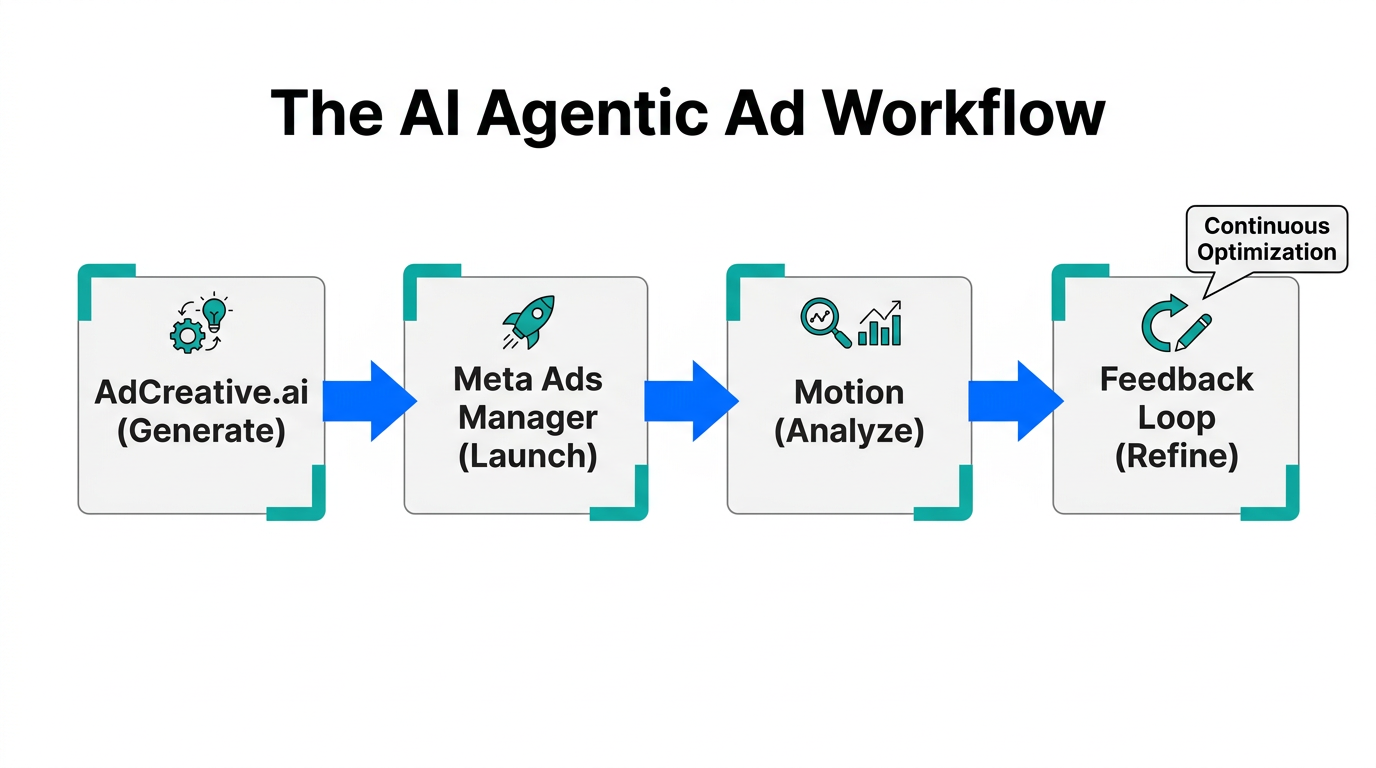
For years, the industry relied on human-triggered tools like ChatGPT or basic rules in Meta Ads Manager. However, 2025 marks the shift where AI has moved from the "side of the tech stack" to the center, as noted by Saul Marquez. We are seeing the rise of multi-agent orchestration, where one agent handles creative generation, another manages real-time bidding, and a third reallocates budget based on cross-platform performance.
"The 'Agent Revolution' is as significant as the cloud or mobile revolutions, moving software from something we use to something that works for us." — Marc Benioff, CEO of Salesforce
This revolution is fueled by dynamic creative optimization. Platforms are now capable of analyzing if a specific KPI (like ROAS falling below 2.0) has been triggered and autonomously pausing underperforming assets or shifting spend. This level of autonomy allows teams to report a 61% increase in efficiency, freeing up human talent to focus on high-level strategy and brand vision.
Step 1: Massive Creative Generation with AdCreative.ai
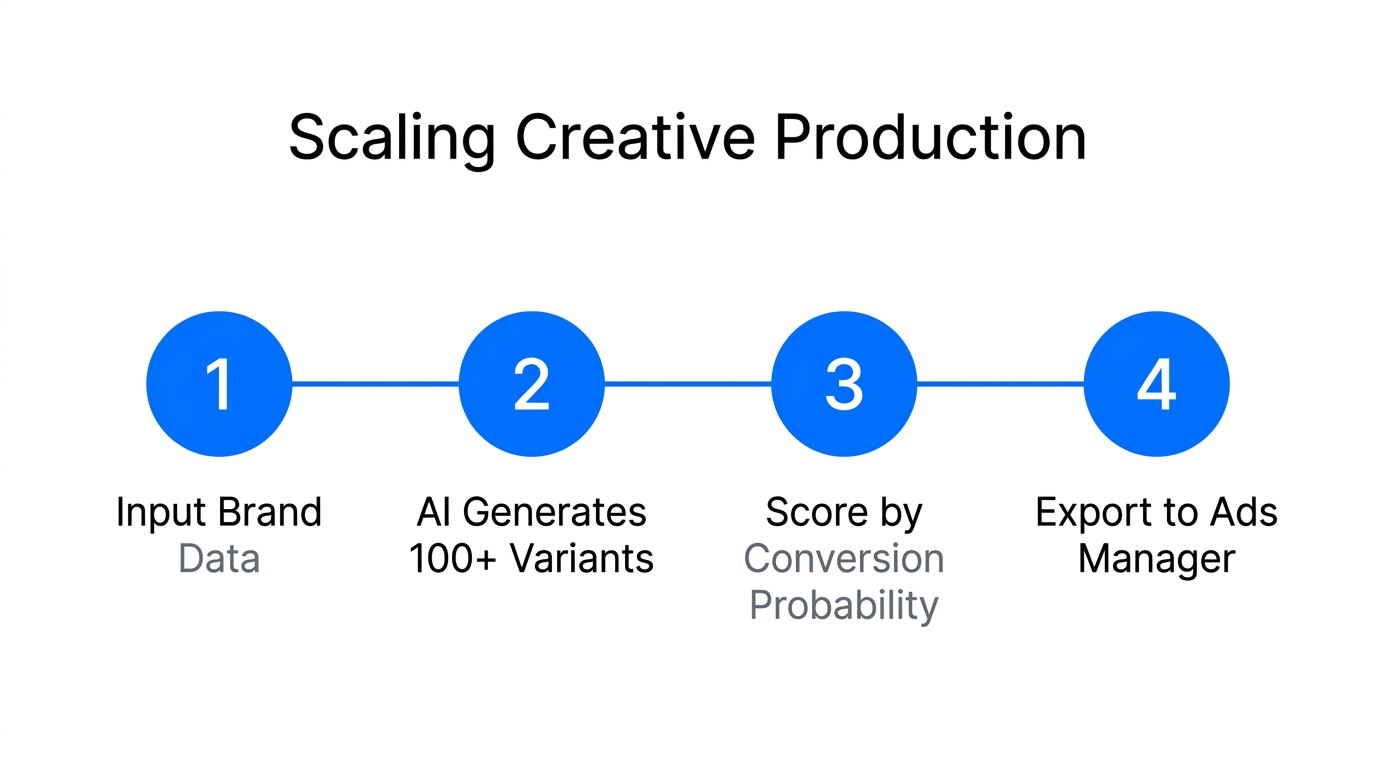
The biggest bottleneck in scaling paid social is creative fatigue. To maintain high performance, you need a constant stream of fresh visuals. AdCreative.ai solves this by using generative AI to produce high-converting visuals that strictly follow brand style guides. By feeding the tool your logos, brand colors, and fonts, you can generate thousands of variations in seconds.
Maintaining Brand Integrity at Scale
One of the risks of AI ad copy generation and visual creation is the "hallucination" or drift from brand standards. AdCreative.ai mitigates this by allowing you to lock in specific design parameters. This ensures that even when the AI explores new "vibes" or social sentiments, the core brand identity remains intact. Brands like Coca-Cola have already seen 20% increases in conversion rates by implementing these real-time event triggers and dynamic bidding strategies.
| Feature | Traditional Automation | AI Agent Workflow |
|---|---|---|
| Creative Output | Manual design with templates | Autonomous generation based on performance data |
| Bidding Strategy | Static rules (e.g., if CTR < 1%, pause) | Real-time adjustments based on market volatility |
| Analysis | Weekly human reviews | Continuous monitoring and instant pivoting |
The 'Anti-Hallmark' Prompting Strategy
A common mistake in AI ad copy generation is producing generic, overly sentimental content that feels like a greeting card—the "Hallmark effect." To drive conversions, your agent needs to speak with a unique brand voice. Using tools like Jasper or Copy.ai, you should implement an "Anti-Hallmark" prompting strategy.
How to Prompt for Performance
- Feed the Style Guide: Always include your brand’s "voice and tone" document in the system prompt.
- Negative Constraints: Tell the agent what not to do (e.g., "Do not use emojis," "Avoid exclamation points," "Don't use the word 'revolutionary'").
- Contextual Relevance: Use agents to match the current "vibe" of social media. If a specific trend is blowing up on TikTok, your agent should be prompted to adapt existing copy to that sentiment within hours.
"Generic LLM prompts result in generic results. Constraint is the key to creativity when working with autonomous agents."
Step 2: Feeding the Data Back with Motion
Generation is only half the battle. To create a true AI agent for paid ads, you need a feedback loop. This is where Motion creative analytics becomes essential. Motion bridges the gap between the creative team and the media buyers by visualizing why certain ads work.
Closing the Loop: Motion to AdCreative.ai
By connecting Motion to your ad accounts, you can identify winning visual elements—such as a specific hook length or a particular color palette—and feed that data back into your creative agent. This is the "Perceive" and "Think" part of the loop. If Motion shows that "User-Generated Content (UGC)" styles are outperforming polished studio shots, your next batch in AdCreative.ai should lean heavily into that aesthetic.
For brands looking to source the raw material for these tests, platforms like Stormy AI streamline creator sourcing and outreach. By using Stormy AI to find influencers who fit your niche, you can gather high-quality video content that your AI agents can then iterate on and optimize for different platforms like TikTok Ads Manager or Meta.
Case Study: How Sephora Scaled Creative Testing
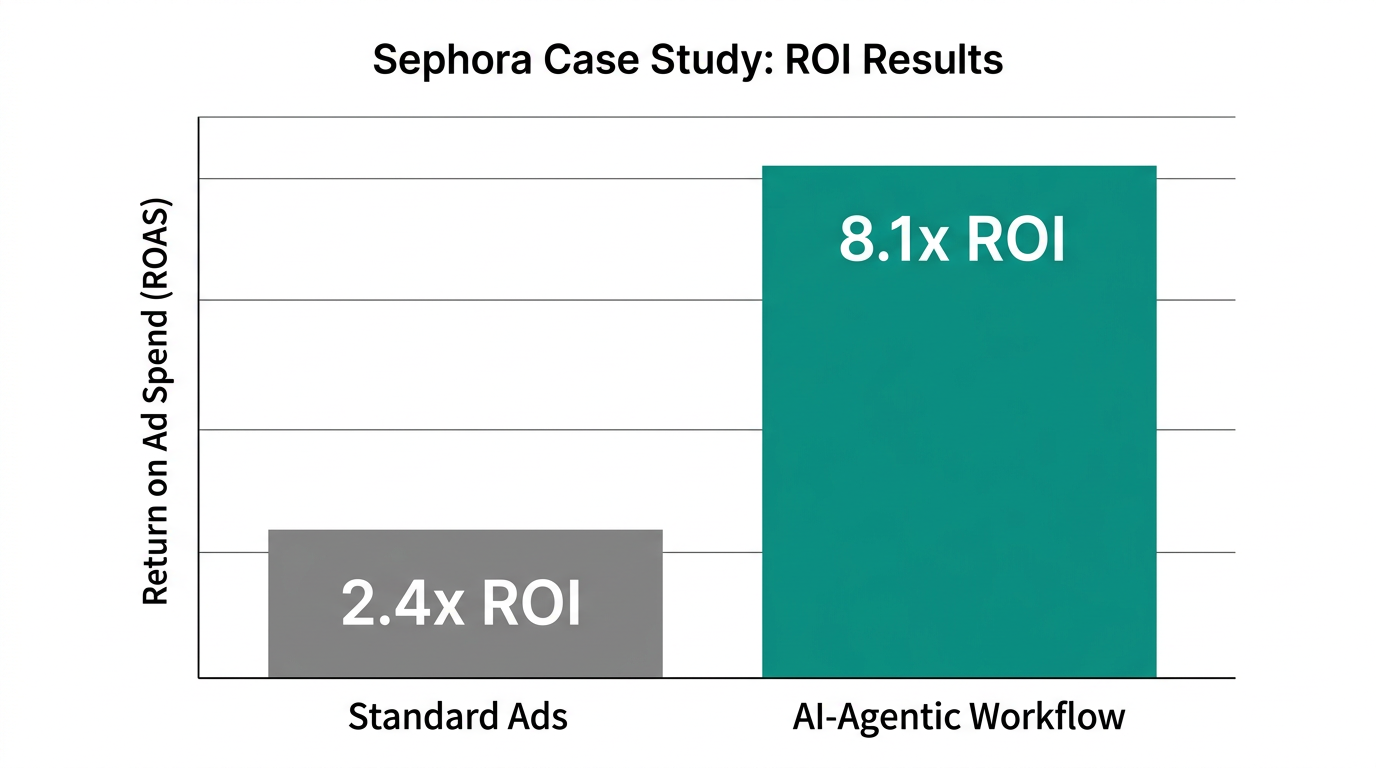
Sephora provides a masterclass in dynamic creative optimization. By deploying AI agents to test thousands of creative variations simultaneously, they were able to identify niche audience preferences that traditional testing would have missed. This high-velocity approach resulted in a 35% increase in engagement rates.
The lesson from Sephora is clear: the more variations you test, the faster you find your "unicorn" ads. Instead of launching three variations and waiting two weeks, Sephora's agentic approach allowed them to launch 300 variations and find the winner in 48 hours. This efficiency is why AI-driven bidding improves campaign efficiency by up to 30%.
Avoiding 'The Creep Factor': Privacy in Personalization
As AI agents become better at hyper-personalization, marketers must navigate the "Autonomy Paradox." While users demand personalized experiences, 71% of consumers get frustrated with impersonal ads, but they are equally "spooked" by ads that seem to know too much. This is often called "The Creep Factor."
Best Practices for Safe Personalization
- Constraint over Chaos: Use agents within "safety pre-hooks" to prevent them from using sensitive user data in ad copy.
- PII Filtering: Before sending performance data to an LLM for analysis, use an agent to scrub personally identifiable information.
- Vibe over Identity: Focus on matching the "vibe" or the context of where the ad appears (e.g., matching a trending sound on TikTok) rather than specifically targeting a user's private life.
The Modern Growth Stack for AI Ads
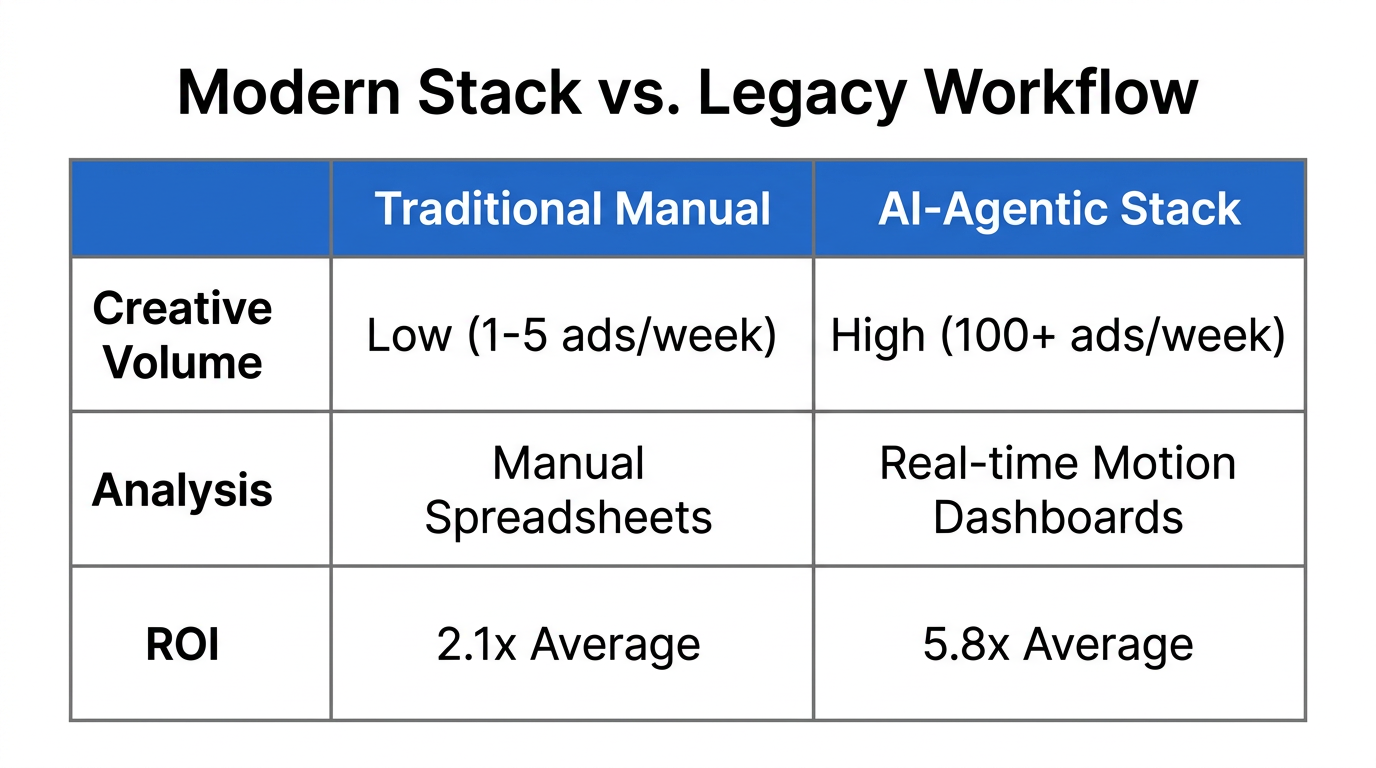
To implement this tactical guide, you need an integrated ecosystem. Don't try to build a monolithic system; instead, use low-code tools to connect specialized agents.
| Tool Category | Recommended Platform | Primary Function |
|---|---|---|
| Creative Gen | AdCreative.ai | Visuals & Banners |
| Analytics | Motion | Creative Reporting |
| Workflow | Make.com | Connecting APIs |
| Discovery | Stormy AI | Sourcing UGC Creators |
| Ad Delivery | TikTok/Meta | Distribution |
Conclusion: From Manual to Autonomous
The transition to AI agents for paid ads is not just a trend; it's a fundamental shift in how digital marketing operates. By pairing AdCreative.ai for generation with Motion for analytics, you create a self-optimizing engine that learns faster than any human team could.
However, autonomy requires strict guardrails. As you build your agentic workflows, remember the "Autonomy Paradox"—give your agents the power to act, but keep them within the bounds of your brand voice and privacy standards. Whether you are a startup using Make.com to bridge tools or an enterprise leveraging Salesforce Agentforce, the goal is the same: software that works for you, allowing you to scale creative testing to heights previously unimaginable.