Walk down the cleaning aisle of any major retailer, and you will see what Eric Ryan, the mastermind behind Method Soap, Olly Vitamins, and Wellie, calls a "sea of sameness." For decades, home care was dominated by toxic chemicals in uninspiring green plastic jugs. Ryan didn't just see a category; he saw a cultural shift toward lifestyling the home that legacy brands had completely missed. By applying an influencer marketing strategy rooted in high design before the creator economy even existed, he turned commodities into icons. The secret lies in a concept called 'creative tension'—the delicate balance between the familiar and the novel.
To build a brand today, you cannot simply be "better"; you must be different in a way that creates an emotional connection. In a world where consumers are increasingly distracted, your product must act as an "object of desire." Whether you are running campaigns on TikTok Ads Manager or building a storefront on Shopify, the visual identity of your product is your strongest lever for organic growth. If a customer wants to leave your product on their counter rather than hide it in a cabinet, you have already won the battle for UGC marketing.
The Physics of Creative Tension: Familiarity vs. Novelty
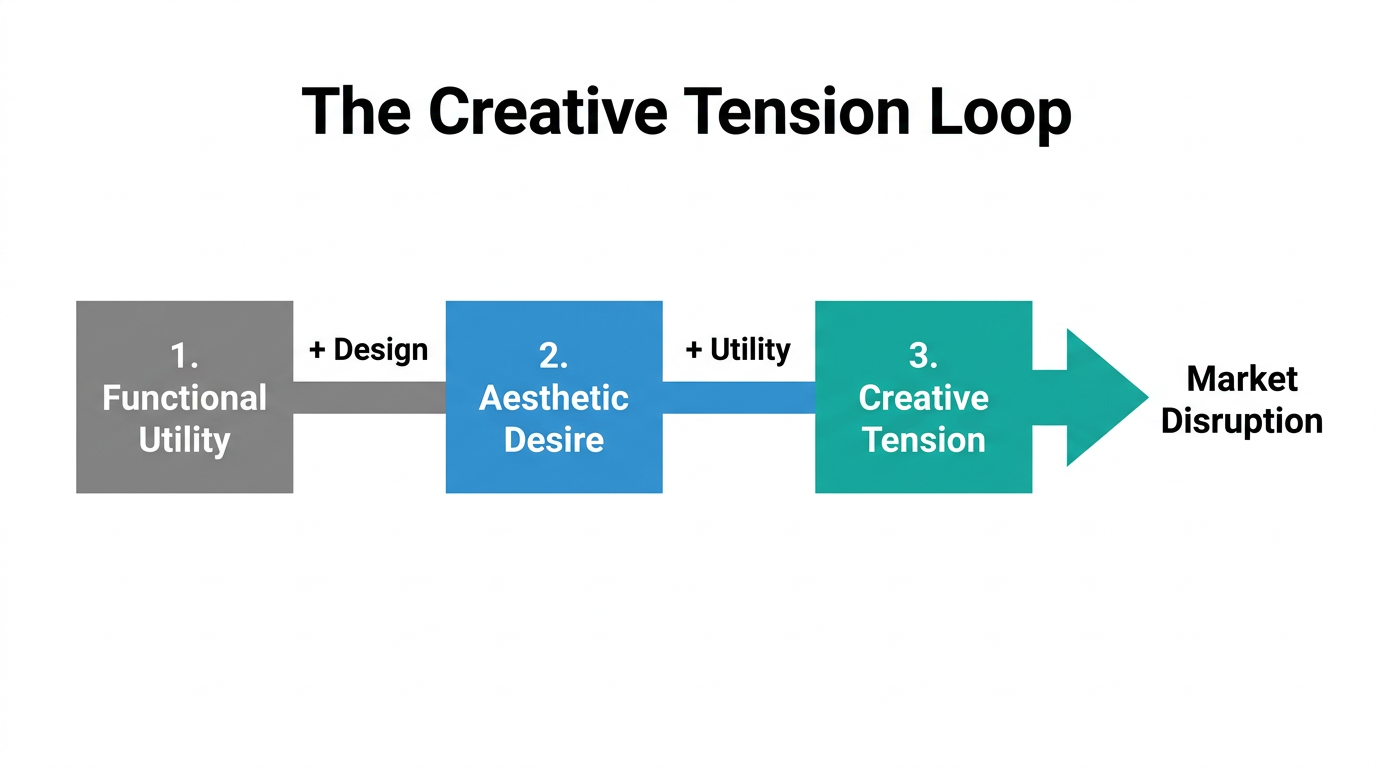
Most entrepreneurs fail because they over-innovate. According to Ryan, if you create something that is too novel, you face an insurmountable consumer education cost. You have to explain what it is, why it works, and why they should change their habits. Conversely, if you are too familiar, you lack differentiation and get lost in the noise. The sweet spot is the intersection of the two—this is where creative tension lives. It is the practice of taking a deeply familiar category (like hand soap) and applying a novel twist (like a designer vase shape).
"I look for those ideas that bring together exactly what you just said of this creative tension, but there's enough familiarity in it. You can jump into it, but there's enough novelty to it that it makes it a new experience."
When Method launched, they brought together 'eco-friendly' and 'chic.' At the time, these were opposing ideas. 'Eco' meant brown boxes and smelling like vinegar; 'Chic' meant luxury and high fragrance. By mashing them together, Ryan created a product that felt both safe and aspirational. This approach reduces the friction of customer acquisition. When your product is intuitive, you don't need a 50-page manual on your Notion workspace to explain it; the design does the talking.
Designing the 'Object of Desire'
In the creator economy trends we see today, products are no longer just tools; they are props. A product that looks like a "little object of desire" sitting on a countertop is infinitely more likely to be featured in an organic TikTok or Instagram Story. Method's original bottle design was actually inspired by a camping fuel bottle Ryan found in Norway. He stole the aesthetic from housewares and beauty aisles to disrupt the unsexy cleaning aisle. This is the product positioning masterclass: steal from categories as far away as possible.
This "display-ability" is the engine of UGC marketing. When you design for the "countertop," you are essentially building a viral loop into your physical goods. This is why Ryan's vitamin brand, Olly, moved away from the standard round pharmaceutical bottles. They chose a square jar with a white cap that looked like a premium apothecary item. It was designed to be left out, which not only served as a visual reminder to the consumer to take their vitamins but also turned the product into a conversation piece for anyone visiting their home.
The 'Square vs. Round' Rule of Differentiation
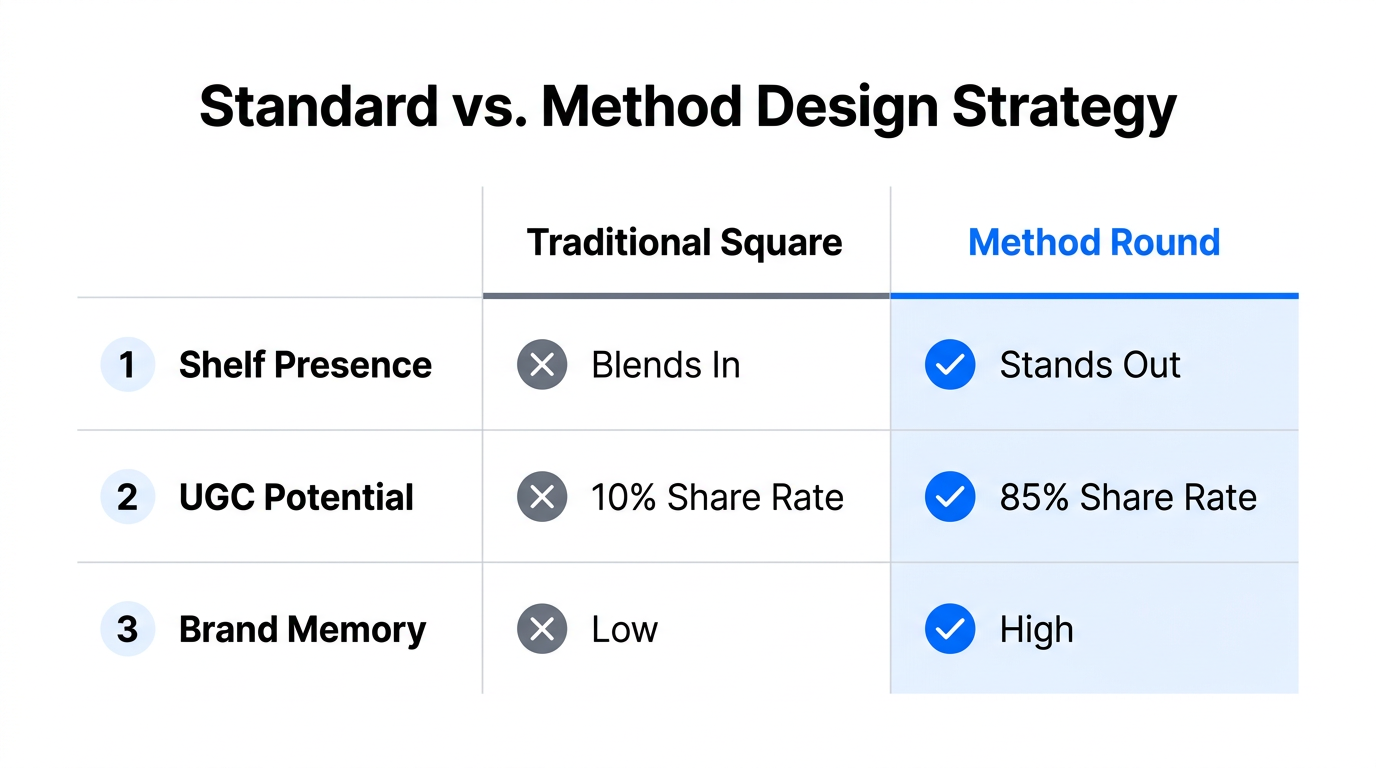
One of the most powerful heuristics Ryan shares is the simple observation of shape. When he walked into the vitamin aisle, he noticed every single bottle was round. His immediate conclusion? "I guess we’re going to have square packaging." This isn't just about being contrarian; it's about brand identity design that breaks the consumer's autopilot mode. If everyone is zigging, you must zag to get noticed. This simple visual shift can do more for your customer acquisition cost (CAC) than a month of testing on Meta Ads Manager.
| Feature | Legacy Brands | Design-Led Brands |
|---|---|---|
| Packaging Shape | Standard/Uniform (Round) | Distinctive/Iconic (Square/Vase) |
| Naming Strategy | Pseudo-science (Centrum) | Benefit-Focused (Sleep, Beauty) |
| Storage Location | Under the sink/In the cabinet | On the counter/Display |
| Marketing Angle | Utility & Price | Lifestyle & Emotion |
By changing the "presentation," you change the perception. Ryan notes that even in personal care, the leaders were taking themselves too seriously. This often hides an insecurity in the product. By bringing a sense of play—like putting patterns on Wellie bandages or making vitamins taste like gourmet gummies—you simplify the experience. You turn a chore (cleaning, taking meds) into a moment of delight. This time-to-fun (TTF) metric is just as important for physical products as it is for mobile apps.
The 'One Egg' Rule of Communication
Simplicity is the ultimate sophistication. Ryan uses the "one egg" analogy to describe consumer communication: if you throw a consumer one egg, they will catch it. If you throw them three eggs, they will drop all of them. Many brands fail because they try to communicate too many features at once. They want to be the cheapest, the fastest, the most organic, and the best-smelling. By the time they finish their pitch, the customer has already moved on.
"The number of pitches I sit through where they are intentionally over-complicating this to justify a valuation... the best entrepreneurs are the ones who take incredibly complex ideas and simplify them down."
This applies to your influencer marketing strategy as well. When you work with creators, give them one clear "egg" to throw. For Olly, it wasn't about Biotin dosages; it was about "Beauty." It wasn't about Melatonin milligrams; it was about "Sleep." By naming the product after the benefit rather than the chemical, you remove the cognitive load from the shopper. You can manage these clear, benefit-driven briefs using tools like Klaviyo for automated messaging or a specialized creator CRM, but the real magic happens when you find the right people to tell the story.
Lowering CAC through Design-Led UGC
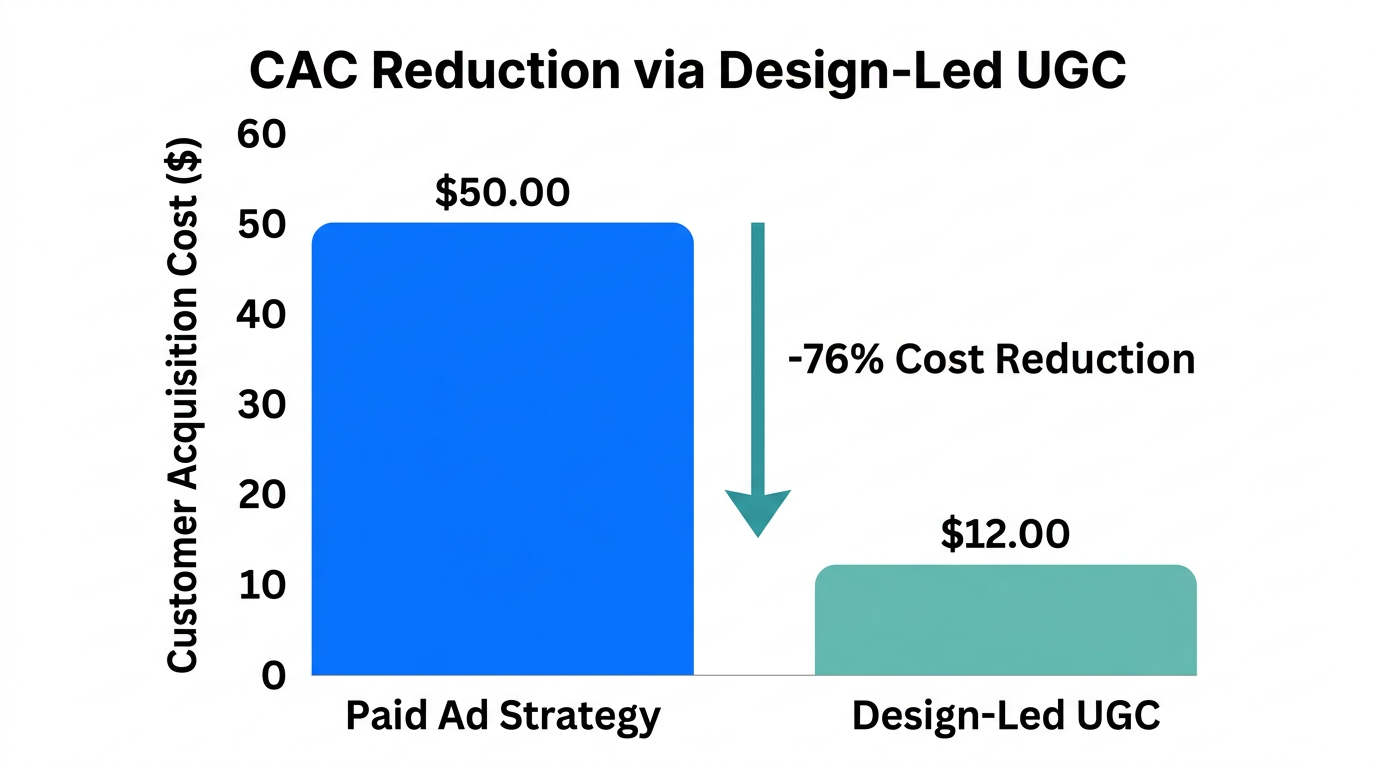
In the modern growth stack, design is a performance lever. High-quality product design acts as an organic top-of-funnel. When a product is beautiful, creators want to include it in their "Get Ready With Me" (GRWM) videos or aesthetic home tours. This organic UGC marketing significantly lowers your blended CAC because the content is produced at zero cost to the brand. Instead of paying thousands for a professional shoot on Canva, your customers become your creative agency.
Scaling this requires a systematic approach to finding the right advocates. Modern platforms like Stormy AI allow brands to discover creators who already align with their aesthetic. By searching for influencers who post about "minimalist home decor" or "clean beauty," brands can find partners who will naturally gravitate towards an "object of desire" product. This isn't just about reach; it's about finding creators whose audience values the same creative tension that your brand embodies. Using Stormy AI to vet these creators for audience quality ensures that your high-design product is being seen by real people, not bots.
The Playbook for Category Disruption
If you are looking to reinvent a category using the Eric Ryan model, follow these sequential steps to ensure you are creating something that resonates in the creator economy:
- Identify a Sea of Sameness: Walk the aisles. Look for categories that are boring, overly clinical, or taking themselves too seriously.
- Spot the Missed Cultural Shift: What is happening in fashion, tech, or travel that hasn't hit this category yet? (e.g., the "SoulCycle-ification" of vitamins).
- Be a Strategic Thief: Look for shapes, textures, and metaphors in unrelated industries. Use an architectural texture from Tokyo for a soap bottle.
- Apply the One-Egg Rule: Strip away the jargon. What is the single, most visceral benefit your product provides? Name it that.
- Foster Creative Tension: Ensure the product is familiar enough to understand instantly but novel enough to demand a second look.
Once the product is ready, the next phase is influencer discovery and outreach. You can use an AI-powered creator discovery platform to find those first 100 advocates who live at the intersection of your product’s two disparate ideas. By seeding the product with creators who value high-design commodities, you create the social proof necessary to move from a niche startup to a household name.
Conclusion: The Future of Brand Building
Building a billion-dollar brand in the 2020s is less about traditional advertising and more about product positioning and aesthetic allure. As Eric Ryan demonstrated with Method and Olly, the most successful products are those that solve a functional problem while fulfilling a narcissistic desire for beauty and status. When you balance familiarity with novelty, you create the "creative tension" that sparks curiosity and drives organic sharing.
In a world of infinite choice, design is the ultimate differentiator. Whether you are launching a new fiber supplement or reinventing the American diner, remember that if it feels "hard," it might be wrong. Simplify the message, elevate the object, and use modern tools like Zapier to automate your workflows and find the creators who will help you tell that story to the world. The era of the "sea of sameness" is over; the era of the "object of desire" has just begun.