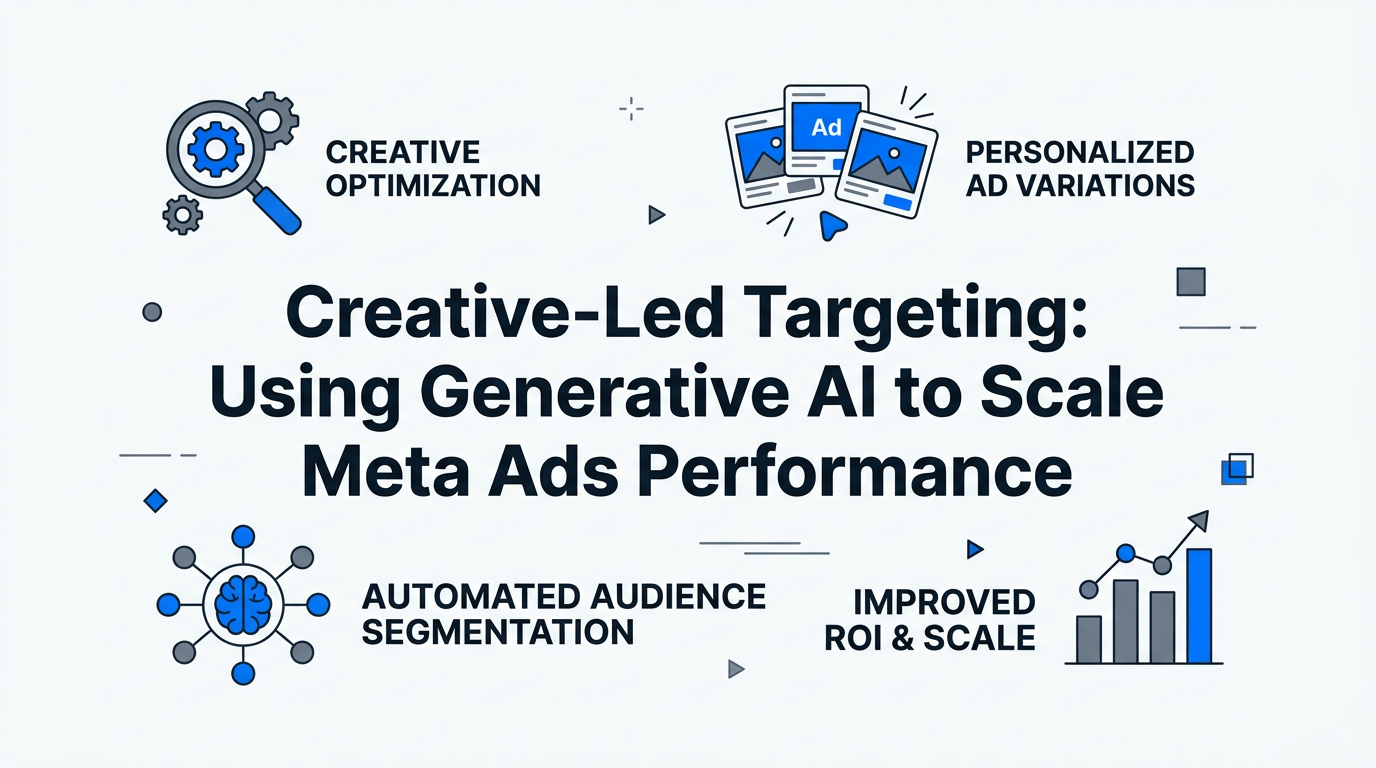
The landscape of social advertising is undergoing its most radical transformation since the launch of the Power Editor. For years, the secret to success on Facebook and Instagram lay in intricate interest-group layering and meticulous audience exclusions. Today, that manual labor is being replaced by machine learning and generative AI. By 2025, Meta aims for a state of "full-funnel automation," where the primary role of the advertiser is no longer to click buttons, but to supply a high-volume "creative warehouse" that the algorithm can use to find your buyers. If you are still trying to outsmart the algorithm with narrow targeting, you are likely leaving a 15% higher ROAS on the table.
Why Manual Interest Groups are Dying: The Rise of the Andromeda Engine
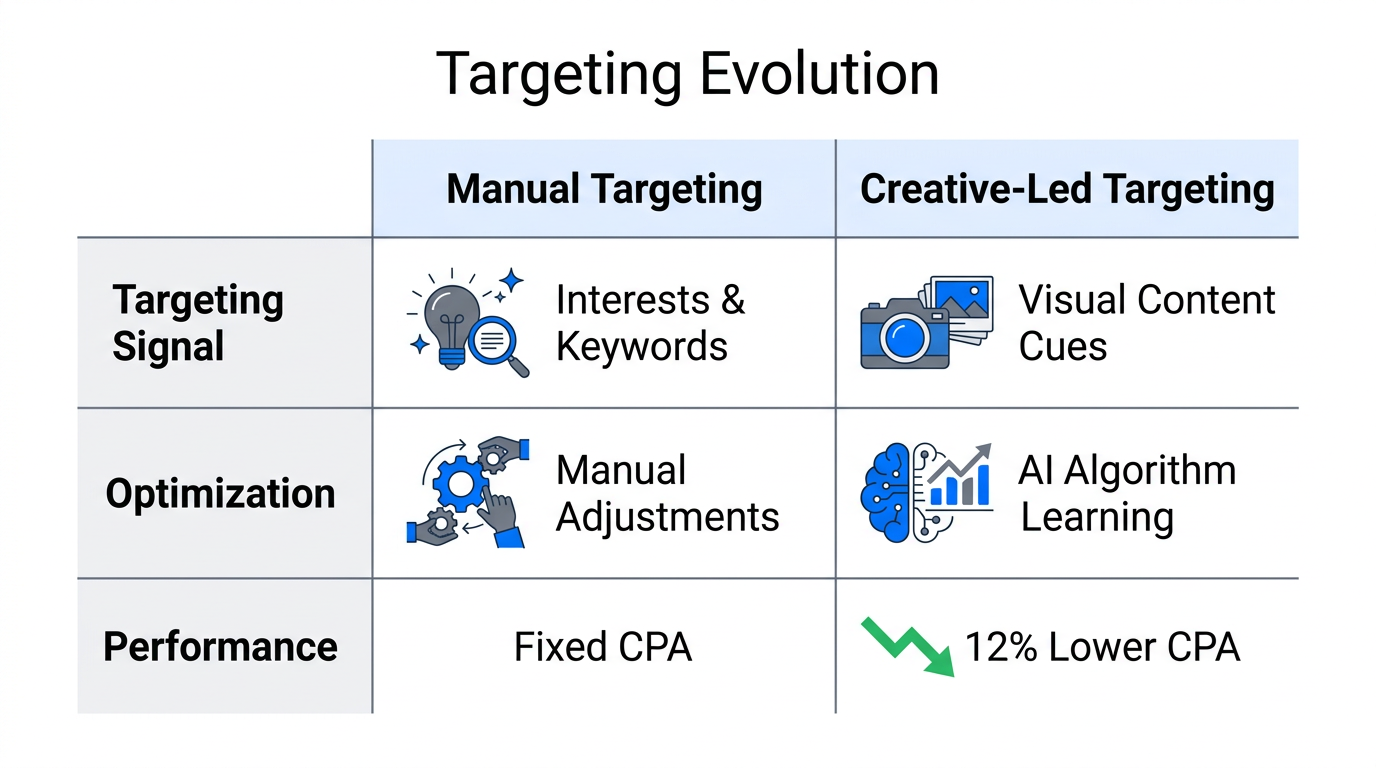
The era of "button-pushing" media buying is effectively over. Meta is currently rebuilding its entire recommendation infrastructure around a new architecture often referred to as Andromeda (or the Lattice engine). This system unifies signals from website data, app usage, and ad engagement into a single, massive prediction layer. According to research from MarTech, this move toward unified AI signals means the platform no longer needs you to tell it who your audience is—it figures it out by analyzing the creative itself.
This shift is known as creative-led targeting. When you upload an ad, the AI scans the visual elements, the text in the image, and the spoken words in the video. If your video features a person hiking in the Pacific Northwest, Meta’s AI identifies those visual cues and serves the ad to people whose behavior suggests an interest in outdoor gear and travel. Manual interest filters often act as unnecessary guardrails that prevent the algorithm from finding cheaper conversions in unexpected segments. Instead of narrow groups, the modern playbook suggests using Advantage+ Audience, providing a few broad suggestions, and letting the machine expand the reach.
"The role of the Media Buyer has shifted from manual optimization to high-level strategy and creative direction, as AI handles the heavy lifting of delivery."
The 20-50 Variant Rule: Building Your Creative Warehouse
If creative is the new targeting, then volume is the new currency. To succeed with Meta ads creative testing in 2025, you cannot rely on two or three "best-guess" assets. The AI requires a massive amount of raw material to test different combinations of hooks, headlines, and visual styles. Top-performing brands now follow the 20-50 variant rule: every major campaign should launch with dozens of creative iterations.
Manually designing 50 ads is a bottleneck that most teams can't overcome. This is where an AI ad generator becomes essential. Tools like AdCreative.ai allow you to generate high-conversion banners and copy at a scale previously impossible for small teams. By automating the production of these assets, you ensure the Meta algorithm always has "fresh" material to rotate, preventing the dreaded creative fatigue that causes performance to tank after a few days.
| Strategy Phase | Old Manual Method | AI-Powered Method |
|---|---|---|
| Asset Creation | 1-3 hand-designed banners | 20-50 AI-generated variants |
| Audience Selection | Layered interest groups | Advantage+ Broad Targeting |
| Performance Scaling | Manual budget increases | Rule-based scaling (e.g., Revealbot) |
| Testing | A/B split testing one variable | Multivariate AI testing (e.g., Marpipe) |
Meta Reels Automation: From Static Images to High-Engagement Video
The highest growth area on Meta right now is Reels. However, many brands struggle to produce enough video content to keep up with the demand. Meta Reels automation through generative AI is the solution. Using platforms like Creatify.ai, you can transform a single Shopify product URL or a static image into a high-quality video ad with AI-generated voiceovers and transitions.
This "image-to-video" generation is a game-changer for e-commerce. It allows you to take your existing catalog and instantly create dozens of Reels-ready assets that look and feel like native content. Creative diversity is the key to scaling; Meta's internal research suggests that optimizing creative with AI tools leads to a 22% boost in ROAS. By testing different video hooks—the first 3 seconds of the Reel—you can find exactly which visual triggers stop the scroll for your specific audience.
Systematic Testing with Marpipe and Smartly
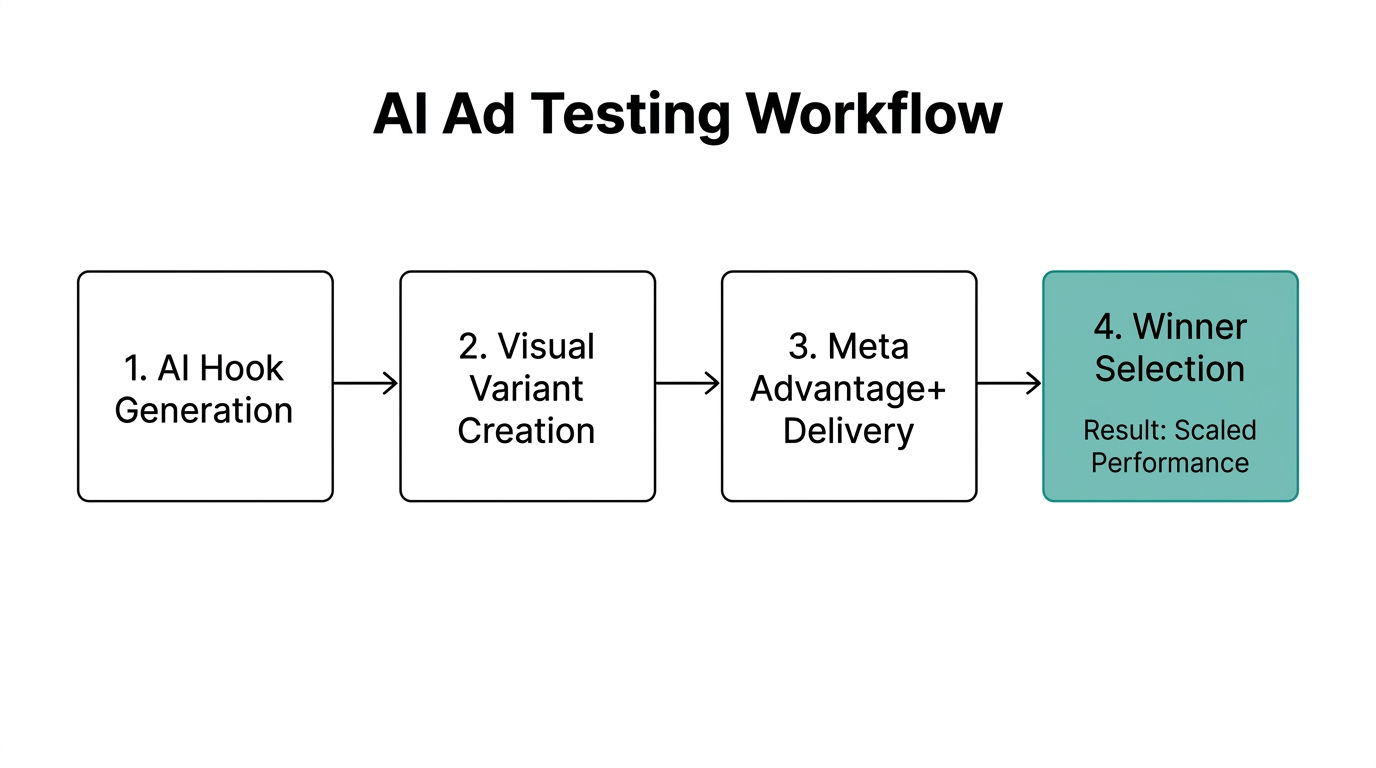
Simply throwing 50 AI-generated ads into a campaign isn't enough; you need a system to understand why an ad is working. This is where systematic multivariate testing comes in. Tools like Marpipe allow you to break an ad down into its component parts: the background color, the model, the headline, and the CTA button.
By testing these elements in isolation, you gain data-driven insights that inform your next batch of creative. For instance, you might discover that videos featuring "unboxing" footage outperform "lifestyle" footage by 30%. To get this raw footage, you can use creator discovery tools like Stormy AI to find UGC creators who can provide the authentic clips that your AI tools then transform into polished ads. This synergy between human creativity and AI scale is the hallmark of a high-performing 2025 marketing stack.
"AI should be treated as a 'junior intern' that can produce massive volume, but it still requires a human 'Creative Director' to ensure brand safety."
Avoiding the 'Bland Brand' Trap and Training Your AI
One of the biggest risks of using generative AI for marketing is the tendency for assets to look generic. If every brand uses the same AI prompts, every ad starts to look the same. Experts from the Forbes Agency Council warn that while AI handles 90% of the work, the remaining 10%—the emotional resonance and brand voice—must be human-led.
To avoid the "bland brand" trap, you must train your AI tools on your specific brand guidelines. Instead of using generic prompts, feed your AI ad generator examples of your best-performing past copy, your brand's unique value propositions, and the specific pain points of your customers. The goal is to produce "high-frequency creative" that still feels deeply personal and authentic to your brand.
The Technical Foundation: CAPI and Data Hygiene
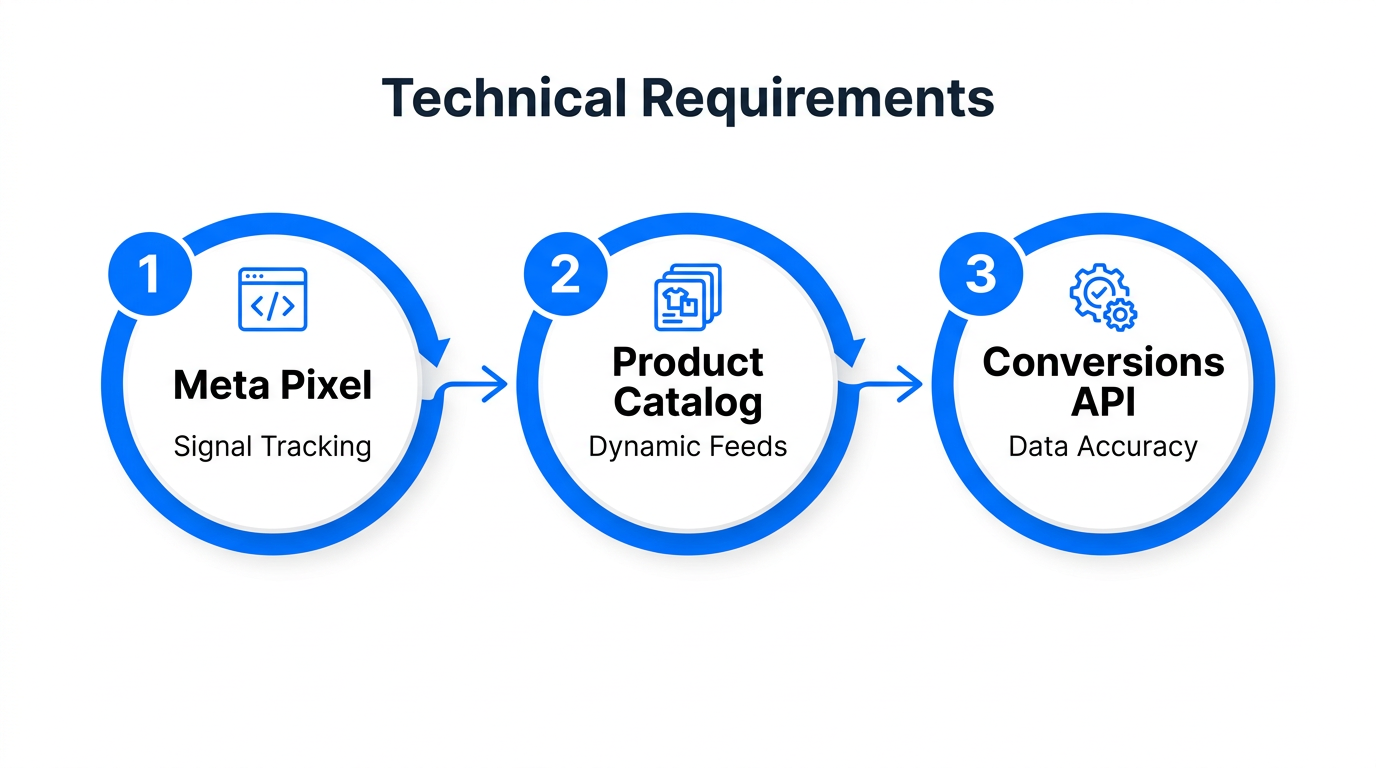
Your AI-driven creative strategy is only as good as the data feeding it. As traditional cookie tracking becomes less reliable, Meta relies on the Conversions API (CAPI) to maintain automation accuracy. Setting up Meta CAPI allows for server-side tracking, ensuring that the AI receives a clear signal of who is actually buying your product.
Without clean data, the AI might optimize for the wrong actions, leading to a drop in lead quality. In fact, research shows that nearly half of advertisers who use automation without proper technical setup see a performance decline. Brands that pair robust data hygiene through Google Analytics with a scalable creative engine, managed through a creator CRM like Stormy AI, are the ones that will dominate the feed in the coming years.
Conclusion: The Playbook for AI-Driven Success
Scaling Meta ads in 2025 requires a fundamental shift in mindset. You are no longer just a media buyer; you are a Creative Strategist. Success is built on three pillars: Creative-Led Targeting, AI-Powered Content Scaling, and Technical Data Accuracy.
- Embrace Broad Targeting: Trust the Advantage+ engine and let the creative find your audience.
- Automate Asset Production: Use tools like AdCreative.ai and Creatify.ai to maintain the 20-50 variant rule.
- Test Systematically: Use Marpipe to identify high-performing visual hooks and headlines.
- Prioritize Data: Implement CAPI to ensure your AI is learning from high-quality signals.
By moving away from manual adjustments and focusing on the volume and quality of your creative assets, you can leverage Meta’s powerful machine learning to drive sustainable, scalable growth for your brand.