In the world of technology and startups, there is a pervasive myth that you must invent something entirely new to achieve massive success. Founders often believe they need to be the next Steve Jobs, conjuring up a category-defining product from thin air. However, the reality of the most profitable business models is often much simpler: they are built on the foundations of existing success. By identifying markets that already have proven demand and adding a strategic "twist," you can bypass the most dangerous phase of a startup—the search for product-market fit—and move straight into scaling. This is the Copycat Framework, a methodology that helped entrepreneur Will Cannon build two companies doing over $30 million in sales without ever reinventing the wheel.
The Myth of Innovation vs. Proven Product-Market Fit
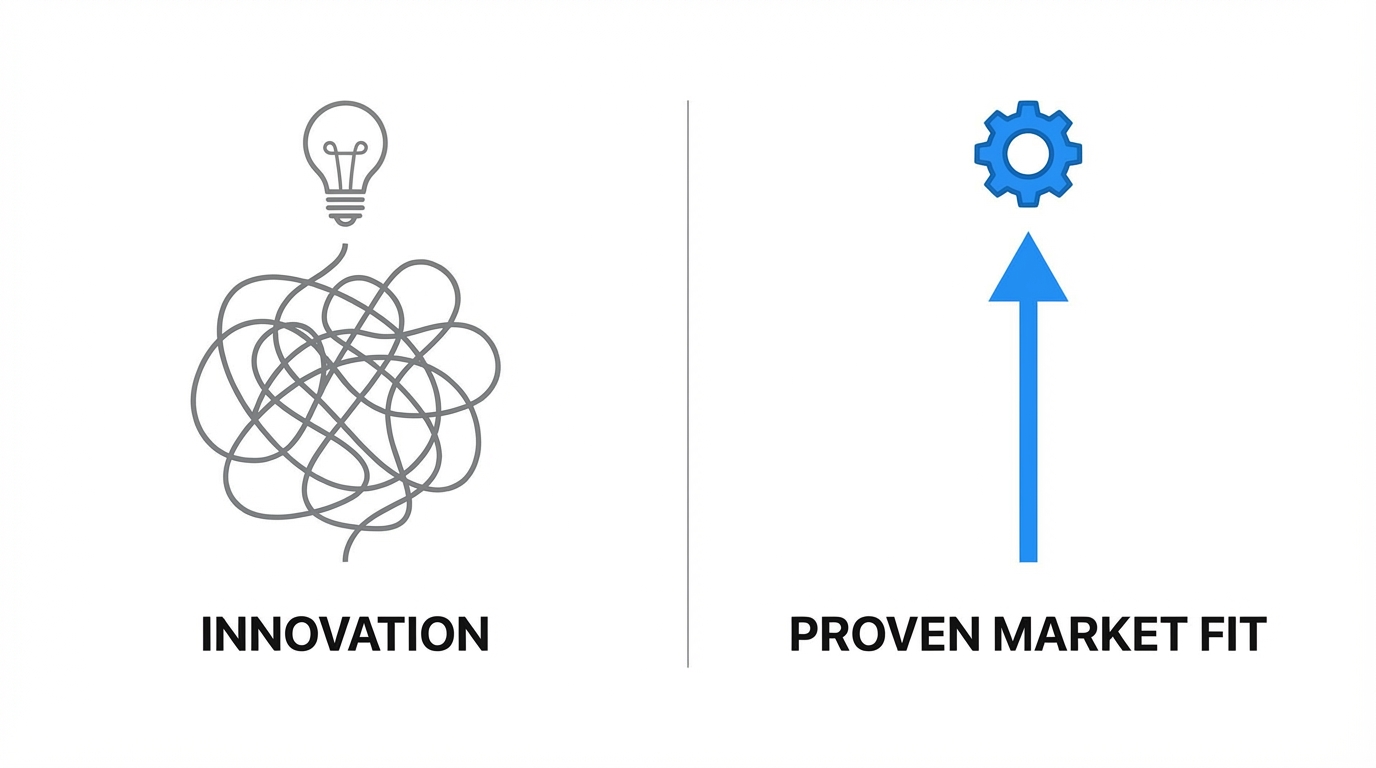
Most first-time founders fail because they try to solve a problem that doesn't exist or isn't painful enough for people to pay for. According to Starter Story, many of the most successful ventures are those that entered crowded markets and simply did one thing better. This is known as a product market fit strategy that prioritizes safety and validation over novelty. When you enter a market that already has massive incumbents, you aren't guessing if people want the product; you already know they do. The demand is documented in the revenue figures of the market leaders.
Will Cannon’s journey is a testament to this. After losing everything in the 2008 mortgage crisis, he realized that high-risk bets are often the fastest way to "get crushed." Instead of trying to predict the future, he looked at what was working right now. His framework suggests that if you aren't a visionary like Steve Jobs, it is far more effective to compete in a market that is already fragmented and lucrative. Platforms like Stormy AI help brands navigate the creator economy by using similar data-driven approaches to find what is already working in the market rather than guessing on unproven trends. Furthermore, brands use Stormy AI to vet creators and detect fake followers, ensuring that their marketing spend is actually reaching real audiences.
Transitioning From Agency to SaaS: Solving Your Own Pain
Before building UpLead, Cannon spent a decade running a lead generation agency. This is a common path for those learning how to start a software company. Agencies are essentially research labs; they expose you to the recurring manual tasks and frustrations that can be automated with software. For Cannon, the recurring pain was data quality. His agency was spending thousands of hours manually verifying emails and phone numbers because the existing B2B data providers only offered 40-60% accuracy. Every time they built a list, they had to send it to a call center in the Philippines for manual verification.
This "aha moment" didn't come from a brainstorm session; it came from a line item on his profit and loss statement. He realized that if he needed a tool that provided real-time verified data, thousands of other agencies did too. This is a primary driver for SaaS business ideas: looking at your own internal processes and identifying the highest friction point. This approach is particularly effective for mobile app marketing and app install campaigns, where data accuracy and high-quality UGC (user-generated content) are the difference between a profitable campaign and a total loss.
The 1-2 Star Review Method: Finding Your Unique Twist


Once you’ve identified a proven market, you need a way to differentiate. You cannot simply build a carbon copy; you must perform a competitor gap analysis. Cannon’s secret weapon is the 1-2 star review method. By studying the complaints of customers using the industry leaders, you can find exactly where the incumbents are failing. This allows you to build a product that addresses those specific grievances as its core value proposition.
Analyzing the Gaps
For his second major success, Signaturely, Cannon looked at DocuSign. While DocuSign is a multi-billion dollar public company, its product had become bloated and complicated for small business owners. By looking at what users disliked, he found his twist: extreme simplicity. He built an e-signature tool that was "so easy your grandmother could use it." He didn't need to invent electronic signatures; he just needed to make them more accessible. Today, Signaturely has over 1.6 million users because it focused on the segment of the market that felt neglected by the complex features of the market leader.
Pricing is Not a Twist
It is important to note that being "the cheaper version" is rarely a sustainable strategy. Cannon emphasizes that your twist must be functional or experiential. Whether it’s better data accuracy for UpLead or better UX for Signaturely, the twist should be something a customer is willing to switch for, even if the price is comparable. In the world of influencer marketing, for example, brands might switch to a tool like Stormy AI because it offers better AI-powered discovery through natural language prompts rather than just being a lower-cost database.
The 4-Step Execution Framework
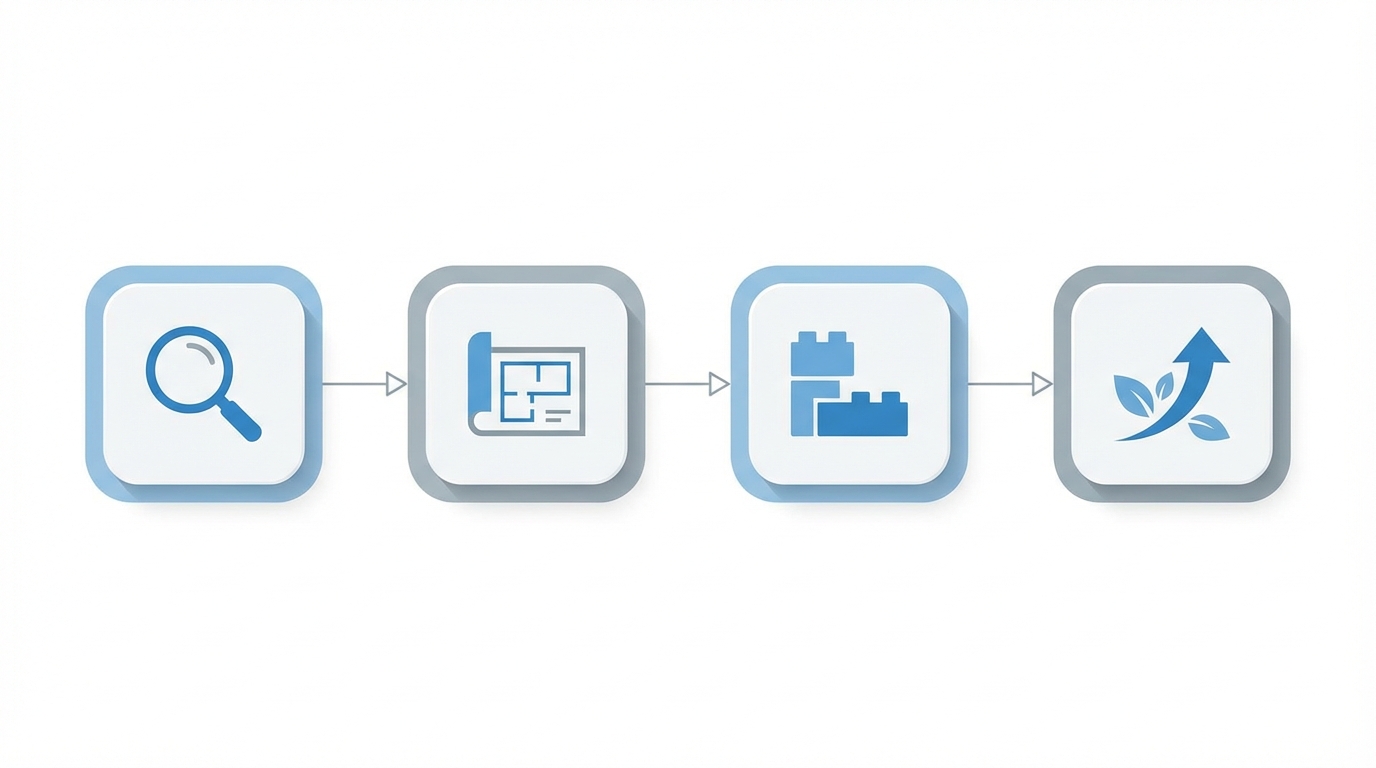
To replicate this success, you need a repeatable playbook. Most people talk about building a business, but very few execute with the persistence required to see it through. Cannon’s framework consists of four distinct pillars:
Step 1: Identify a Proven Market
Don't look for blue oceans. Look for markets where there are already multiple winners making millions or billions of dollars. Fragmentation is your friend. If there are five different CRM companies all doing well, there is room for a sixth with a unique twist. This is the core of a profitable business model: demand is already validated.
Step 2: Find Your Unique Twist
Use the 1-2 star review method mentioned earlier. Focus on one major pain point—complexity, data quality, lack of support, or poor mobile experience—and make that your primary focus. This is where you conduct your competitor gap analysis to ensure you aren't just adding noise to the market.
Step 3: Profitable Customer Acquisition
You must have a distribution skill set. Whether it is SEO, cold email, or paid ads, you need a way to get users without spending more than they are worth. Cannon utilized Google Ads and heavy SEO to scale Signaturely, while UpLead was built on a foundation of cold email. If you are building a mobile-first product, mastering Apple Search Ads is critical for growth.
Step 4: Persistent Execution
Building a SaaS is a marathon of failures. Cannon failed at over 20 different businesses before hitting his $30M milestones. You have to be prepared to get back up after every setback. The "copycat" strategy reduces market risk, but it does not eliminate execution risk. As your company grows, you'll need to maintain security compliance to close enterprise deals, often using tools like Vanta to automate the SOC 2 process and keep the momentum going.
Growth Playbooks: Cold Email and SEO
Acquiring the first $1 million in Annual Recurring Revenue (ARR) is often the hardest hurdle. Cannon used two distinct strategies for his two companies, providing a blueprint for any new SaaS founder.
The UpLead Cold Email Strategy
UpLead reached its first $1 million in ARR strictly through cold email. The secret was a short, human-centric template that framed the product against the market leader. The email looked like this: "Hi [Name], I saw your LinkedIn profile and thought this could be of value. We built a tool called UpLead, which is like ZoomInfo but with real-time email verification, and we’re really affordable. Are you open to trying it out at no cost?" This simple approach worked because it was direct, neutral, and offered a low-friction entry point. Today, founders can use Stormy AI to automate this entire process with an AI agent that handles personalized outreach and follow-ups to creators while they sleep.
The Signaturely SEO Strategy
For Signaturely, the growth engine was SEO and free tools. They built a free online signature tool that ranked highly for search terms related to hand-drawn signatures. Once users used the tool, they were funneled into the e-signature platform. Additionally, they created hundreds of templates for marketing agreements, construction contracts, and landlord agreements. By ranking for these "high-intent" keywords, they captured users at the exact moment they needed to sign a document. Brands often use similar strategies with Meta Ads to drive traffic to high-value lead magnets or templates.
Market Opportunities for 2025: Where to Apply the Framework
If you are looking for SaaS business ideas to launch in 2025, Cannon identifies three specific areas where the Copycat Framework is ripe for application. These are markets with high fragmentation, existing PMF, and clear gaps left by incumbents.
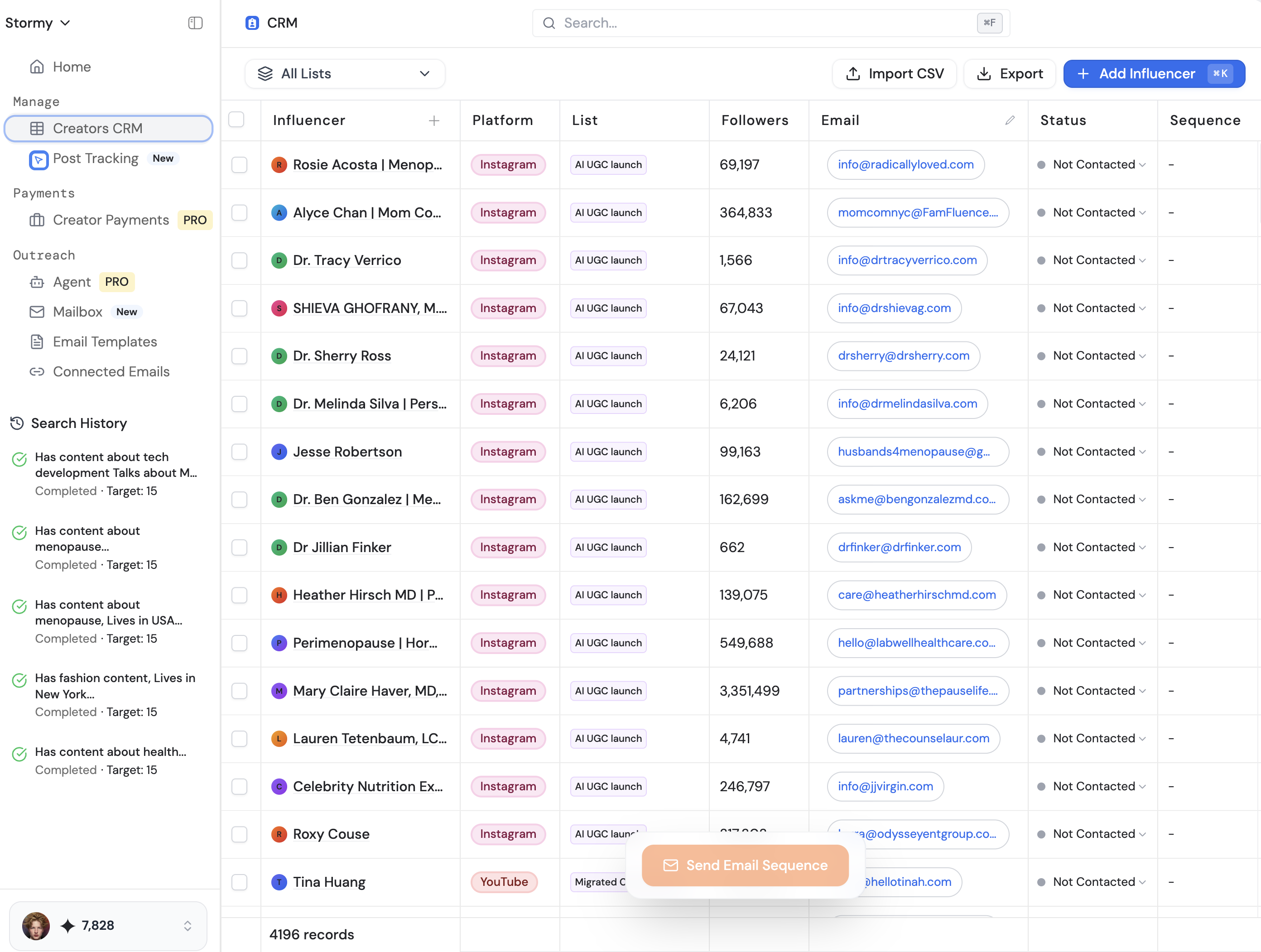
- Simple CRMs: Salesforce and legacy platforms have become massive, complex ecosystems. There is a huge opportunity for a stripped-back CRM focused on a specific niche (e.g., a CRM specifically for UGC creators or small plumbing businesses) that prioritizes speed over features. For those in the influencer space, the Stormy AI creator CRM allows teams to manage relationships and deals without the unnecessary overhead of general-purpose tools.
- SMB Payroll: Payroll is a massive, fragmented market. By copying the SEO playbook of companies like FreshBooks—which uses templates and tools to capture search traffic—a new player could carve out a significant share of the small business market.
- AI-Driven Website Analytics: Google Analytics 4 has frustrated many users with its complexity. A tool that provides simple attribution, ROI tracking, and integrates AI to mention Large Language Model (LLM) mentions or sentiment analysis would have an almost infinite market.
For app developers, these opportunities are even more lucrative when paired with App Store Optimization (ASO) and a strong UGC strategy. Stormy is an AI-powered platform for creator discovery, especially for mobile app marketing and UGC campaigns. By finding creators through Stormy AI to demonstrate these simple tools in action, you can lower your acquisition costs significantly across social platforms.
Conclusion: The Path to $30 Million

Building a $30 million SaaS doesn't require a stroke of genius; it requires a commitment to competitor gap analysis and relentless execution. By choosing a market with proven demand, finding a specific "twist" through user complaints, and mastering a profitable acquisition channel like SEO or cold email, you can build a sustainable, high-growth business. Monitoring your growth is essential, and using Stormy AI for post tracking and analytics helps you understand which campaigns are actually driving ROI. Stop looking for the idea that has never been done. Instead, look for the business that everyone is using but everyone is complaining about. That is where your fortune lies. Ready to start finding the creators who can help launch your proven idea? Explore how Stormy AI can accelerate your growth today.