The 2026 Guide to Conversational BI: Implementing Glew.io and Polar Analytics for Marketing Teams
Master conversational BI in 2026. Learn how Glew.io and Polar Analytics use natural language querying to turn dark data into actionable ecommerce growth insights.
In 2026, the era of the marketing manager-turned-data-scientist is officially over. For years, ecommerce teams were buried under VLOOKUPs and complex SQL queries just to answer basic questions like, "Which customer segment has the highest 90-day retention?" Today, the barrier between curiosity and insight has collapsed. With the global AI-enabled ecommerce market projected to reach $64.03 billion by 2034, according to Precedence Research, the industry has shifted from static dashboards to Conversational Business Intelligence (BI).
This guide explores how modern marketing teams are using natural language querying (NLQ) to eliminate manual spreadsheets and illuminate the "dark data" that traditional tools miss. By implementing platforms like Glew.io and Polar Analytics, brands are no longer just tracking what happened—they are using AI to dictate what should happen next.
Eliminating SQL: How 'Ask Polar' and NLQ Interfaces Empower Marketing Teams
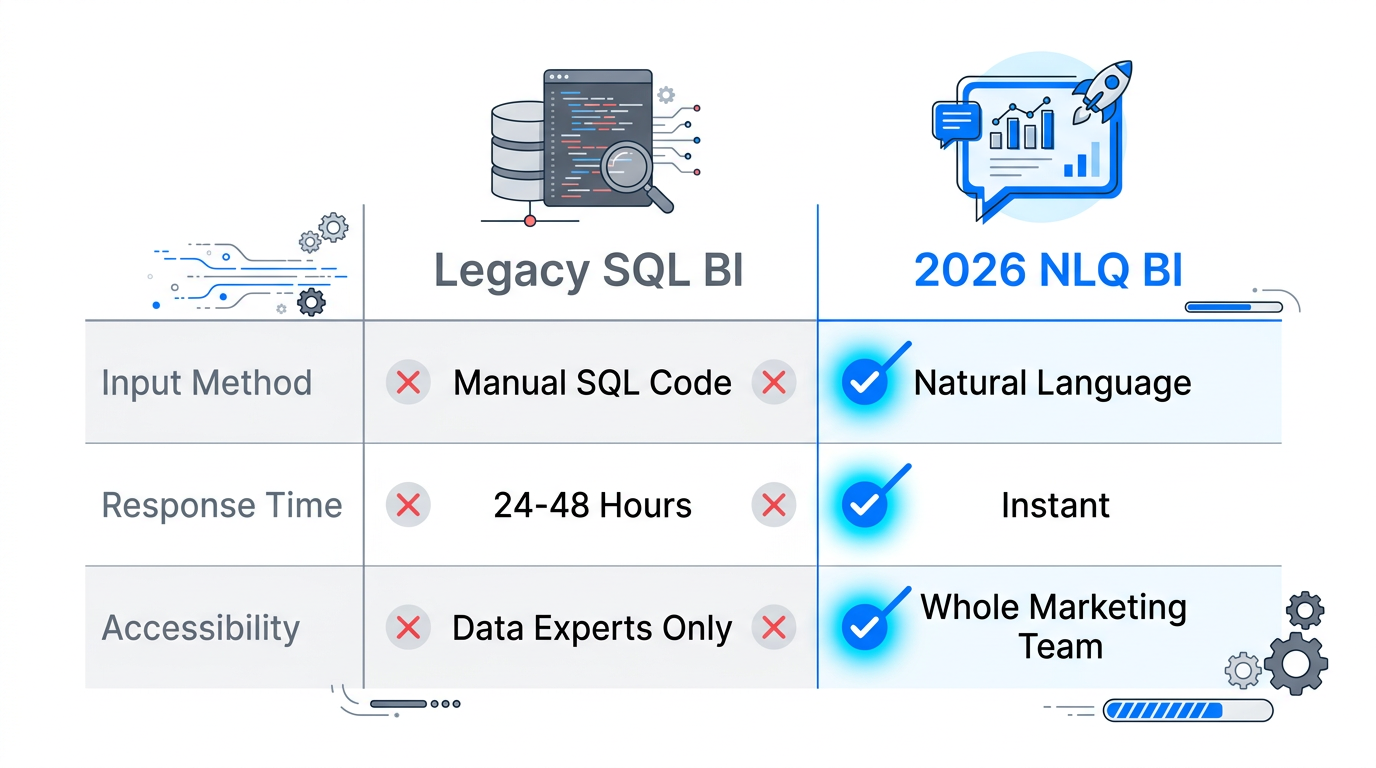
The greatest friction point in marketing analytics has always been the "technical gap." When a VP of Marketing needs a report, they typically have to wait 48 hours for a BI analyst to write a SQL script. In 2026, that wait time has been reduced to seconds thanks to Natural Language Querying (NLQ), a technology that Gartner notes is revolutionizing data democratization.
Tools like Polar Analytics have pioneered the "Ask Polar" interface, which allows any team member to type a question in plain English. Instead of building a pivot table, you simply ask: "Why did my net margins drop in the UK last week?" The AI doesn't just pull a chart; it analyzes cross-channel variables—shipping costs, ad spend fluctuations, and discount usage—to provide a narrative answer.
This shift to agentic analytics means your dashboard is no longer a graveyard of historical data. It is a digital teammate. According to Charles Lamanna, VP at Microsoft, every ecommerce manager in 2026 now operates with a "team of agents" handling finance, supply chain, and IT tasks autonomously in the background.
"The death of the manual spreadsheet isn't just about convenience; it's about the democratization of intelligence. When every marketer can query data, the speed of experimentation triples."
The Glew.io Implementation Roadmap: Unifying Shopify, Amazon, and ReCharge
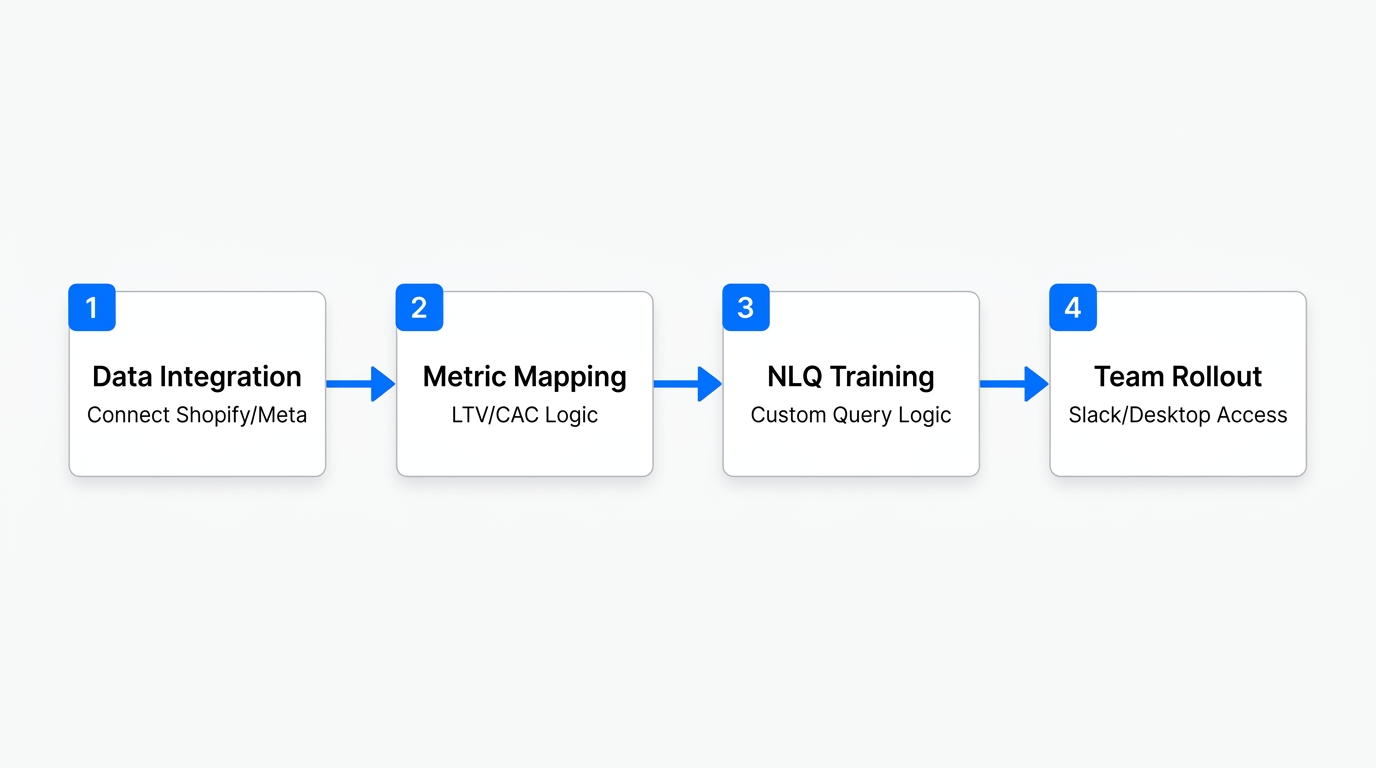
For omnichannel brands, the biggest challenge isn't a lack of data—it's data siloing. Your Shopify data says one thing, your Amazon Seller Central says another, and your ReCharge subscription metrics are in a third bucket. Glew.io ecommerce analytics solves this by acting as the unified "source of truth."
Phase 1: The Multi-Channel Connection
The first step in a 2026 implementation is connecting your primary revenue engines. Glew.io offers native integrations that pull historical data from Shopify Plus, Amazon, and ReCharge. This allows for a 360-degree view of the customer journey, identifying users who perhaps started on Amazon but moved to your direct-to-consumer (DTC) site for a subscription.
Phase 2: LTV and Profitability Mapping
Once the data is unified, the AI begins mapping Customer Lifetime Value (LTV). In 2026, we focus on Contribution Margin rather than just ROAS. Glew allows you to see the true profitability of every SKU after accounting for COGS, shipping, and marketing expenses across all platforms.
| Feature | Traditional BI (Legacy) | Glew.io / Polar (2026) |
|---|---|---|
| Data Access | Manual SQL / CSV Exports | Natural Language (NLQ) |
| Attribution | Last-Click Only | AI-Powered MMM & 1st Party |
| Insights | Descriptive (What happened?) | Prescriptive (What to do?) |
| Update Frequency | Daily/Weekly | Real-Time / Agentic |
Case Study: How Oatly Scaled U.S. Operations
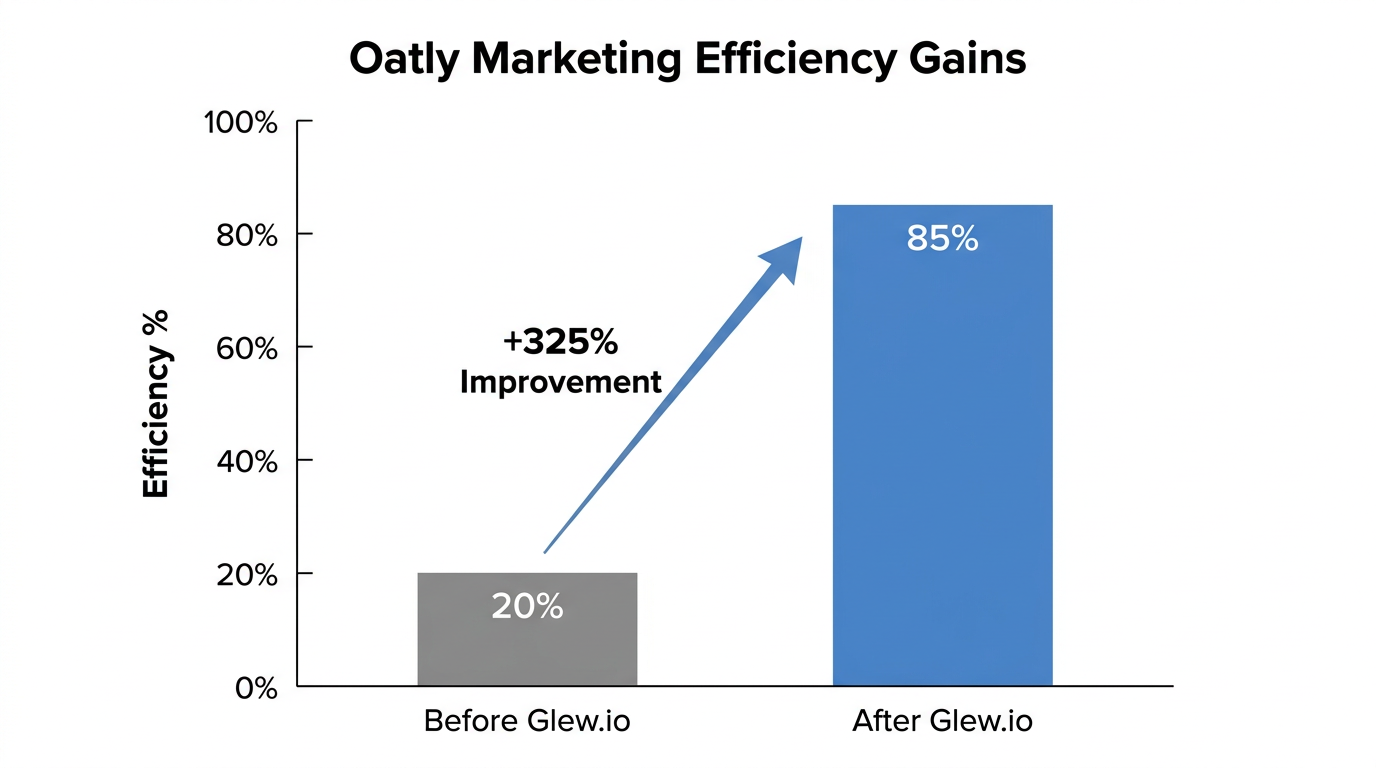
A prime example of unified data in action is Oatly. As the brand expanded its footprint in the U.S., it faced the complexity of managing recurring revenue alongside high-volume wholesale and DTC orders. By using Glew to unify Shopify and ReCharge data, their team gained instant access to subscription performance metrics.
Before this unification, identifying churn risks or the most profitable subscription tiers required manual data cleaning that took days. With Glew, Oatly could identify "hidden gems" in their product lineup—SKUs that had high initial acquisition costs but superior long-term LTV. This insight allowed them to reallocate their Google Ads budget toward high-retention products, scaling their U.S. operations with surgical precision.
"Unifying subscription data isn't just about tracking revenue; it's about understanding the heartbeat of your most loyal customers."
Cleaning Your 'Metric Layer': The Prerequisite for AI Success
One of the most common AI dashboard implementation 2026 mistakes is ignoring data hygiene. AI is an engine; your data is the fuel. If the fuel is contaminated, the engine stalls. This is where the Metric Layer comes in.
Standardizing your naming conventions is non-negotiable. If your Facebook ads are tagged as "FB_Promo" and your Instagram ads as "IG-Sales," an AI might struggle to aggregate them under a single "Meta" bucket without manual intervention. To ensure natural language querying for marketers works effectively, you must:
- Standardize UTM Parameters: Use a consistent framework like Google's Campaign URL Builder across Meta Ads Manager and TikTok.
- Define "Net Profit" Centrally: Ensure that every department (Finance, Marketing, Ops) agrees on the formula for contribution margin.
- Clean SKU Data: Ensure product names are identical across Shopify and your warehouse management system.
Illuminating 'Dark Data': Analyzing Unstructured Reviews and Voice Memos
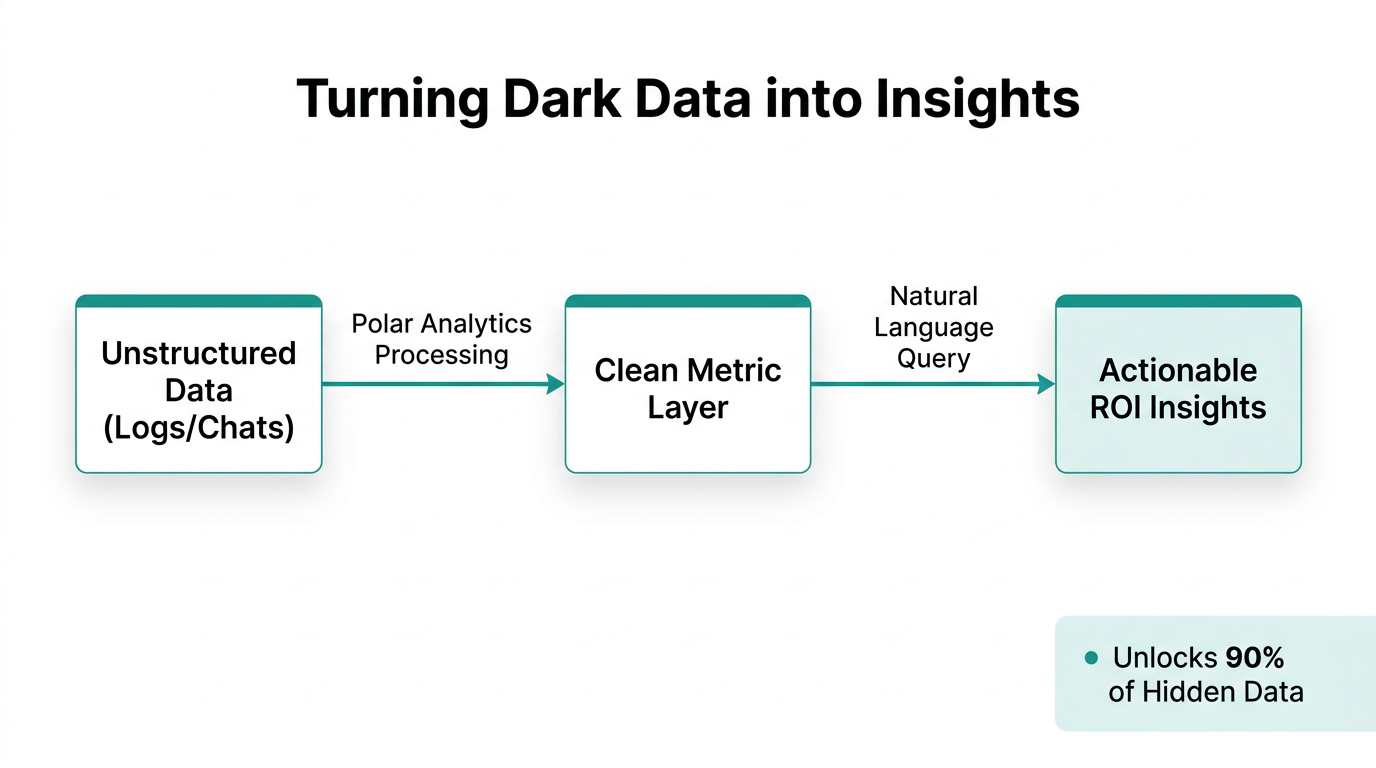
In 2026, the most valuable insights often hide in unstructured data—what industry experts call "dark data." This includes customer reviews, support tickets, and even voice memos from customer service calls. Traditionally, this data was impossible to quantify at scale.
Modern AI agents can now process thousands of these entries to find sentiment trends. For instance, if 50 customers mention that a specific zipper is "stiff" in their 5-star reviews, a traditional BI tool would only see the "5 stars." An AI-powered tool like Polar Analytics or integrations via Google Cloud can flag this as a potential quality control issue before it impacts your return rate.
Andi Gutmans, VP of Databases at Google Cloud, notes that "dark data will light up" as AI transforms our ability to reason about enterprise-wide unstructured information. For marketing teams, this means understanding the why behind the what.
When sourcing content creators for these products, platforms like Stormy AI can even help identify which influencers naturally use the sentiment keywords found in your best customer reviews, closing the loop between data and creative strategy.
"The future of BI isn't just counting clicks; it's understanding the human emotion behind the purchase through unstructured data insights."
Best Practices for AI Analytics Implementation
To successfully deploy these tools in 2026, follow this structured playbook to avoid the "Hype-First" trap:
- Audit Your Attribution: Use AI to run "what-if" scenarios. Tools like Triple Whale allow you to predict what would happen to total revenue if you cut spend on a specific channel by 10%.
- Implement Natural Language Interfaces: Prioritize tools that empower your non-technical staff. If your social media manager can query Polar Analytics directly, your BI team can focus on high-level strategy.
- Bridge the Gap with UGC: Use your data insights to fuel your creator campaigns. If your data shows a spike in interest from a specific demographic, use Stormy AI to instantly find and outreach to creators in that niche.
- Monitor for Narrative Hallucinations: AI is excellent at storytelling, but humans must validate the logic. Always double-check AI-generated "reasons" for data dips against seasonal trends or external market events.
The Bottom Line: Data-Driven, Human-Led
The transition to unstructured data insights in ecommerce marks the final move away from manual reporting. By implementing Glew.io and Polar Analytics, marketing teams are reclaiming hundreds of hours previously lost to data entry. However, the most successful brands in 2026 recognize that AI provides the map, but humans still provide the direction.
Whether you are unifying your Shopify and Amazon data or using NLQ to uncover customer sentiment, the goal is the same: faster, more accurate decisions that drive growth. As you build your 2026 growth stack, remember to pair these heavy-duty analytics tools with agile execution platforms. For example, once your data identifies a new audience segment, use Stormy AI to discover and collaborate with the creators who speak their language, turning your AI insights into high-converting reality.