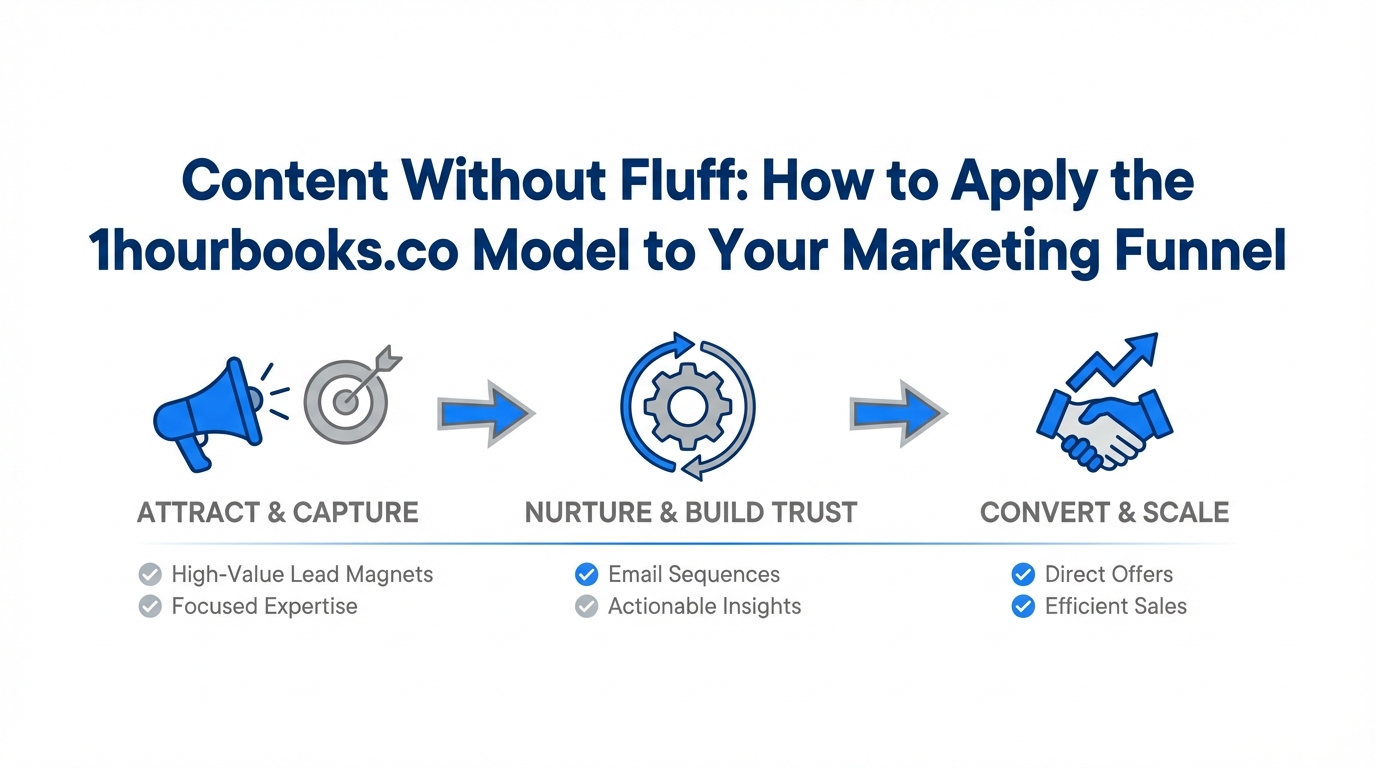
We have all been there: you download a 40-page whitepaper that promises to revolutionise your content marketing strategy, only to find three pages of actual insight buried under thirty-seven pages of corporate jargon, generic stock photos, and fluff. In an era of shrinking attention spans and information abundance, the traditional B2B lead magnet is dying. The market no longer rewards volume; it rewards utility. This shift is at the heart of the 1hourbooks.co philosophy—a movement toward creating high-impact, low-friction assets that respect the user's time while delivering maximum value.
By adopting a "lean content" mindset, marketers can move away from being perceived as noise-makers and start being seen as essential resources. This guide explores how to dismantle the "relic of publishing" and build digital products that actually convert by trading 10,000 hours of research for one hour of your audience's undivided attention.
Why the 300-Page Book is a Relic of Publishing
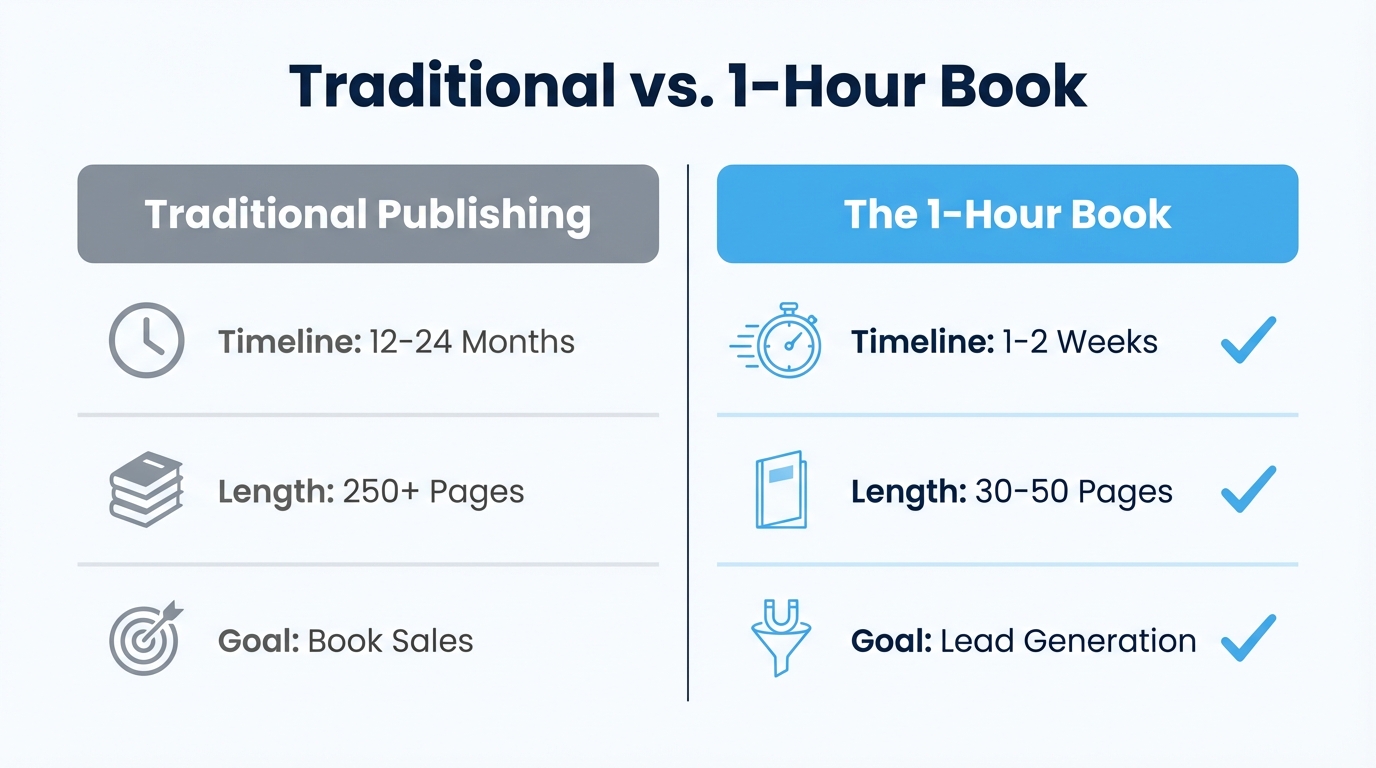
For decades, the publishing industry operated on a simple, flawed logic: weight equals value. If a customer was going to spend $25 at a bookstore, they needed to feel a physical heft in their hands. This forced authors to stretch 20 pages of brilliant insight into 300 pages of repetitive anecdotes and filler. This legacy has bled into legacy inbound marketing, where "comprehensive" is often confused with "long."
The reality is that your audience is suffering from information fatigue. When you offer a bloated asset, you aren't providing more value; you are providing a more difficult chore. The 1hourbooks.co model rejects this by focusing on "single-sitting consumption." If a user can finish your asset in the time it takes to drink a cup of coffee, the likelihood of them actually implementing your advice—and returning to your funnel—skyrockets.
The 'TED for Books' Framework for B2B Lead Magnets
Imagine if your lead magnets followed the same constraints as a TED Talk. TED famously limits speakers to 18 minutes because that is the threshold for maintaining high-level cognitive engagement. When applying this to Google Ads landing pages or organic social campaigns, your goal should be to create the "TED for Books."
A "TED-style" digital asset focuses on one big, counterintuitive idea. Instead of trying to cover the entire landscape of digital product marketing, pick one specific friction point your customer faces and solve it completely. This creates a "format consistent" expectation: your audience knows that every time they engage with your brand, they will get a sharp, punchy, and actionable insight without the fluff.
"10,000 hours of my research for one hour of your time is an incredible trade that anyone should be willing to make."This framework forces a content marketing strategy shift from breadth to depth. You are no longer summarizing what everyone else says; you are providing a curated, high-density shortcut. This is particularly effective for B2B content distribution on platforms like LinkedIn, where professionals value efficiency above all else.
Using 'Irritation-Driven Innovation' to Spot Gaps
Great content isn't born from a vacuum; it’s born from frustration. Irritation-driven innovation is the process of looking at your competitor's content and identifying what makes it annoying. Is it too slow? Is the design distracting? Is it gated behind too many form fields? Does it fail to answer the actual question posed in the title?
If you hate the way traditional industry reports are written, do the opposite. If everyone is making 20-minute webinars, make a 2-minute "Flash Masterclass." By paying attention to your own irritations as a consumer, you can identify the exact gaps in the market. The opposite of a boring industry standard is often a viral success.
Mapping Irritation to Content Opportunity
| Competitor Flaw (The Irritant) | The Lean Content Solution | Impact on Funnel |
|---|---|---|
| 30-page PDF with 5% signal | 3-page "Cheat Sheet" | Higher opt-in rates |
| Hidden pricing/technical specs | Interactive ROI Calculator | Faster sales cycle |
| Vague, academic tone | Case Study "Post-Mortem" | Increased trust/authority |
| Over-produced, long video | Raw, 60-second Loom tutorial | Higher social engagement |
The 10,000-Hour Research Rule
To produce a 75-page book that changes a reader's life, you have to do the work that they don't have time to do. This is the 10,000-hour research rule. Your value proposition in digital product marketing is your ability to synthesize vast amounts of data, failures, and successes into a distilled format. You are the lab rat so they don't have to be.
When you spend a year researching how the world's best creators use AI-powered discovery tools, and you package those findings into a 1-hour read, you aren't just selling information—you're selling time. This level of depth is what allows you to command attention. It requires a craftsman-like approach to content creation, where you face your own mediocrity for hours to find the one "door" where the great ideas lie.
"The pro and the amateur both make bad work at first. The difference is the pro stays in the chair until they get to the door where the good stuff is."In the middle of this research process, tools like Stormy AI can be invaluable for sourcing the right perspectives. When you are looking to validate your content with real-world examples, Stormy helps you source and manage UGC creators who are already living the trends you are writing about, allowing you to add proprietary "street-level" data to your high-level research.
Lead Magnet Optimization: From Bloat to Utility
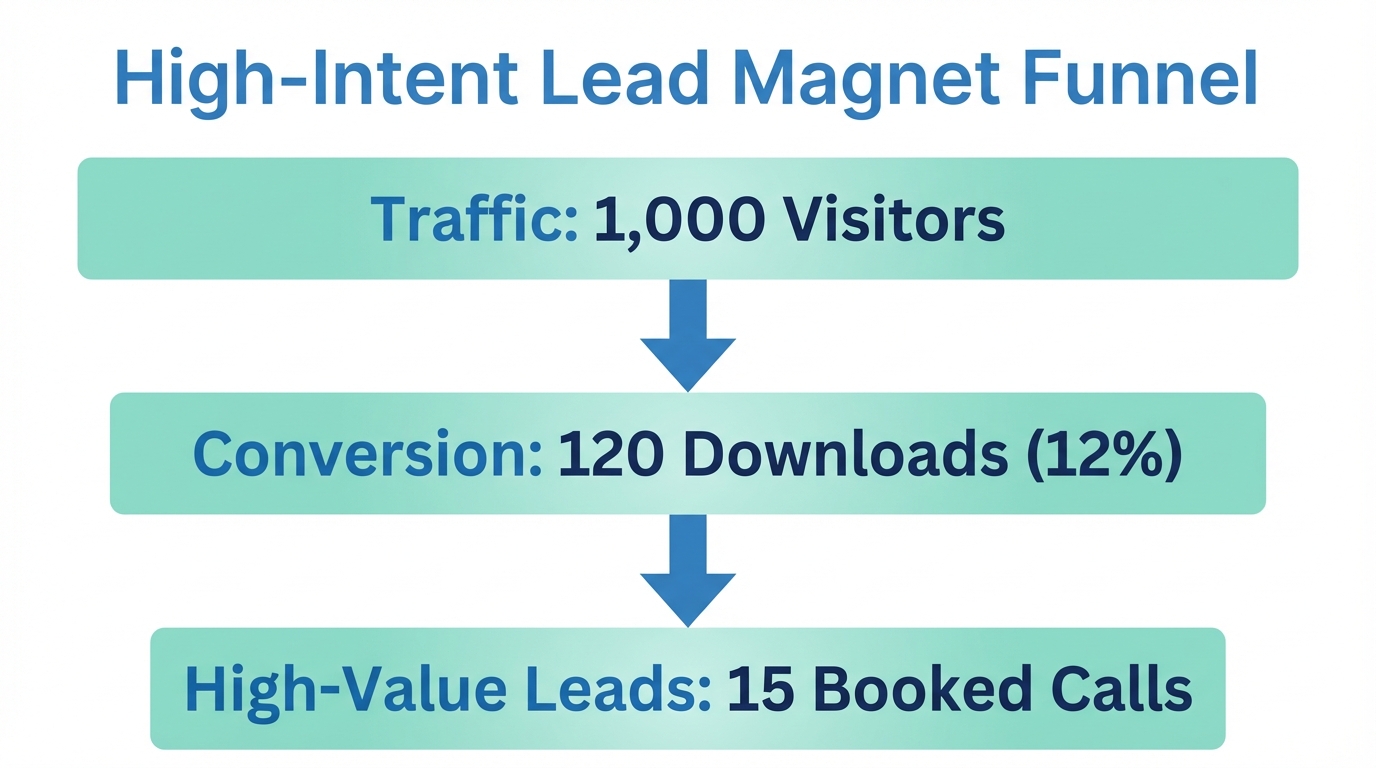
If you want to improve lead magnet optimization, you must focus on the "Quick Win." A lean asset should promise—and deliver—a result within minutes of being opened. This builds the dopamine loop necessary for conversion rate optimization.
Step 1: Identify the Micro-Problem
Don't solve "How to do SEO." Solve "How to find 10 low-competition keywords in 10 minutes." The smaller the problem, the more concrete the solution, and the higher the perceived value.
Step 2: Choose a High-Velocity Format
Use tools like Canva to build checklists, or Notion to build operating systems (OS) that users can duplicate. These are more valuable than static PDFs because they are functional.
Step 3: Distribute via High-Intent Channels
Promote your lean assets using Meta Ads Manager or TikTok Ads Manager, targeting specific niche interests. Because your asset is low-friction, your Cost Per Lead (CPL) will typically be significantly lower than traditional whitepaper campaigns.
B2B Content Distribution Tactics for High-Impact Assets
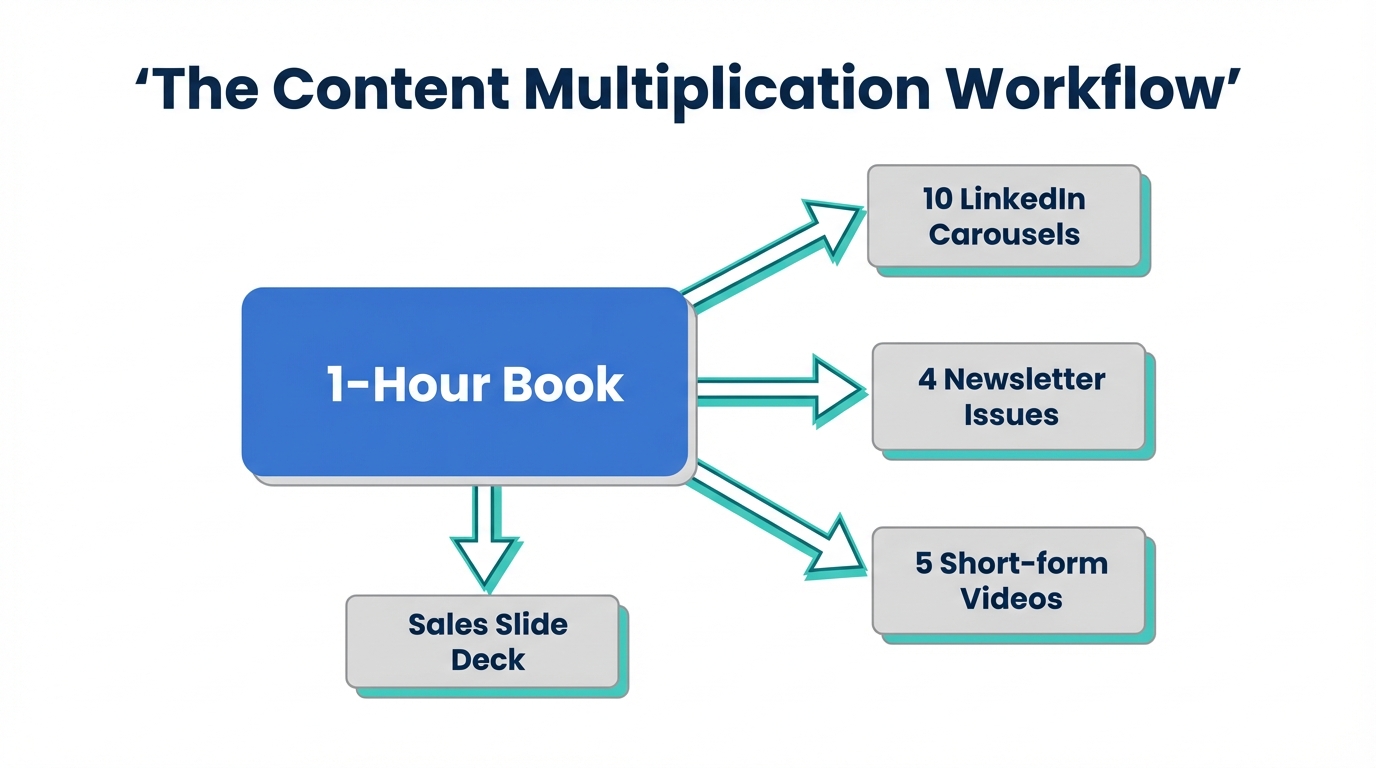
Even the best 1-hour book will fail without a strategic distribution plan. The goal is to move from "interruption" to "ubiquity." You want your lean asset to be the thing people save to their Asana boards or share in their company Slack channels.
- The "Trojan Horse" Method: Share 10% of your best insights as a long-form post on X or LinkedIn. Link to the full "1-hour" version as the logical next step.
- Newsletter Partnerships: Instead of a generic ad, provide a "mini-version" of your book as a guest feature in industry newsletters.
- Creator Collaborations: Partner with influencers to review your asset. Using Stormy AI, you can find niche creators who specialize in your topic and have them do a "live walkthrough" of your lean content, providing social proof and massive reach.
- The Physical-Digital Hybrid: If your asset is truly high-value, consider a small print run of physical "pocket guides" to send to high-value prospects. In a digital world, a physical object that fits in a pocket stands out.
Conclusion: Build What Outlives the Scroll
The 1-hour book model isn't just a marketing tactic; it's a commitment to quality and respect for your audience. By stripping away the fluff, you create a content marketing strategy that actually builds trust. You stop being a solicitor and start being a partner in your customer's success.
As you build your next marketing funnel, ask yourself: Am I trying to look important by being long, or am I trying to be useful by being lean? Utility is the only metric that matters in the long run. Start by identifying one irritation in your industry, apply 10,000 hours of research, and deliver the solution in a single, life-changing hour. That is how you build a brand that outlives the temporary distractions of the internet.