When Paul Millerd walked away from a $250,000-a-year consulting career in New York City, he didn’t have a viral marketing plan or a massive ad budget. He had a health crisis, a sense of creative restlessness, and a laptop. Today, his book The Pathless Path has sold over 25,000 copies, generating $249,000 in revenue in a single year through a masterclass in organic growth for creators. His success isn't an overnight fluke; it’s the result of a "slow and deliberate" content distribution strategy that prioritizes relationship-building and idea validation over traditional gatekeepers.
For any founder or author looking to replicate this success, the lesson is clear: you don't need a massive publishing house to find your audience. By leveraging modern platforms like Quora, and engaging in high-impact podcast marketing for authors, you can build a self-sustaining ecosystem. In this guide, we’ll break down the exact playbook Millerd used to scale his message, validate his product, and create an influencer marketing flywheel that continues to spin today.
The Repetition Lead-In: Validating Ideas Before Launching
Before Millerd ever wrote a single chapter of his book, he spent years refining his core message. He calls this the "Repetition Lead-In." Rather than guessing what readers wanted, he committed to writing on Quora every single morning before his corporate job. For 100 days straight, he answered questions about career paths, consulting, and the "default path" of high-salary, low-fulfillment work. This was essentially a low-stakes content distribution strategy that allowed him to see which ideas resonated and which ones fell flat.
This phase was critical for personal brand building. By the time he officially quit his job in 2017, he already had a backlog of ideas that had been "peer-reviewed" by thousands of anonymous readers. He transitioned these learnings into a personal blog, where he increased his publishing frequency from once every few months to weekly. This steady drumbeat of content ensured that when he finally announced a book, he wasn't shouting into a void; he was speaking to a community that had grown alongside him.
"You need to get in the reps such that you can deal with the fear. You'll quickly realize that when you're starting, nobody says anything because you don't have any readers yet."The Self-Publishing Decision: Why Control Beats Prestige
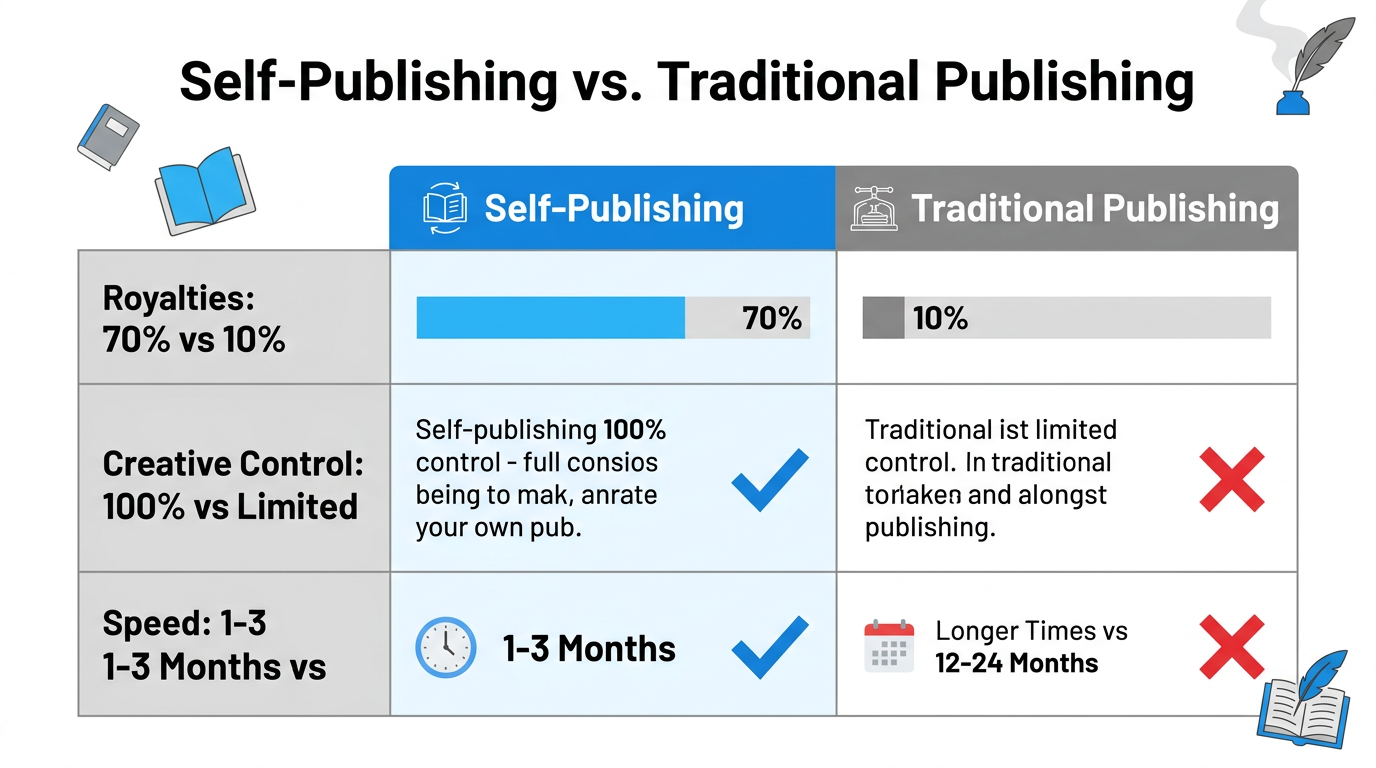
Millerd famously turned down a deal with Penguin Random House, one of the world's largest publishers. While a traditional deal offers prestige and wide physical distribution, Millerd realized the math and the creative cost didn't add up for his specific goals. By choosing to self-publish, he maintained 100% creative control and significantly higher royalty margins. Using tools like Reedsy for formatting and 99designs for a professional cover, he was able to produce a book that matched the quality of any major house.
| Metric | Traditional Publishing | Self-Publishing (The Pathless Path) |
|---|---|---|
| Royalty per Copy | ~$2.00 (Hardcover) | $7.00 - $8.00 |
| Creative Control | Limited | Absolute |
| Time to Market | 12-24 Months | 3 Days (via Amazon KDP) |
| Profit Margin | ~10% of list price | ~50-70% of list price |
As Millerd shared in his Starter Story interview, he earns roughly $8.24 per hardcover and $7.45 per paperback through Amazon KDP. Compare this to the standard 10% list price royalty from traditional publishers, and it’s clear why self-publishing is becoming the preferred content distribution strategy for modern creators. He also utilized IngramSpark to ensure his book was available in bookstores and libraries worldwide.
Podcast Marketing: The Primary Growth Lever
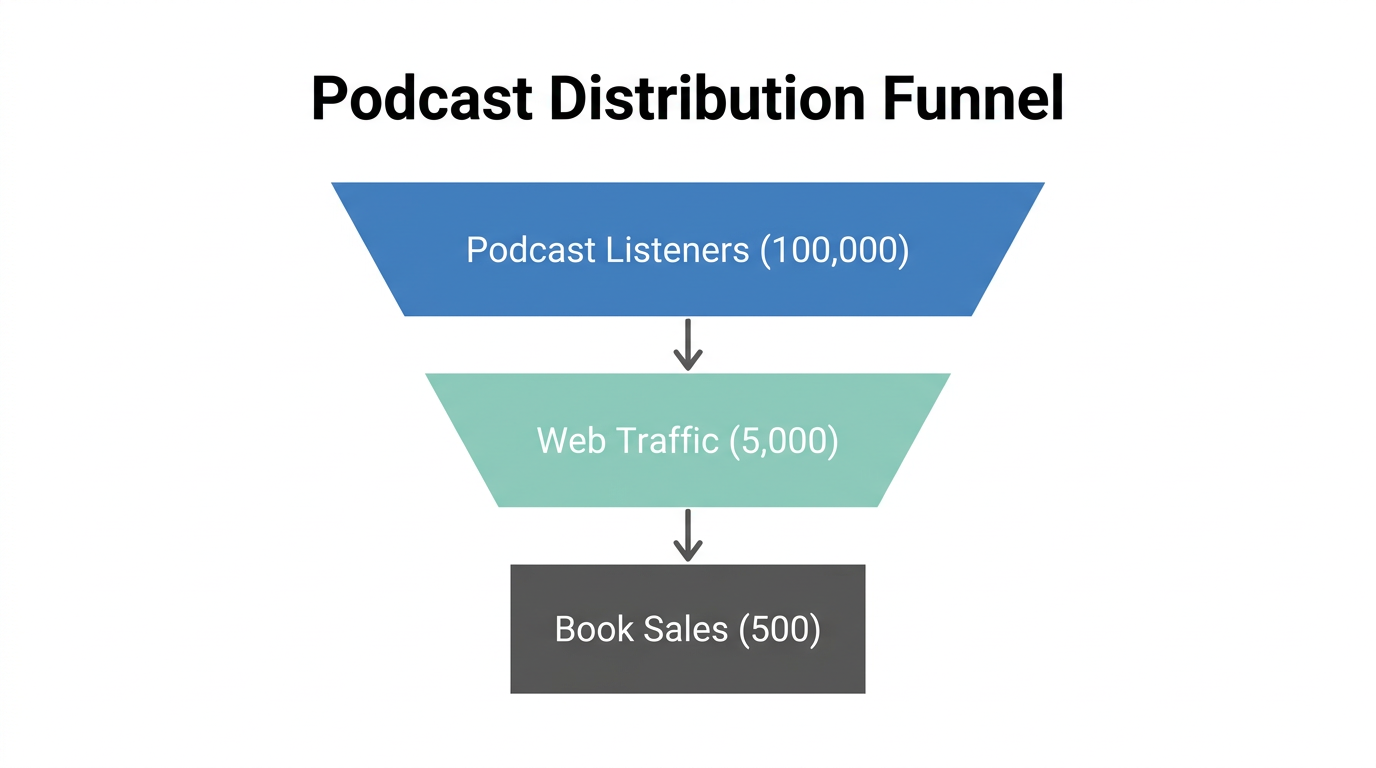
Once the book was live, Millerd didn't buy Facebook ads. Instead, he leaned into podcast marketing for authors. He realized that podcasts are the ultimate "trust vehicle." According to research by Edison Research, the deep engagement of podcast listeners makes them one of the most valuable audiences for long-form creators. When a listener hears an author speak for 60 minutes, a deep parasocial bond is formed that a static ad can never replicate. Millerd actively pitched himself to shows that cater to his target audience: freelancers, burnt-out corporate workers, and digital nomads.
The beauty of this influencer marketing tactic is that it taps into existing, highly engaged audiences. Rather than building a new audience from scratch for every post, Millerd "borrowed" the trust built by podcast hosts. This strategy is particularly effective for books because podcast listeners are, by definition, consumers of long-form content. They are already primed to buy a 200-page book after finishing a 1-hour interview.
"I like talking on podcasts; I like talking about the ideas in the book. It’s about leaning into what you actually enjoy doing to drive growth."When executing this kind of outreach, creators often struggle with finding the right shows or individuals to contact. While legacy platforms like Tagger have been used in the past, they often lack the agility of modern tools. Platforms like Stormy AI streamline creator sourcing and outreach across platforms like TikTok, YouTube, and LinkedIn, making it easier to identify who has a genuine connection to your niche before you send a pitch. Millerd’s success shows that personal brand building is significantly accelerated when you stop trying to be everywhere and start being in the right ears.
The 'Gifting' Flywheel: Influencer Marketing on a Budget
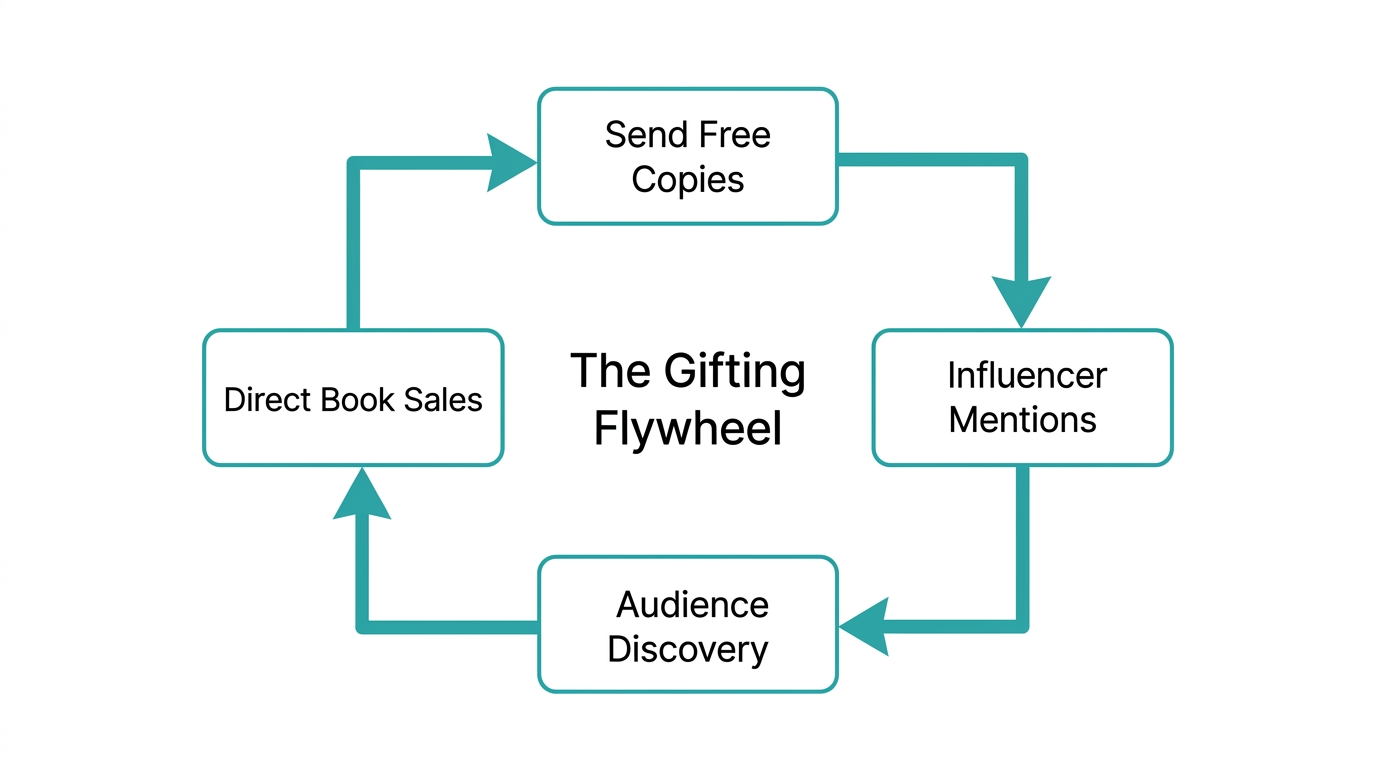
One of Millerd’s most effective influencer marketing tactics is also his simplest: gifting the book. Because he self-published, he can order author copies at cost. In the U.S., he can ship a physical copy of The Pathless Path to anyone for about $4.50 including shipping. He used this as a high-impact networking tool, sending copies to people he admired, fellow writers, and potential podcast hosts.
This strategy creates a flywheel: a gifted book leads to a social media shoutout, which leads to a podcast invite, which leads to more book sales. It’s a low-cost way to stay top-of-mind with influential figures in your industry. For creators looking to scale this, managing these relationships in a creator CRM like Stormy AI allows you to track who you've sent books to and automate the follow-up process, ensuring no potential collaboration falls through the cracks.
Community Building and the 'Personal Story Edge'
What sets The Pathless Path apart in a crowded marketplace is Millerd’s willingness to share his failures. He didn't just write a "how-to" guide; he wrote a "how-I-did-it" memoir. This personal story edge makes the content relatable. He openly discusses the "status tax" he paid by quitting his fancy job and the $24,000 he had to pay back to his employer for leaving early. This vulnerability is a powerful tool for personal brand building because it builds a level of authenticity that "gurus" often lack.
To capture the traffic from his book and podcasts, Millerd built a multi-layered community. He uses a newsletter to keep in touch with readers and offers workshops for those who want to dive deeper into his philosophy. This transition from reader to student allows him to monetize his expertise beyond just book royalties. He leverages tools like Beehiiv or ConvertKit to maintain this direct line of communication, ensuring he isn't reliant on any single social media algorithm.
Diversifying Revenue Streams
While the book is the centerpiece, Millerd’s business is a mix of various income streams that provide stability:
- Book Royalties: Now making up over 50% of his income.
- Workshops & Training: Specialized training through his Strategy U brand.
- Coaching & Freelancing: Keeping a minimal amount of high-value work to maintain the lifestyle.
- Affiliate & Digital Products: Courses that stem from his writing.
The Reality of the Numbers: Costs vs. Profit
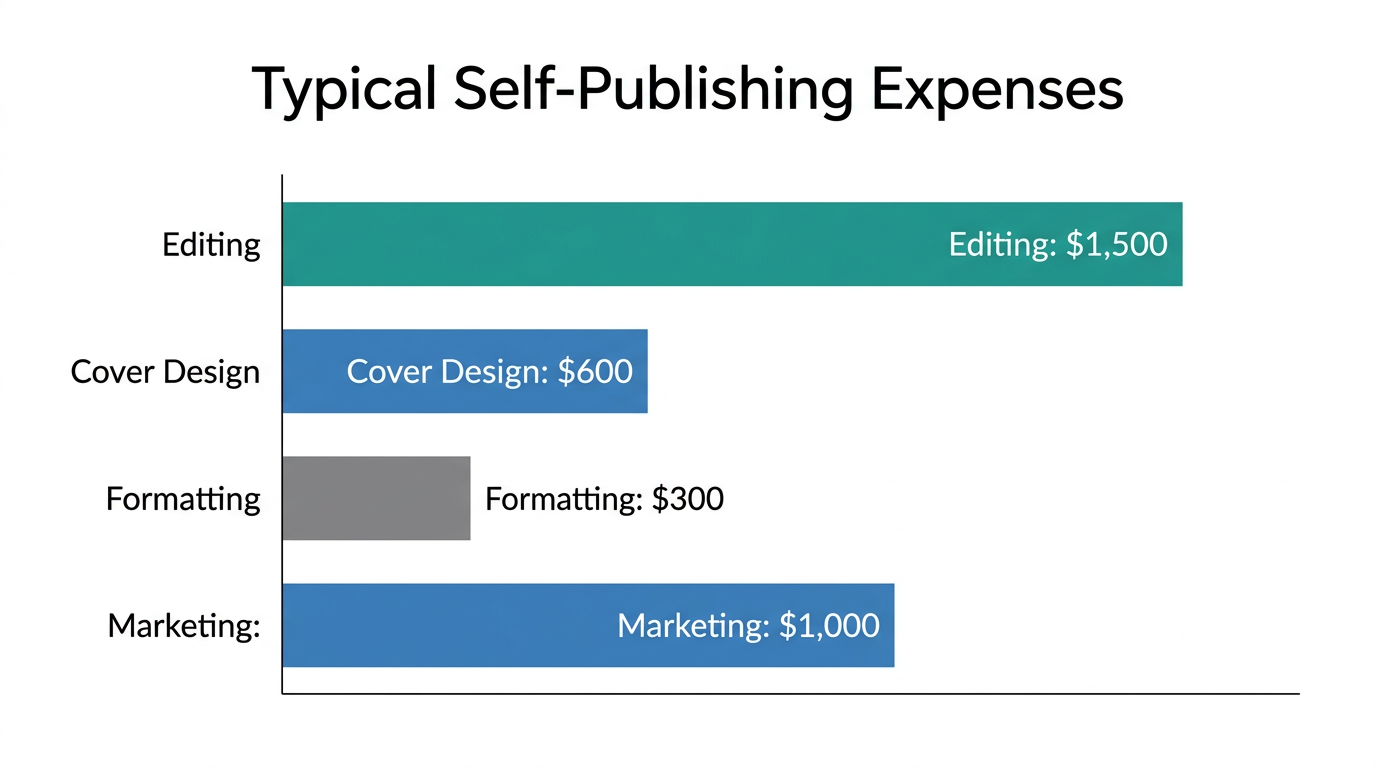
Scaling through organic growth for creators doesn't mean zero cost. Millerd invested significantly in the quality of the product to ensure it could compete with traditionally published titles. Here is a breakdown of what it cost to produce The Pathless Path and the resulting profit as of mid-2024.
| Expense Category | Estimated Cost | Notes |
|---|---|---|
| Editing & Coaching | $3,900 | Developmental editing for flow and structure. |
| Book Cover Design | $742 | Sourced via 99designs. |
| Audiobook Production | $1,280 | High-quality narration and editing. |
| Formatting & Fees | ~$250 | Using Reedsy and IngramSpark. |
| Total Investment | ~$6,172 | One-time upfront costs. |
With $125,000 to $130,000 in total profit so far, the ROI on his initial $6,000 investment is over 2,000%. This is the power of a well-executed content distribution strategy. By front-loading the work and the investment, Millerd created an asset that pays him dividends while he spends time with his newborn daughter.
"I’m willing to light it all on fire, go broke, and decrease my earnings to keep doing work that matters to me. Once you find that work, you're willing to pay so much to have it central in your life."Conclusion: Building Your Own Path
Paul Millerd’s journey from a $250k consulting job to a $250k creator business is a testament to the power of organic growth for creators. By rejecting the "default path" and focusing on personal brand building through repetition, podcasting, and genuine community engagement, he has built a lifestyle of true freedom. He didn't chase virality; he chased resonance.
If you are looking to scale your own creative project or book, remember these three pillars: validate your ideas through daily writing, own your distribution via self-publishing and newsletters, and leverage the trust of existing communities through podcast marketing for authors. Whether you use a simple spreadsheet or an AI-powered platform to manage your outreach, the core principle remains the same: trust the journey and focus on the "real work" that sustains your soul.