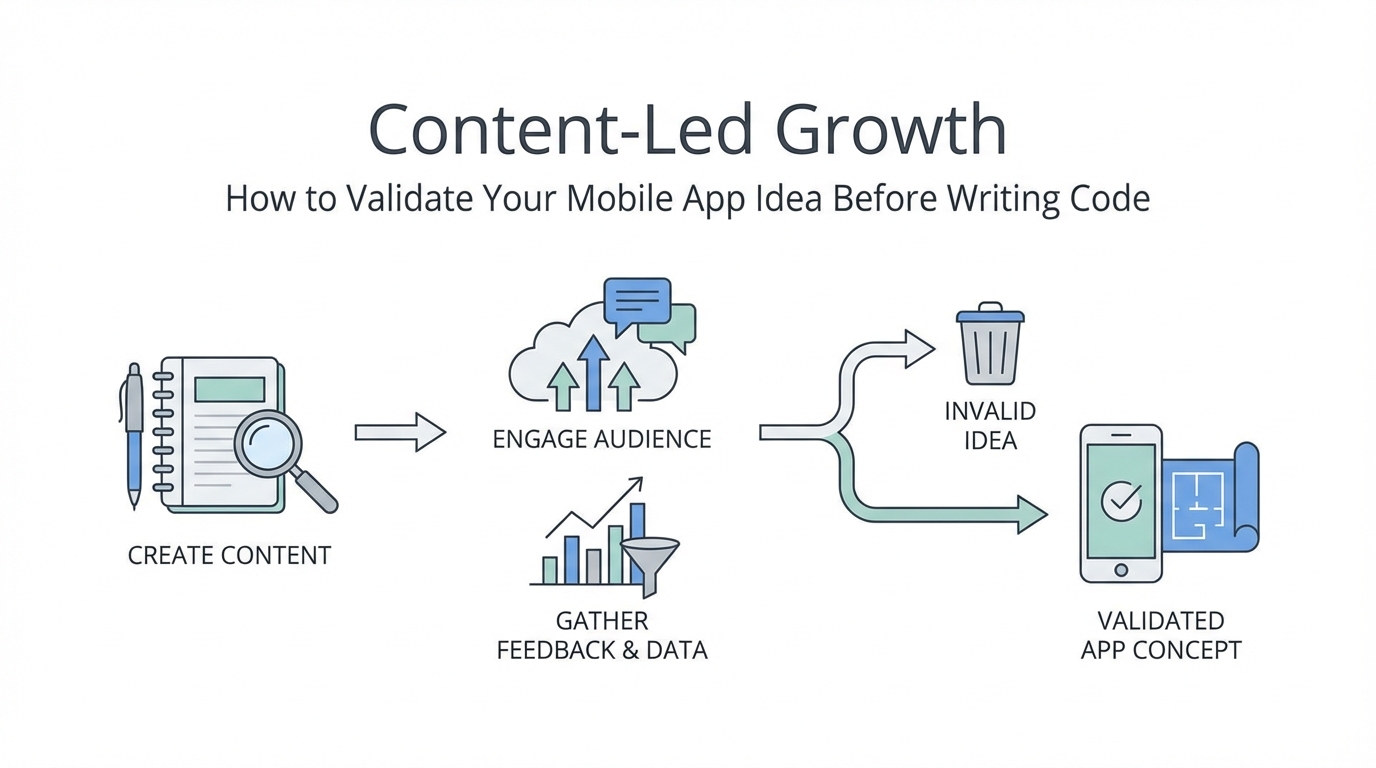
In the traditional startup world, the blueprint for building a mobile app follows a predictable, often expensive path: come up with an idea, hire a developer (or spend months learning to code), build a Minimum Viable Product (MVP), and then try to find an audience. This approach is fraught with risk, often leading to months of wasted effort on features nobody wants. But what if you could reverse the funnel? By employing a content-led growth strategy, founders are now proving that you can validate demand, find your core audience, and even generate revenue before writing a single line of code. This is the story of how founders like Jack and Nick Sweeney used content to turn a simple breathwork concept into a business generating $85,000 in revenue in less than a year.
The 'Content-First, Product-Second' Philosophy: De-risking Your Startup
The core of the content first product second philosophy is simple: attention is the most valuable currency in the digital economy. If you can capture attention and solve a problem through digital content, you have already completed the hardest part of building a business. For Jack and Nick, the co-founders of the nervous system regulation app Coherence, the journey didn't start in a code editor like Cursor. It started on social media.
By producing content about topics that genuinely excited them—spiritual esoteric topics and breathwork—they were able to treat social platforms as a market validation framework. Instead of guessing what people wanted, they let the algorithms and engagement metrics tell them. This approach shifts the risk from the developer to the creator. When a piece of content goes viral, it isn't just a vanity metric; it is a signal that you have hit on a validated piece of content that resonates with a specific human need. As they noted, they didn't actually write a single line of code in the entire codebase themselves, relying instead on AI-powered tools and content-driven validation to lead the way.
The X-to-TikTok-to-YouTube Pipeline: A Hierarchy for Testing

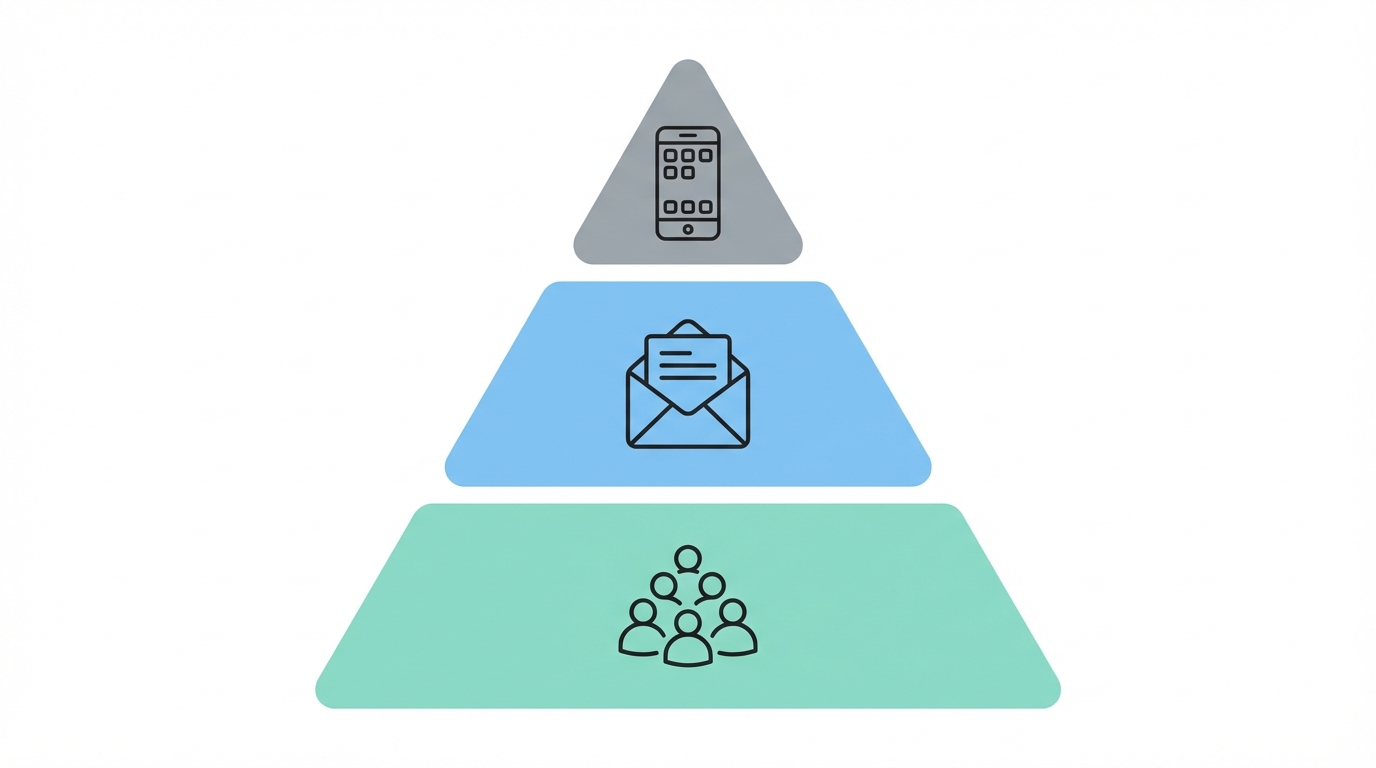
To execute app idea validation at scale, you need a system that filters low-effort ideas into high-impact products. Platforms like Stormy AI, an AI-powered search engine that allows you to find creators across TikTok, YouTube, and Instagram using natural-language prompts, help brands discover the right voices for these campaigns. While you must first become the primary voice of your brand, finding similar creators to study or partner with is essential.
- The Battleground (X/Twitter): Use X as your primary testing ground. Write threads and short posts about different pain points. It is fast, requires zero production value, and provides immediate feedback.
- The Validation Stage (Instagram/TikTok): When a post on X gains traction, it becomes a script for short-form video. Replicate the winning idea on Instagram Reels and TikTok. This tests if the idea has visual and mainstream appeal.
- The Authority Stage (YouTube): If the short-form videos perform well, expand that topic into a long-form YouTube video. This builds deep trust and moves users closer to a purchase decision.
This "upstream" movement ensures that you are only investing time in high-production content for ideas that have already been proven in the "trenches" of text-based social media. It’s a lean way to handle how to validate an app idea without over-investing in the wrong direction.
Identifying 'Painful Niches' Through Sentiment
Success in content-led growth requires more than just posting; it requires identifying a "painful niche." A painful niche is a community of people experiencing a specific, chronic problem that they are actively seeking to solve. In the case of Coherence, Nick Sweeney’s own experience with a career-ending injury led him to discover the power of breathwork. By sharing his "resurrection with breath," he tapped into a niche of people looking to regulate their nervous systems and reverse chronic conditions.
When looking for your own niche, monitor audience sentiment. Are people asking questions in the comments? Are they sharing the content with friends who have similar struggles? For example, a single tweet about "vortex breath" went viral for the Sweeneys, signaling that this specific technique was a "winner." They didn't just see views; they saw a validated problem that could be solved more efficiently through a dedicated mobile application. Tools like Stormy AI can be incredibly useful here for founders to vet creators in these niches, providing deep audience demographics and content quality scoring to see what topics are truly resonating.
The 5-Step Playbook for Validating App Ideas
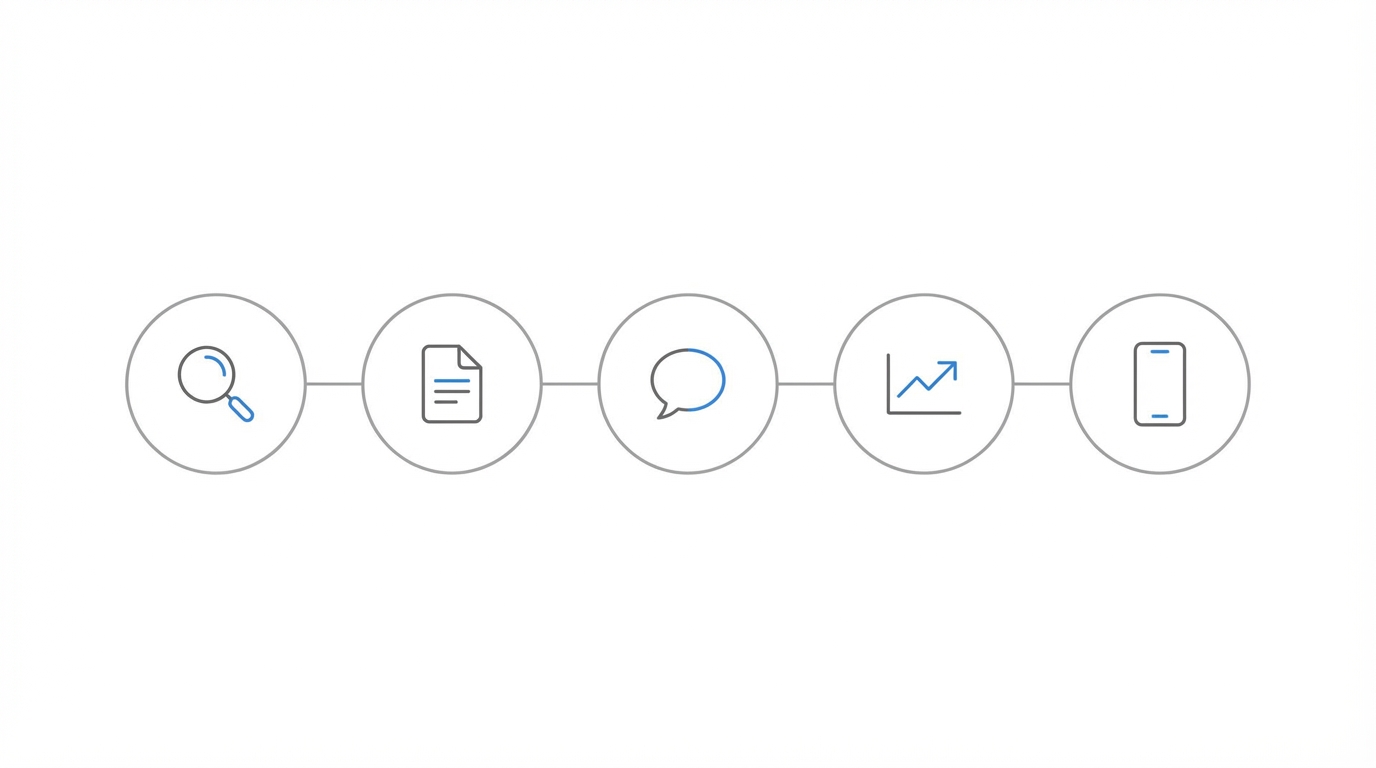
If you want to replicate this success, you need a repeatable process. Here is the exact 5-step framework used to move from a content idea to a $11,000-per-month revenue app.
Step 1: Pick a Painful Niche
Don't try to appeal to everyone. Focus on a specific problem that causes real distress. Whether it's health, finance, or productivity, find a niche where the "cost of inaction" is high for the user. Ideally, find a topic you are personally invested in, as this makes the content creation process sustainable.
Step 2: Batch Your Ideas Weekly
Consistency is the engine of content-led growth. Set aside one day a week to brainstorm and script 10-20 ideas based on your niche. Position yourself as the solution provider. Don't worry about being perfect; worry about being helpful.
Step 3: Film in Bulk
Efficiency is key. Once your ideas are batched, film them all in one session. The Sweeney brothers suggest aiming for 30 to 60 videos in a single push. This can provide up to two months of content, allowing you to focus on other areas of the business while your social presence grows organically.
Step 4: Amplify Your Winners
Not every video will be a hit. However, when one catches fire—like the breathwork video that garnered 8 million views—you must double down. Use Meta Ads Manager or "Spark Ads" on TikTok to put budget behind your top-performing organic posts. This converts a viral moment into a steady stream of leads.
Step 5: Outmarketing the Competition
In a crowded market, the most visible product often wins. Once you have a validated message, increase your volume. This might involve hiring clippers to turn long videos into shorts or using automation tools like ManyChat to handle the influx of Instagram DMs and lead conversions. Outmarketing doesn't just mean spending more; it means being more present across all platforms.
Transitioning from Viral Content to a Minimum Viable Product

Once you have a validated audience, the transition to a product becomes much smoother. You aren't guessing what features to build; you are building the features your audience is already asking for. For the Coherence app, this meant creating a simple, minimal interface in Figma that focused on six main techniques: Coherence Breathing, Vortex, Energy, Focus, Stress Relief, and Sleep.
For modern founders, the tech stack is more accessible than ever. The Sweeneys used React Native with the Expo framework to build their app. They relied on Supabase for their database and backend, ensuring they could scale without a massive engineering team. By using AI coding agents, they finished their MVP in just a few weeks. This speed is critical—once the content is viral, you have a limited window to capture that interest into a functional product.
To further scale, many app developers are now turning to Stormy AI. Stormy AI is an all-in-one platform for influencer marketing that allows brands to find creators for UGC campaigns, manage those relationships in a built-in CRM, and even use an AI agent to handle creator outreach and follow-ups automatically. This bridges the gap between the founder's personal brand and a broader, scalable marketing machine.
Understanding the Economics of a Content-Led App

A significant advantage of this model is the high profit margin. Because the primary acquisition channel is organic content, the cost per acquisition (CPA) is significantly lower than traditional paid-media-first strategies. Coherence operates at a 50% profit margin, which is impressive for a growing startup.
Typical monthly expenses for a content-led app might include:
- Video Editors: $2,500 (Crucial for maintaining high-volume organic content).
- Influencer Partnerships: $1,000 - $2,000 (To broaden reach beyond the founder’s account).
- Administrative Support: $500 - $800 (Ghostwriters or VAs to handle scheduling and admin).
- Infrastructure: $300 - $500 (Tools like RevenueCat for subscription management and Mixpanel for analytics).
By keeping overhead low and focusing spend on content production rather than just pure ad spend, founders can build a sustainable, bootstrapped business that isn't reliant on venture capital.
The Future of App Development is Content-First
The success of the Sweeney brothers proves that the barrier to entry for building a successful mobile app has shifted. It is no longer about who has the biggest development budget, but who can best leverage a content-led growth strategy to build and nurture an audience. By using the market validation framework of social media, you can ensure that by the time you write your first line of code, you already have a line of customers waiting to hit the download button.
If you are ready to start your journey, stop focusing on the code and start focusing on the conversation. Pick your niche, batch your content, and use Stormy AI to find the creators who can help you amplify your message and track your post performance across all platforms. The market is waiting for a solution to their most painful problems—you just need to show up and start creating.