
In the world of high-velocity startups and venture-backed 'burn-and-churn' models, there exists a quieter, more lethal path to wealth: multi-decade compounding. While most founders are chasing the next exit, a new breed of 'micro-aggregators' is looking toward the philosophy of Mark Leonard and Constellation Software. This strategy isn't about building the next social media giant; it is about the maniacal focus on Vertical Market Software (VMS), high-yield cash flows, and the discipline to play a game that lasts thirty years rather than three.
The legend of Constellation Software is one of the most remarkable stories in modern finance. Since its IPO in 2006, the stock has seen a staggering 10,000% return, outperforming nearly every major tech darling. But the 'secret sauce' isn't a proprietary algorithm—it is a rigorous holding company architecture built on the back of niche software dominance. By studying these principles, entrepreneurs can learn how to transition from 'operating a business' to 'allocating capital' in a way that creates generational wealth.
Vertical vs. Horizontal Software: The Moat of Niche Dominance
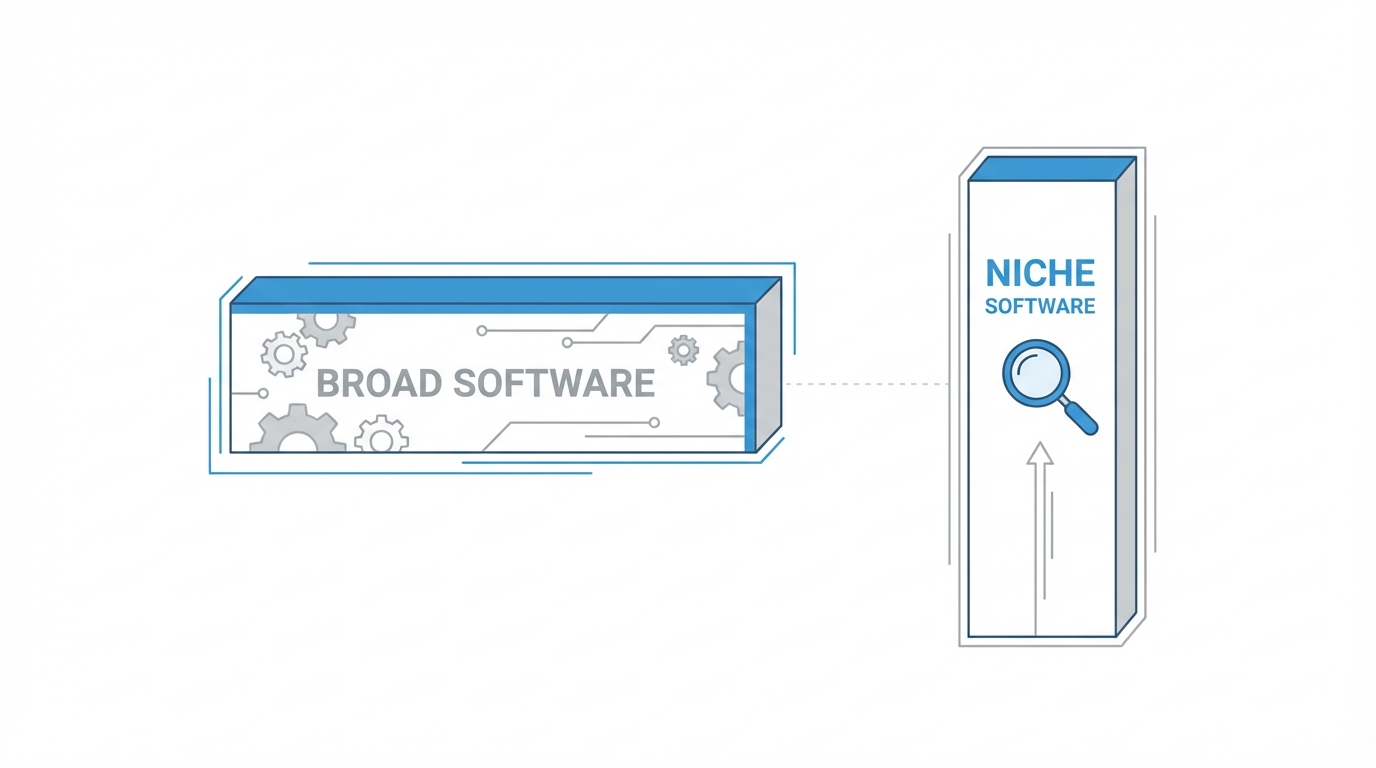

The first pillar of the Constellation Software strategy is understanding the fundamental difference between vertical and horizontal software. Most founders gravitate toward horizontal software—tools like Microsoft Word or Slack—that serve every industry. While the total addressable market (TAM) for horizontal software is massive, so is the competition. You are fighting for the same eyeballs as billion-dollar incumbents.
Vertical Market Software (VMS), on the other hand, targets a hyper-specific industry—think software for pet care clinics, roofing contractors, or library management systems. These businesses are often overlooked by Silicon Valley because they seem 'small,' but they possess extraordinary pricing power and low customer churn. When you own the software that runs the entire operation of a specific niche, you aren't just a vendor; you are the infrastructure. This creates a durable moat that is nearly impossible to disrupt.
As Michael Girdley points out, VMS companies write the code once and sell it forever. They enjoy high gross margins and predictable recurring revenue. Because the software is critical to the daily workflow of the business, customers rarely switch, allowing the owner to focus on yield rather than aggressive reinvestment for growth. This is the bedrock of business compounding.
The Mark Leonard Philosophy: Feedback Loops and Reflection
Mark Leonard, the reclusive 'Gandalf of Software' and CEO of Constellation, has spent over 25 years perfecting an internal learning machine. Unlike typical private equity firms that buy a company and immediately cut costs to flip it, Leonard focuses on long-term holding for yield. One of his most critical innovations is the post-acquisition reflection process. Constellation doesn't just buy a company and move on; they engage in a standardized, data-centric feedback loop to analyze what went right and what went wrong with every deal, a process often detailed in his famous President's Letters.
This culture of accountability ensures that the organization gets smarter with every dollar deployed. Leonard's focus is dual-pronged: managing the culture of the business and creating systems that facilitate a learning culture. He isn't in the weeds of the individual software companies; he is optimizing the holding company architecture to ensure capital is always flowing toward the highest return on investment.
To replicate this, entrepreneurs must move away from 'gut-feeling' acquisitions and toward a rigorous underwriting process. This involves tracking every lead, vetting creators or founders with the same scrutiny as a public company auditor, and maintaining a database of potential targets for years before the deal actually closes. In the world of influencer marketing and digital assets, platforms like Stormy AI streamline creator sourcing and outreach by providing the same kind of data-centric vetting that VMS aggregators use for software targets.
Designing for Yield: Building the 'Cash Flow Vacuum Cleaner'
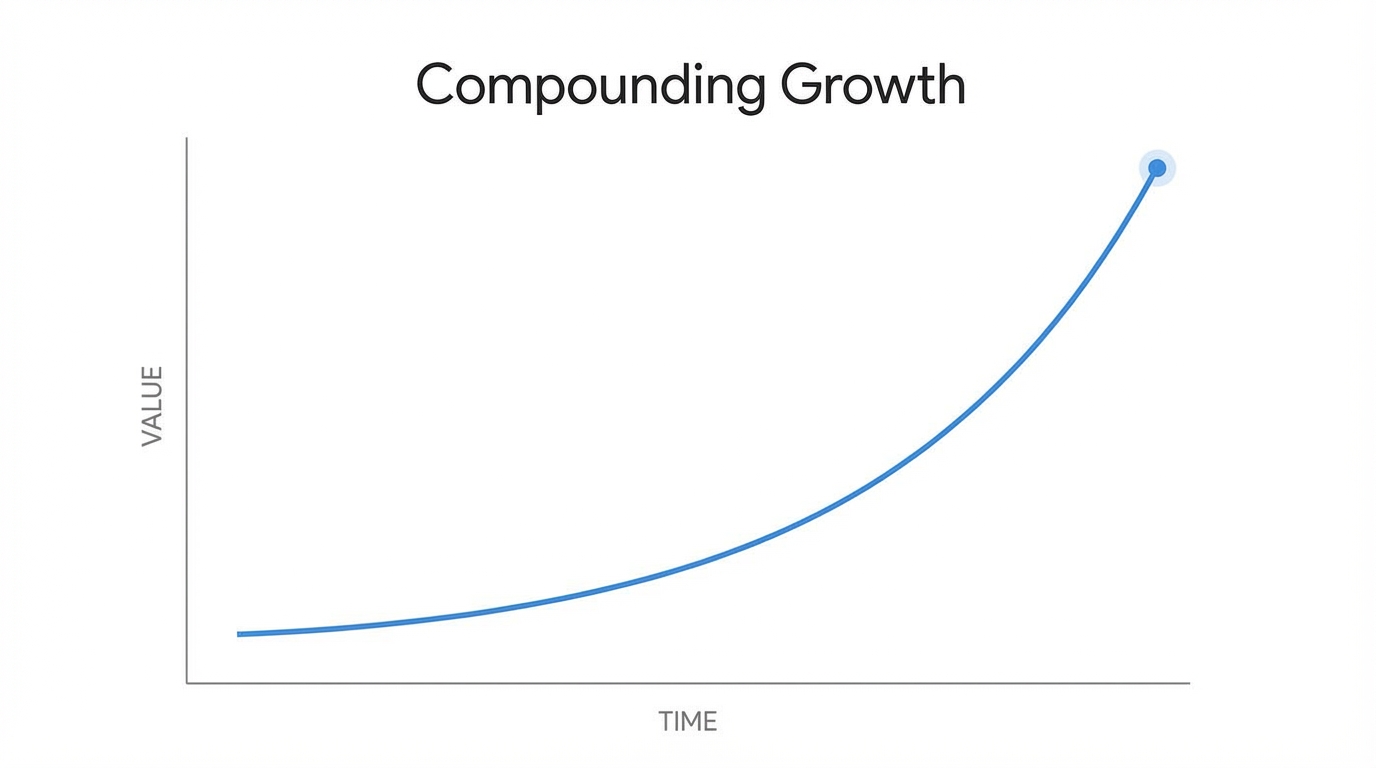
Many entrepreneurs are seduced by the idea of 'valuation appreciation.' They want their business to be worth more so they can sell it later. The Constellation model flips this: you build for yield today. A holding company is essentially a 'vacuum cleaner' for cash flow. It sucks up the profits from individual subsidiaries and redeploys that capital into the next acquisition.
This requires a shift in mindset. Instead of reinvesting every dollar into R&D or marketing to 'blitzscale,' you optimize the business for EBITDA and cash distribution. This is particularly effective in high-interest-rate environments where assets become expensive. When buying becomes too costly, the best entrepreneurs pivot to incubation—creating assets from scratch using their existing resources and audience.
For example, using the Stripe ecosystem for payments or Shopify for commerce allows a micro-aggregator to launch new 'pods' of revenue with minimal capital expenditure. The goal is to reach a point where your self-funded growth becomes an unstoppable snowball. As your cash flow grows, you can afford larger acquisitions without needing to dilute your ownership by taking on venture capital.
Easy Games vs. Hard Games: Selecting the Right Industry
One of Michael Girdley's most profound lessons is the distinction between easy games and hard games. A 'hard game' is a business with high complexity, low margins, and heavy regulation—like the fireworks industry or a local restaurant. In these businesses, you can be the best operator in the world and still struggle to make a meaningful profit because the structural dynamics of the industry are working against you.
An 'easy game' is VMS. In these niches, the competition is often non-existent or stuck in the 1990s. By applying modern marketing strategies—like using Meta Ads Manager or Apple Search Ads to target niche keywords—you can dominate a vertical with relatively little effort compared to a commoditized retail business.
When selecting a game to play, look for these three characteristics:
- Sticky Customers: Is it 'painful' for the customer to leave?
- Pricing Power: Can you raise prices by 5% without losing half your customers?
- Low Churn: Does the product become more valuable the longer the customer uses it?
If the answer to all three is yes, you have found an easy game. This is why software remains the greatest business model in history: it allows for high-leverage growth without the 'exploding family' risks associated with legacy brick-and-mortar industries.
The Holding Company Architecture: Scaling from 50 to 1,000 Employees


As a holding company (Holdco) scales, the habits of the founder must change. A 30-person company can be managed like a 'speedboat'—you can change direction on a dime. But a mid-sized business with 200 to 1,000 employees is more like a tanker. You have to start planning three to four quarters ahead for people problems, corporate development, and financial controls.
This is where the sub-holdco structure comes into play. By setting up autonomous divisions (sub-holdcos), you can maintain the agility of a small team while leveraging the capital and wisdom of the parent company. This often involves bringing in equity partners or growth equity firms who understand the 'mid-market' transition. For instance, a firm might invest $50 million into a sub-holdco to fuel larger acquisitions while the founder maintains board-level oversight.
Managing this growth requires a robust Creator CRM or internal management system. When you are managing dozens of companies and hundreds of relationships, you need a single source of truth for deal stages, negotiation history, and performance tracking. Professional tools like Stormy AI provide this level of infrastructure for creator-led brands, allowing you to track campaign performance across TikTok, YouTube, and Instagram just as Constellation tracks its software KPIs.
The 'Prison vs. Castle' Framework for Decisions
When you are offered $30 million in venture capital or a massive buyout, you have to ask yourself: Are you building a prison or a castle? Many entrepreneurs are seduced by a high valuation, only to realize they have traded their freedom for a 'micro-boss' in the form of a VC board member. In a castle, you make the rules. In a prison, you are 'tap-dancing' to someone else's tune.
The Constellation playbook is about building a castle. By remaining self-funded or using patient capital (like pension funds or family offices), you can ignore the short-term pressure to 'exit' and focus on the multiple of fun. There is a diminishing return on money; once you can afford to fly private, the marginal utility of an extra dollar often becomes negative due to the added complexity and loss of privacy. The goal of a long-term business strategy should be to maximize impact and autonomy, not just the bank balance.
The Modern Content Layer: Using Media to Scale Impact
In 2024, a holding company is incomplete without a media layer. Whether it is Michael Girdley on YouTube or niche educational communities like ScalePath, having a voice allows you to scale your impact and 'refill the karmic bucket.' Audience-building makes every other part of the business easier: fundraising, hiring, and deal sourcing all become inbound activities rather than outbound slogs.
Modern 'multipreneurs' are now building media companies alongside their Holdcos to create a feedback loop of trust. By sharing what they learn—even the 'quirky' parts like a love for Chili's or flyover America—they build a genuine connection that AI-generated content cannot replicate. This 'vulnerable' approach to social media is a blue ocean for the older generation of entrepreneurs who are often too terrified of saying something 'unprofessional' to build an audience.
Conclusion: Playing the Thirty-Year Game
The lessons from the Constellation Software playbook are clear: focus on high-quality niches, prioritize cash flow over valuation, and build systems for perpetual learning. Whether you are acquiring VMS companies or building a portfolio of creator-led brands, the winners are those who refuse to be distracted by short-term trends. By selecting 'easy games' and staying disciplined with your capital allocation, you can build a holding company that serves your life rather than consumes it. Stop looking for the exit, and start building for the multi-decade compound.