For years, the barrier to creating a high-end visual brand was either a decade of design experience or a massive agency budget. Today, that barrier has effectively collapsed. The shift we are seeing in the creative industry isn't just about speed; it is about the transition from technical execution to curated taste. As industry experts like Brett from Designjoy have noted, tools like Midjourney and Runway allow non-creators to generate professional-grade graphics in minutes. This marketing playbook will walk you through the exact steps to build a consistent brand identity using a modern AI stack, ensuring your visual assets remain cohesive across every social media channel and landing page.
The Death of the Prompt Engineer
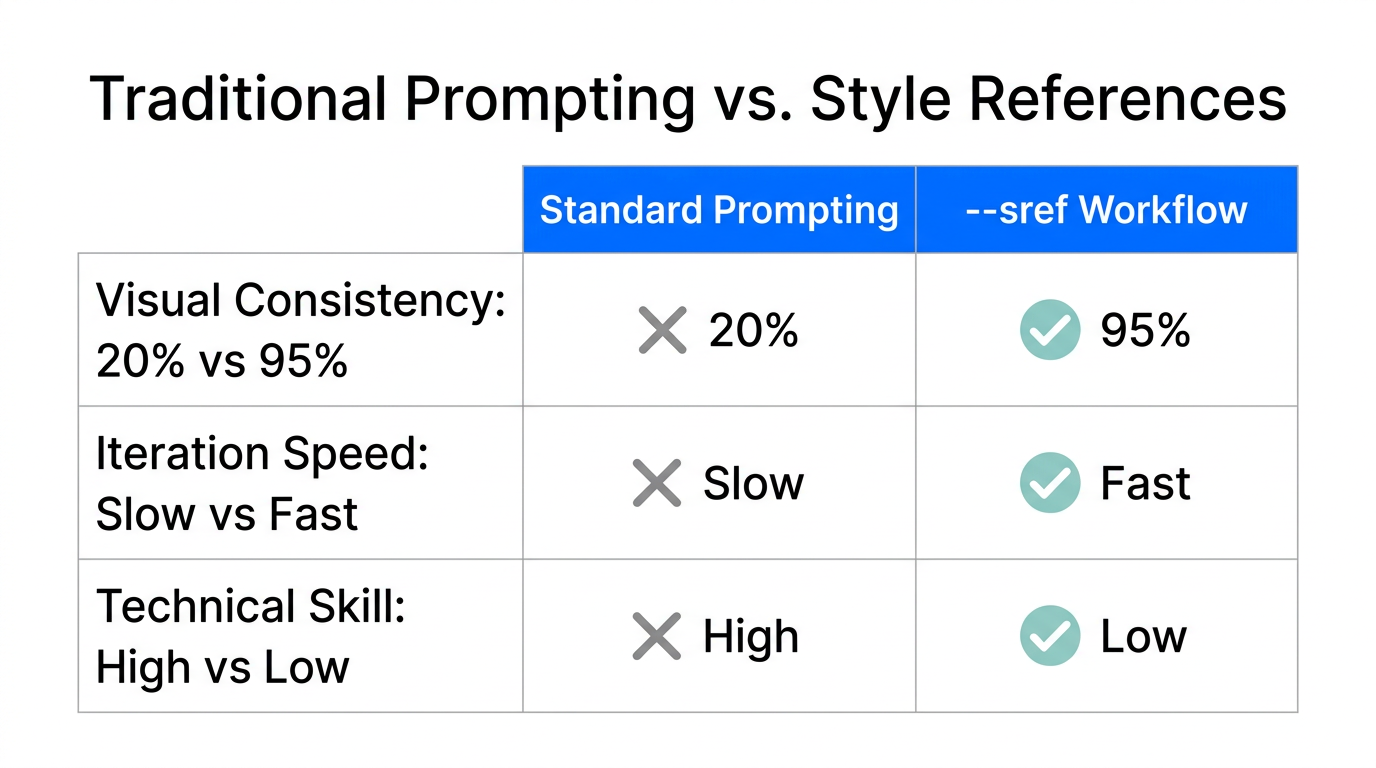
One of the biggest misconceptions in AI brand building is that you need to be a "prompt engineer" to get good results. In the early days of generative AI, describing a scene required an almost author-level skill in visualization. However, with the evolution of models like ChatGPT, the technical side of prompting has been democratized. Prompting is no longer a gatekept skill; it is a conversation. If you can describe a vibe to a friend, you can direct an AI to build a brand.
When building a brand, the challenge isn't creating one beautiful image—it is creating one thousand images that all look like they came from the same company. This is where consistency becomes the primary metric of success. Whether you are building a fintech startup or a boutique e-commerce shop, your audience needs to recognize your visual language instantly.
Step 1: Sourcing Visual Truth on Pinterest
Before touching an AI tool, you must define your "visual truth." Many marketers make the mistake of starting with a blank text box in Midjourney. Instead, you should start with Pinterest. Pinterest is a goldmine for stylistic direction because it allows you to find real-world photography, architecture, and lighting that resonate with your brand's core values.
- Search for Textures: Look for specific materials like "brushed aluminum," "vintage Kodak film grain," or "minimalist brutalist architecture."
- Focus on Lighting: Search for "golden hour soft focus" or "harsh cinematic shadows."
- Don't Search for Your Product: If you are selling a beverage, don't just search for cans. Search for the vibe of the lifestyle your beverage represents.
Once you find 3-5 images that represent your brand’s soul, save them. These will become your Style References. These images do not need to contain the objects you want to generate; they only need to represent the colors, shadows, highlights, and depth of field you desire.
"AI systems are only as good as the reference images you provide. Pinterest is the ultimate engine for sourcing the artistic DNA of your brand."Step 2: Using ChatGPT as Your Creative Director
Most marketers don't talk like film directors. We don't naturally use terms like "dolly in," "cinematic wide shot," or "bokeh effect." This is where ChatGPT acts as your bridge. Instead of struggling to write a sophisticated Midjourney prompt, explain your idea to ChatGPT in plain English.
| User Input (Simple) | ChatGPT Output (Professional AI Prompt) |
|---|---|
| "A cowboy on a horse in the mountains." | "Cinematic low-angle shot of a weathered cowboy holding leather rains, zoomed in on hands, rugged textures, atmospheric mountain mist, 8k resolution." |
| "A modern office building." | "Architectural photography of a brutalist glass structure, sunset reflections, sharp geometric lines, hyper-realistic, shot on 35mm film." |
By asking ChatGPT to "act as a creative director for a high-end fashion brand," you can generate prompts that include the specific technical language Midjourney needs to produce consistent brand assets. You can even tell ChatGPT which tool you are using—like Runway—and it will adjust the prompt to focus on motion rather than static detail.
Step 3: The Midjourney Style Reference Tutorial
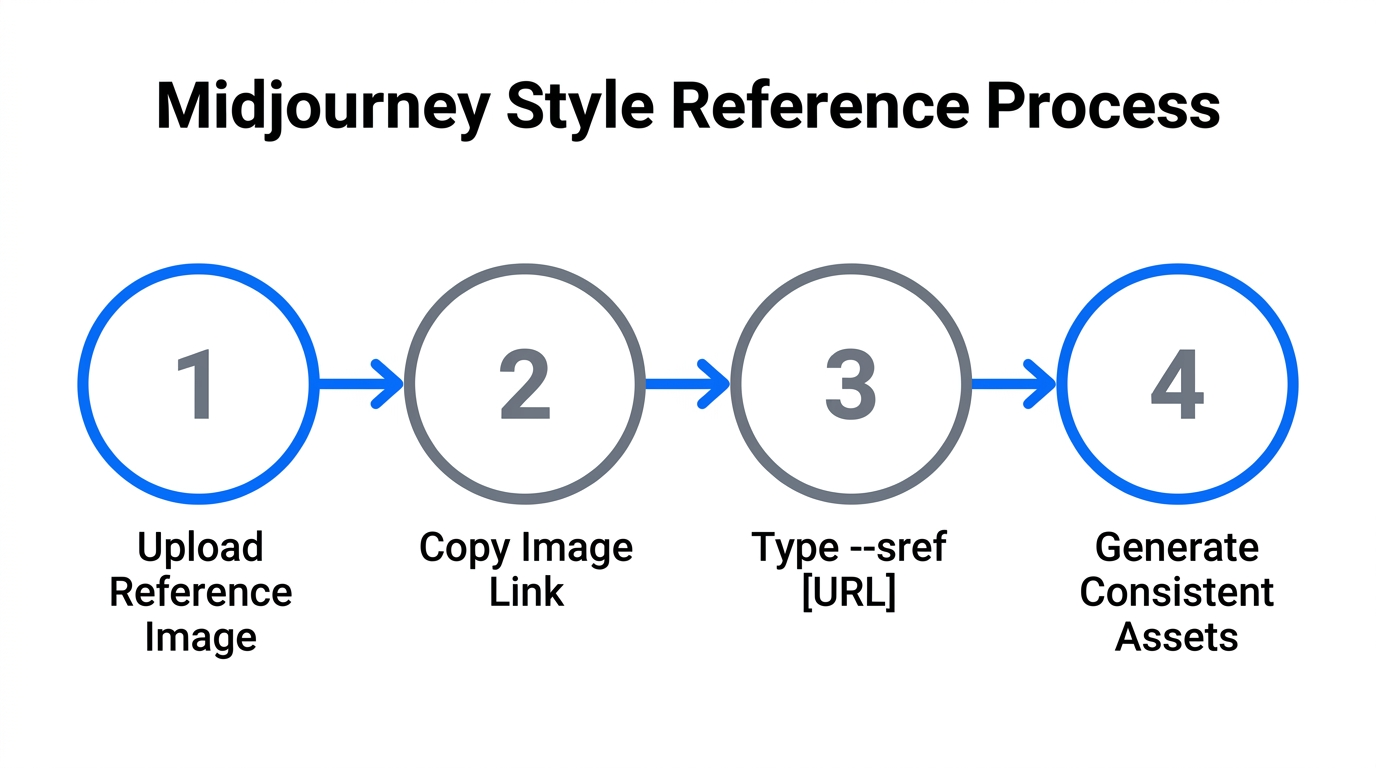
The secret weapon for AI brand building is the Style Reference parameter (`--sref`). In the past, getting Midjourney to repeat a style was a nightmare of trial and error. Now, you can force the AI to adopt the exact aesthetic of your Pinterest finds.
How to use the --sref parameter:
- Upload your inspiration image to Discord or the Midjourney web gallery.
- Copy the image link.
- Type your prompt followed by
--sref [URL]. - Adjust the weight if necessary using
--sw 1000for maximum style adherence.
If you have multiple images that define your brand—say, one for color and one for texture—you can use multiple URLs. Midjourney will blend these aesthetics, creating a unique visual signature that belongs solely to your brand. This ensures that whether you are generating a background for a website or a social media post, the shadows and color grading remain identical.
Managing Creators and Assets at Scale
Once you have established your brand’s AI-generated visual language, the next step is implementation. While AI can generate the assets, you often need real creators to bring them to life in the real world—especially for UGC (User-Generated Content). Platforms like Stormy AI streamline the process of finding influencers and creators who match your specific brand aesthetic. By using the AI search engine on Stormy AI, you can discover creators who already produce content in the style you’ve developed with your Midjourney mood boards, ensuring a seamless transition from AI concept to human-led marketing campaigns.
Step 4: Leveraging Runway AI for Marketing
Static images are great for blogs, but social media demands movement. Runway is the industry leader for turning your Midjourney masterpieces into high-quality video. This is particularly useful for web backgrounds and high-performing social ads.
The Runway Workflow:
- Image-to-Video: Upload your Midjourney generation to Runway. This provides a clear anchor for the AI, preventing it from "hallucinating" random objects.
- Motion Brush: Use the Motion Brush tool to highlight specific areas you want to move—like soft ripples in water or smoke rising from a cabin chimney.
- Eloquent Motion Prompts: Use ChatGPT to write the motion description. Instead of saying "make the clouds move," use a prompt like "slow-motion cinematic time-lapse of cumulus clouds drifting across a desert sky."
"The future of branding isn't just a static logo; it's a living, breathing visual ecosystem that moves and reacts."If you need your videos to loop—perfect for website hero sections—tools like Cling allow you to set a start and end frame that are identical. The AI then fills in the middle, creating a perfectly seamless loop. Once generated, you can use Runway's 4K Upscaler to ensure the final asset looks professional on large retina displays.
Step 5: Building a Digital Mood Board for the Team
A brand identity is useless if it lives only on one designer's computer. You need a digital mood board that your entire team can reference. Midjourney now allows you to create "collections" or use a specific Style Random Code that can be shared.
When you find a generation that perfectly captures your brand, Midjourney assigns it a random style code. You can distribute this code to your marketing team or agency. Anyone who uses that code at the end of their prompt will generate images in your exact brand style. This is the ultimate tool for consistent brand assets AI management.
The Final Production Pipeline
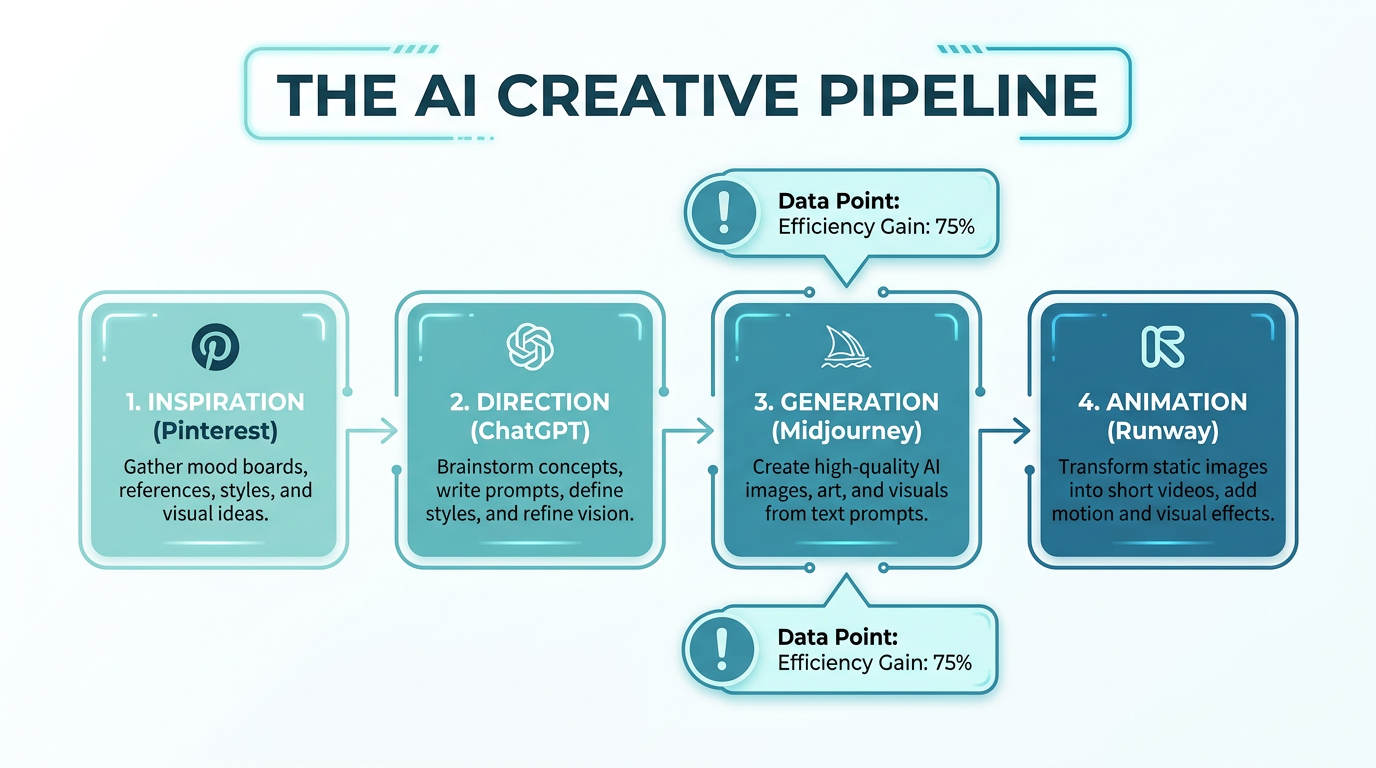
To produce a professional campaign, you should follow this sequential pipeline:
- Ideation: Source 3 reference images from Pinterest.
- Refinement: Use ChatGPT to turn a basic concept into a 100-word descriptive prompt.
- Generation: Use Midjourney with the `--sref` parameter to create 10-15 base assets.
- Animation: Import the best assets into Runway for 5-10 second motion clips.
- Post-Processing: Bring the video into CapCut to add text overlays and music. CapCut is much easier for non-designers than Premiere Pro and allows for quick formatting for TikTok or Instagram.
Conclusion: Taste is the New Skill
The democratization of design through AI does not mean that designers are obsolete; it means the value has shifted from the hand to the eye. By mastering the Midjourney style reference tutorial and understanding how to use Runway AI for marketing, you can build a visual identity that rivals the world’s top brands.
Remember that tools like Stormy AI can help you scale this identity by connecting you with the right creators to amplify your message. Start by getting your hands dirty: find your inspiration on Pinterest, talk to ChatGPT like a director, and start building your brand’s visual future today.