In the modern startup ecosystem, we are often told to "fail fast" and "pivot" at the first sign of friction. While agility is a virtue, this culture of constant switching has created a generation of founders who quit exactly 10% before their efforts would have yielded a vertical growth curve. The reality of long-term growth strategy is far less glamorous than a series of rapid-fire pivots; it is a grueling exercise in radical persistence. Winning in business isn't just about the brilliance of the initial idea, but about the ability to pay a known cost today for an unknown payoff in the future. Those who can manage the psychological and financial weight of the 'uncertainty period' are the ones who eventually capture the massive terminal value of business compounding.
The Price of Winning: Navigating the Zero ROI Period
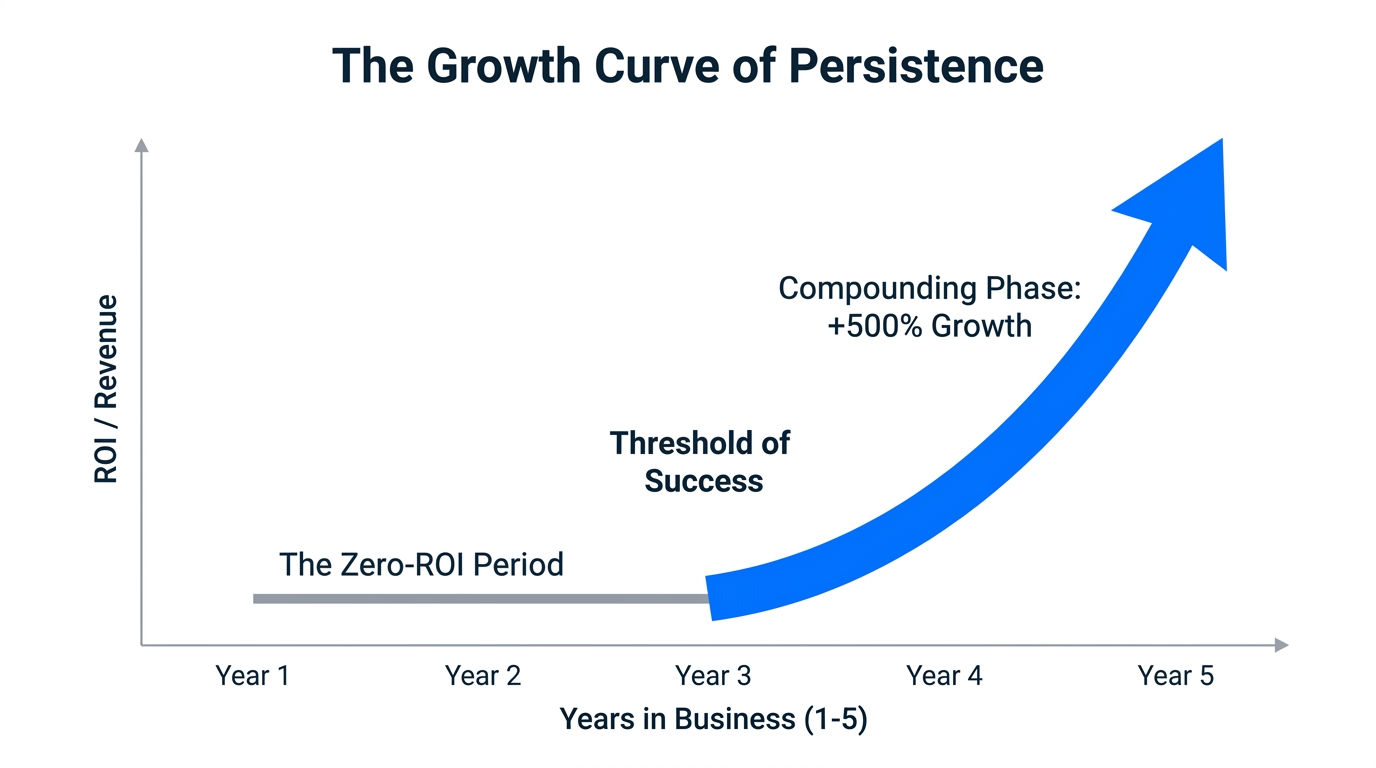
Every ambitious project begins with a surge of excitement, but that momentum eventually hits a wall. This is the 'price of winning'—a period where you are putting in maximum effort, burning capital, and losing sleep, yet the scoreboard still says zero. Many founders mistake this for a failing business model, when in reality, it is simply the gestation period required for scaling a business. According to research on adult development and happiness, the highest performers are those who can find meaning in the grind before the results manifest.
During this phase, entrepreneurial resilience is your only true currency. You are essentially buying a lottery ticket where the odds improve every day you stay in the game. The difficulty lies in the fact that no one can tell you exactly when the payoff will occur. This uncertainty makes founders second-guess their long-term growth strategy. They look at their peers who are launching new 'side hustles' or jumping into the latest trend and feel like they are falling behind. However, true business compounding requires a foundational layer of stability that only comes from sticking to one path for years, not months.
"The path to winning feels like losing for a very long time. You burn energy, you lose sleep, and the scoreboard stays at zero—until the compounding curve turns vertical."
The Psychology of Pivot Culture: Why We Quit Too Early
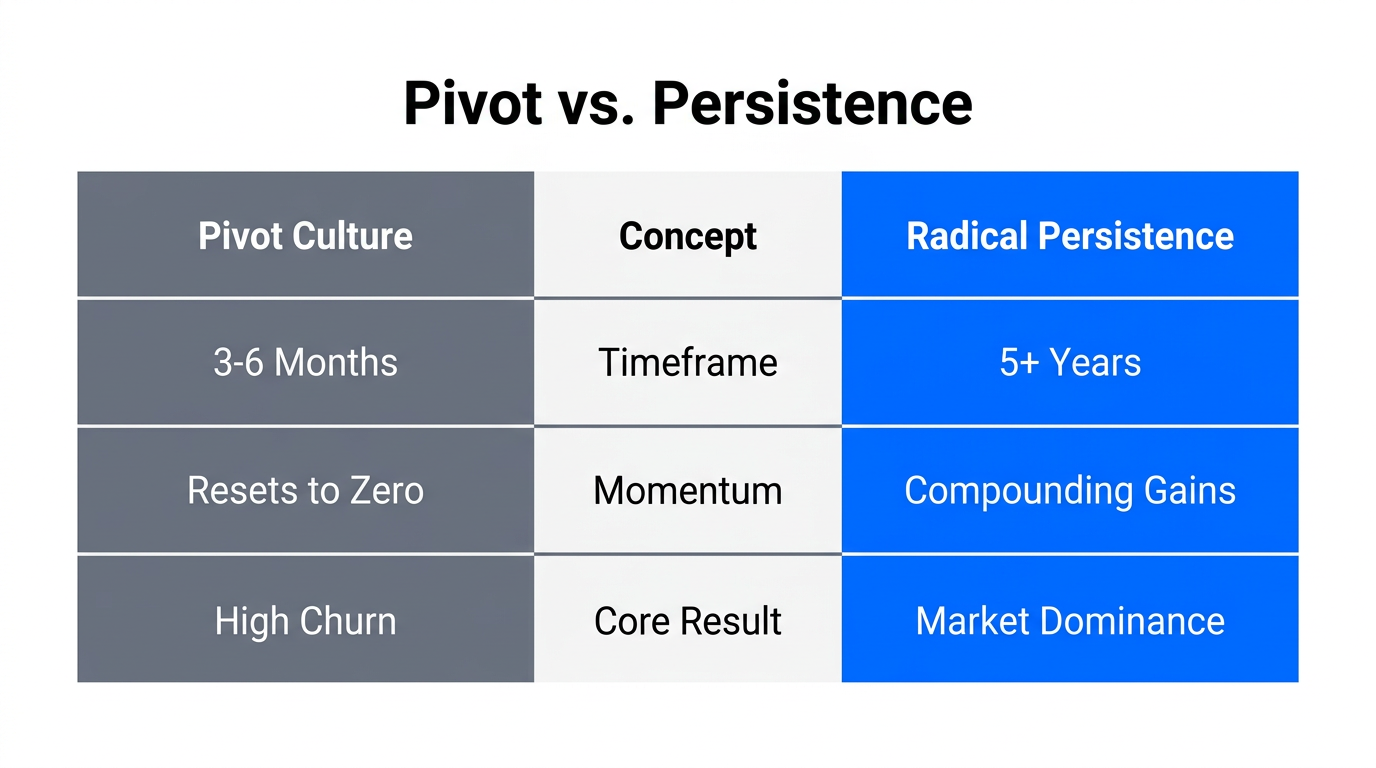
Why is it so tempting to switch projects? The answer lies in the 'cost of switching.' Every time you start a new venture, you reset the compounding clock. You lose the specialized knowledge, the industry relationships, and the brand equity you've built. Psychologists like Dan Gilbert, author of Stumbling on Happiness, have explored how humans perceive choice. In one experiment, Gilbert found that students who were 'locked in' to a decision were significantly happier than those who were given the option to change their minds later.
When you allow yourself the option to pivot, your brain never fully commits to solving the problems in front of you. You are always looking for the exit. Conversely, when you commit to a 5-10 year horizon, your brain stops looking for an escape and starts looking for solutions. This commitment 'manufactures' the founder mindset necessary to overcome impossible obstacles. People who 'keep their options open' often end up with no options at all because they never built anything of substantial depth.
| Trait | The Serial Pivoter | The Compounding Founder |
|---|---|---|
| Time Horizon | 6-12 Months | 5-10 Years |
| Focus | Width (Many small bets) | Depth (One massive bet) |
| Reaction to Failure | "The market doesn't want this." | "I haven't found the right lever yet." |
| Terminal Value | Low (Constant resets) | Exponential (Compounding gains) |
Lessons from Eight Sleep and Oculus: Commitment as a Competitive Advantage
The story of Eight Sleep is a masterclass in entrepreneurial resilience. Matteo Franceschetti, the founder, has spoken openly about how the company nearly died five separate times. In the early days, hardware is notoriously difficult, and the 'zero ROI' period lasted for years. If Matteo had followed the 'fail fast' mantra, he would have pivoted after the second or third near-death experience. Instead, he doubled down on the vision of smart sleep technology, eventually building a business worth billions.
Similarly, Palmer Luckey, the founder of Oculus, emphasizes that at some point, you must commit to a path. In an era where everyone wants to keep their 'options open,' the act of commitment becomes a competitive advantage. While your competitors are busy testing five different niches, you are becoming the undisputed expert in one. This mastery allows you to see opportunities and efficiencies that a surface-level explorer would never notice. Scaling a business to a massive scale requires this level of singular focus.
"At some point, you have to say: This is the path I'm on, for better or worse, and I'm going to double down on it. Options are just distractions in disguise."
Diagnosing the Difference: Failing Product vs. Difficult Growth Phase
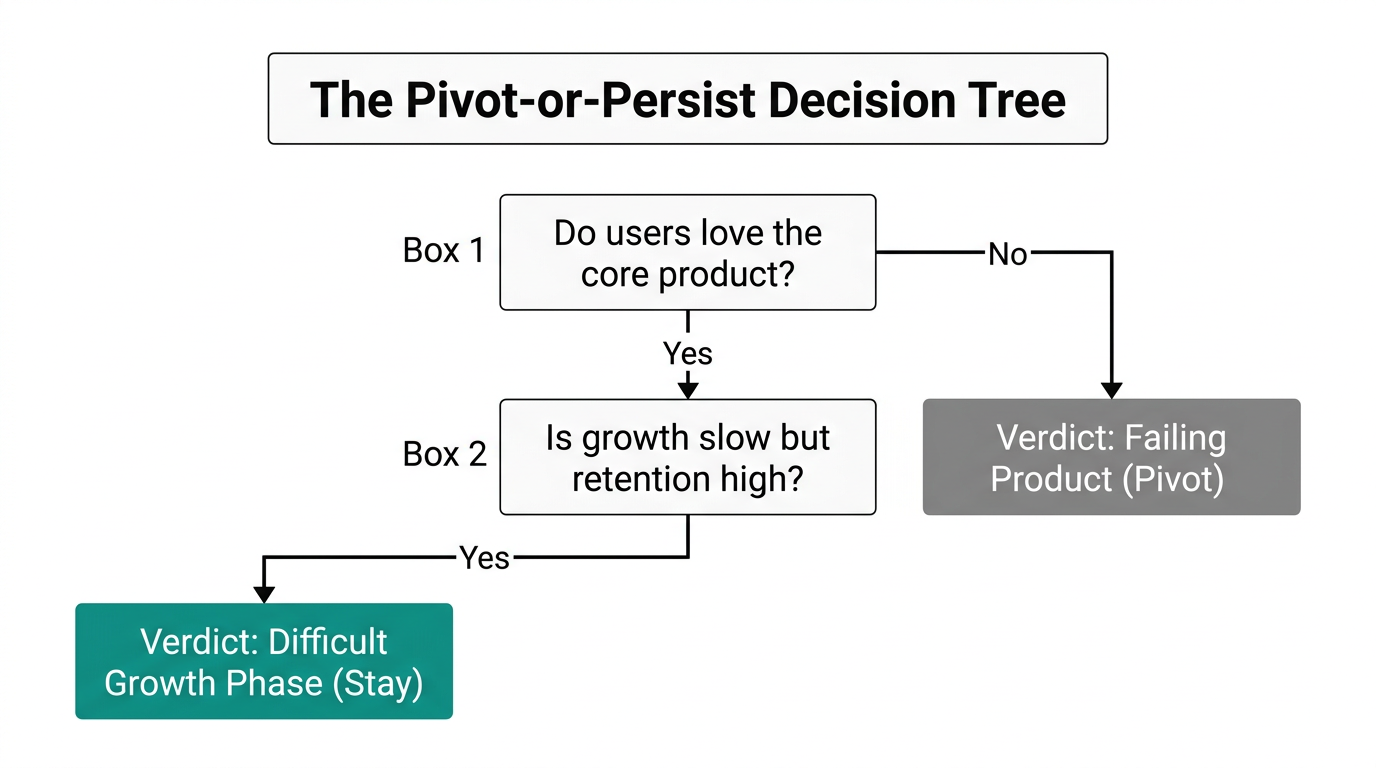
The hardest part of business compounding is knowing whether you are beating a dead horse or if you are just in a 'difficult growth phase.' A failing product has no engagement, no 'pull' from the market, and no path to profitability even at scale. A difficult growth phase, however, often has small pockets of intense user love. If you have 100 people who absolutely cannot live without your product, you don't have a product problem; you have a distribution or scaling problem.
To navigate this, you need to set clear, trackable goals. Borrowing from the founder mindset of John D. Rockefeller, as detailed in his biography Titan, you should track every meaningful metric with religious fervor. Rockefeller’s 'Ledger A' wasn't just about money; it was about the discipline of awareness. If your metrics are moving—even slowly—in the right direction, you are in a growth phase. If you are stagnant for years despite radical experimentation, it might be time to re-evaluate. But remember: most founders quit when the scoreboard is at zero, not when the metrics are actually declining.
The SMART Path to Scaling
To avoid the 'pivot trap,' your long-term growth strategy must be broken down into actionable, SMART goals:
- Specific: Don't just say "I want to grow." Say "I want to increase our subscriber base by 3% weekly."
- Measurable: Use tools like Google Analytics or Mixpanel to track every conversion.
- Achievable: Set milestones that are challenging but grounded in reality.
- Relevant: Ensure your daily tasks actually move the needle on your primary goal.
- Time-bound: Give your experiments enough time to breathe—usually 6 to 12 months—before deciding to change course.
Leveraging Modern Tools for Radical Persistence
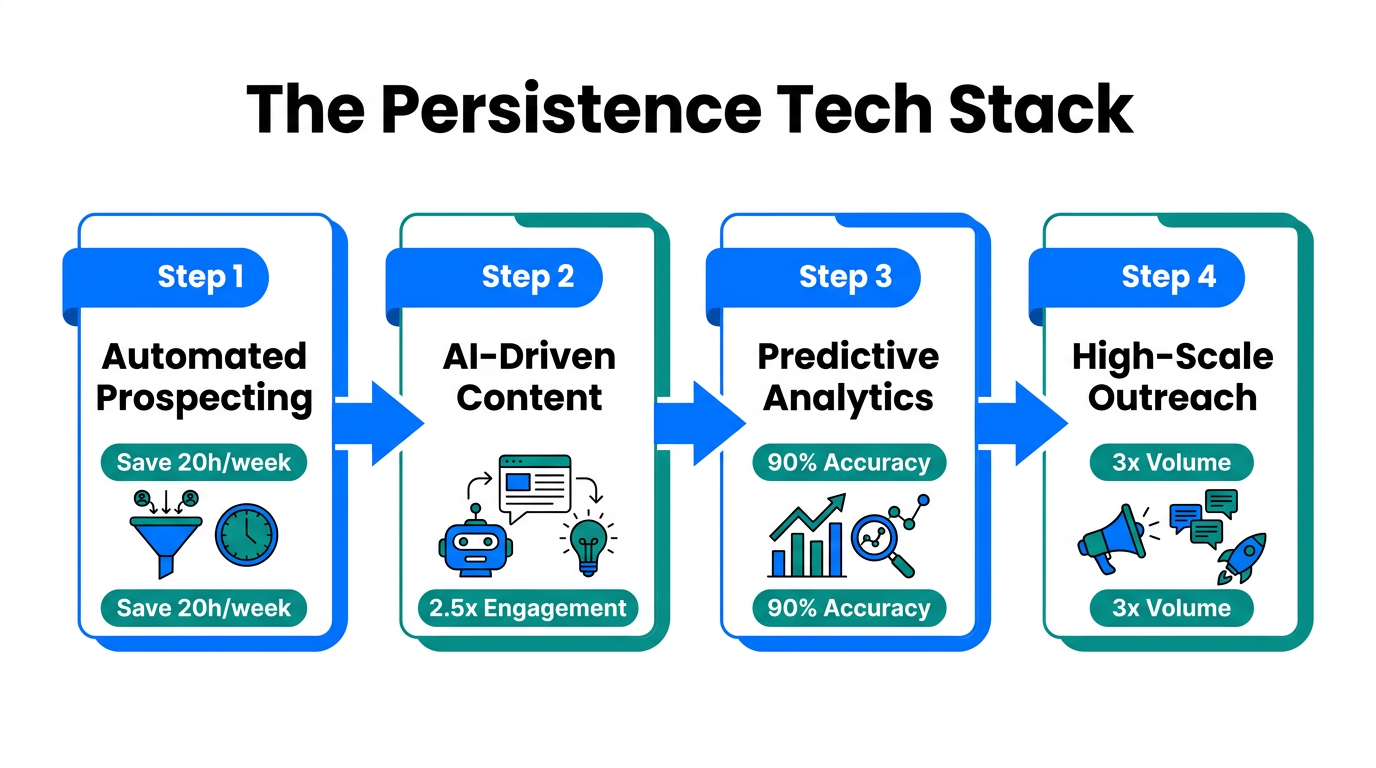
Persistence doesn't mean doing everything manually. In fact, scaling a business today requires offloading the repetitive 'grind' to intelligent systems so you can focus on high-level strategy. For instance, if your growth strategy involves UGC (user-generated content) or influencer partnerships, the manual outreach can be soul-crushing. This is where AI-driven platforms come in.
Tools like Stormy AI allow founders to automate the discovery and vetting of creators, effectively removing the friction that often leads to burnout. By using an AI agent to handle the daily outreach and follow-ups, you maintain the persistence of a 24/7 marketing team without the overhead. This allows you to stay on your chosen path for years, knowing that the engine of your growth—whether it's on TikTok, Instagram, or YouTube—is running autonomously in the background.
When you pair a long-term growth strategy with automated execution, you reduce the psychological 'cost' of sticking to one path. You can manage your creator relationships in a dedicated CRM and track campaign performance without getting bogged down in the minutiae. This is how modern founders achieve business compounding: they choose a path and use AI to make that path sustainable for the long haul.
"The most successful founders aren't the ones who work the hardest; they are the ones who build systems that allow them to stay in the game the longest."
The Compounding Conclusion: Why Time in the Market Wins
The final lesson of the compounding founder comes from the world of finance. There is a famous saying: "It's not about timing the market; it's about time in the market." If you missed the 20 best-performing days of the stock market over the last 20 years, your returns would be nearly zero. Business is no different. The 'best days'—the viral moments, the massive partnership deals, the sudden influx of users—only happen if you are already standing on the field.
If you keep switching niches, you are constantly exiting the market right before the 'best days' occur. You are reset to zero, while the founder who stayed the course is finally seeing their 5-year graph turn vertical. Whether you are building a SaaS, a consumer brand, or a content empire, the rules of business compounding remain the same: pick a direction, invest in entrepreneurial resilience, and refuse to pivot until you have exhausted every possible lever for growth.
Success is a lagging indicator of persistence. By the time the world sees your 'overnight success,' you have already been paying the price of winning for years. Stop looking for the shortcut and start building for the decade. Use tools like Stormy AI to automate your discovery and outreach, set your SMART goals, and let the power of compounding do the rest.