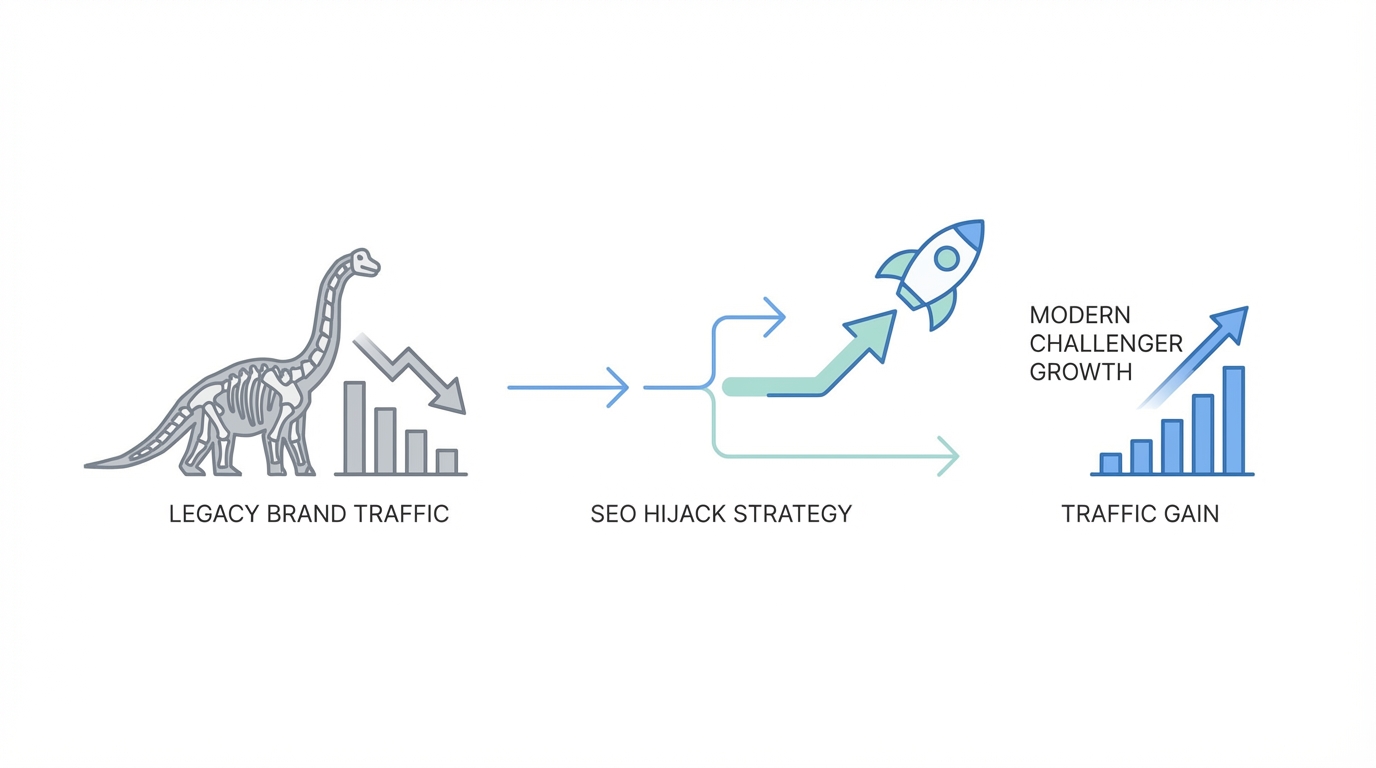
In the rapidly evolving world of digital marketing, the largest threat to established legacy brands isn't another conglomerate; it's a nimble startup with a better SEO strategy for startups. When a massive incumbent becomes slow-moving and out of touch with its user base, it creates a vacuum. Savvy entrepreneurs can fill this void by learning how to rank for alternative keywords, effectively hijacking the traffic that once belonged to the industry 'dinosaurs.' This approach isn't just about technical optimization; it's about identifying market fatigue and positioning your product as the modern, user-friendly successor to an aging giant.
Identifying 'Dinosaur' Competitors: The Art of Finding Vulnerable Markets

The first step in any aggressive competitor keyword research plan is identifying which giants are ready to fall. A 'dinosaur' competitor is typically a company that has dominated a space for decades, often relying on a legacy Software as a Service (SaaS) model that no longer serves modern consumers. These companies are frequently characterized by high churn rates, expensive seat-based pricing, and a refusal to adapt to new user behaviors. As noted in a recent Starter Story interview, these markets have validated demand, but the incumbent products are often 'ugly' or cumbersome.
To find these opportunities, look for industries where the top-ranking apps have not updated their UI/UX in years. You can use competitor analysis tools like Ahrefs to see if a legacy brand is losing rank for its core features. If a company like Skype begins to decline or announces a shutdown, it leaves behind thousands of users searching for a replacement. Platforms like Stormy AI, which functions as an AI search engine for finding creators across TikTok, YouTube, and Instagram using natural language prompts, can help you monitor which influencers are still mentioning these legacy competitors, giving you a list of targets for fresh outreach and market entry.
The 'Skype Alternative' Strategy: Capitalizing on a Major Competitor's Decline
When Microsoft announced it was scaling back certain legacy features of Skype, it created a massive surge in search volume for the term 'Skype alternative.' This is a classic example of a market opening. By focusing on how to rank for alternative keywords, a developer named Dennis was able to build Yataphone, a browser-based calling service that reached $14,000 MRR in just seven months. His success wasn't based on reinventing the wheel, but on being the best 'alternative' when a giant stumbled. He used Vercel for lightning-fast hosting to ensure his 'alternative' was technically superior to the original.
This strategy works because it leverages the existing brand awareness of the competitor. Instead of spending millions on top-of-funnel awareness, you target users who are already at the 'consideration' or 'decision' stage of the buyer's journey. By positioning your app as the modern successor, you can capture high-intent traffic from people who are actively looking to switch providers. For those building mobile apps, integrating User Generated Content (UGC) into your marketing can further humanize your brand against a faceless legacy corporation. Using Stormy AI for finding UGC creators and vetting them for fake followers or engagement fraud is a powerful way to build trust quickly and ensure your 'alternative' product is showcased by high-quality influencers.
The Outreach Playbook: How to Hijack Top-Ranking Listicles
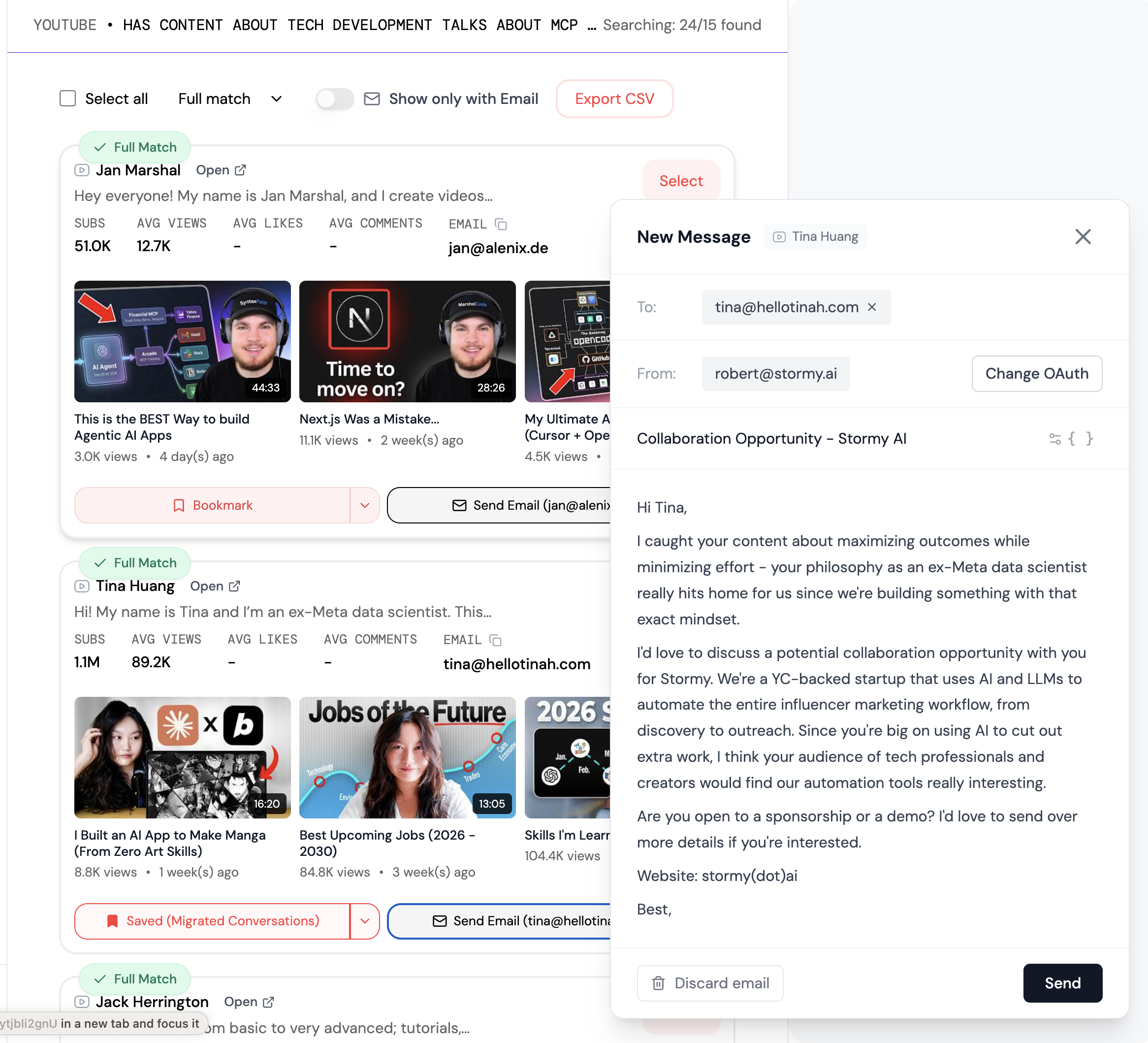
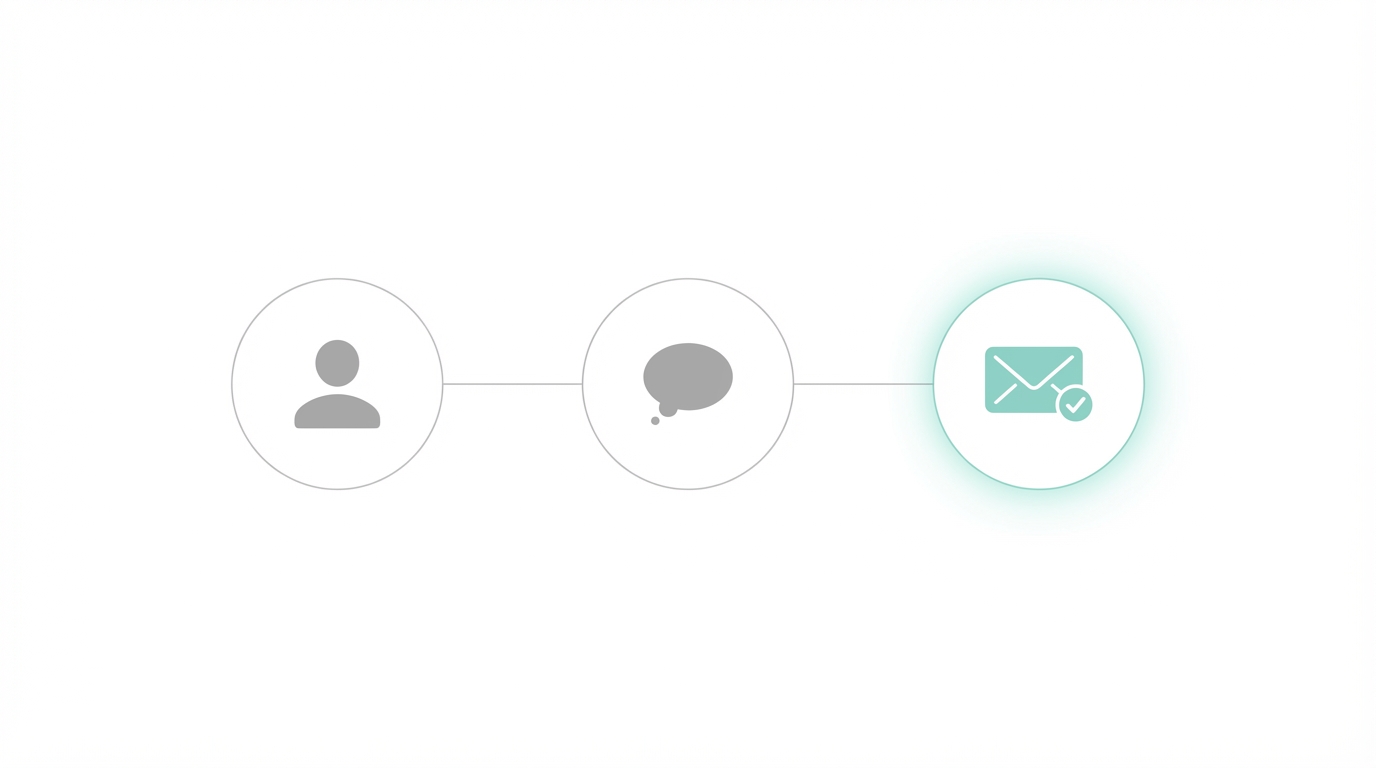
One of the most effective ways to steal market share is to replace your competitor in existing high-authority content. High-ranking blog posts with titles like 'Best International Calling Apps' or 'Top 10 Communication Tools' often link to dead or dying brands. Your backlink outreach strategy should involve contacting the authors of these articles directly. Dennis used this exact method: he found every blog post ranking for 'Skype alternative' and reached out via X, LinkedIn, or email. Modern teams use Stormy AI to automate this process, utilizing AI-personalized outreach to contact influencers and blog owners with hyper-personalized emails generated for each contact.
Step 1: Identify Ranking Content
Use competitor analysis tools to find every URL that currently links to your legacy competitor. Focus on 'Best of' lists and comparison guides that have high domain authority. Tools like Ahrefs are invaluable for this type of competitor keyword research, allowing you to see exactly where your competitor's traffic is coming from.
Step 2: Craft a Compelling Pitch
Don't just ask for a link; provide value. Tell the author that their current recommendation is outdated or that a major player is shutting down. Offer a unique angle, such as 'The first pay-as-you-go alternative for travelers.' This makes it easy for the editor to update the post and keep their content relevant for SEO. If you are running Google Ads, you can even point to the success of your campaign on Google Ads as proof of your product's popularity.
Keyword Research for Gaps: Finding What Your Competitors Are Losing
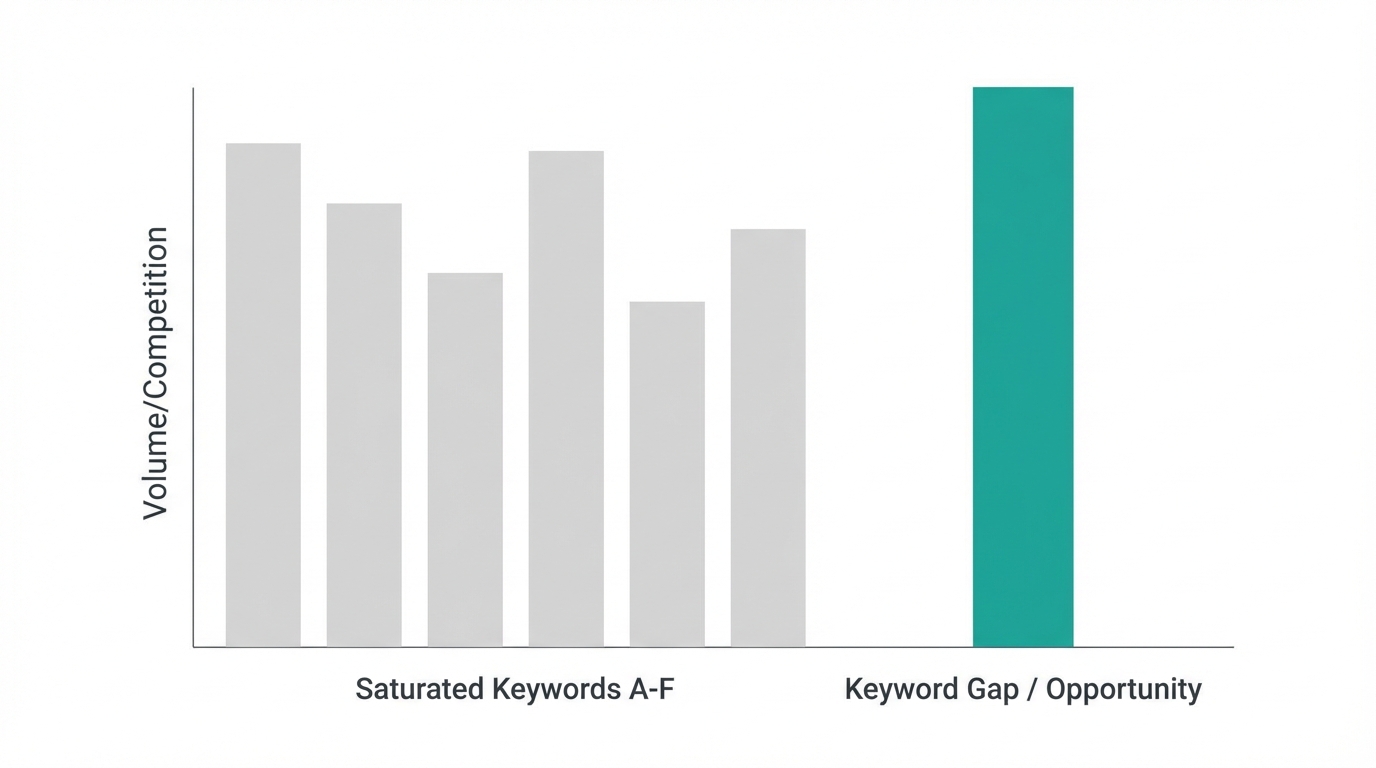
A winning SEO strategy for startups involves finding the 'gaps' in your competitor's armor. Large legacy brands often ignore long-tail keywords or niche use cases because they are focused on broad market dominance. For example, while a legacy giant might target 'international calling,' a startup might target 'how to call migration authorities from abroad.' These specific, high-intent keywords are often less competitive and highly profitable. By using competitor analysis tools, you can identify keywords where the incumbent is losing position and swoop in with better, more targeted content.
Moreover, legacy brands often struggle with modern technical requirements. If you notice a competitor's site is slow or not mobile-friendly, you can outrank them by focusing on Core Web Vitals. Using an AI-powered code editor like Cursor can help you build a technically perfect MVP in a weekend, allowing you to iterate on these SEO gaps faster than a large corporation ever could. This agility is your primary advantage when ranking for alternative keywords. You can also leverage Stormy AI to track how your new content performs across social platforms, monitoring likes and engagement on videos that target these specific keyword gaps.
Technical SEO Hygiene: The Small Details That Scale Startups
Technical errors can derail even the best SEO strategy for startups. Dennis noted that for months, Google ignored his pages simply because his site map lacked a www prefix. This small technical detail meant that despite having a superior product and a validated market, his visibility was capped. Proper URL structure and sitemap management are non-negotiable. You must ensure that your site is easily crawlable and that all redirects are handled correctly.
In addition to sitemaps, startups should focus on App Store Optimization (ASO) if they have a mobile presence. Combining ASO with a strong web-based SEO plan creates a 'moat' around your brand. If you're running Meta Ads to drive initial traffic, ensure your landing pages are optimized for conversions using Meta Ads Manager data to inform your copy. Consistent technical SEO hygiene ensures that when you finally do land those big backlink outreach strategy wins, the authority flows correctly through your entire domain.
Scaling to B2B: Moving Beyond Individual 'Alternative' Keywords
While hijacking traffic for individual 'alternative' keywords is a great way to start, the real growth lies in the B2B sector. Enterprise clients have higher lifetime value and much lower churn than B2C customers. Dennis discovered this when an organization asked for an enterprise plan that didn't yet exist. He stayed up all night to code it, realizing that businesses were also looking for alternatives to legacy systems that required expensive per-seat subscriptions. By offering a central balance and credits via Stripe, he provided a more flexible solution than the 'dinosaurs.'
For startups, this means your competitor keyword research should also include B2B-specific terms. Instead of just 'Skype alternative,' look for 'VoIP for small business' or 'enterprise international calling.' You can scale these efforts by using Twilio to handle the infrastructure, allowing you to focus purely on the user experience and SEO. This transition from a B2C 'hustle' to a B2B 'powerhouse' is facilitated by a robust backlink outreach strategy that targets industry-specific publications and B2B software reviewers.
Conclusion: Consistency and Patience in SEO
Winning the SEO war against legacy brands requires a combination of aggressive backlink outreach, precise competitor analysis tools, and technical excellence. As Dennis's story with Yataphone proves, a lone engineer can take on a giant by being faster, more attentive to user needs, and smarter about how to rank for alternative keywords. SEO isn't an overnight fix—it requires weeks or months of patient iteration—but the payoff is a sustainable, high-margin business built on the traffic your competitors were too slow to keep. Start by identifying your 'dinosaur' competitors today, and use tools like Stormy AI to set up an autonomous AI agent that discovers, outreaches, and follows up with creators on a daily schedule to help you take their place.