For the last decade, the standard playbook for digital growth was simple: create a 10-page PDF, put it behind a gated landing page, and run Google Ads or Meta Ads Manager campaigns to harvest email addresses. This 'lead magnet' approach was transactional and passive. But in an era of content saturation and AI-generated noise, users have become allergic to the low-value exchange of their data for a generic ebook. The lead magnet isn't just dying; in high-trust niches, it’s already dead.
Enter the Community Magnet. Unlike a passive lead magnet, a community magnet is a high-utility, free or low-cost tool that serves as an entry portal into a high-trust environment. It focuses on audience engagement strategies that turn a one-time visitor into a long-term collaborator. By providing immediate value through a functional tool and then inviting users into a micro-community, brands and creators can build customer feedback loops that inform future products while drastically reducing churn.
The Shift from Passive Consumption to Active Contribution
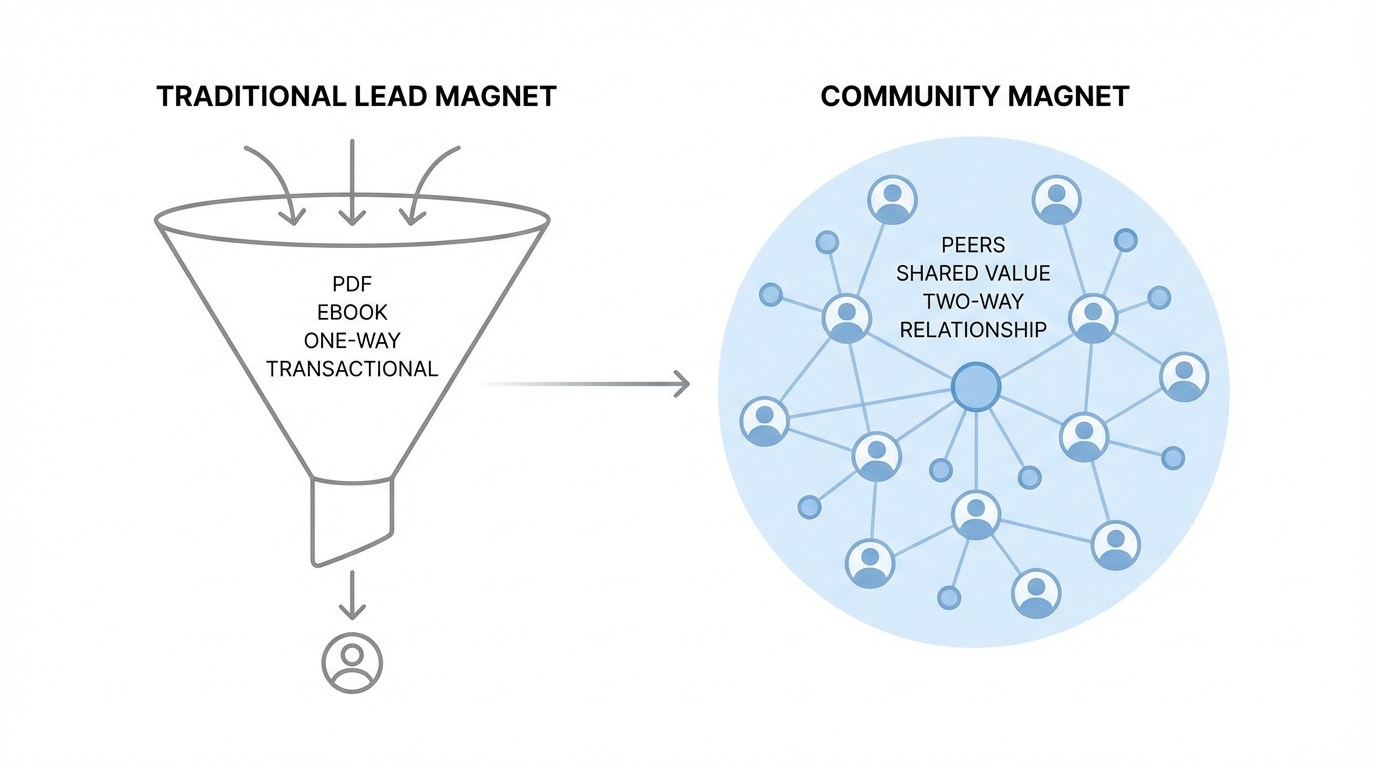
The core difference between a traditional lead magnet and a community magnet lies in the depth of interaction. A lead magnet is a dead end; once the PDF is downloaded, the relationship often stalls. A community magnet, however, is a living ecosystem. It is designed to be used daily, creating a 'stickiness' that traditional content cannot match. This is the cornerstone of a modern community building strategy.
According to Jack Butcher, the founder of Visualize Value, the shift toward these magnets often happens when a creator or brand moves from a 'service-based' mindset to a 'product-based' one. In his experience, the goal isn't just to gather an email list, but to aggregate a group of people who share a common problem or aesthetic. When you offer a tool—rather than just information—you are signaling that you understand the user's workflow, not just their curiosity.
Case Study: How the Daily Manifest Built a 20,000+ User Foundation
One of the most successful examples of a community magnet is the Daily Manifest created by Jack Butcher. In the early days of Visualize Value, Butcher was transitioning out of a high-stress agency environment where he felt 'burned out' by the constant cycle of pitching and production. He needed a way to manage his own day and stay focused on building a scalable brand. He created a simple PDF template in Figma to plan his tasks and shared it with his audience.
Originally, this was a $9 digital product. Crucially, it wasn't just a file; it came with an invite to a private WhatsApp group. This small friction point—the $9 fee—ensured that everyone in the group was 'skin in the game' serious about productivity. This group became a petri dish for Butcher to observe how people used the tool, what questions they asked, and where they struggled. Today, that product has over 20,000 downloads and served as the psychological and financial foundation for the entire Visualize Value ecosystem.
This demonstrates the power of influencer community growth. By starting small and high-utility, Butcher didn't just find customers; he found 'early adopters' who acted as unofficial co-founders. They provided the customer feedback loops necessary to refine his next big products, like 'Build Once, Sell Twice' and 'How to Visualize Value.'
Using Micro-Communities to Find Your Early Adopters

When building a community magnet, the platform you choose matters less than the intimacy of the environment. While large-scale audience engagement strategies might happen on Twitter or Instagram, the 'magnet' works best in micro-communities like Discord, WhatsApp, or Slack. These are the spaces where 'permissionless apprentices'—a term Butcher uses for those who start projects without being asked—thrive.
For many brands, the most effective lead generation tactics now involve driving traffic from broad social platforms into these focused hubs. Instead of broad-spectrum marketing, you are looking for specific signals. When someone joins a Discord for a niche tool, they are signaling a high degree of intent. These individuals are your most valuable assets; they are the ones who will beta-test your features, provide testimonials, and defend your brand in public forums.
Sourcing the right creators to lead or seed these micro-communities is vital. Modern platforms like Stormy AI allow brands to discover creators across platforms like TikTok and LinkedIn who already have established trust with niche audiences. By identifying influencers who align with your community's aesthetic and utility goals, you can accelerate the growth of your magnet without relying solely on paid acquisition.
Reducing Churn Through Utility-First Free Tools
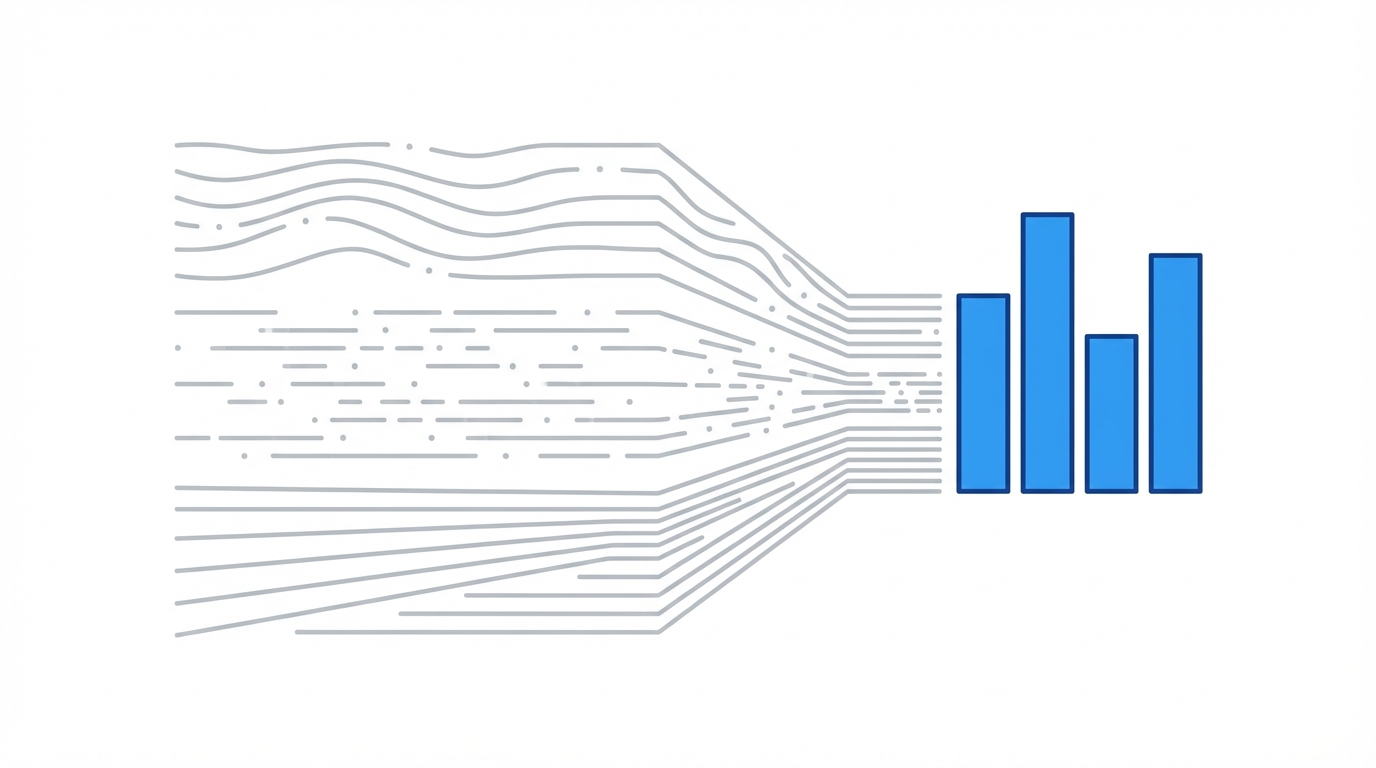
One of the hardest parts of scaling a paid product is fighting the churn battle. This is where community magnets offer a massive competitive advantage. When your entry-level tool is 'utility-first'—meaning it helps a user perform a specific, recurring task—it becomes part of their daily habit. If that tool is also the gateway to a community, the cost of leaving is no longer just the loss of a tool, but the loss of a social network and a support system.
By aggregating audience data through these tools, you can identify patterns that lead to churn before they happen. For example, if you see engagement in the community dropping, it’s a leading indicator that the paid product's value might be slipping. You can use these insights to pivot or add features. This is significantly more effective than traditional lead generation tactics that only track the top of the funnel.
For instance, companies like Retool or TypeShare have successfully built businesses by providing tools that solve a specific friction point for a specific community (developers and writers, respectively). They don't just sell software; they sell a way to operate better within their specific world. Once a user is embedded in that workflow, the 'multiple' on their lifetime value (LTV) increases exponentially.
Transitioning to a Decentralized Product Studio
The final stage of the community magnet playbook is the transition from a solo creator or a single-product brand to a decentralized product studio. Once you have a high-trust audience and a set of utility tools, the community itself starts to build the products. Jack Butcher notes that Visualize Value is moving toward a model where community members build co-branded products or tools that benefit from the brand's distribution.
This is the ultimate audience engagement strategy. When your community members become contributors, your cost of replication drops to near zero. You are no longer just selling a product; you are managing a network of value exchange. This shift is often accelerated by technologies like Web3, which, as Butcher suggests, act like an 'automatic cappuccino maker' for distributing value across a network of contributors without the friction of traditional contracts.
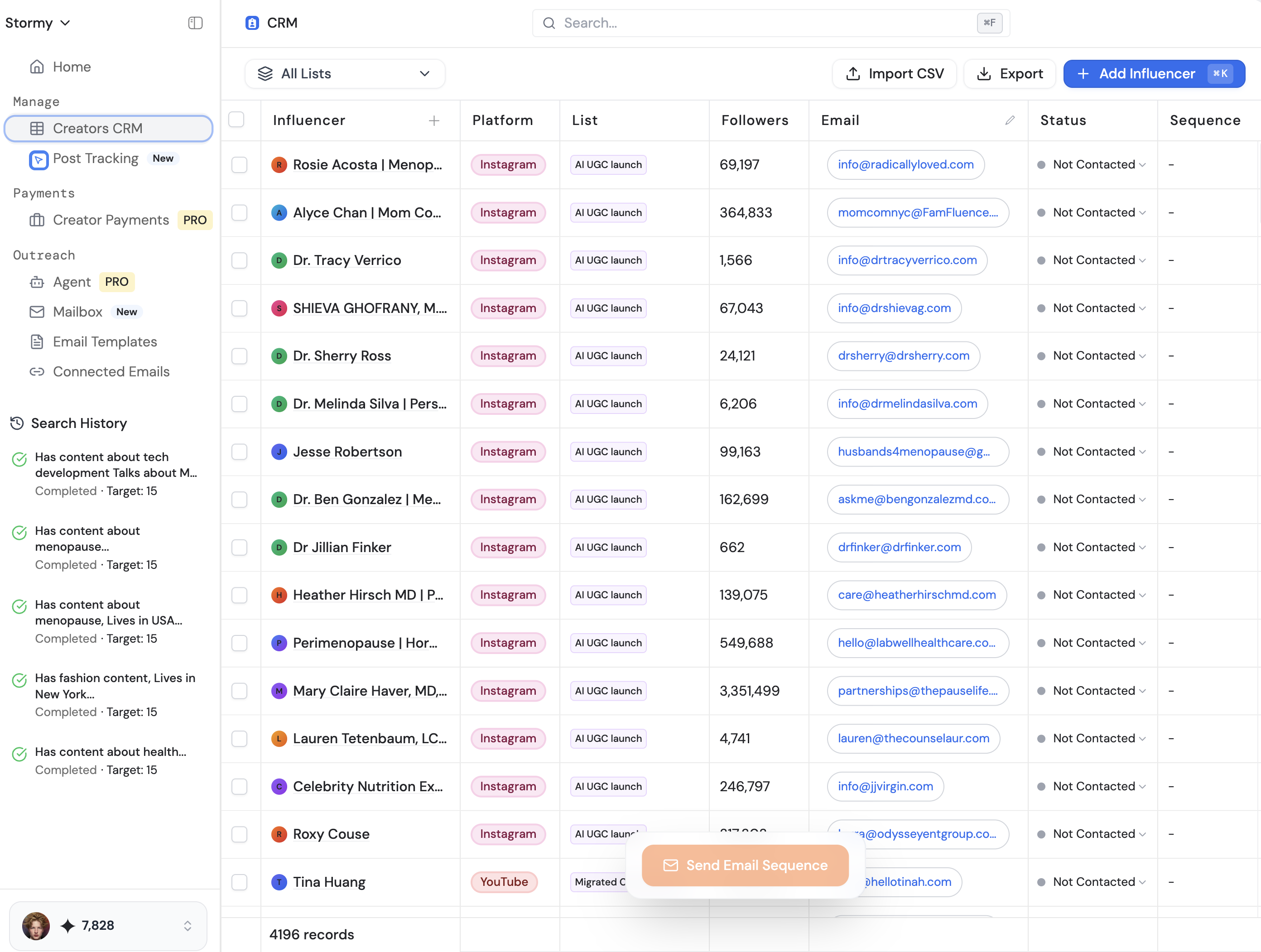
Managing these complex, multi-layered relationships requires robust infrastructure. Using a creator CRM like Stormy AI can help brands keep track of their most active community contributors, ensuring that the 'early adopters' and 'co-founders' are properly incentivized and supported as the community scales.
The Playbook: How to Build Your Own Community Magnet
If you are ready to move beyond the traditional lead magnet, follow these steps to build a magnet that actually compounds over time.
Step 1: Identify a Specific Friction Point
Look at your own workflow or the struggles of your audience. What is one thing they do every day that is harder than it needs to be? It could be a planning template, a calculator, or a simple design asset. Don't worry about 'how to do graphic design' in a broad sense—focus on a narrow subset like 'how to visualize a complex idea.'
Step 2: Build a Utility-First Tool
Create a version of that tool that works immediately. It doesn't have to be complex software. A Figma template, a Notion dashboard, or even a specialized spreadsheet can serve as a magnet. The key is that it must be immediately useful without a 20-page instruction manual.
Step 3: Create an Immediate Feedback Hub
Don't just give the tool away. Attach it to a micro-community. Whether it’s a WhatsApp group or a Discord server, ensure that the tool is the ticket to entry. This is where you will observe the customer feedback loops that will dictate your future product roadmap.
Step 4: Own the Aesthetic and the Language
As Butcher emphasizes, naming and aesthetics are under-indexed in marketing. Own a phrase or a visual style that people can latch onto. When someone sees a black-and-white geometric diagram, they think of Visualize Value. When people hear 'Build Once, Sell Twice,' they think of Butcher. Your community magnet needs its own 'mantra' to stay grounded in the minds of your users.
Conclusion: The Future is Community-First
The traditional lead magnet was built for an internet that was still relatively quiet. Today, the internet is deafeningly loud. To stand out, brands and creators must move from lead generation tactics to community building strategies. By creating community magnets—high-utility tools that foster intimacy and trust—you build an asset that grows more valuable as more people use it.
Whether you are a solo creator or a large brand, the goal remains the same: stop harvesting emails and start building a network. Tools like Stormy AI can help you find the right voices to champion your community, but the core value must come from the utility you provide. Build something useful, put it in the hands of people who care, and let the community take it from there.