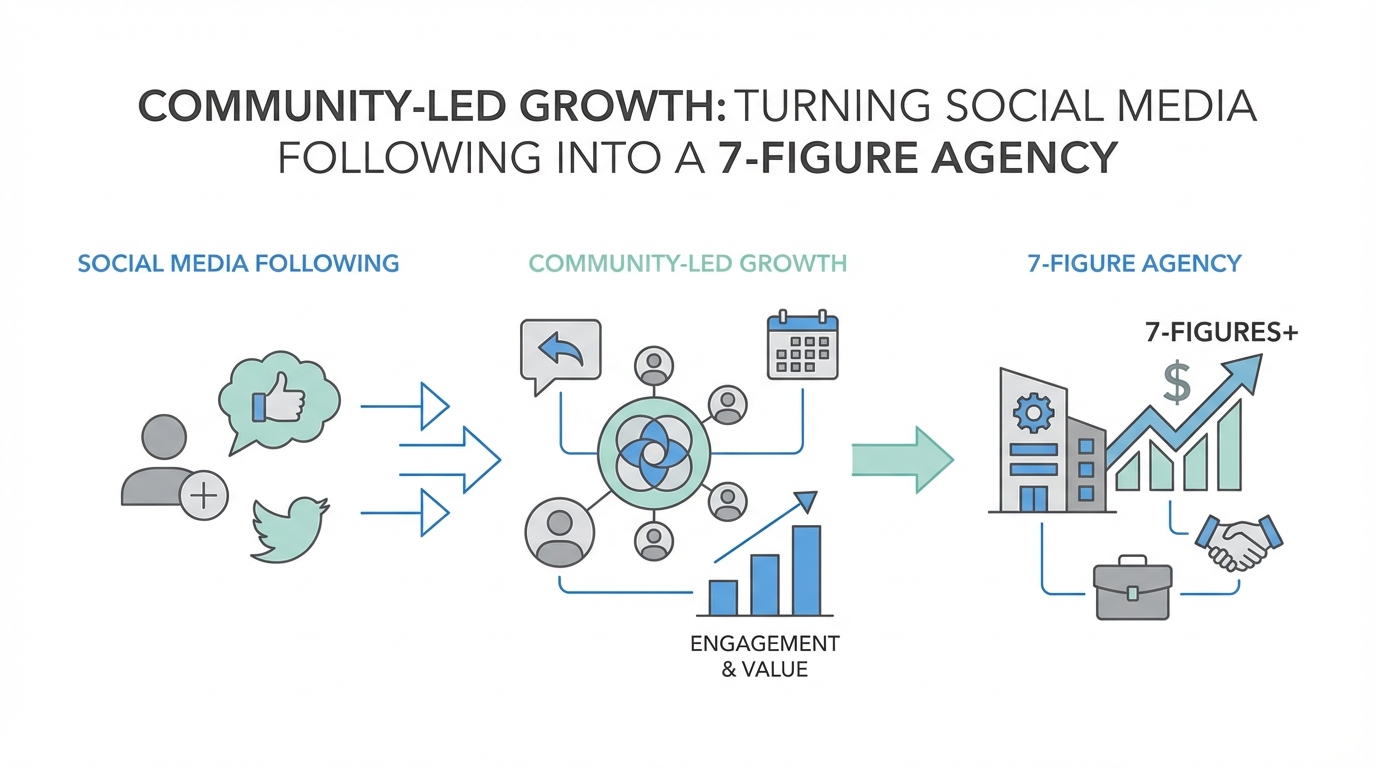
Most founders believe that a multi-million dollar business starts with a revolutionary product and a massive venture capital injection. However, the modern digital landscape has flipped this script. Today, the most successful ventures aren't built in secret labs; they are built in the open, fueled by community led growth. By pivoting from a "product-first" to an "audience-first" mentality, entrepreneurs are launching high-ticket services with surprisingly low overhead. Imagine turning a $90 investment into a 7-figure agency in just 40 days. This isn't just a dream—it is a replicable framework for anyone looking to monetize social media audience assets effectively.
The Shift from Product-First to Community-First

Traditional business models often follow a linear path: come up with an idea, build it, and then spend thousands on marketing to find an audience. This approach is increasingly risky. Instead, the community led growth model suggests you should build an online community first to validate demand before a single line of code is written or a service is offered. By engaging with users on platforms like Twitter or LinkedIn, you can identify what people are actually craving rather than what you think they need.
In the case of the community "You Probably Need a Robot," the founder noticed a massive influx of generic AI content that lacked depth. Millions of users were searching for actionable knowledge but were met with "trash" threads. By identifying this gap in the market, the foundation for a 7-figure business was laid without spending a dime on product development. The focus was entirely on social media community management and listening to the noise to find the signal.
The 'Ask, Don't Guess' Framework for Validation
Validation is the graveyard of most startups. Founders spend months building features that no one wants. The "Ask, Don't Guess" framework eliminates this risk. When you have a spark of an idea, the first step is to validate it through public interaction. A simple tweet or post can serve as your initial litmus test. A proven rule of thumb for social validation is the 20% retweet-to-like ratio. If your announcement generates this level of engagement, you have struck a nerve and found a viable market.
Once you see interest, you must move from public posts to private data collection. Using tools like Typeform allows you to capture emails and, more importantly, qualitative data. While many marketers advise against open-ended questions, they are a goldmine for community led growth. If people care about the problem, they will write paragraphs explaining their pain points. This data becomes the blueprint for your productized agency model.
Turning Open-Ended Data into a Service Roadmap
When building the "You Probably Need a Robot" community, the founder asked two simple questions: an email address and "What is interesting to you about AI and productivity?" The responses weren't just random thoughts; they were a direct request for specific services. A common recurring theme was: "My company needs help implementing AI into our workflow."
This insight is what allows you to monetize social media audience groups with high-ticket offers. Instead of guessing which AI tool to build, the community told the founder exactly what they would pay for: implementation consulting. By analyzing these responses, you can identify high-ticket pain points that are ripe for a productized agency model. This allows you to stop trading hours for dollars and start selling standardized solutions to common problems.
Manufacturing Scarcity: The 'Free for Now' Tactic
Even with a great idea, you need a psychological trigger to move people from "interested" to "signed up." Scarcity is a powerful motivator. By using the phrase "Free for now, but not forever," you create a sense of urgency. This simple psychological nudge can 10x your sign-up rate because it triggers a fear of missing out (FOMO) on future value.
This tactic is essential when you build an online community. You want early adopters to feel like they are getting a special deal for being first. This early cohort becomes your most loyal advocates, providing the initial social proof needed to scale your social media community management efforts to tens of thousands of members. At this stage, the investment is still minimal—often just the cost of a basic form builder and an email marketing tool like Notion or Mailchimp.
Marketing on a Budget: The $65 Viral Opportunity
You don't need a five-figure ad budget on Meta Ads Manager to grow. Instead, look for non-obvious, high-leverage promotion opportunities. For the founder of "You Probably Need a Robot," this came in the form of a $65 ad slot in a viral thread by Jackson Greathouse Fall, who was running the HustleGPT experiment. This tiny investment resulted in over 1.3 million impressions.
The lesson here is to stay embedded in the community you are trying to serve. By being an active participant in the conversation, you can spot these "golden opportunities" before they become mainstream and expensive. This type of guerrilla marketing is far more effective for community-led brands than traditional Google Ads or Apple Search Ads campaigns because it leverages existing trust and viral momentum.
The Transition to a Productized Agency Model
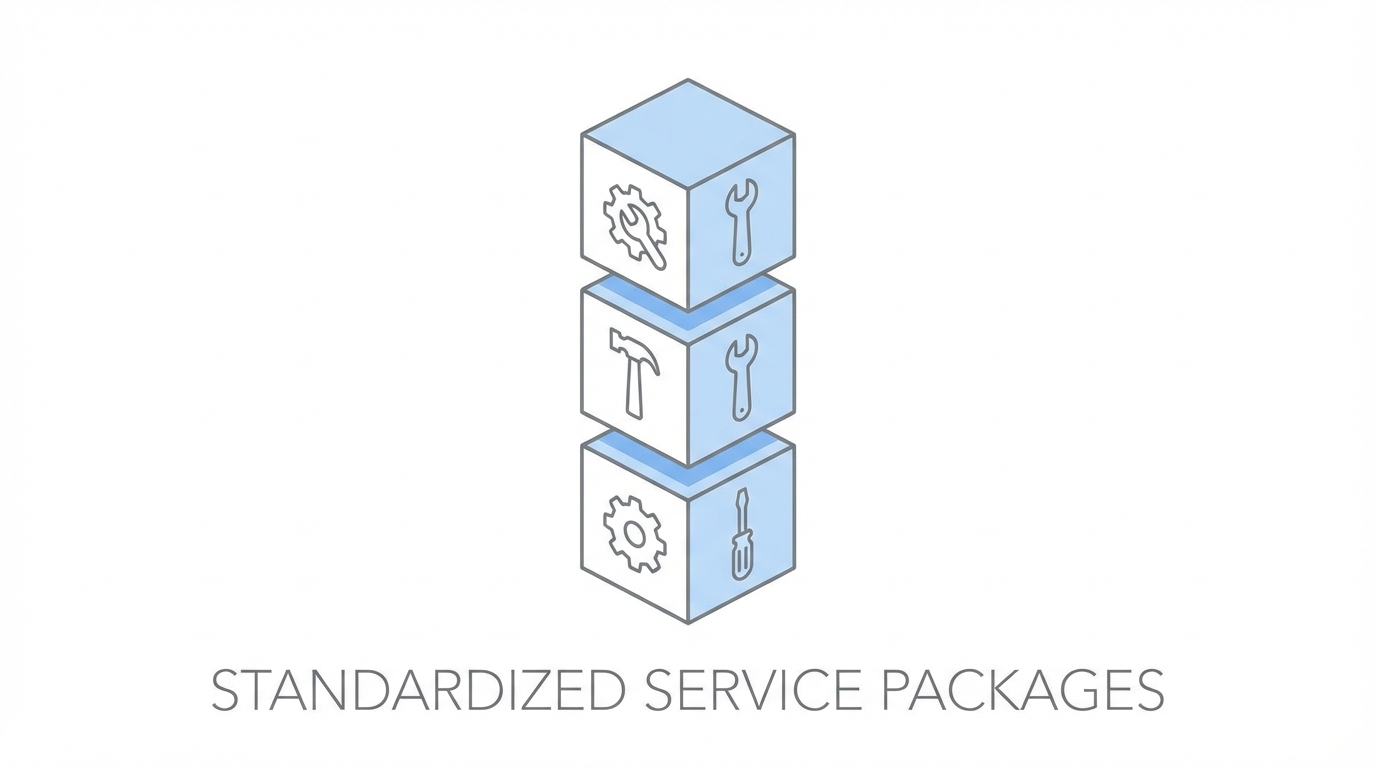
A community of 60,000 members is impressive, but a productized agency model is what turns that attention into a 7-figure business. A productized agency takes a complex service—like AI implementation—and turns it into a defined package with a fixed price and clear deliverables. This makes the service scalable and easier to sell.
To succeed with this model, focus on solving workflow problems rather than just providing information. People pay for convenience and time-saving. When you transition from a community manager to an agency owner, your role shifts to managing these standardized workflows. Tools like Stripe can help automate the billing for these packages, while a robust creator CRM ensures that no lead from your community falls through the cracks.
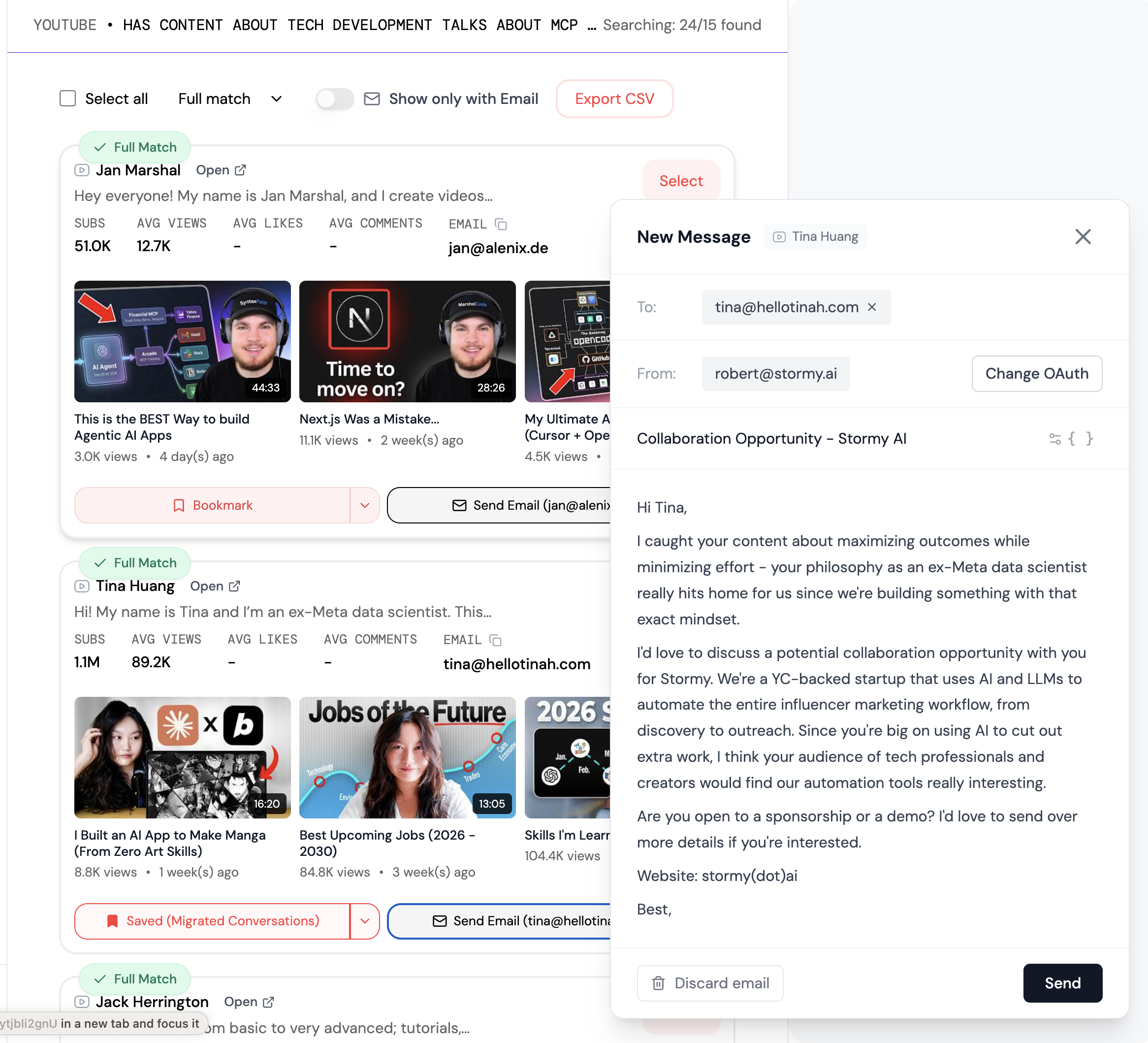
When you reach the stage of managing hundreds of potential collaborators and high-ticket clients, efficiency becomes your primary bottleneck. This is where modern software enters the picture. Platforms like Stormy AI can help you source and manage the very UGC creators or influencers you need to keep your community flywheel spinning. By using AI to vet creators and automate outreach, you can maintain a high standard of quality without manually checking every profile.
The Flywheel Effect: Retention Through Value
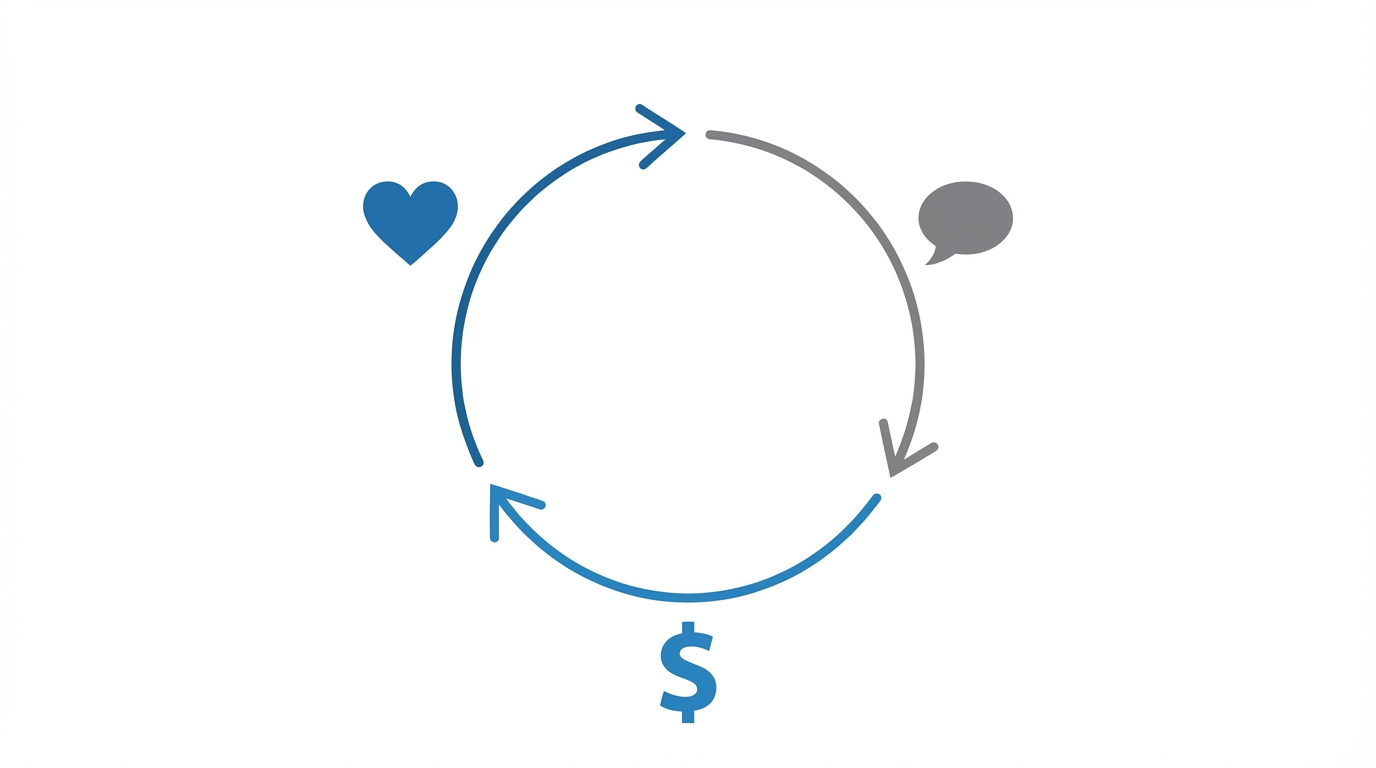
The final stage of community led growth is the flywheel effect. This is when your community members become your primary lead source. Because you have built trust by providing consistent value, your members naturally turn to your agency when they need professional help. To maintain this, you must focus on retention through value.
Maintaining interest after a viral spike requires solving deeper, more complex problems over time. As the market evolves—for instance, as AI moves from a novelty to a necessity—your community must evolve with it. Your social media community management strategy should prioritize:
- Deep-dive tutorials: Moving beyond the surface-level "threads" to actual implementation guides.
- Networking opportunities: Allowing members to connect with each other, increasing the "stickiness" of the group.
- Exclusive access: Providing early looks at new tools or agency-developed products.
Conclusion: Your $90 Playbook
Building a 7-figure business doesn't require a massive bank account; it requires a deep understanding of your audience and a willingness to build in public. By following the community led growth playbook—validating through social interaction, collecting qualitative data, creating scarcity, and productizing the most common solutions—you can monetize social media audience assets at a level most founders only dream of.
Remember: find audiences who share questions around your interests, build an online community to help them answer those questions, and then build productized services to help them at scale. Whether you are using Stormy AI to discover the right influencers to boost your reach or simply tweeting your latest experiment, the key is to start now. The opportunities to replicate this $90 system are everywhere; you just need to pay attention and hit publish.