The Community-Led Growth Blueprint: Scaling Ecommerce via Whop, Circle, and Social Commerce
Learn how community-led growth ecommerce and social commerce trends 2026 are reshaping the $8.1T market through platforms like Whop, Circle, and TikTok Shop.
In 2026, the digital storefront is no longer a destination; it is a node in a vast, interconnected ecosystem of human connection and AI-driven logic. The global ecommerce market is projected to reach a staggering $8.1 trillion by the end of this year, according to Statista. However, for many brands, the traditional playbook of dumping venture capital into Meta and Google ads has reached a point of diminishing returns. As AI-generated content saturates every feed, consumers are retreating into private "brand homes"—exclusive communities where trust is the primary currency. To survive, brands must pivot from transactional marketing to community-led growth ecommerce strategies that prioritize long-term retention over one-off sales.
Why Community-Led Growth is the Primary Defense Against AI-Saturation
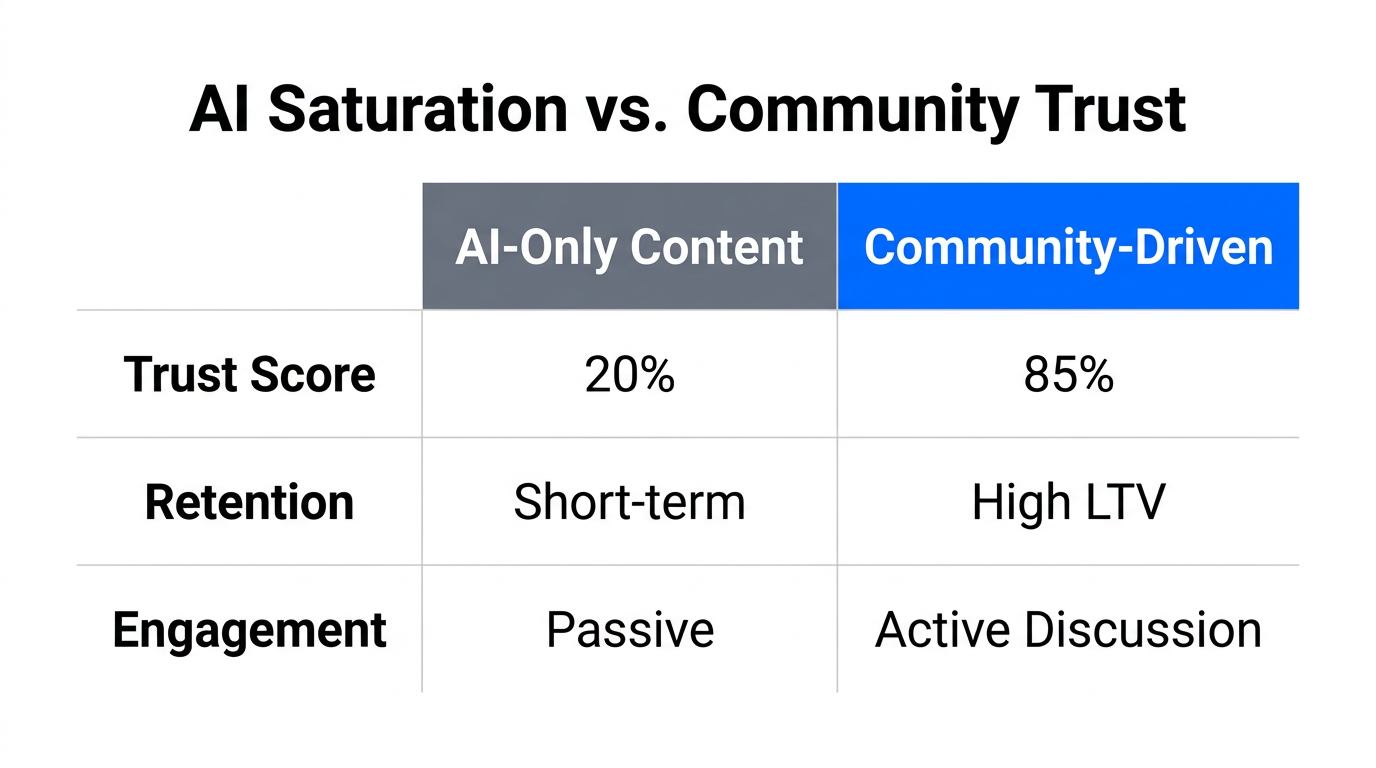
The rise of "Agentic Commerce" has changed how products are discovered. With Forrester predicting that 25% of shoppers now use AI-powered chatbots as their primary shopping assistant, brands are no longer just selling to humans; they are selling to algorithms. In this landscape, generic SEO and paid ads are easily mimicked by AI agents like Agentforce that research and negotiate on behalf of users.
Community-led growth (CLG) acts as a moat. When you host a customer community on platforms like Whop or Circle, you create a "brand home" that AI cannot replicate. These spaces foster real-world feedback, user-generated content (UGC), and emotional loyalty that transcends price sensitivity. By 2026, ecommerce customer loyalty strategies have shifted from points-based rewards to access-based benefits within these gated communities.
"The future of ecommerce isn't about more traffic; it's about deeper resonance. If you don't own the community, you're just renting your customers from the algorithms."
The $100B Social Commerce Opportunity: Meeting Users Where They Live
Social commerce is no longer an experiment—it is a cornerstone of the modern retail experience. US social commerce sales are expected to exceed $100 billion in 2026, representing over 7% of all ecommerce sales, per data from Triple Whale. This growth is driven by the seamless integration of discovery and checkout within social apps, primarily through mobile devices.
As Insider Intelligence notes, mobile devices (mCommerce) will drive over 40% of all ecommerce sales this year. This makes a TikTok Shopify integration guide essential for any scaling brand. The friction-less nature of "Live Shopping" allows creators to showcase products in real-time, converting viewers into buyers without them ever leaving the app. Brands that ignore this shift risk losing the 70% of mobile users who, according to APIDots, will abandon a purchase if the site isn't perfectly optimized for "thumb-friendly" interactions.
| Metric | 2021 Data | 2026 Projection | Growth Trend |
|---|---|---|---|
| Global Ecommerce Sales | $5.2 Trillion | $8.1 Trillion | Significant Upward |
| US Social Commerce | ~$37 Billion | $100+ Billion | Hyper-Growth |
| mCommerce Share | ~30% | 40%+ | Dominant |
| AI Shopping Usage | <5% | 25% | Mainstream |
Building Your Brand Home: The Whop and Circle Strategy
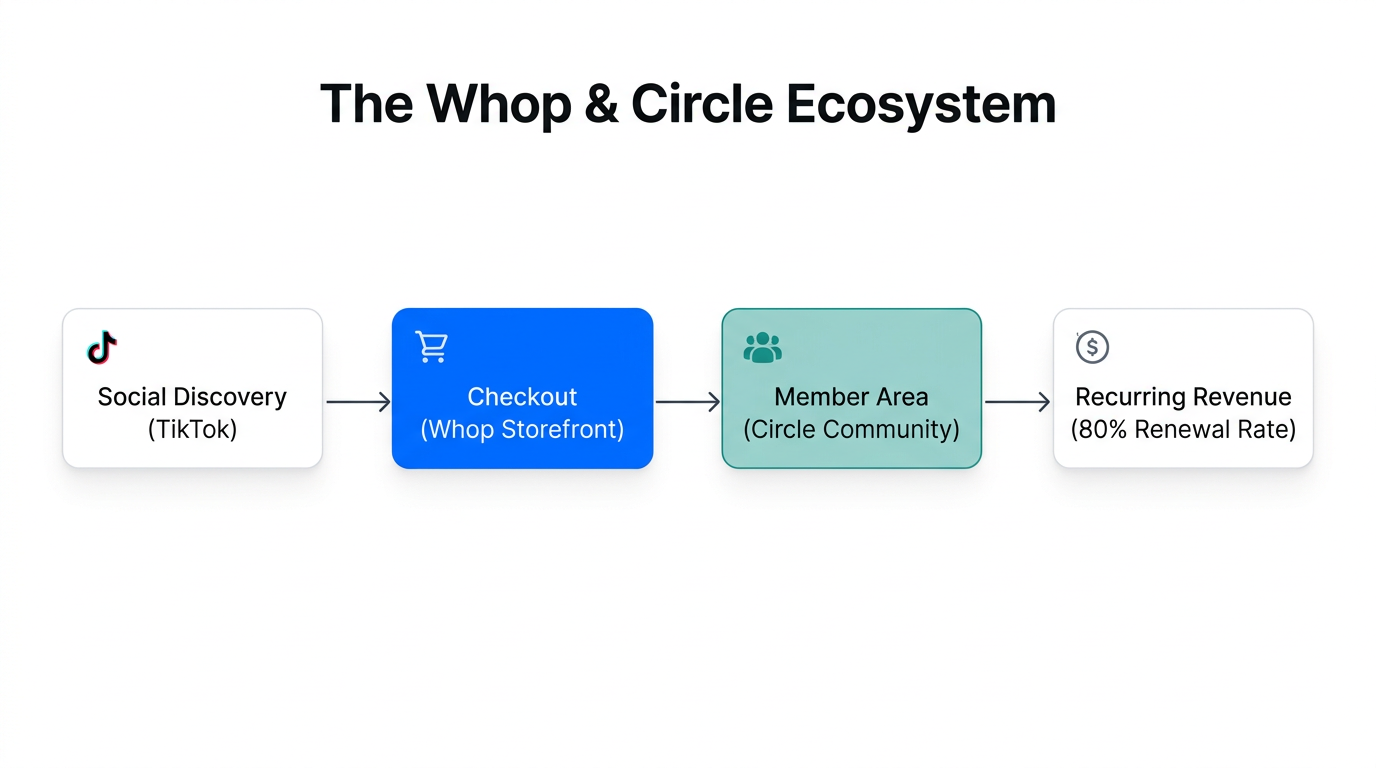
To drive high Lifetime Value (LTV), 2026 brands are moving beyond the newsletter. They are building immersive environments where customers can interact with the brand and each other. This is where community-led growth ecommerce takes a physical form.
Step 1: Choose Your Platform
- Whop: Ideal for brands selling digital products, access to exclusive software, or high-velocity communities. Whop allows you to gate access to Discord servers, files, and links effortlessly.
- Circle: Best for high-end lifestyle brands and education-heavy niches. Circle.so offers a white-labeled experience that feels like a private social network.
Step 2: Incentivize Participation
Don't just launch a forum; launch an ecosystem. Use these communities to offer Digital Product Passports (DPP), a concept gaining traction via EU regulations. By providing customers with a digital "birth certificate" for their physical goods within your community, you reinforce transparency and sustainability—two key drivers for 2026 consumers.
"The brands that win in 2026 are those that treat their customers like members of a club, not entries in a database."
Case Studies: Scaling from $1M to $50M and Beyond
Success in 2026 is often found by ignoring traditional marketing "best practices" and leaning into radical identity or live interaction. Two standout examples illustrate this perfectly.
The Glamnetic Live Shopping Playbook
Glamnetic revolutionized the beauty industry by utilizing a TikTok Shopify integration guide to its fullest potential. By hosting daily live shopping events, they scaled from $1M to $50M in revenue. Their strategy relied on hyper-personalization—using real-time behavioral data to customize landing pages and pricing in the moment. For modern brands, tools like Stormy AI are critical for discovering the right creators to lead these live sessions, ensuring the influencers have genuine engagement and a verified audience quality before they go live on the brand's behalf.
The Liquid Death Identity Product
Liquid Death took a commodity—water—and turned it into an identity product. Their success is a masterclass in community-led growth ecommerce. By creating a radical, counter-culture brand and a "Country Club" community where fans can "sell their souls" for access, they built a cult following that drives organic feedback and hyper-loyalty. They don't just sell water; they sell a membership to a lifestyle. This approach effectively combats the 80% failure rate seen in new ecommerce businesses that fail due to a lack of real demand research, as reported by eDesk.
The Unified Commerce Tech Stack for 2026
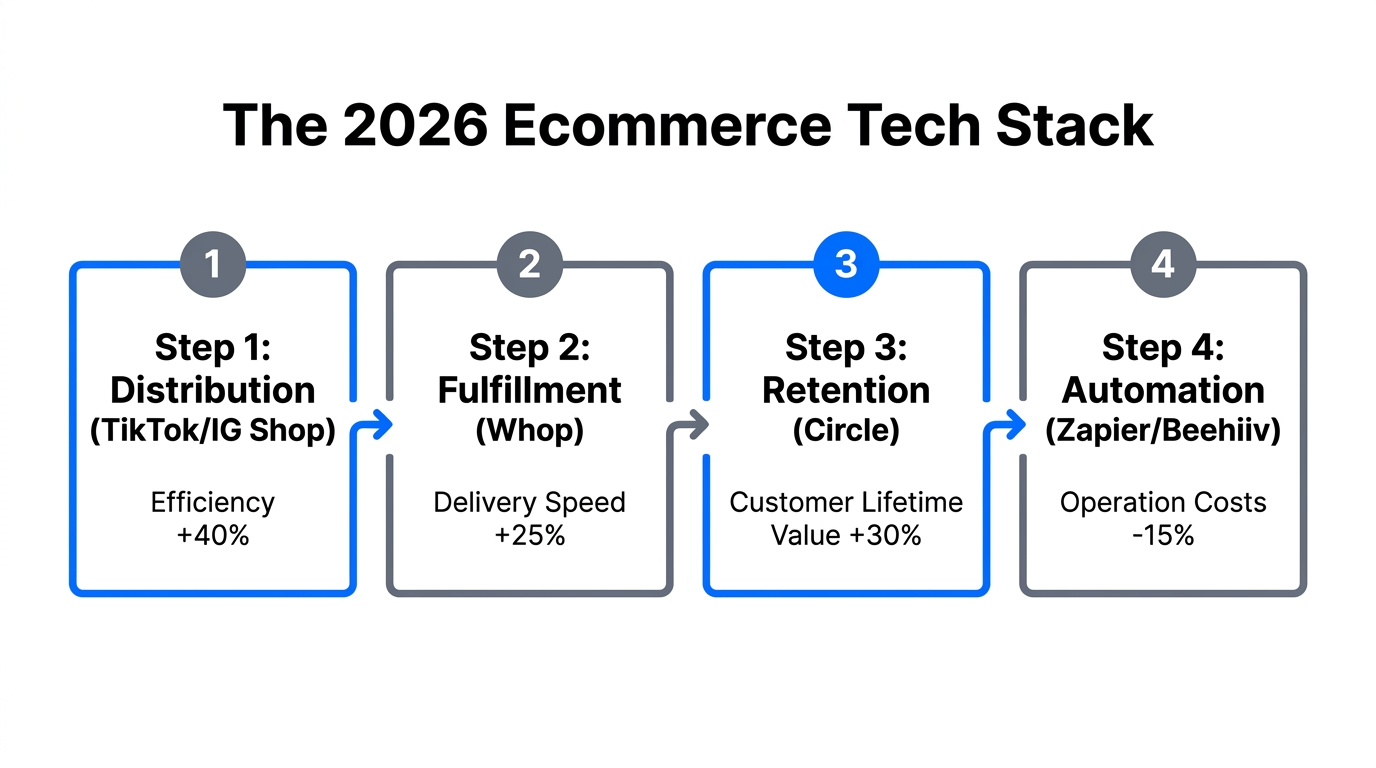
To avoid the dreaded data silos that prevent hyper-personalization, brands must adopt a "Unified Commerce" approach. This creates a single source of truth for inventory and customer data across every touchpoint, from Shopify stores to physical experiential centers.
- Core Platform: Shopify remains the gold standard for rapid scaling and app integrations.
- Unified Payments: Mollie facilitates seamless cross-border transactions and unified payment data.
- AI-Driven Marketing: Klaviyo is used for predictive SMS and email sequences that respond to community engagement.
- Influencer Sourcing: Using Stormy AI to find creators who specifically excel in community-building on LinkedIn or TikTok Shop.
- Customer Support: Fin AI or Tidio handles up to 70% of support queries, freeing your human team to engage in community discussions.
Avoiding the Pitfalls: Why 80% of Ecommerce Businesses Fail
While the market is massive, it is also ruthless. Rick Watson, CEO of RMW Commerce, emphasizes that 2026 success depends on "operational excellence" and protecting margins rather than chasing growth at any cost. Operational excellence in 2026 means mastering your data attribution.
Many brands struggle with attribution in a cookieless world. Using tools like RedTrack.io allows brands to track every conversion back to the specific community post or influencer video that sparked the interest. Without this granularity, you are flying blind.
"The biggest mistake of 2026 is ignoring the 'zero-click search' trend. If your brand isn't discoverable through voice and visual AI search, you don't exist." — Jason Goldberg, Publicis Groupe
Conclusion: Your 2026 Ecommerce Blueprint Checklist
Scaling an ecommerce brand in this year's hyper-personalized landscape requires a blend of high-tech automation and high-touch community building. By following these steps, you can position your brand for sustainable growth:
- Validate Demand: Use Semrush or Ahrefs to find high-demand, low-competition micro-niches.
- Build Your Home: Launch a community on Whop or Circle to secure customer loyalty.
- Go Social: Implement a robust TikTok Shopify integration guide to capture the 40% of sales coming from mobile commerce.
- Source Smart: Leverage Stormy AI to find creators who fit your niche and can authentically represent your brand in social feeds.
- Automate & Personalize: Use Klaviyo and Fin AI to ensure every customer interaction feels unique and immediate.
The era of "growth at any cost" is over. In 2026, the winners are those who build ecosystems, foster communities, and use AI as a tool for connection rather than just a tool for volume.