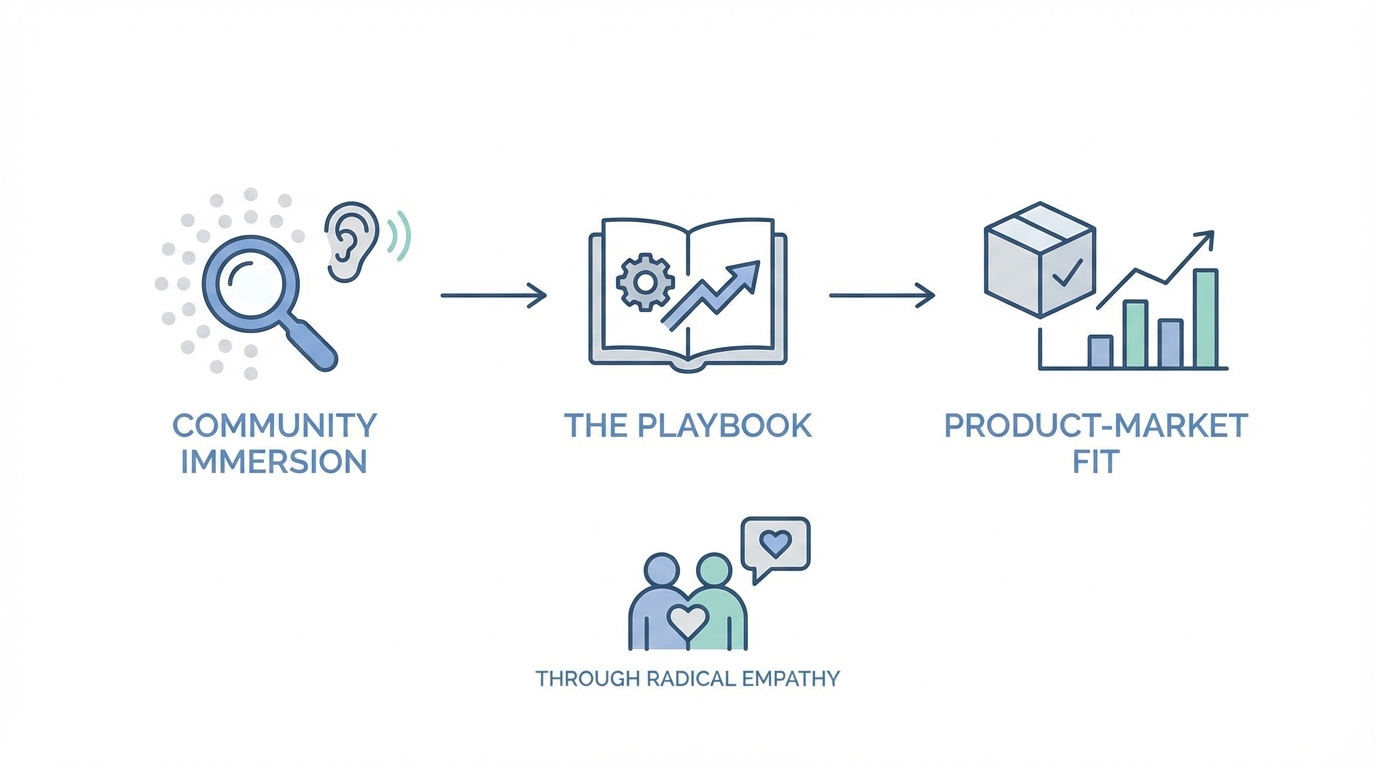
In the traditional startup world, the playbook is often predictable: build a Minimum Viable Product (MVP), launch on a platform like AppSumo to find your first thousand users, and iterate based on support tickets. But for many modern founders, this process feels hollow. They are building solutions for problems they’ve only observed from a distance. The result is often high churn and a lack of true stickiness. To build something that truly resonates, you need more than just data—you need radical empathy. This is the core of community-led growth, a strategy where you stop being a builder for a moment and start being a participant.
Radical empathy requires you to go where the pain is. Whether that’s a physical fraternity house in Alabama or a chaotic Discord server for NFT traders, immersion is the only way to uncover the unvoiced frustrations that lead to billion-dollar software opportunities. When you immerse yourself, you aren’t just looking for feature requests; you are looking for the broken rails of an industry. By the time you start writing code, you shouldn’t just know what to build—you should know exactly how your users feel when they encounter the problem you are solving.
The 'Tuscaloosa Roadshow' Method: Why Physical Presence Still Matters
In 2017, a startup called Islands set out to build "Slack for college." The founders realized that building a campus product from a glass office in San Francisco was a recipe for failure. Their reality—tech-saturated, older, and professional—was light-years away from the reality of an undergraduate student in the South. To fix this, they utilized the Tuscaloosa Roadshow method. They didn't just run ads; they moved to Alabama for nearly nine months to immerse themselves in the local college culture.
This is a fundamental product market fit framework: if you don't understand the environment, you can't understand the user. By being physically present in Tuscaloosa, the team could witness the daily friction points of campus life—how students organized social events, how they communicated across different groups, and where existing tools like GroupMe or Facebook were failing them. They landed in Alabama with a product they thought worked and left with a product that actually worked because it was forged in the fire of real-world interaction.
Physical immersion allows you to see the "non-verbal" feedback of a user. You see the hesitation when they open an app, the frustration when a notification doesn't arrive, and the creative workarounds they use to get things done. This level of user research for startups is impossible to replicate over a Zoom call or a Typeform survey. It requires you to sit in the room where it happens, share the same experiences, and build a bond of trust with your target demographic.
Platinum vs. Bronze Immersion: Scaling Your Presence
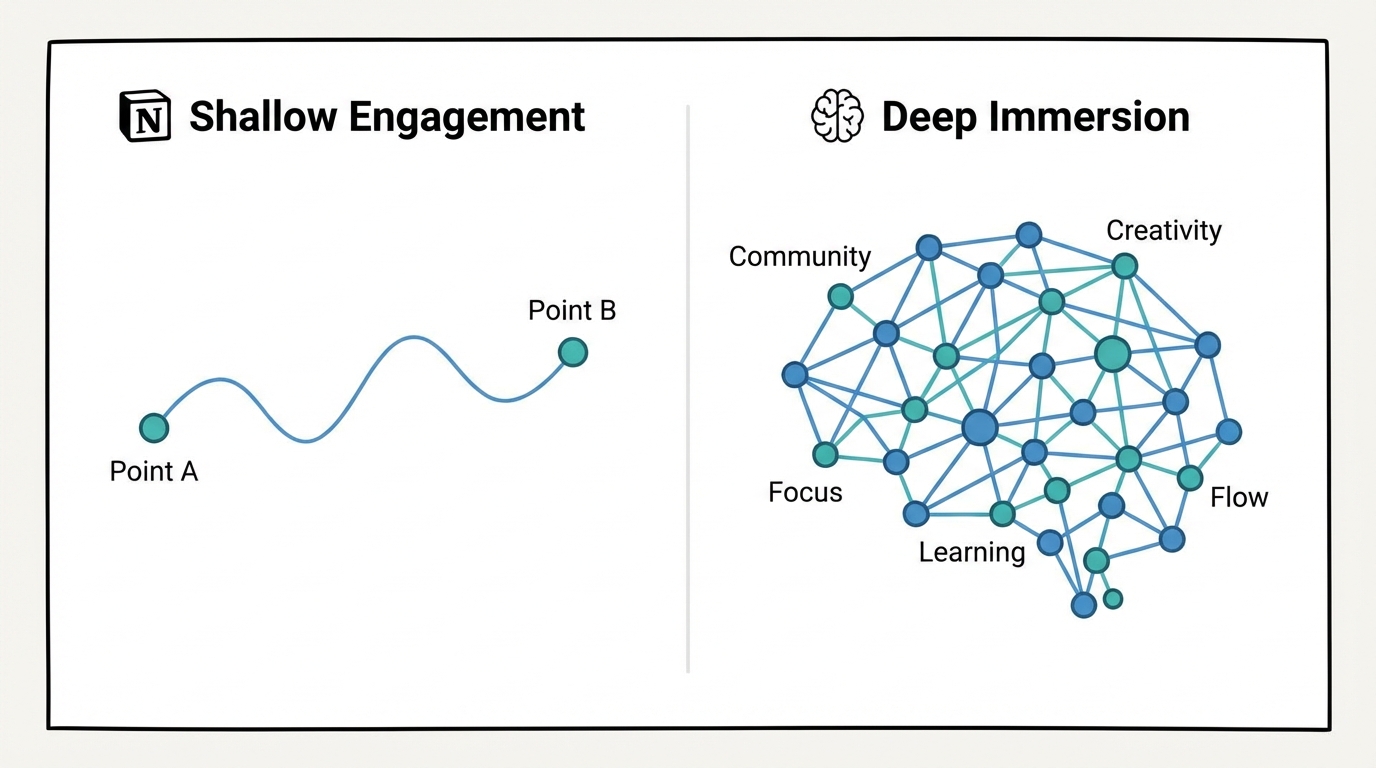

Not every founder can afford to spend nine months in Alabama. This is where we differentiate between Platinum and Bronze immersion. Platinum immersion is the heavy-touch approach: being physically present, living the life of your user, and building deep, personal relationships. This is the gold standard for high-stakes, niche products where the nuances of the workflow are everything. However, to scale your community immersion strategy, you often need to adopt a Bronze approach.
Bronze immersion is about digital teleportation. It involves auditing the platforms where your community already gathers. This means more than just browsing; it means actively participating in Reddit threads, dissecting the sentiment in Discord servers, and monitoring the real-time pulse on Stocktwits. The goal is to identify the recurring complaints and the "hacks" people use to solve them. If you see ten people in a Discord server complaining about how they manage their invoicing, you haven't just found a complaint—you've found a market opportunity.
The key to effective digital immersion is becoming a lurker before becoming a leader. You must listen to the language the community uses. Do they use specific slang? Do they have internal memes? Using tools like Stormy AI can help you discover and analyze the most influential voices within these niches, allowing you to see which creators are driving the conversation and what their followers are actually asking for. Once you understand the landscape, you can move from a Bronze observer to a Silver participant, asking tactical questions that reveal hidden workflows.
Moving from 'Community' as a Buzzword to a Moated Asset
In the venture capital world, "community" is often thrown around as a marketing buzzword. But as investor Howard Lindzon notes, true community-led growth is about more than just a large user base—it’s about ownership and incentives. For a community to be a moated business asset, the members must feel like they are part of the success of the platform. This is why we are seeing a shift toward Web 3.0 models where community members can stake their interest and participate in the upside.
A community becomes a moat when the switching cost is no longer just about the software, but about the relationships and the collective knowledge housed within it. If you build a product that solves a financial pain point for creators—like the difficulty of getting a loan without W-2 income—and you pair it with a community where those creators share tax tips and growth strategies, you have created something nearly impossible to disrupt. You are no longer just a utility; you are an ecosystem. Platforms like The Room Where It Happens are designed to be this exact type of two-way conversation, where the community's input directly shapes the future of the content and the products built around it.
Tactical Guide to the 'Inquiry Phase': Revealing Hidden Frustrations
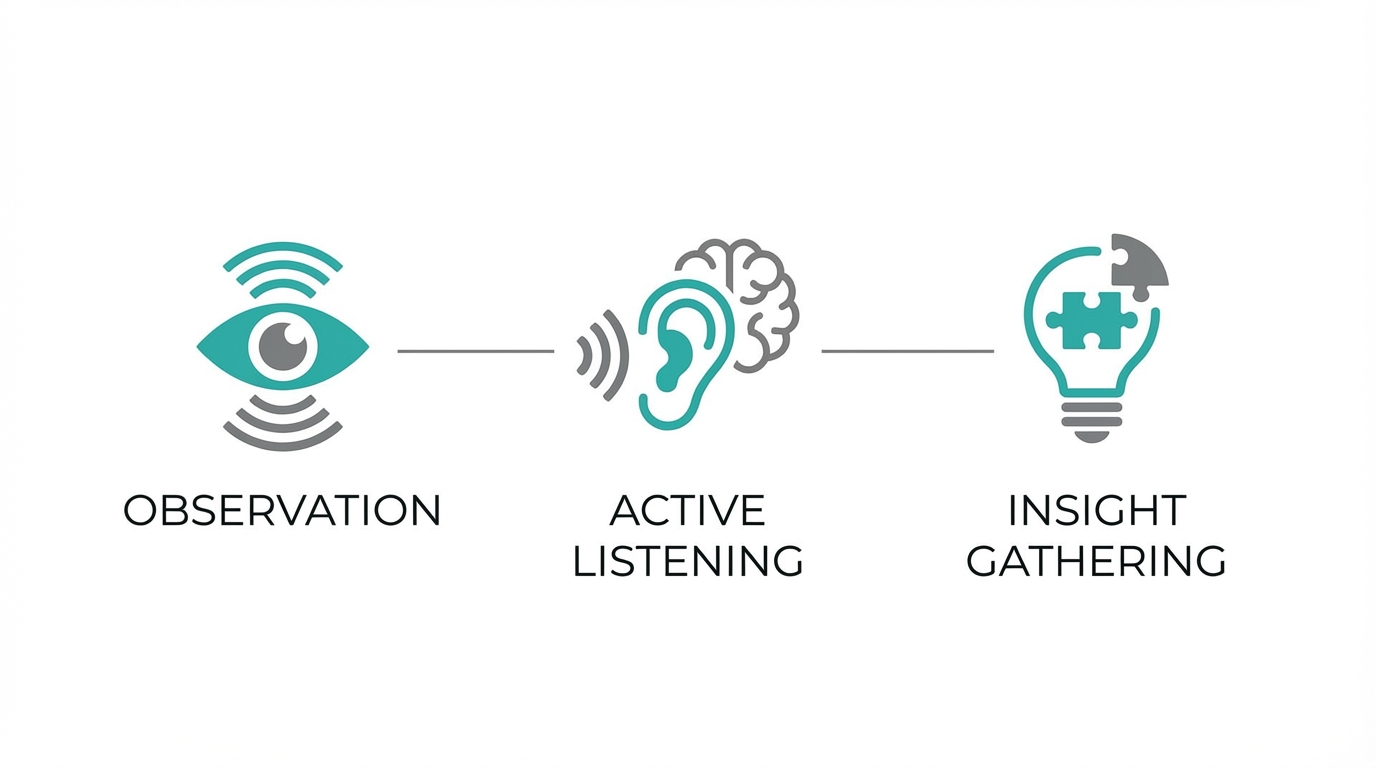
The Inquiry Phase is where you transition from passive observation to active investigation. The goal is to ask questions that reveal the "tax" your users are paying in terms of time, money, and stress. Most users won't tell you they need a new software platform; they will tell you they hate their bank, or they are confused by their 1099 forms, or they can't get a credit limit increase despite earning six figures. You have to be the detective that connects these dots.
Tactical questions to ask during immersion:
- "What is the one task you dread doing every Monday morning?" (Reveals automation opportunities)
- "How many different apps do you have to open to finish one specific workflow?" (Reveals unbundling or consolidation opportunities)
- "What was the last thing you tried to do that your bank or current software said 'no' to?" (Reveals underserved market segments)
- "If you could wave a wand and eliminate one specific administrative headache, what would it be?"
Consider the example of Mercury, a banking product built specifically for startups. Traditional banks were overserving large corporations while underserving founders who needed a fast, intuitive, and API-first banking experience. By asking founders what frustrated them about Chase or Bank of America, Mercury was able to build a product that spoke specifically to the startup archetype. They didn't need a new banking license to start; they needed a better understanding of the founder's pain.
Building Software for 'Businesses of One'
The workforce is fundamentally changing. We are moving away from the 40-year career at a single company toward a portfolio theory of jobs. This has given rise to the "Business of One"—the creator, the freelancer, the 1099 consultant. These individuals are running multi-million dollar businesses with the administrative infrastructure of a teenager's lemonade stand. This is the biggest opportunity for community led growth in the next decade.
Creators often don't know how to manage invoicing, optimize for deductible expenses, or underwrite their own credit. They are effectively gladiators in a digital arena, as Howard Lindzon describes, taking huge risks and learning through the "punch in the face" of financial loss. Software that automates these micro-tasks is the next frontier. If you can help a creator save $20,000 on their taxes just by correctly identifying their equipment as a deductible expense, you haven't just built a tool; you've built a retention machine.
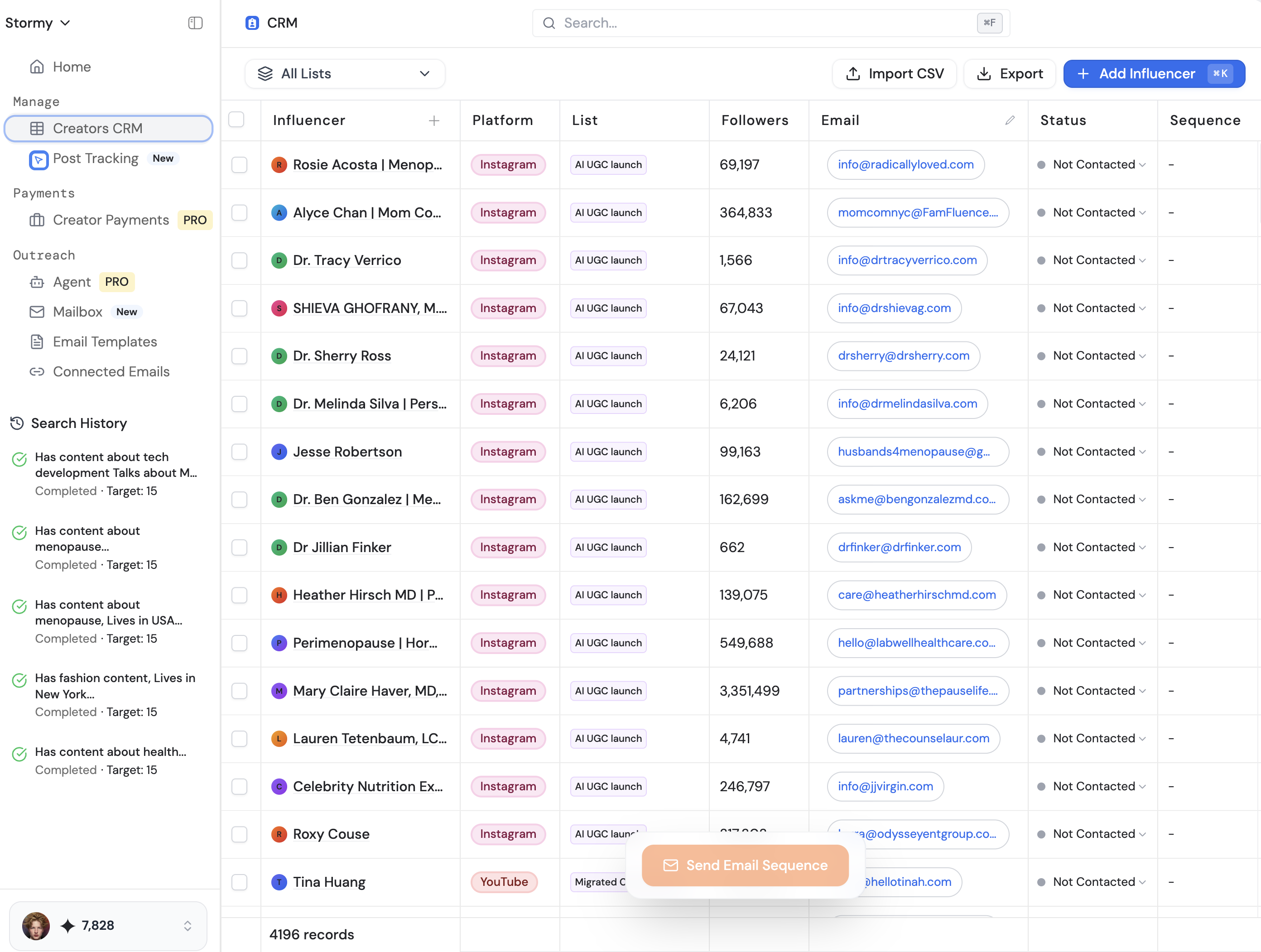
For those looking to build in this space, influencer marketing analytics and relationship management are key. While legacy tools like Captiv8 or impact.com offer traditional database features, modern platforms like Stormy AI provide AI-native discovery and outreach that feels like a natural extension of a creator's workflow. Managing multiple brand deals, tracking post performance, and handling payments in one place is a massive pain point. Building a Creator CRM or a specialized financial portal is a prime example of taking an insight from community immersion and turning it into a scalable SaaS product.
The Disruptive Innovation Framework: Using the Niche as a Wedge
To understand how a small startup can take on an incumbent, you must look at the Clay Christensen model of disruptive innovation. This framework explains how upstarts enter the bottom of a market, serve an underserved niche extremely well, and then move upmarket to displace giants. In the financial world, we are seeing this with the unbundling of the S&P 500. Investors no longer want a passive, one-size-fits-all portfolio; they want to customize their investments, fractionalize their ownership of assets via platforms like eToro or Robinhood, and engage with their assets in real-time.
This same logic applies to community-led software. You don't build "ERP for everyone." You build "ERP for YouTubers." By focusing on a specific customer archetype, you can provide the best possible product for that niche. This focus becomes your wedge. Once you have captured the loyalty of the creator community, you can expand horizontally into other 1099 professions, eventually challenging the legacy players who are too slow to innovate.
We see this trend across various industries, from media companies like Business Insider that focused on digital-first reporting, to consumer products like Manscaped that addressed a grooming need men were too embarrassed to talk about. These companies succeeded because they immersed themselves in a specific truth that the mainstream market was ignoring.
Conclusion: The Path to Radical Empathy
Finding product-market fit is not a game of luck; it is a game of presence. By adopting a community immersion strategy, you bypass the guesswork and build on the solid foundation of real-world pain. Whether you are conducting a Tuscaloosa Roadshow or auditing the latest trends in a Web 3.0 community, the goal remains the same: to understand your user better than they understand themselves.
As you move forward, remember that speculation has become entertainment and community has become the new capital. Don't just build software—build a home for a community. Use the Inquiry Phase to find the broken rails, use the Business of One mindset to empower your users, and use disruptive innovation to carve out your niche. In a world of automated solutions and AI-generated noise, the only true moat left is the radical empathy you have for the people you serve. If you're ready to start discovering the creators who will define your next community, tools like Stormy AI are here to help you bridge that gap and start the conversation.