Maximizing Profitability: Syncing Cogsy and Ecommerce Inventory Management Automation with Your 2026 Ad Spend
Learn how Cogsy and ecommerce inventory management automation optimize ROAS in 2026. Sync real-time stock with Google and Meta ads to reduce ad waste and boost profit.
In the high-stakes ecommerce landscape of 2026, the margin for error has vanished. Performance marketers can no longer afford to dump thousands into Meta and Google campaigns only to realize, three days later, that their best-selling SKU has been out of stock since Tuesday. This isn't just a logistical hiccup; it’s a direct drain on your Return on Ad Spend (ROAS). In a world where inventory mismanagement contributes to 43% of lost sales, the bridge between your warehouse and your ad manager must be automated, intelligent, and instantaneous.
Modern founders are moving away from "growth at all costs" toward a model of "operational maturity." According to analysts at Gartner, growth without visibility is a liability. This is why Cogsy ecommerce inventory management automation has become the linchpin for brands looking to maximize profitability. By syncing your stock levels with your marketing spend, you don't just save money—you create a resilient, self-optimizing engine that scales with precision.
The Rise of the Inventory-Driven Marketing Strategy
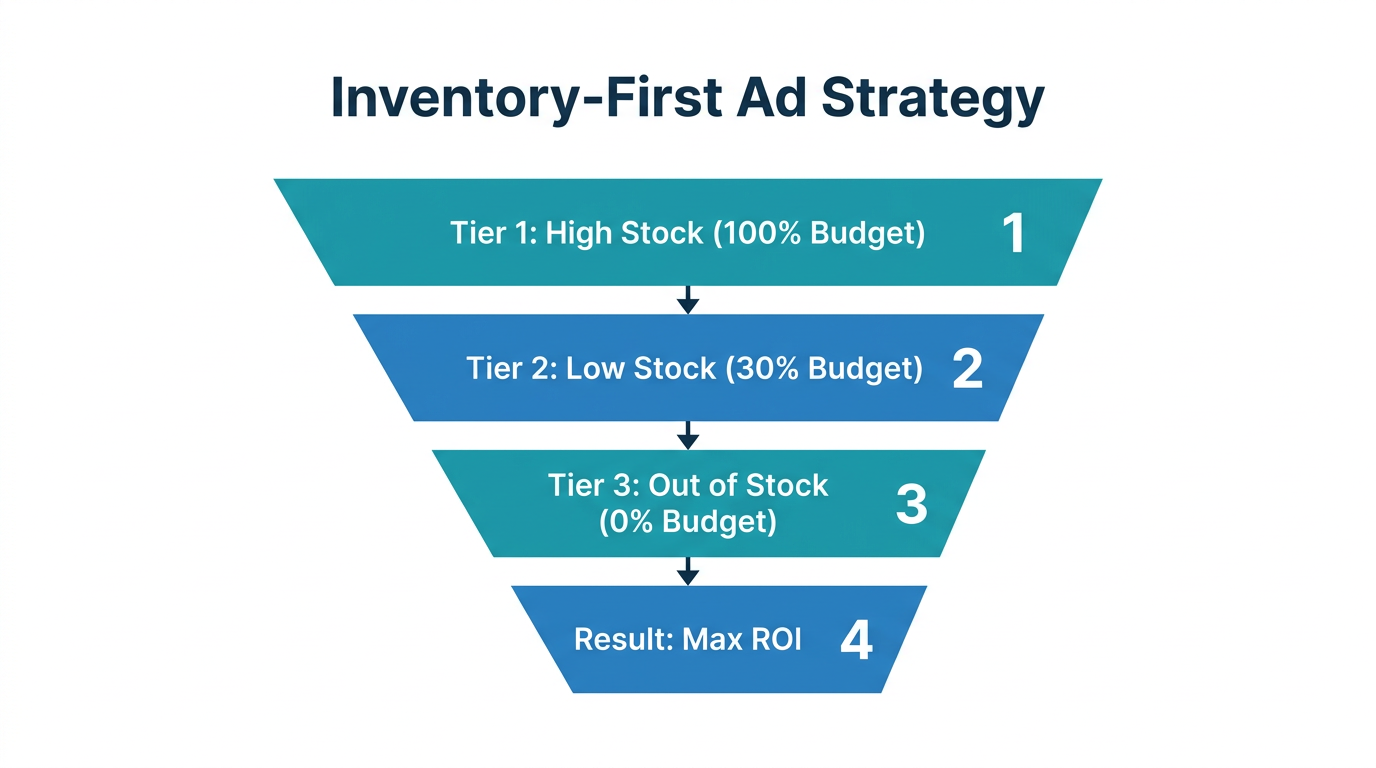
The core problem in 2026 isn't finding customers; it's ensuring you have the product to fulfill their expectations when they click. An inventory-driven marketing strategy aligns your paid media budget with real-time stock availability and incoming shipments. When these two systems don't talk, you create "zombie ads"—promoted content for items that cannot be purchased.
By integrating a platform like Cogsy, brands can move toward Unified Commerce. This means your Meta Ads Manager and Google Ads accounts react dynamically to what is physically on the shelf. If your "Hero Product" drops below a 10-day supply, the system should automatically scale back the budget, shifting those dollars to high-stock, high-margin items. This prevents the frustration of stockouts and keeps your CAC (Customer Acquisition Cost) efficient.
"Inventory-driven marketing is the only way to protect your brand reputation in a 2026 market where customer loyalty is won or lost at the fulfillment stage."
Using Cogsy for AI-Powered Demand Forecasting in 2026
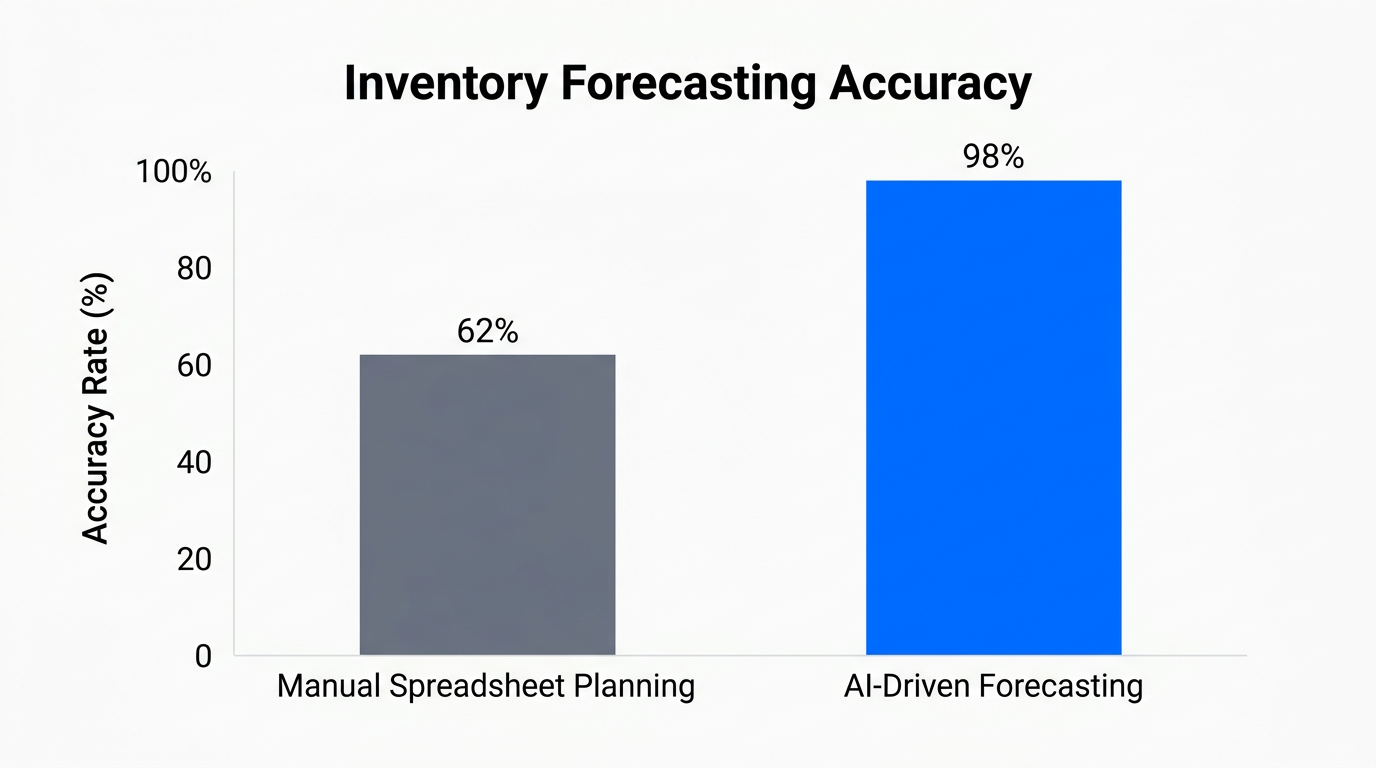
Predicting the future used to involve messy spreadsheets and gut feelings. Today, demand forecasting for ecommerce 2026 is handled by AI agents that analyze historical sales, seasonal trends, and even macro-economic shifts. Cogsy excels here by helping brands reduce excess inventory carrying costs by 20%.
The goal isn't just to avoid running out of stock—it’s to avoid overstocking, which ties up vital cash flow. In a high-interest-rate environment, capital efficiency is king. By using Cogsy, you can categorize your products through AI-driven ABC Analysis. This ensures that your "A" items (the top 20% of products driving 80% of revenue) have tighter automated reorder points and higher safety stock levels compared to slower-moving items.
| Inventory Metric | Manual Approach | Cogsy AI Automation |
|---|---|---|
| Forecasting Accuracy | 63% - 65% | 95% - 99% |
| Reorder Logic | Static thresholds | Dynamic (Lead-time aware) |
| Carrying Costs | High (Safety stock guesswork) | Reduced by 20% |
| Ad Waste | High (Promoting OOS items) | Near Zero |
Furthermore, leading tools like Netstock and Cogsy now use Lead-Time Automation. Instead of using a fixed reorder date, these systems adjust thresholds based on real-time supplier performance and potential seasonal shipping delays. If a manufacturer in Vietnam is trending three days slower this month, your reorder point automatically moves up to compensate.
The 'Phantom Profit' Danger: Automating Landed Costs
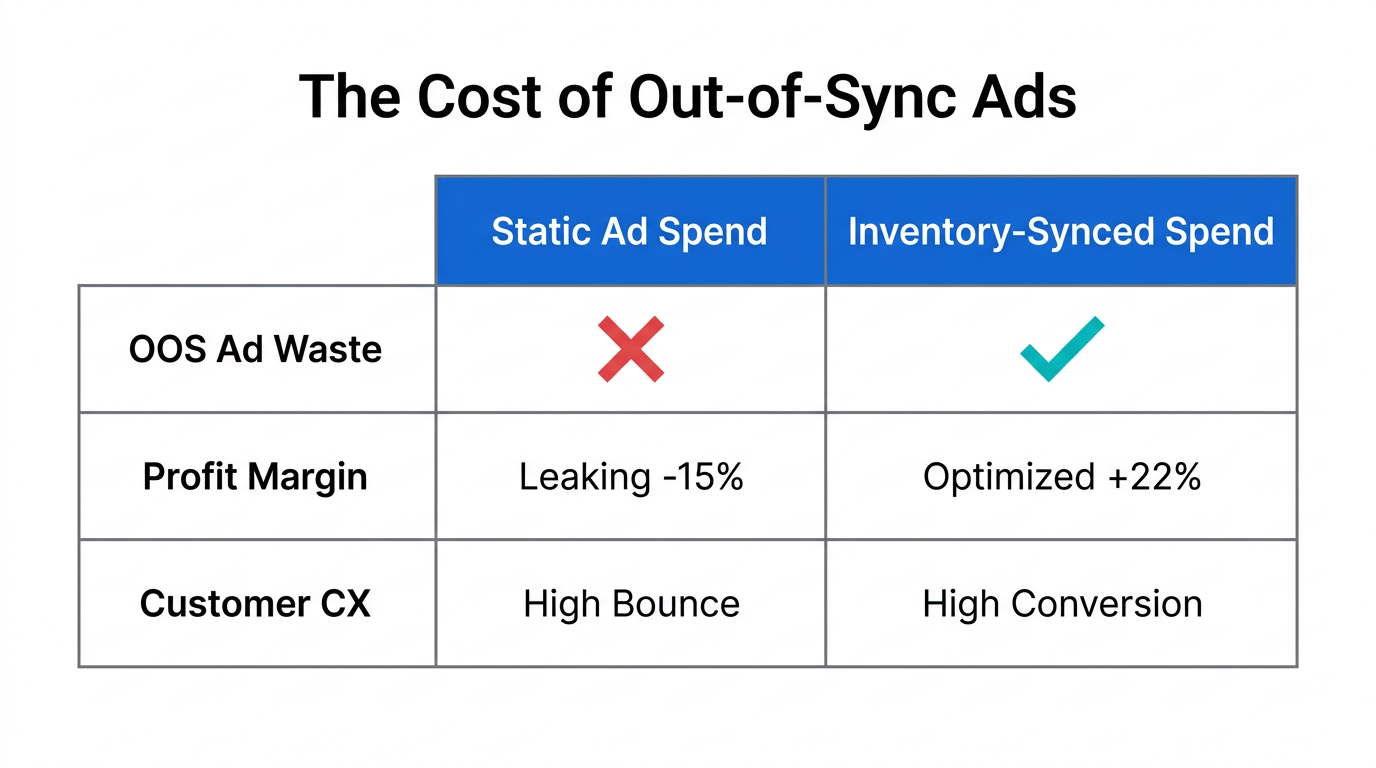
One of the most dangerous mistakes an ecommerce founder can make is looking at "Gross Profit" without accounting for landed costs. If you are only tracking the unit price from the factory, you are ignoring freight, duties, insurance, and local drayage fees. This leads to "Phantom Profits"—where your dashboard says you're making money, but your bank account is shrinking.
Automating these calculations is essential. Modern systems like Kimonix or specialized modules in NetSuite ensure that every single cent spent to get a product into your warehouse is factored into your ROAS calculations. When your ad spend is synced with actual landed margins, you can reduce ecommerce ad waste by pausing products that are currently too expensive to ship profitably due to a temporary spike in freight costs.
"If you aren't automating your landed cost calculations, you aren't running a business—you're running an expensive hobby with a marketing habit."
Playbook: Automatically Pausing Ad Sets Based on Stock Thresholds
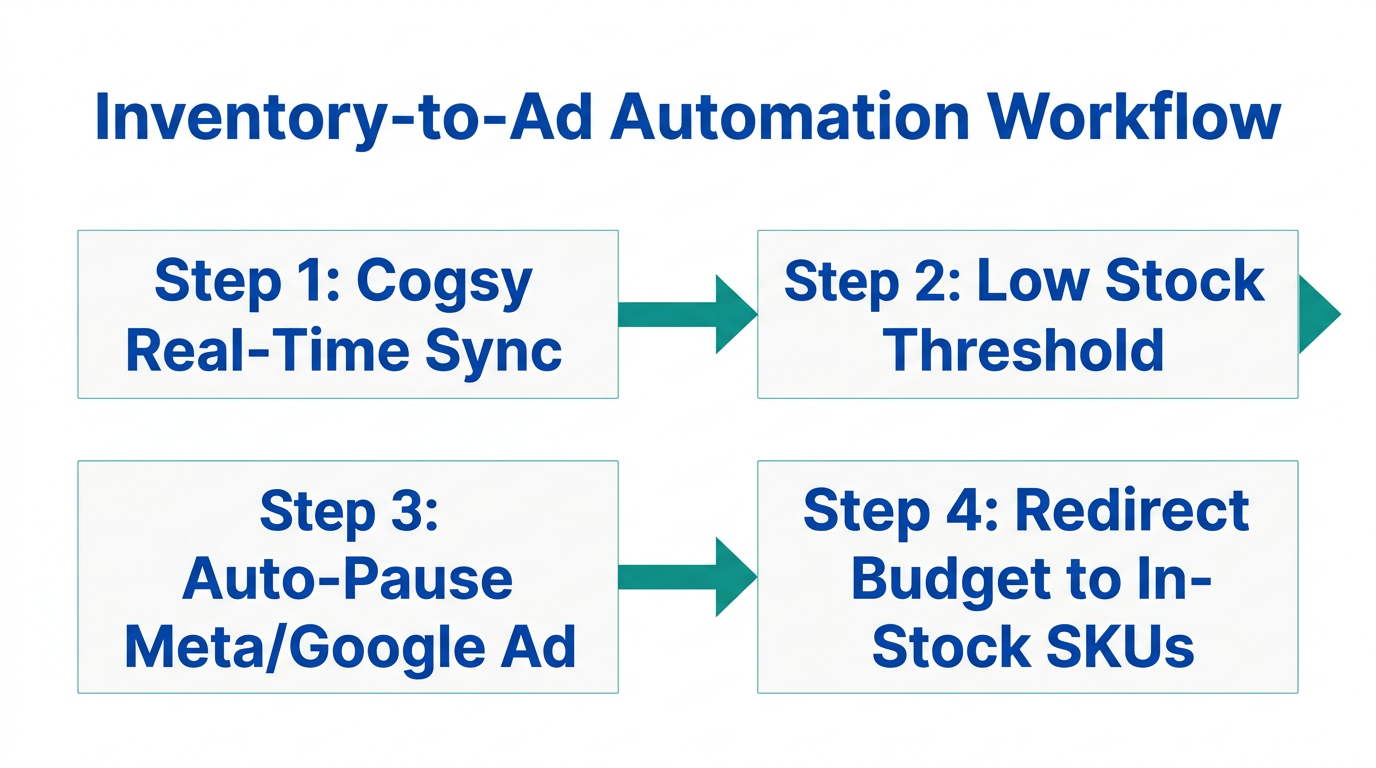
To truly maximize profitability, you need to implement a technical bridge between your IMS (Inventory Management System) and your ad platforms. Here is the 2026 playbook for automating this workflow:
- Step 1: Establish a Single Source of Truth. Use a tool like Cin7 or Flxpoint to aggregate stock levels from your 3PL, your retail stores, and your own warehouse.
- Step 2: Define 'Low-Stock' Thresholds. This isn't just "zero." You should define a threshold based on your burn rate. For example, if you sell 50 units a day and your lead time is 14 days, your automated alert should trigger when you hit 1,000 units.
- Step 3: Connect to Automation Hubs. Use Zapier or Make to monitor your Cogsy data. When a SKU hits the "Danger Zone" (e.g., less than 7 days of stock), the automation sends a signal to your ad manager.
- Step 4: Execute the 'Ad Pause' Rule. In Meta Ads Manager, you can set an automated rule that pauses specific ad sets or switches the creative to a different product when the inventory API returns a low-stock value.
- Step 5: Leverage UGC for High-Stock Items. While some items are low-stock, others might be overstocked. This is where you should double down on content. Many brands use Stormy AI to quickly find and vet UGC creators who can create fresh content for overstocked SKUs, helping to clear inventory and improve cash flow.
Real-World Impact: How Coffee Beanery Lifted Revenue by 29%
The theory of inventory automation sounds great, but the results are even better. Take Coffee Beanery as a prime example. By automating their replenishment cycles and syncing them with post-purchase follow-up flows, they achieved a 29% revenue lift in just one quarter. They didn't necessarily spend more on ads; they simply made their existing spend more efficient by ensuring they never promoted a flavor that wasn't available for immediate shipping.
Similarly, cookware brand Caraway uses real-time monitoring to prevent "stockout cascades." During viral growth periods (often triggered by creator campaigns found on Stormy AI), their systems automatically adjust reorder points to prevent the site-wide outages that plague less-prepared competitors.
"Success in 2026 ecommerce isn't about the biggest budget; it's about the smartest sync between supply and demand."
Common Mistakes in Inventory Automation
Even with the best tools, implementation errors can sink your profitability. Avoid these four common pitfalls:
- The Spreadsheet Trap: If you have more than 50 SKUs or sell on 2+ channels (e.g., Shopify and Amazon), manual entry will introduce a 5% error rate that compounds monthly. Stop using Excel for critical operations.
- Ignoring the Receiving Dock: An automated system is only as good as the data entered. If your warehouse staff doesn't scan a new shipment immediately, your ad manager will think you're still out of stock, missing out on crucial sales hours.
- Sustainability-Blindness: Modern fulfillment algorithms, as noted by Sendcloud, now prioritize shipping from the closest location to reduce costs and carbon footprints. If your inventory isn't balanced across multiple warehouses, your ad spend will be eaten up by shipping zones.
- Underinvesting in Training: Don't just buy Cogsy and hope it fixes everything. Ensure your operations team understands how to interpret the AI's forecasting suggestions.
Conclusion: Building a Resilient Ecommerce Engine
Profitability in 2026 is a game of inches. By embracing Cogsy ecommerce inventory management automation, you remove the friction between what you're selling and what you actually have. You protect your ROAS, eliminate phantom profits, and ensure that every dollar of ad spend is backed by a product ready to ship.
As you optimize your inventory, remember that your marketing content needs to be just as dynamic. Use Stormy AI to discover creators who can pivot your messaging as stock levels fluctuate, ensuring that your brand remains agile, profitable, and customer-centric in an increasingly automated world. The founders who automate their back-end today are the ones who will own the market tomorrow.