In the hyper-competitive mobile landscape of 2026, the distance between a side project and a multi-million dollar exit has never been shorter—provided you have the right growth engine. Coconote, an AI-powered note-taker for students, proved this by scaling from zero to $6.7 million ARR and securing an acquisition by Quizlet in just 18 months. Their secret wasn't a massive ad budget or a sprawling marketing department; it was a highly specialized 'Navy SEALs' approach to User-Generated Content (UGC). By prioritizing a small team of 10-12 elite creator-marketers over the traditional 'spray and pray' influencer model, founders Brett and Zach cracked the code on high-intent organic traffic.
The 'Navy SEALs' Philosophy: Why Small Teams Win in 2026
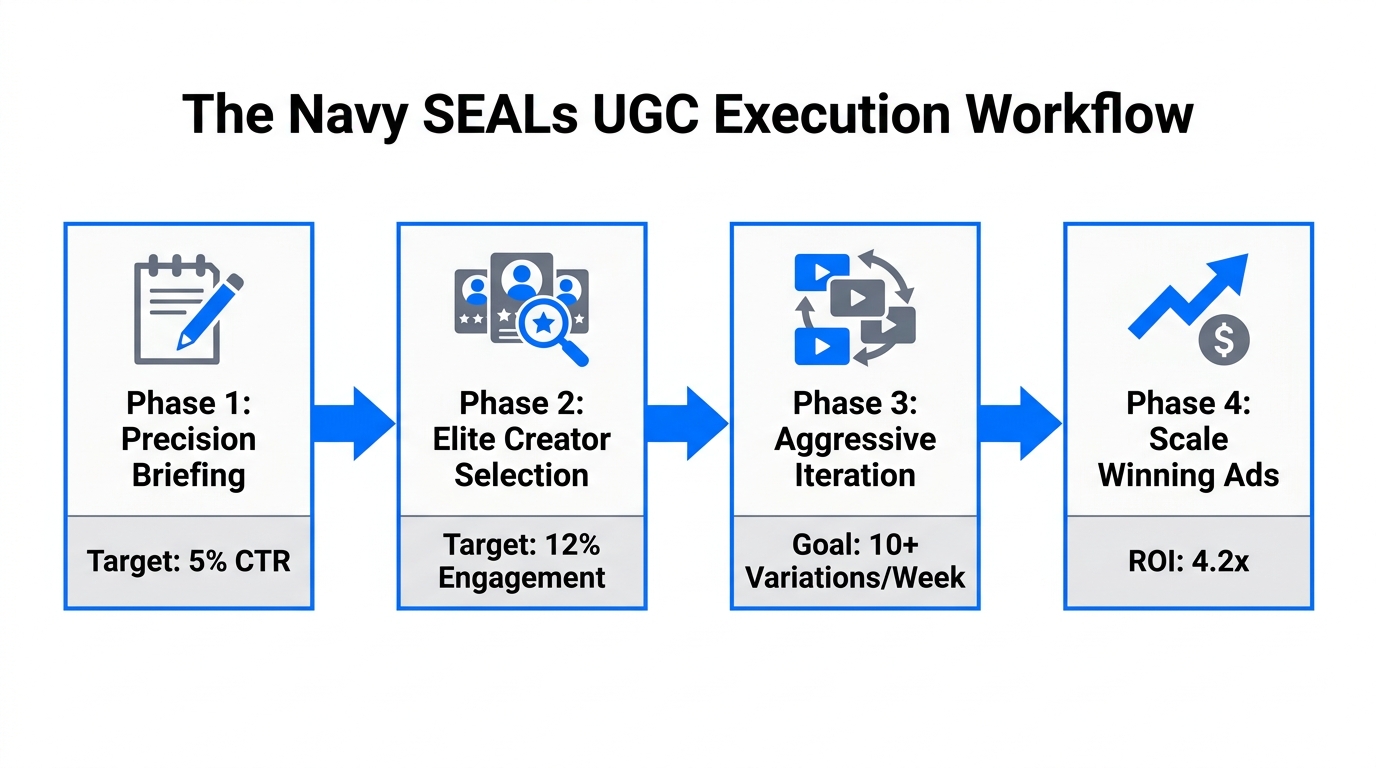
Most app founders approach influencer marketing by trying to hire as many people as possible, effectively building a 'Navy' of mediocre content. Coconote took the opposite path. They built a 'Navy SEALs' unit: a lean group of 10 to 12 part-time contractors who weren't just 'influencers,' but high-level marketers who deeply understood the product and the student audience. This distinction is critical in the 2026 creator economy. While influencers chase likes, marketers chase trial starts and revenue. This elite team, including breakout creators like Allison and Sydney, generated hundreds of millions of views by focusing on problem-solution frameworks rather than mere aesthetic appeal.
"We wanted to build the equivalent of the Navy SEALs, not the Navy. Our content team was small, but every single member was a trendsetter who understood the unit economics of a trial start."
Finding this 'undiscovered talent' is the 2026 growth hack. Coconote didn't just look for high follower counts; they looked for infectious energy and camera-presence. One of their top-performing creators was actually Zach’s Spanish tutor, whom he recruited after noticing her charisma during a lesson. Platforms like Stormy AI are now essential for this level of sourcing, allowing brands to skip the 'mega-influencers' and find raw, high-potential creators who can be trained into high-converting marketing assets. Managing these relationships is streamlined using a Creator CRM, which helps track every interaction from the first DM to the final payout.
The 40 Million View Fallacy: Virality vs. High-Intent Traffic
 10:20
10:20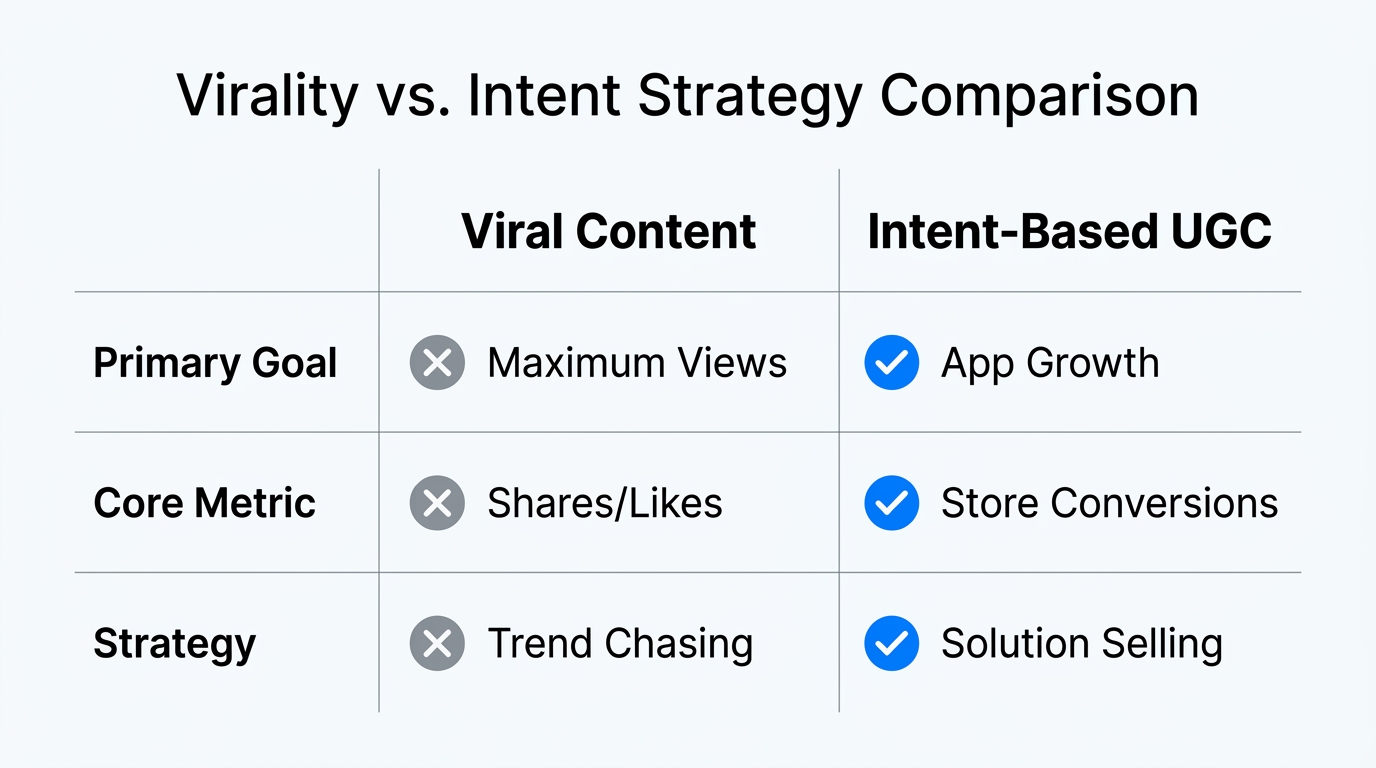
In the early days of TikTok marketing, 'more views' always equaled 'more success.' In 2026, the Coconote playbook teaches us that not all virality is created equal. The team famously hit 40 million views on a single video featuring a 'PDF to Brainrot' tool. While the video was a viral sensation, the founders realized it was a 'Trojan Horse' that drove low-intent traffic. Users came for the novelty, not the solution. Compare this to their 'Lecture Hall' videos, which garnered 10-18 million views but featured the core product as a direct solution to the stress of college life. The latter resulted in significantly higher LTV (Lifetime Value) and subscription conversion rates.
| Content Style | Primary Goal | Traffic Quality | Conversion Result |
|---|---|---|---|
| Novelty / 'Brainrot' | Mass Awareness | Low Intent | $25k revenue from 200M views |
| Problem-Solution | User Acquisition | High Intent | Sustainable ROI & High Retention |
| Educational / Demo | Feature Adoption | Targeted | Consistent Daily Growth |
To replicate this, brands must move beyond lazy content. A high-converting video in 2026 requires a 'Shock Hook' followed immediately by a product demo that solves a visceral pain point. For Coconote, the hook 'My mom just changed my college life forever' paired with a shot of a busy lecture hall worked because it immediately signaled to students that their biggest problem—taking notes—was about to be solved. They didn't rely on TikTok Ads Manager for this growth; 99% of these 18 million views were purely organic, driven by the algorithm's favor for high-retention storytelling.
Technical Hacks: Visual Stimulus and Creator-Only Screens
14:03One of the most innovative parts of the Coconote playbook is the use of 'Creator-Only' app screens. The founders realized that the standard, functional UI of an app isn't always the most visually stimulating for a 9:16 vertical video. To solve this, they built hidden, 'eye-catchy' screens specifically for their creators. For example, while the actual app might have a clean, white recording screen, the creator version featured a gigantic rainbow wave and huge 'coconote.ai' branding. These screens were impractical for daily use but perfect for stopping the scroll on Instagram Reels.
This technical flexibility extends to their URL strategy. Rather than just using a standard link-in-bio, they created vanity domains for specific trends, such as 2048buthelpmestudy.com. This made the call-to-action (CTA) feel like part of a game or a secret tool rather than a standard advertisement. When combined with Canva for rapid asset creation and CapCut for trending transitions, these technical hacks allow a small team to out-execute massive agencies.
The 'Pyramid of Creator Success': From Raw Talent to Trendsetter
46:45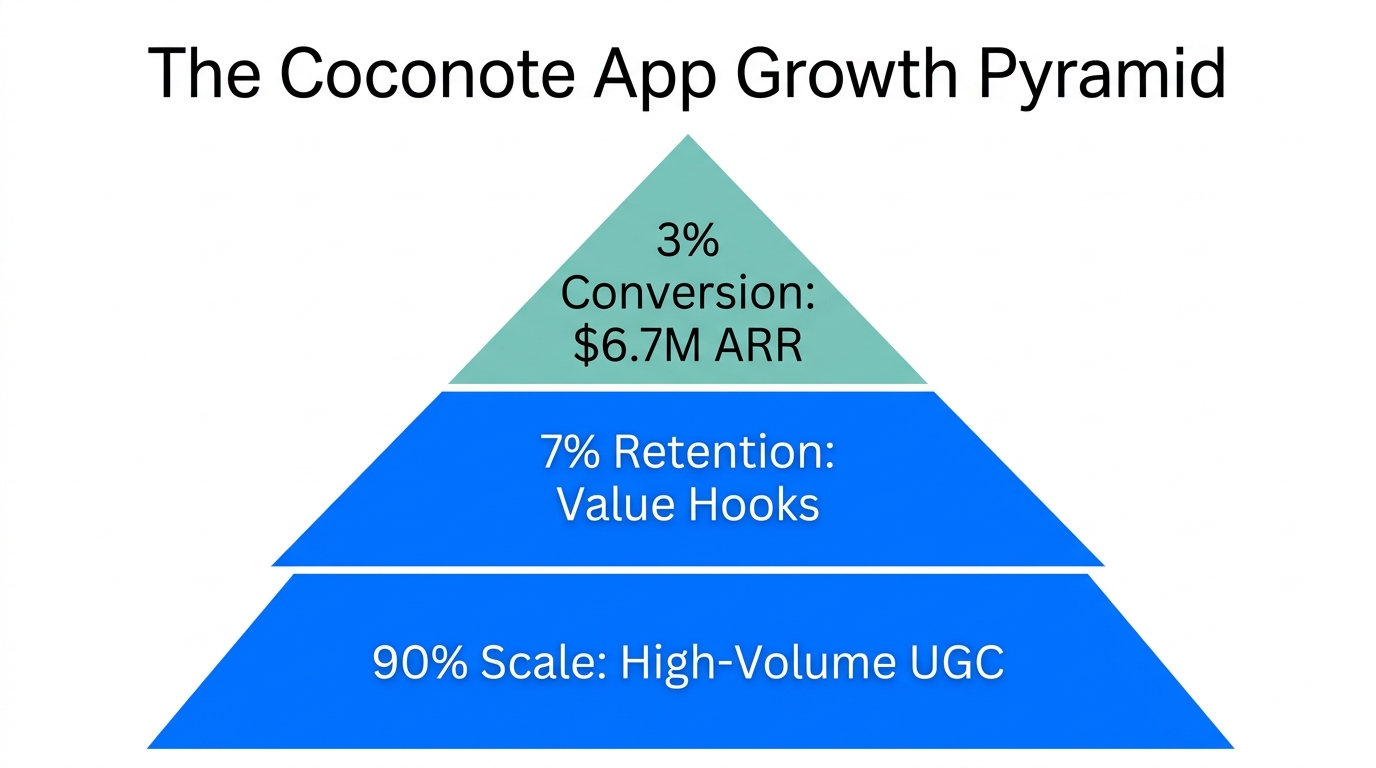
Scaling a UGC program to $6.7M ARR requires more than just hiring talented people; it requires a curriculum for growth. Coconote uses a three-tier pyramid to train their 'Navy SEALs':
- Level 1: The Will to Win. This is the baseline. Do they engage in Slack? Do they show up on time? This is the cultural foundation.
- Level 2: Content Deconstruction. Can the creator watch a viral video and identify why it worked? The founders often quiz creators on hidden view counts to see if they can spot 'outlier' content.
- Level 3: Trendsetting. The highest level of creator can script their own videos and invent new trends rather than just following existing ones.
"The top-tier creators are marketers first. They don't just follow the trend; they define the inputs that make a video go viral in the first place."
To manage this at scale, Coconote employed Content Coaches at a ratio of 1 coach per 12 creators. These coaches don't just review videos; they walk creators through metrics and help them iterate on hooks. For teams looking to replicate this, using an AI-powered search engine like Stormy AI helps identify creators who are already at 'Level 2' by analyzing their historical performance and engagement quality across multiple platforms.
The Monetization Loop: Maximizing Every View
31:05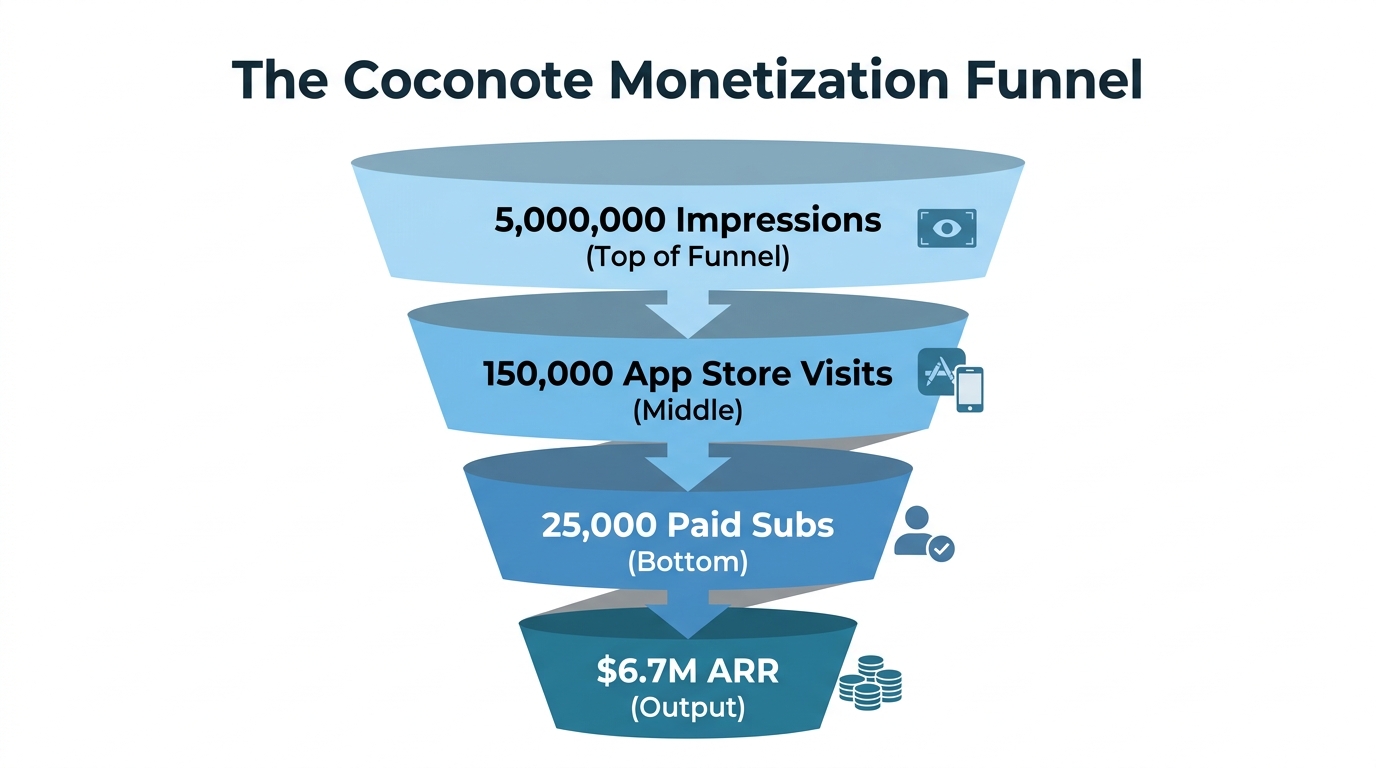
Getting millions of views is useless if the app experience doesn't convert. Coconote found that longer onboarding sequences actually boosted their trial conversion by 16%. By increasing the onboarding from 5 screens to 13, they made the app feel more personalized. They also utilized Superwall to place the paywall before the login screen, removing friction for users who wanted to subscribe immediately via FaceID.
Retention was another massive focus. By implementing an anti-churn tactic where users are offered a 7-day trial extension at the moment of cancellation, Coconote successfully saved 27% of potential churners. This strategy is essential for consumer apps where the 'subscription fatigue' of 2026 is at an all-time high. Pairing these retention tactics with high-quality organic content creates a 'growth flywheel' that allows for 50%+ EBITDA margins even while scaling rapidly.
Conclusion: Building for the 2026 Creator Economy
The success of Coconote isn't an anomaly; it's a blueprint. By treating UGC marketing as a high-stakes engineering problem, they managed to build a product that hit $100k ARR in 45 days and exited to Quizlet in 18 months. As we move deeper into 2026, the 'Navy SEALs' approach to creator management—finding undiscovered talent, focusing on problem-solution hooks, and using AI-powered tools like Stormy AI to automate outreach and discovery—will be the only way to survive in a market where 'wow' moments have a shorter shelf life than ever before.
If you're building a mobile app today, stop looking for influencers. Start looking for marketers who can film. Scale your team lean, build for identity, and remember that 10 million high-intent views are always worth more than 40 million views of 'brainrot.' Ready to find your elite creator unit? Start your search on Stormy AI today.