In the high-velocity world of 2026 mobile app development, reaching an 18-month exit is no longer a pipe dream—it is a repeatable playbook. Take Coconote, an AI note-taker for students that exploded from a side project to a $6.7M ARR powerhouse in less than two years. Founded by Brett Bauman and Zach DeGeorge, two former employees of Loom, Coconote represents the new guard of lean, bootstrap SaaS companies that prioritize cash flow over VC funding. By the time they were acquired by Quizlet, they had hit 2 million registered users with a team of just four engineers. This guide deconstructs their app exit strategy 2026, from finding oxygen in momentum to navigating the complexities of corporate development.
Momentum as Oxygen: The $1M ARR Sprint
 4:58
4:58For most startups, the first year is a grind for survival. For Coconote, it was a vertical ascent. As Zach DeGeorge noted on the Superwall Podcast, momentum is like oxygen for a startup. Without it, the team suffocates under the weight of uncertainty; with it, every engineering hour and marketing dollar is amplified. Coconote’s timeline is a masterclass in profitable app growth: they crossed $100,000 ARR in just 45 days. By month four, they were at $1 million, and they hit $5 million within a single year.
This rapid scaling allowed the founders to stay lean. Instead of chasing a Series A, they focused on 50% EBITDA margins, giving them the ultimate leverage: the ability to say 'no' to low-ball offers. When you are bootstrapping SaaS to acquisition in 2026, profitability is your best defense against predatory deal terms.
"Within 45 days we crossed 100,000 ARR, within four months we crossed a million, and within five months we were about 2 million ARR. Momentum is like oxygen."
The UGC Playbook: Navy SEALs vs. The Navy
10:20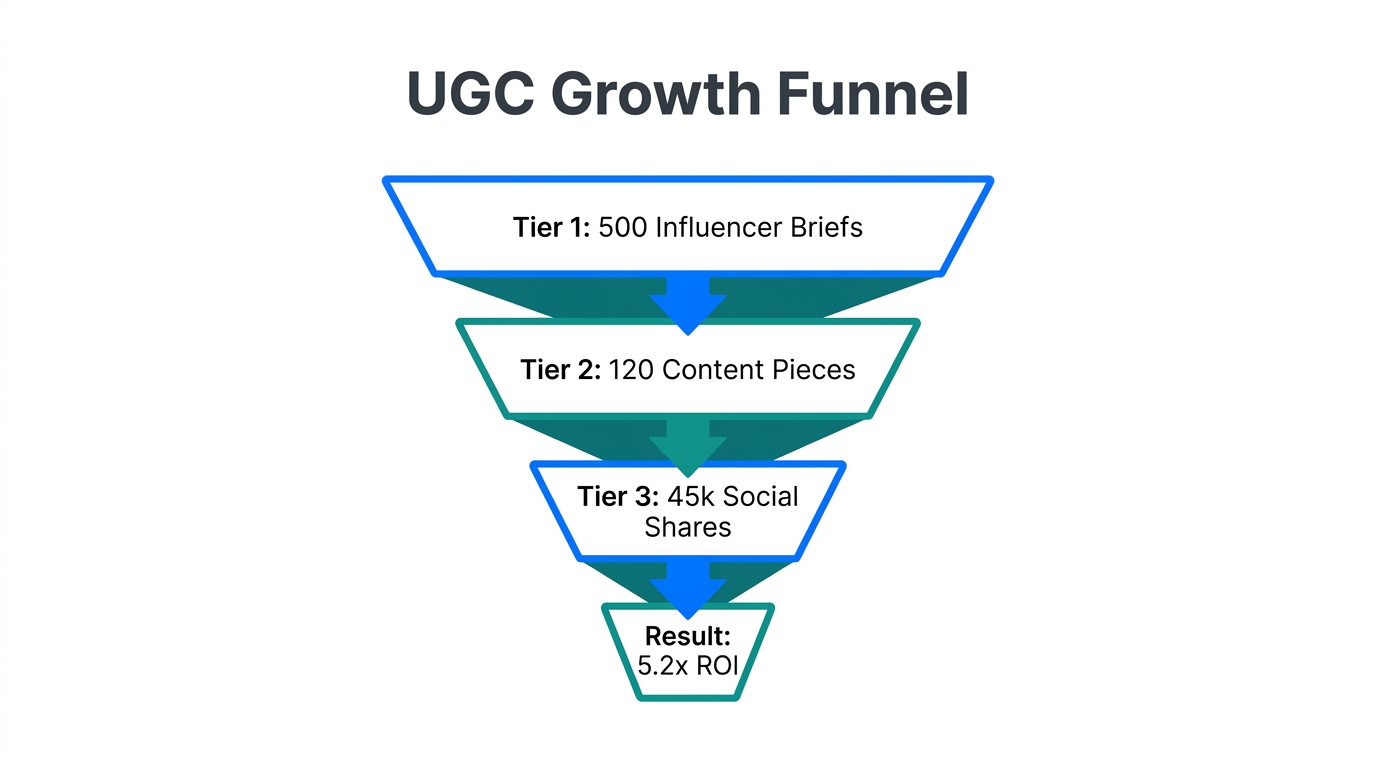
Coconote's virality on TikTok and Instagram Reels wasn't accidental. They didn't chase views for the sake of views; they chased conversions. One of their most famous campaigns, the 'PDF to Brainrot' feature, generated over 200 million views. However, the founders realized a critical lesson: 40 million views on a novel 'toy' video often converts worse than 10 million views on a video solving a real problem. They transitioned from 'lazy' content to highly targeted demonstrations of Coconote's core value—summarizing lectures and creating study materials.
To manage this, they built a content team of 10-12 part-time creators. They weren't looking for influencers with millions of followers; they were hiring marketers, not influencers. They looked for 'undiscovered talent'—people with infectious energy and an innate understanding of short-form hooks. While the Coconote team manually scouted talent via DMs and platforms like Handshake, many modern growth teams in 2026 now use Stormy AI to discover and vet creators who specifically drive high-intent traffic for mobile apps.
| Content Type | Primary Goal | Conversion Intent |
|---|---|---|
| Brainrot / Novelty | Mass Awareness | Low |
| Problem/Solution Demo | User Acquisition | High |
| Identity-Based (ADHD) | Retention/Community | Extreme |
One secret to their success was creating 'creator-only' screens. These were visual-heavy, eye-catching UI elements—like a massive rainbow wave during audio recording—that weren't in the public app but looked incredible in a 15-second Reel. This allowed their 'Navy SEALs' content team to produce high-intent UGC that drove 18 million views on a single brand post without spending a dime on paid ads.
Monetization and the 13-Screen Onboarding
31:05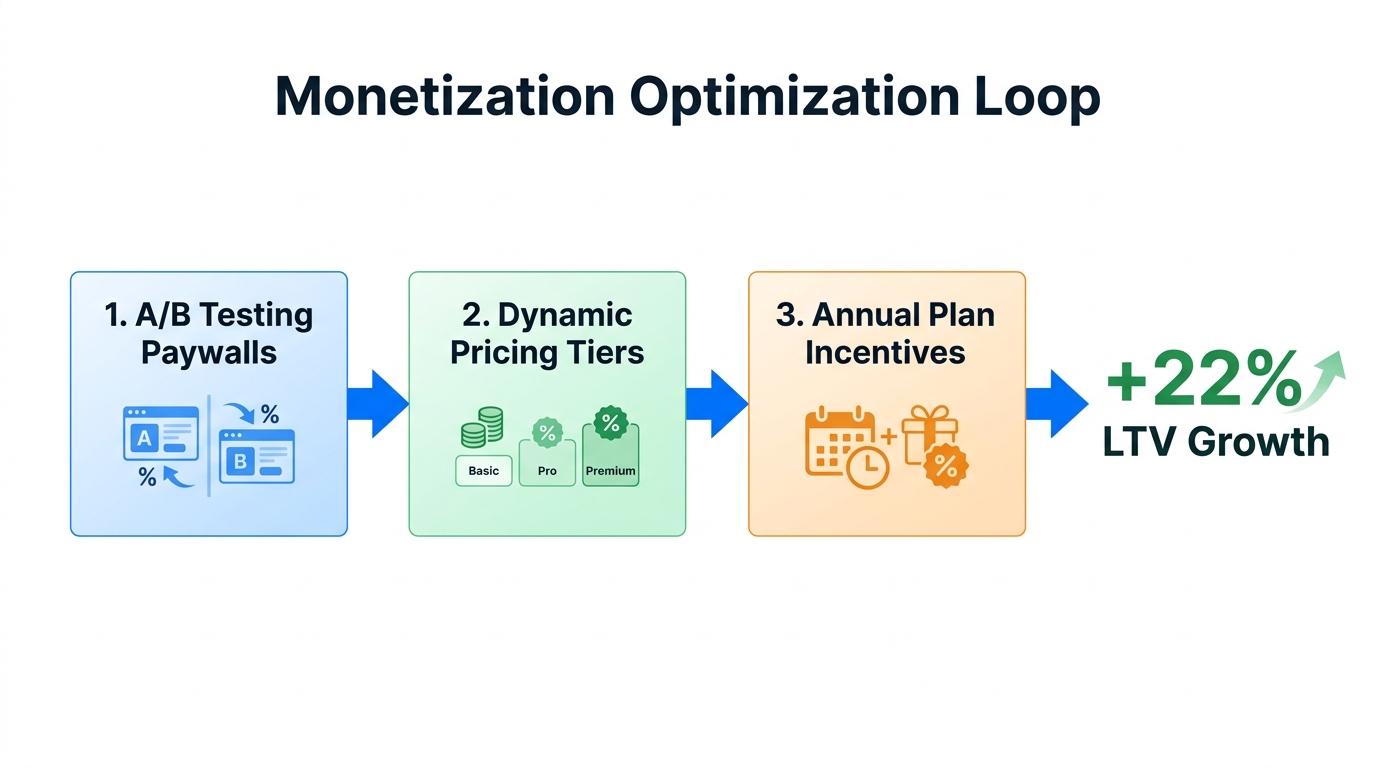
Getting users in the door is only half the battle of a SaaS founder exit playbook. Coconote optimized their revenue by ignoring the 'shorter is better' myth of onboarding. In fact, they doubled their onboarding length to 13 screens. This 'long onboarding' trend in 2026 focuses on psychological investment. By asking users about their study habits and goals, the app builds value before the paywall even appears.
Two specific tactics drove their revenue growth:
- Paywall before Login: moving login to the last screen after the paywall significantly boosted trial starts. By using tools like Superwall, they allowed users to commit to a trial before the friction of account creation.
- Delayed Gratification: They allowed users to record a full hour-long lecture before asking for payment. Once the user had 'skin in the game' (their own data), the conversion rate skyrocketed.
They also utilized an aggressive anti-churn flow. By offering a 7-day trial extension to users attempting to cancel, they saved 27% of potential churn. For founders looking to replicate this, analyzing successful experiments on Paywall Experiments is a great starting point for 2026 optimization.
"We doubled the length of our onboarding to 13 screens, and it boosted our trial conversion by 16%. You want people as invested as possible before you ask them to pay."
Managing the Inbound: Vetting Strategic Acquirers
36:02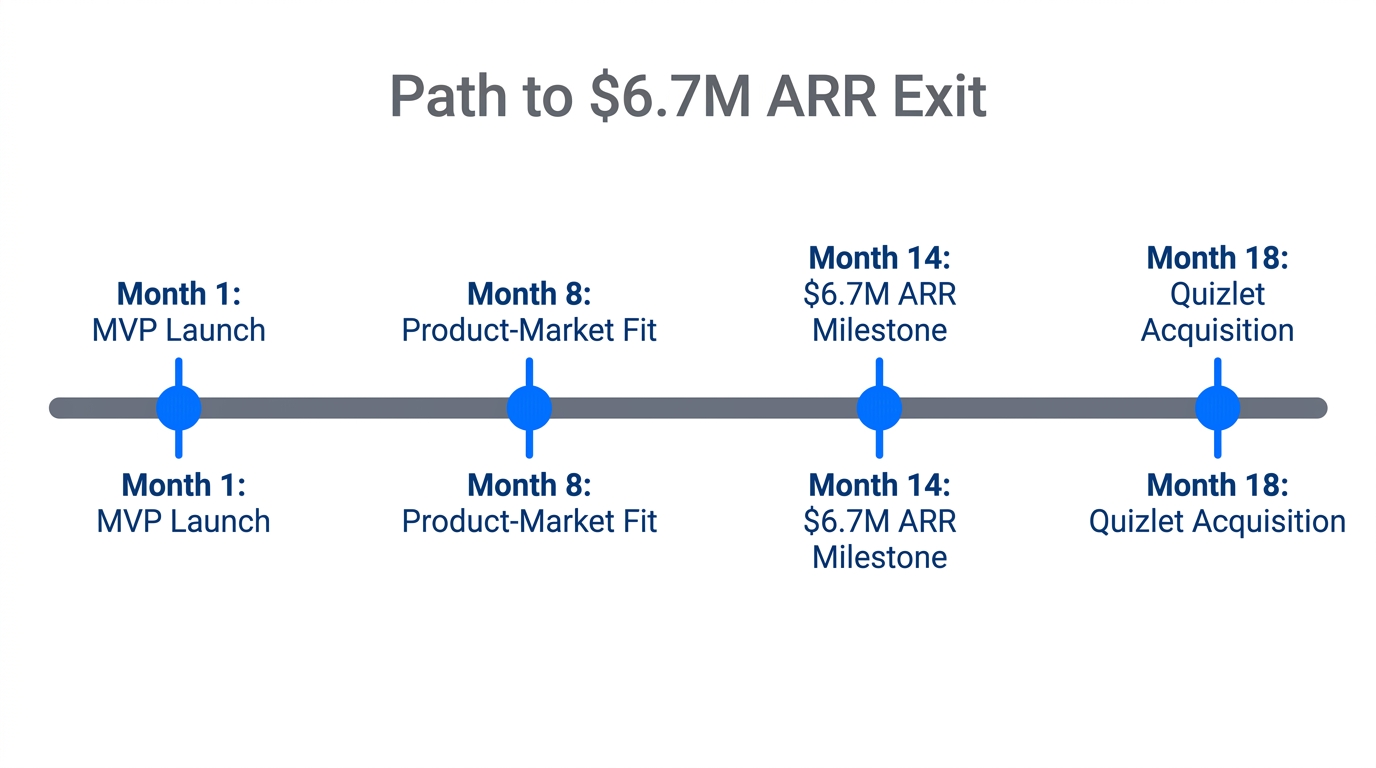
In a mobile app M&A guide, the most difficult moment is the first inbound email from a Corporate Development (Corp Dev) team. Brett and Zach received interest when they were only a few months old. Their initial instinct was to stay 'heads down,' but they eventually realized that starting the conversation early builds the relationship necessary for a high-multiple exit.
However, they warn founders to temper expectations. Most Corp Dev calls lead nowhere. To protect their focus, Coconote engaged Accretive Partners. An investment bank or financial advisor acts as a shield, handling the financial due diligence and 'ballpark' price negotiations so founders can keep building the product. This is essential because the biggest risk during M&A is taking your eye off the ball and letting your metrics slip right when they matter most.
The Identity Framework: Building Moats in 2026
As AI makes software easier to build, 'wow' moments are being commoditized. To build a lasting moat, Brett Bauman suggests building products that are core to the person's identity. Coconote didn't just market as a 'recorder'; they marketed as a tool for 'learners' and 'people with ADHD.' When a user identifies as the type of person who uses your app (e.g., a runner using Strava or a student using Quizlet), your retention becomes bulletproof.
The Coconote team also focused on managing their creator program with precision. They used Viral App to track, manage, and optimize their UGC creators, treating their marketing arm with the same engineering rigor as their codebase. For founders today, integrating a discovery and outreach engine can provide that same level of control, allowing you to scale your 'Navy SEALs' team without increasing overhead.
Conclusion: The 2026 Exit Path
The acquisition of Coconote by Quizlet in 2026 serves as a definitive app exit strategy for the modern era. By prioritizing momentum, hiring marketers over influencers, and building for identity rather than just utility, they achieved a life-changing exit in record time. Post-acquisition, the founders have shifted from 1-month ROI constraints to 'big swings,' leveraging Quizlet's global scale to provide a high-quality AI tutor to every student in the world.
If you are currently building a mobile app, remember: Momentum is your oxygen. Protect it by staying lean, automating your growth workflows with tools like Stormy AI, and always asking: "What is possible today that wasn't possible three months ago?"