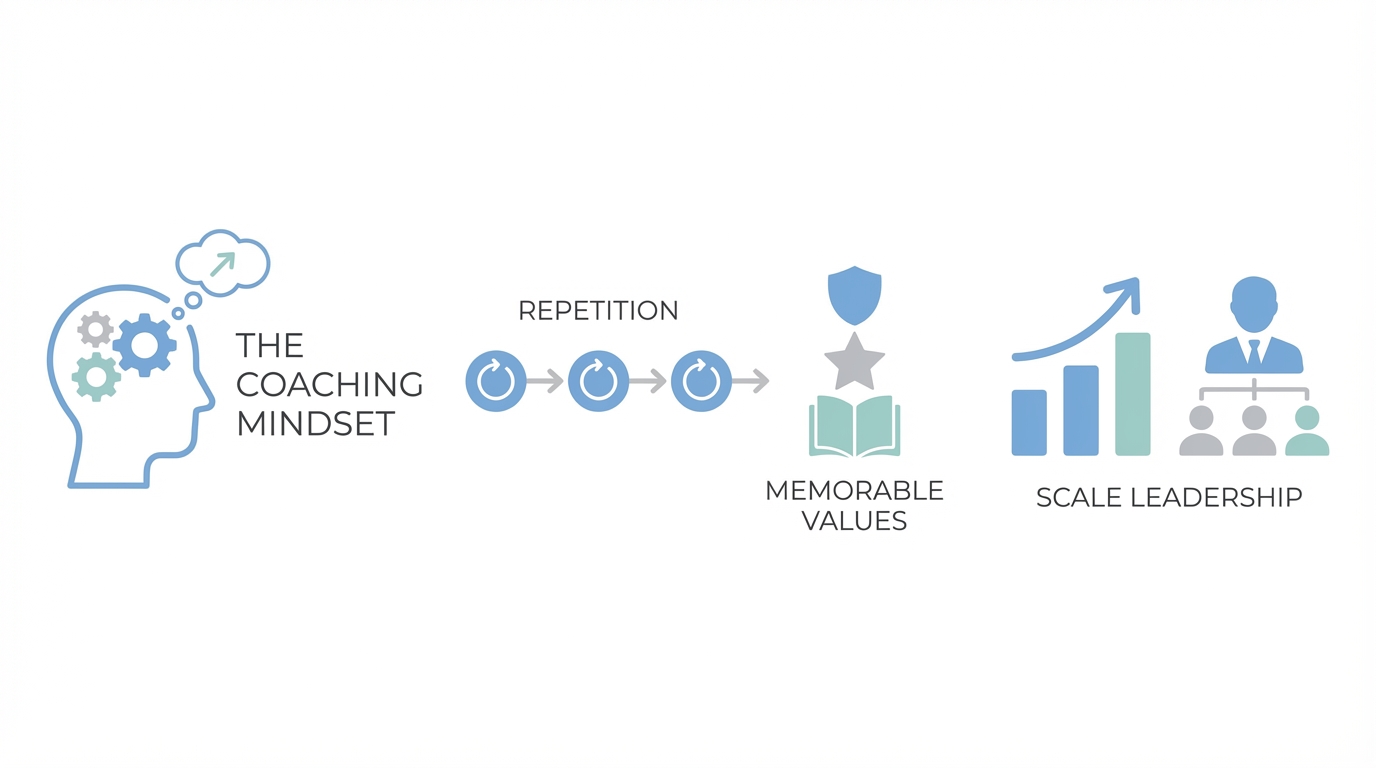
Imagine a high-growth CEO, someone who has built and sold multiple companies, suddenly stepping away from the corner office to become an unpaid assistant coach for a Division 5 high school basketball team. This isn’t the plot of a feel-good sports movie; it is a profound masterclass in leadership development for CEOs. Transitioning from leading executives to coaching teenagers reveals a fundamental truth about human nature: we don’t need to be taught new things nearly as often as we need to be reminded of the things we already know. To scale a company from $10 million to $100 million, a leader must stop chasing "sexy" new strategies and start mastering the art of the coaching mindset.
The 'Play off Two Feet' Principle: Mastering Business Fundamentals

In basketball, the most natural instinct for a player is to run toward the hoop and jump off one foot for a layup. It’s fast, it’s athletic, and it looks great on a highlight reel. However, jumping off one foot commits the player to a single, predetermined path. If a defender appears, the player is stuck. To counter this, coaches drill the "jump stop"—landing on two feet in the paint. This slower, more controlled approach gives the player options: they can pivot, pass, or fake. It is less flashy but infinitely more effective under pressure.
CEOs often fall into the "one foot" trap by sprinting toward growth without a stable base. They commit to a single marketing channel or a massive hiring spree without maintaining the flexibility to pivot. Just as a 5'7" point guard needs to play off two feet to survive among giants, a scaling company needs to master business fundamentals before attempting complex maneuvers. This means refining your Meta Ads Manager strategy or perfecting your sales scripts rather than jumping into five new platforms at once. When you play off two feet in business, you are operating with control and optionality, ensuring that you don't get caught in the air with nowhere to go.
The Rule of 50: Why Repetition is a CEO’s Greatest Weapon

One of the hardest lessons for an ambitious leader to learn is that communication is 90% repetition. Most CEOs announce a new initiative at an all-hands meeting and expect the team to internalize it immediately. When the team fails to execute, the leader feels frustrated, assuming the team didn't listen. In reality, the leader only completed "one of 50" required repetitions. In business coaching techniques, this is known as the Rule of 50: you must repeat a directive fifty times before it becomes a collective habit.
Whether you are coaching high schoolers on defensive rotations or using Stormy AI to automate creator outreach with personalized emails, reminders are undervalued. We often discriminate against reminders because we think we "already know" the information. But as James Clear notes in Atomic Habits, we do not rise to the level of our goals; we fall to the level of our systems. Repetition is the mechanism that builds those systems. If you want your team to prioritize finding the right UGC creators or improving their customer response times, you have to say it until they start saying it to each other. That is when you know you have successfully incepted the idea into the company culture.
Creating Sticky Values: Moving from Vague to 'Max Effort'

Many companies have values like "Integrity," "Innovation," or "Effort." These are fine, but they are rarely memorable. They lack a "pass/fail" test. To create team alignment strategies that actually work, your values need to be "sticky." They should feel like a campaign slogan or a pun that stays in the brain. For instance, platforms like Stormy AI—an AI-powered search engine for TikTok, Instagram, and YouTube—help brands find specific creators who match their identity, but that process only works if the brand itself knows what its identity is.
Take the example of a basketball team struggling with "Effort." The word itself is too subjective. However, if the hardest-working player on the team is named Max, the value becomes "Max Effort." This creates an immediate benchmark: "Are you playing as hard as Max?" This is a binary test that any team member can understand. It is similar to how Google Ads experts focus on specific conversion metrics rather than vague "brand awareness." When you use a tool like Stormy AI to discover and vet influencers for fake followers, you aren't just looking for "good" creators; you are looking for those who meet a specific, high-standard criteria that aligns with your internalized company values.
The Kayasmus Framework: Engineering Unforgettable Missions

If you want to scale company culture, you need to speak in a way the human brain is wired to remember. This brings us to the linguistic structure known as the Kayasmus (or Chiasmus). This is the ABBA structure used in some of the most famous speeches in history. Think of JFK’s "Ask not what your country can do for you, ask what you can do for your country." Both parts of the sentence are valid on their own, but when flipped, they create a satisfying symmetry that the brain craves.
Leaders can use this framework to make company culture and values unforgettable. Consider these examples:
- "Work for the system so the system can work for you."
- "Never negotiate out of fear, but never fear to negotiate."
- "Hire for the mission so the mission can hire the best."
The Trust Process: Candid Feedback Lessons from Pixar
High-performance teams require radical candor, but candor cannot exist without psychological safety. Ed Catmull, the co-founder of Pixar, discusses this at length in his book Creativity Inc.. When Disney Animation was failing and Pixar was thriving, the difference wasn't just the talent—it was the process. Pixar used a "Brain Trust" where creators could show raw, unfinished work and receive brutal, honest feedback without fear of their project being killed.
For a CEO, building this trust means separating the work from the ego. If a marketing manager is testing Apple Search Ads and the campaign fails, the feedback should focus on the data, not the person’s competence. In the same way, a basketball coach helps a player with their math homework to get them back on the team; they are investing in the person so the person can invest in the mission. When there is a high level of trust, the team can receive candid feedback, iterate quickly, and turn a "30-point loss" into a "30-point win" in a matter of days.
Scaling from 10M to 100M: Falling to Your Systems
The transition from a $10 million business to a $100 million business is rarely about a better product; it is almost always about better systems. At the $10M mark, a founder can still exert a lot of personal influence. At $100M, the company must run on autopilot. This is where leadership development for CEOs shifts toward building "local economies" of success. You create a system where the actions taken are independent of how the individuals feel on any given day.
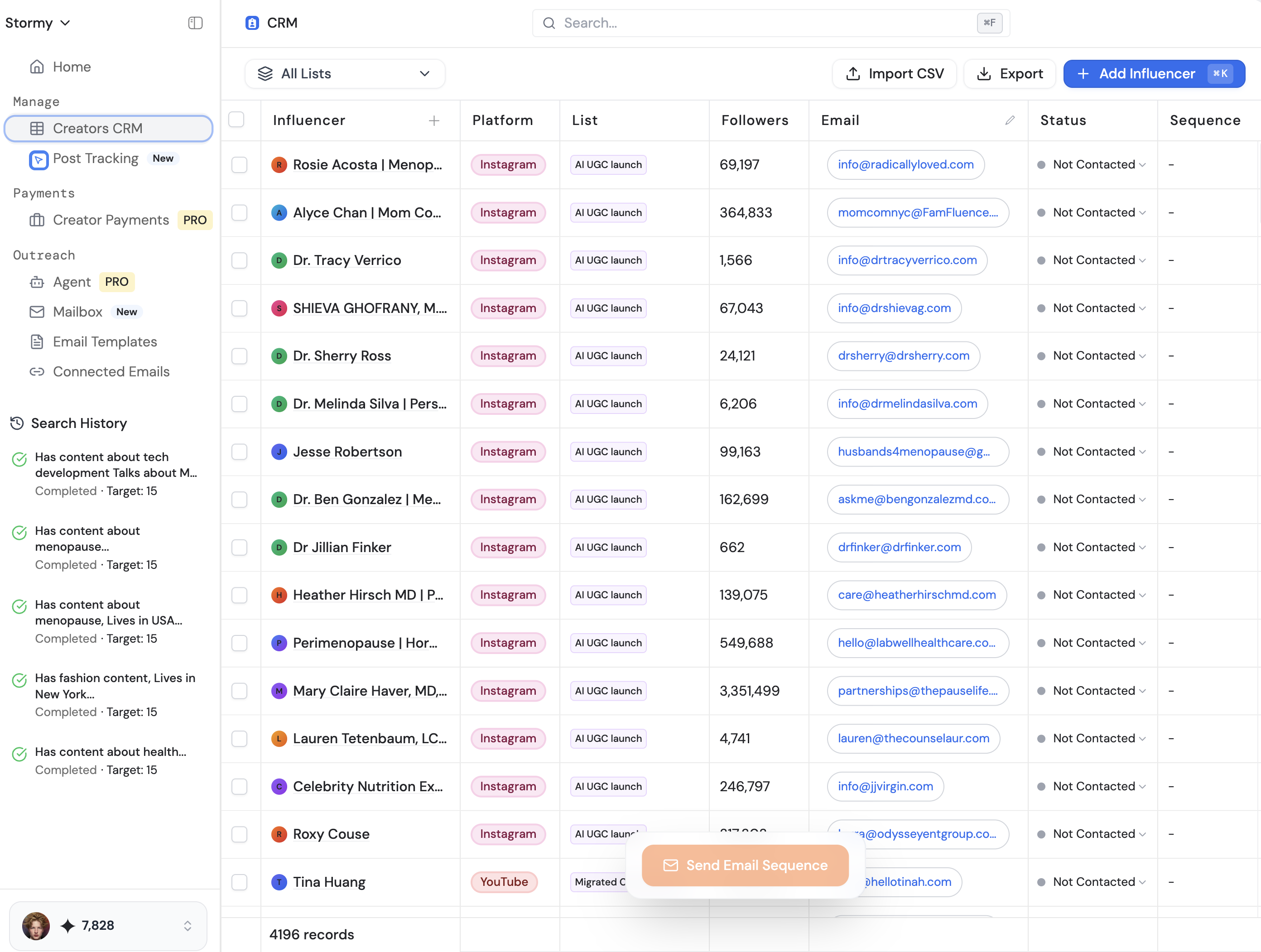
Consider the use of technology like the Stormy AI Creator CRM or a custom AI life coach. These systems act as accountability partners. They remove the "food noise" or "money noise" that distracts a leader from their primary goals. When you have a system, your salespeople follow scripts, your managers follow checklists, and your creators are discovered through data-driven platforms. This predictable structure is what allows a company to scale without the wheels falling off. As a leader, your job is to be the architect of these systems, ensuring that the "inertia" of the company is always moving toward growth.
Conclusion: The CEO as the Chief Reminder Officer
To lead effectively, you must embrace the role of the Chief Reminder Officer. Success in scaling a company or coaching a team doesn't come from the "new and different"; it comes from the "boring and consistent." By focusing on the fundamentals (playing off two feet), repetition (the Rule of 50), and memorable structures (the Kayasmus), you can build a culture that executes at the highest level even when you aren't in the room.
Whether you are managing mobile app growth or leading a ragtag group of high school athletes, remember that leadership is a skill that can be drilled and perfected. By using Stormy AI to track post performance and analyze creator campaign ROI, you can invest in your people, build your systems, and never stop repeating the mission. If you do that, the results—much like a Gatorade dump after a first big win—will be worth every minute of the commute.