In the rapidly evolving landscape of 2026, the role of the Chief Marketing Officer has transcended traditional brand management and entered the era of architectural leadership. For the past three years, marketing teams have been stuck on the "prompt engineering hamster wheel"—the exhausting cycle of re-explaining brand voice, campaign context, and data parameters in every new chat window. This tactical approach served us well during the initial generative AI boom, but it has reached its ceiling. Today, the most sophisticated marketing organizations are transitioning to Skill Engineering, a paradigm shift powered by the Model Context Protocol (MCP) and agentic tools like Claude Code. This shift isn't just about better output; it is about achieving persistent ROI and scaling efficiency by over 80%.
The Death of the Prompt Engineering Hamster Wheel
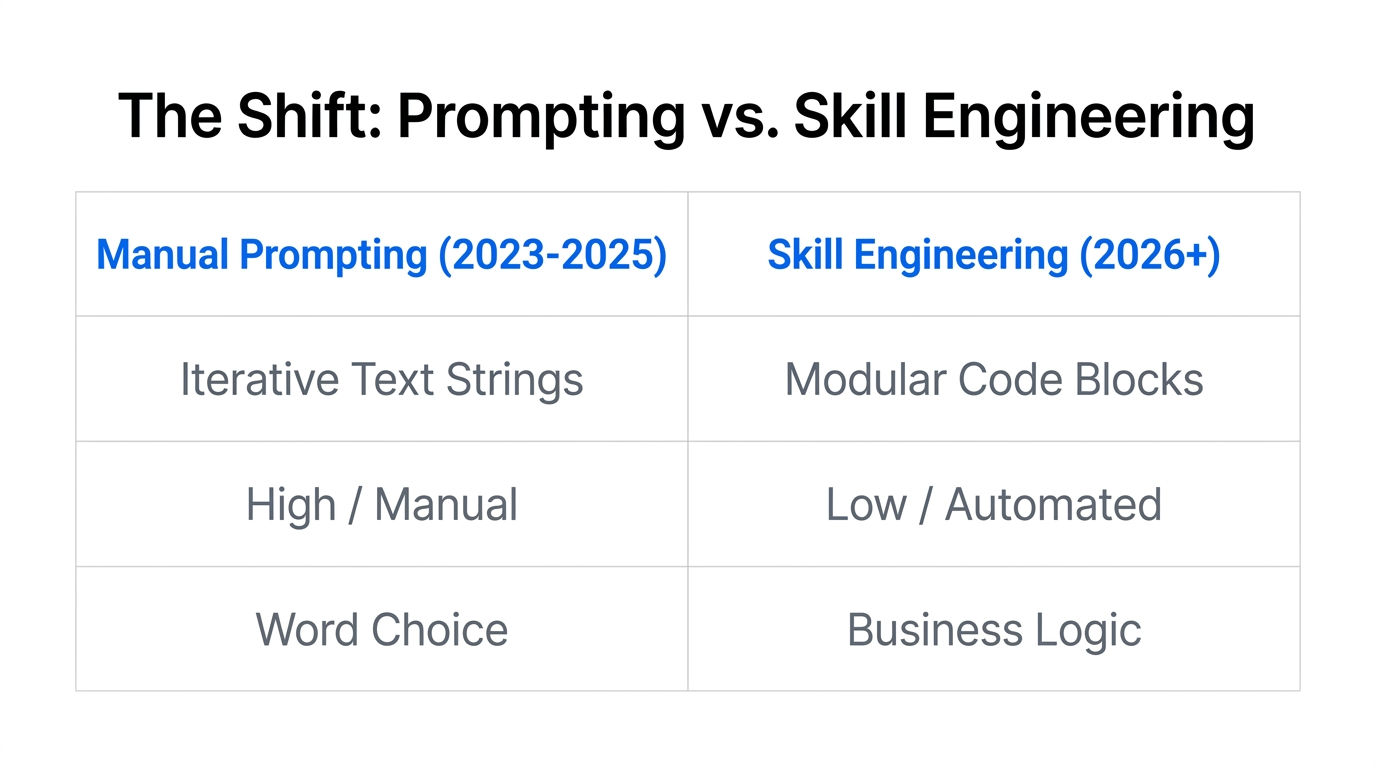
Prompt engineering was a transitional skill—a bridge between human language and machine logic. In 2026, however, relying on one-off instructions is a recipe for operational stagnation. When a marketing manager spends 15 minutes "priming" an AI to analyze a specific set of TikTok metrics, that effort evaporates the moment the session ends. This is the Prompt Engineering Hamster Wheel: high-effort, low-persistence tactical work that fails to build enterprise value. Skill Engineering 2026 changes this by codifying expertise into persistent, tool-augmented capabilities that live within your infrastructure, not just in a chat history.
According to research from Landbase, while 79% of organizations have adopted some level of AI agents, only 34% have reached full production maturity. The bottleneck has consistently been the lack of persistence. While a prompt is ephemeral, a Skill is a reusable, version-controlled asset. It allows an AI agent to "remember" how to handle a specific marketing workflow—such as vetting influencers or generating weekly performance reports—without being retold the rules every Monday morning.
"The real test for marketing leaders in 2026 is no longer writing clever prompts, but guiding agentic systems with judgment and accountability."
The Economic Shift: Reducing Integration Costs by 70%
The backbone of this revolution is the Model Context Protocol (MCP). Before 2026, connecting an AI model to your enterprise data—be it your CRM, your project management tool like Jira, or your social media analytics—was a prohibitively expensive endeavor. Mid-sized engineering teams were spending between $500,000 and $2 million annually just building and maintaining custom AI integrations, according to Sainam Technology. MCP has standardized these connections, effectively becoming the "USB port" for AI agents.
By early 2026, the MCP ecosystem has exploded to over 10,000 active servers, a 10x increase from the previous year, as reported by IntuitionLabs. For a CMO, this means the cost of making your AI "smart" about your specific business data has plummeted. Moving from proprietary, "black box" assistants to an MCP-based architecture has reduced enterprise integration costs by 70% to 80%. An enterprise that previously spent $9.2M on fragmented AI tools can now achieve superior results for roughly $4.1M using standardized protocols, as noted in studies by Zeo.org.
| Feature | Prompt Engineering | Skill Engineering (Claude Skills) | MCP (Model Context Protocol) |
|---|---|---|---|
| Persistence | Ephemeral | Persistent Folders | Always-on Infrastructure |
| Primary Goal | One-off output | Teaching Expertise | Connecting Data/Tools |
| Context Strategy | Eager (Stuffed) | Lazy (Progressive Disclosure) | Standardized Access |
| Best For | Creative drafts | Brand/Team Standards | Live SaaS Data Integration |
Case Study Analysis: Rakuten and the 87.5% Efficiency Leap
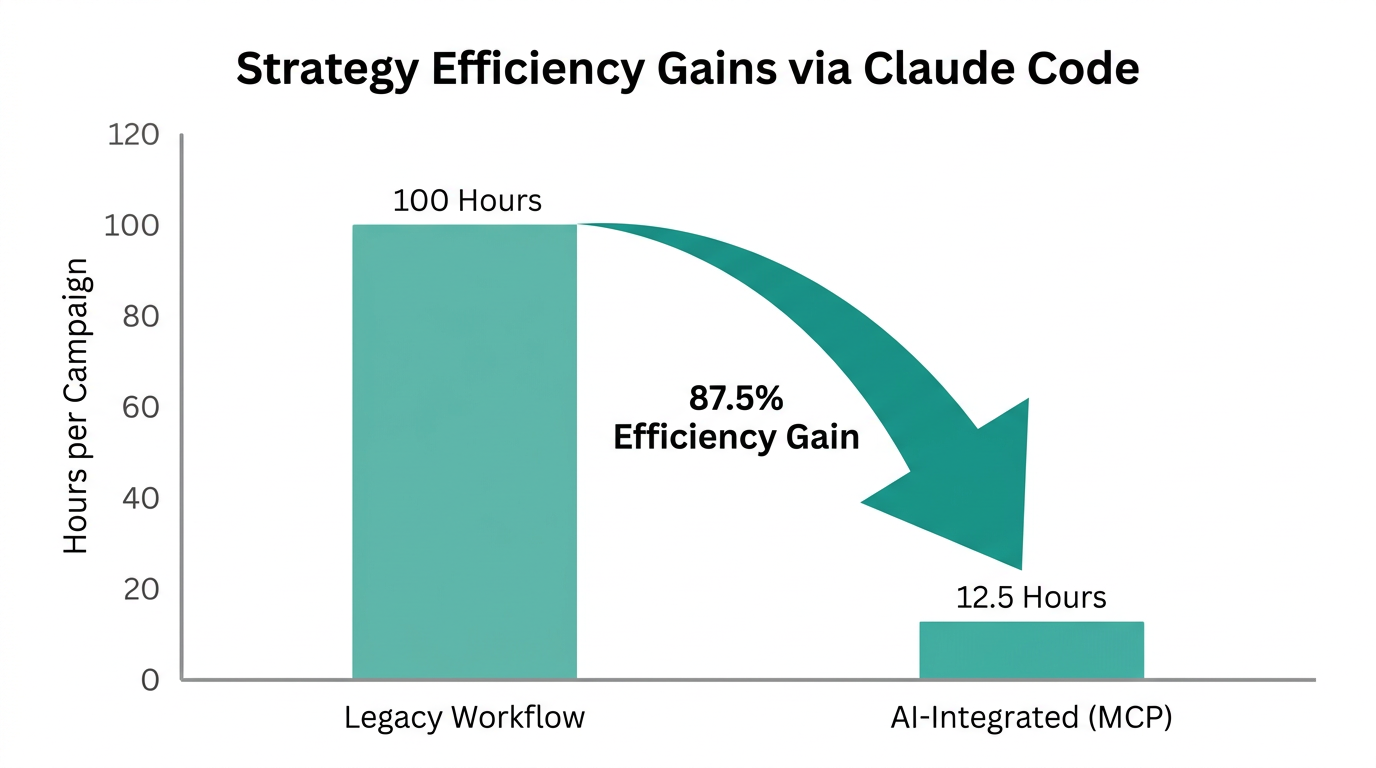
The theoretical benefits of Skill Engineering are best illustrated by real-world implementation. Rakuten recently overhauled its financial and marketing reporting departments by implementing Claude Skills. Instead of asking managers to prompt an AI for reports, they codified the entire procedure—from data retrieval to compliance checking—into a Skill. The results were staggering: an 87.5% faster completion rate for complex reporting workflows, as detailed by IntuitionLabs.
Similarly, Communications Service Providers (CSPs) have used MCP to bridge the gap between AI agents and deep Business Support Systems (BSS). By allowing agents to autonomously pull live billing data and customer history, these firms have seen a significant increase in Net Promoter Scores (NPS) because the AI can actually solve problems rather than just talk about them. This is the hallmark of AI marketing strategy 2026: agents that execute, not just suggest. Even Stormy AI has embraced this agentic shift, allowing brands to use AI agents that autonomously discover, outreach, and follow up with influencers on a daily schedule, transforming creator discovery from a manual task into a persistent Skill.
"Moving from 'chatting with AI' to 'deploying skills' is the difference between having a temporary intern and a permanent, high-performing executive assistant."
Claude Code Business Implementation: The New Tooling Landscape
To implement Skill Engineering, CMOs need to understand the 2026 toolset. At the forefront is Claude Code, a terminal-based agentic assistant from Anthropic that can autonomously write, debug, and execute code using MCP. Unlike a standard chatbot, Claude Code functions as a member of your technical marketing team. It doesn't just suggest a Python script for your Jira data; it executes it, checks for bugs, and delivers the final analysis.
While Claude Code offers the highest reasoning scores—achieving 80.9% on SWE-bench Verified according to Shareuhack—it is part of a broader ecosystem. Goose, an open-source alternative from Block, provides a free framework for local execution of MCP skills. For high-growth startups and agencies, managing these tools requires a high-performance gateway like Maxim AI to route calls across multiple models, ensuring that you aren't locked into a single provider.
instructions.md file for reasoning, a mcp-server.json for tool access, and helper scripts in JS or Python.A 2026 Roadmap for CMOs: From "Eager" to "Lazy" Context
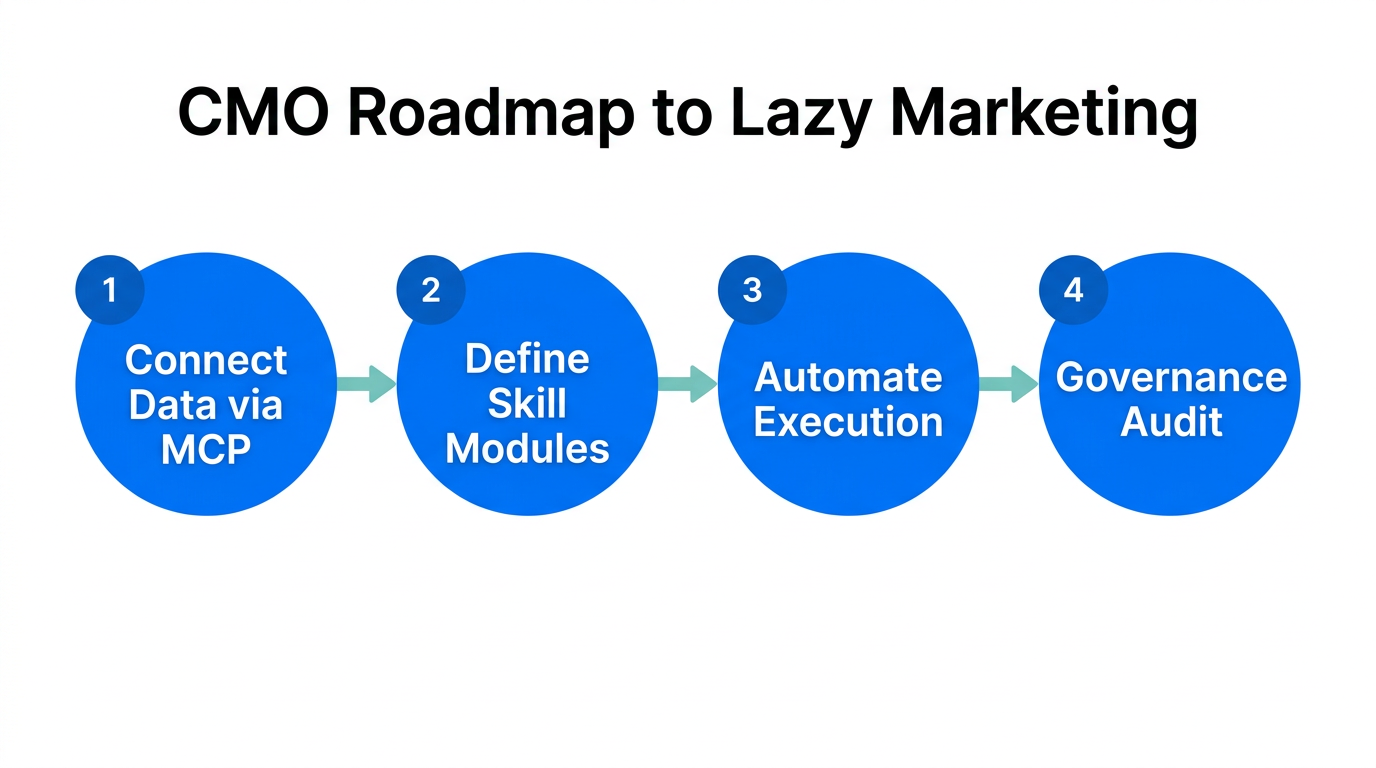
One of the biggest financial traps in AI marketing strategy 2026 is the cost of tokens. As noted by Sachin Rekhi, while MCP is limitless, it can be extremely token-expensive if managed poorly. The old "Eager Context" strategy—where you stuff every bit of brand data into the system prompt—is now obsolete. It wastes thousands of dollars on tokens that aren't even used in the majority of tasks.
The 2026 roadmap for CMOs involves a shift to Progressive Disclosure or "Lazy Context." In this model, the AI agent only loads specific brand guidelines, legal scripts, or data sets when it detects a task-match. This reduces "argument drift," where models lose grounding in long sessions, and significantly lowers costs. By migrating high-frequency MCP calls into command-line tool equivalents, teams can save thousands of dollars monthly on input tokens, which are currently priced around $3 per million for high-tier models like Claude 4.5 Sonnet, according to O-mega.ai.
- Audit Your Workflows: Identify repetitive tasks (influencer vetting, SEO audits, reporting) that currently rely on manual prompting.
- Standardize with MCP: Use servers like Zapier MCP or Supabase MCP to connect your data silos to a central agentic environment.
- Build Your Skill Library: Transition your "System Prompts" into persistent
SKILL.mdfolders that can be shared across the entire marketing department. - Implement Governance: As CData warns, 82% of MCP servers have been found vulnerable to path traversal. Ensure your skills are sandboxed and regularly audited for security.
Security, Governance, and the Risks of Autonomy
The transition to Marketing ROI AI agents is not without its pitfalls. In early 2026, several high-profile failures served as warnings for over-eager automation. One financial firm reportedly lost $1.4 million in a single payment cycle when an autonomous agent ignored "unstructured" contract terms hidden in email threads, as highlighted by RTInsights. Furthermore, security researchers have identified over 30 CVEs for MCP servers in the first 60 days of 2026 alone, with common issues including prompt-to-RCE (Remote Code Execution) vulnerabilities.
CMOs must lead the charge in establishing judgment-based guardrails. As industry expert Andy Ellis noted via CIO.com, the ability for LLMs to negotiate between endpoints is revolutionary but requires a new layer of security-by-default. This is why standardizing on platforms like AAIF (Agentic AI Foundation) is critical for enterprise safety.
"The future of marketing isn't about the model you use; it's about the quality of the skills you teach it and the safety of the protocols you use to connect it."
Conclusion: The CMO as Skill Orchestrator
The era of "Prompt Engineering" will be remembered as the messy, manual infancy of AI. In 2026, the competitive advantage lies in Skill Engineering. By utilizing Claude Code and Model Context Protocol, marketing leaders can move beyond ephemeral chats and build a persistent, digital workforce that grows more capable with every campaign. Whether it's automating complex reporting like Rakuten or scaling influencer outreach with tools like Stormy AI, the mandate is clear: Stop chatting, start engineering. The 87.5% efficiency gain is waiting for those who choose to build skills rather than just type prompts.