In the high-stakes landscape of the 2026 creator economy, the traditional agency model is undergoing a radical transformation. No longer is a service-based business the end goal; instead, it has become the venture-capital arm for personal media empires. This is the story of Henry and Dylan, the founders of Clip.co, an animation studio that generates $2 million in annual revenue. But here is the catch: they aren't optimizing for profit margins. Instead, they are executing the "MrBeast Strategy," funneling every cent of agency profit back into their own IP to build what they call "South Park for nerds."
By 2026, building a personal brand has become the ultimate enterprise value play. While service revenue pays the bills, media ownership builds the legacy. This article breaks down the financial modeling, the viral storytelling formula, and the co-founder archetypes required to turn a $2M agency into a billion-view media engine.
The MrBeast Strategy for 2026: Reinvestment Over Profitability
In 2026, the most successful creator economy business models prioritize long-term asset value over short-term dividends. The founders of Clip.co made a conscious decision to remain technically "unprofitable," at one point carrying $40,000 in credit card debt to keep their momentum. Why? Because they understood that the real gold mine isn't the agency fee—it's the distribution and the audience.
The "MrBeast Strategy" involves treating your agency as a cash-flow machine. You sell a high-demand service to clients like TikTok stars or B2B SaaS companies, and then you "burn" those profits to hire a world-class internal team. For Clip.co, this means employing 10 dedicated animators solely for their own content, which has resulted in over 1 billion combined views on YouTube.
"Make as much cash as possible in the agency, and then dump it all into building the next Disney."This model protects the founders from the volatility of external funding. By using agency profits, they maintain 100% equity in their media IP while building a talent-dense environment. In 2026, this is the most sustainable way to scale a service agency without losing your creative soul.
Transitioning from 'Scratching Your Own Itch' to B2B Scale
Most successful agencies in 2026 start as a solution to a personal problem. Henry and Dylan didn't set out to build a $2M studio; they just wanted to edit their podcast, Smart Nonsense. When their podcast initially failed to gain traction—reaching only 14 views in three months—they realized their internal systems were more valuable than their current content.
They began reaching out to heavy hitters in the industry, such as Sam Parr and Shaan Puri from My First Million, using a strategy they call "Squatter Marketing." This involves doing free, high-quality work until the client can't ignore you. In 2026, finding creators to work with is simpler with AI platforms like Stormy AI, but the execution still requires that human "wow" factor.
This pivot from internal tool to external service is the fastest way to stabilize cash flow. Once the agency began landing clients like Will Smith, Ali Abdaal, and Naval Ravikant, the founders had the capital necessary to return to their original dream: making high-end animated shorts.
Financial Modeling: Subsidizing the Media IP
Learn how a $1.8 million agency funds a dream content creation business.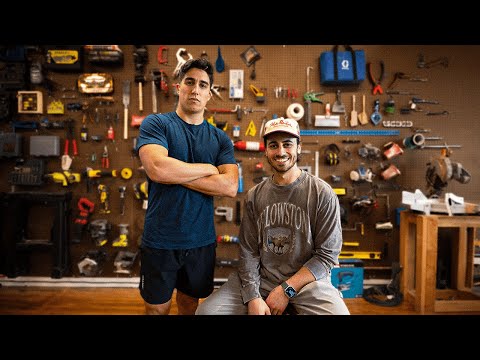
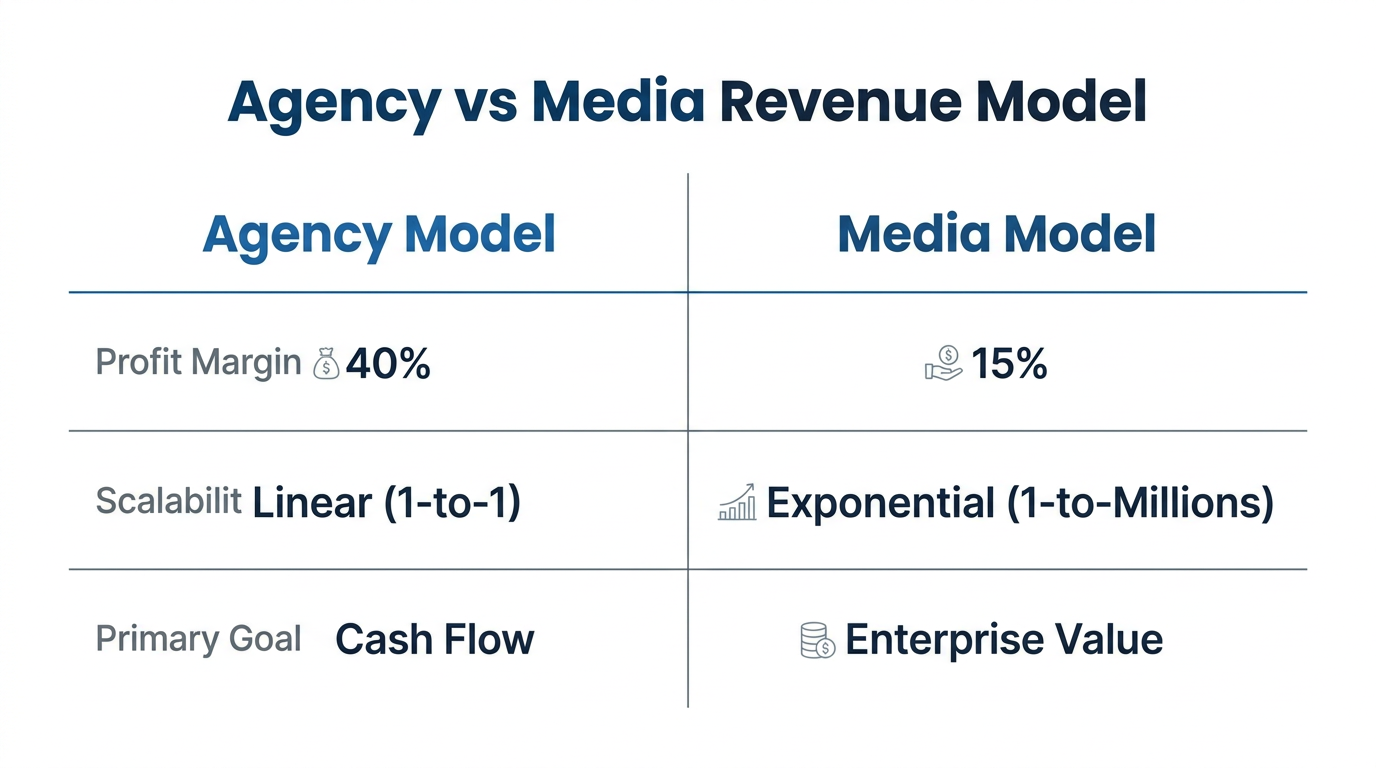
Managing the finances of a dual-entity business requires a stomach for risk. Clip.co spends roughly $25,000 to $30,000 per month on their personal content team—a team that only generates about $5,000 in direct revenue through platforms like YouTube and Beehiiv.
To the average accountant, this looks like a failing business. To a 2026 growth marketer, it looks like underpriced attention. The agency revenue covers the $30k burn, allowing the founders to experiment with storytelling without the pressure of immediate ROI.
| Metric | Service Agency (Clip.co) | Media IP (Smart Nonsense) |
|---|---|---|
| Primary Goal | Cash Flow / Payroll | Brand Equity / Reach |
| Revenue Source | B2B Retainers | Ads, Newsletters, IP |
| Profit Margin | High (Reinvested) | Negative (Subsidized) |
| Long-term Value | Linear Growth | Exponential Growth |
This financial synergy allows them to hire the best talent in the world, specifically from the Philippines, which they cite as the global hub for creative talent. By hiring 50+ editors and animators, they’ve built a talent-dense culture where creators learn from each other, further increasing the quality of the agency’s output.
The Co-Founder Archetypes: The Executor and The Perfectionist
Understand the internal struggle between being a perfectionist and a visionary leader.Scaling a service agency in 2026 requires more than just technical skill; it requires a balance of shipping velocity and quality control. Henry and Dylan represent the two archetypes essential for any high-growth startup: The Executor and The Perfectionist.
- The Executor (Henry): Focuses on the 80% rule. His goal is to ship, iterate, and maintain momentum. Without this role, the business gets stuck in planning cycles.
- The Perfectionist (Dylan): Sweats the details. He ensures the animation matches the high standards of a "South Park" level production. Without this role, the brand becomes mediocre.
By 2026 standards, this friction is productive. Henry prevents Dylan from never shipping; Dylan prevents Henry from shipping garbage. This dynamic allowed them to launch the Smart Nonsense newsletter and grow it to 20,000 subscribers in just a few weeks by focusing on simple, actionable business advice delivered through high-end visuals.
"The executor without the perfectionist sprints in the wrong direction; the perfectionist without the executor never leaves the starting line."The Viral Formula: Storytelling as a Science
Discover the secrets behind viral storytelling and making your content resonate with audiences.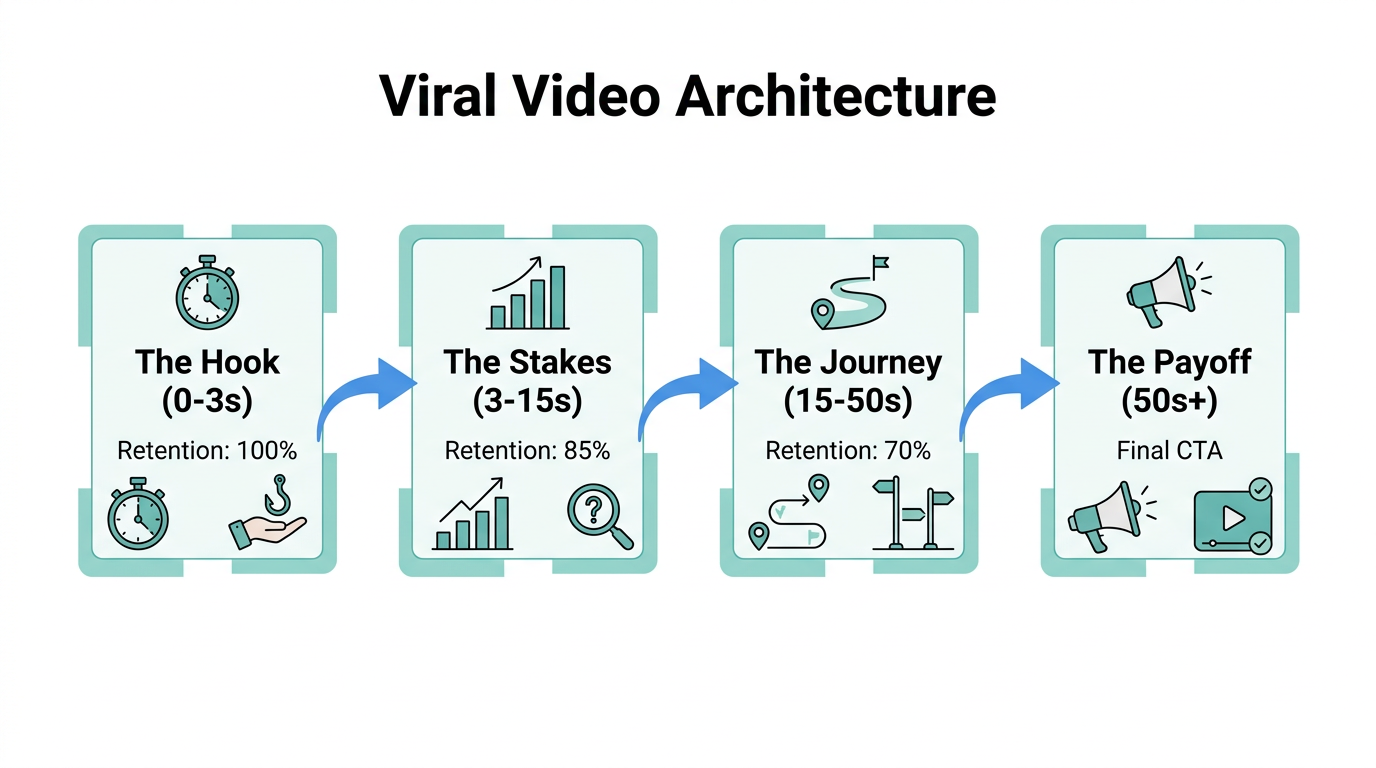
Clip.co’s ability to generate a billion views isn't luck—it's biology. They argue that humans are evolutionarily wired to finish stories. Whether it's a cave painting from 50,000 years ago or a 60-second TikTok Ads Manager campaign, the structure remains the same.
Their formula for 2026 virality includes:
- The Hook: A complex idea simplified into a funny, relatable visual.
- Open Loops: Starting a narrative thread that the viewer's brain feels compelled to close.
- Visual Density: High-quality animation that keeps the eye moving every 2-3 seconds.
This storytelling approach is why they can get viewers to watch 55 seconds of a 60-second clip. In an era of shrinking attention spans, retention is the only metric that matters. For brands looking to improve their influencer strategies, platforms like Stormy AI streamline creator sourcing and campaign management to match this high-velocity content style.
The Blueprint: Pivoting from Service Provider to Media Company
Explore the strategic goal of using a business to fund a content career.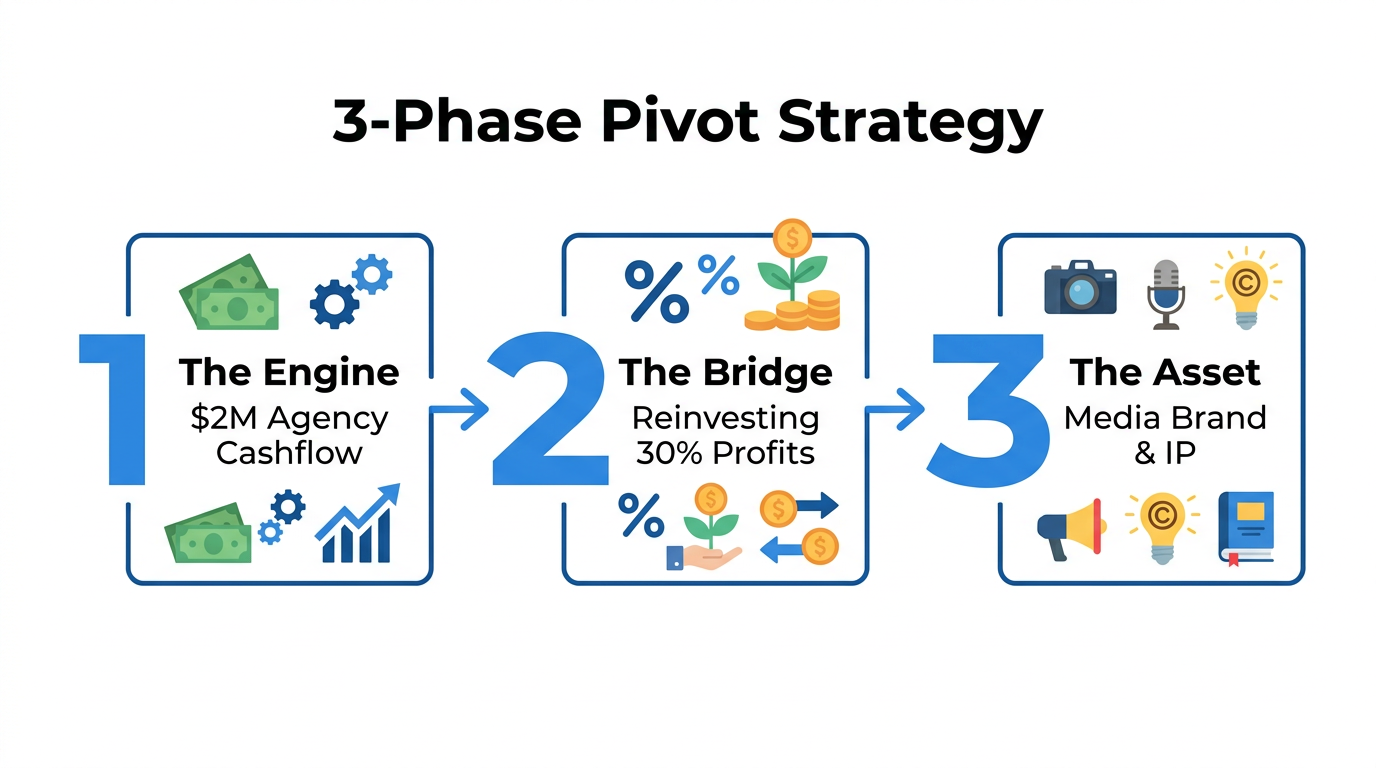
If you are currently running a service-based business and want to transition into a media-heavy model like Clip.co, follow this 2026 playbook:
Step 1: Productize Your Internal Workflow
Take the task you do most often (e.g., video editing, lead gen, design) and turn it into a standalone service. Use Notion or Monday.com to document every step so the business can run without you.
Step 2: Implement "Squatter Marketing"
Identify 5-10 dream clients or partners. Create finished products for them for free. Tag them on X (Twitter) or LinkedIn. Even if they don't hire you, the association with their brand builds instant social proof for other paying clients.
Step 3: Hire "Wow" Talent
Don't hire for budget; hire for gut-feeling. In 2026, the global talent market is accessible via specialized job boards for offshore talent. If their portfolio doesn't make your jaw drop, don't hire them.
Step 4: Stay "Above the Clouds"
As the founder, your job is to be the Explorer. If you are stuck in the day-to-day firefighting of the agency, you cannot innovate. Delegate the operations so you can focus on the next "crazy idea" that will drive the media side of the business.
Conclusion: Scaling for Happiness in 2026
Building a $2M agency like Clip.co isn't about hitting a revenue milestone; it's about buying back your creative time. By leveraging the cash flow of a high-end service to fund a massive personal brand, Henry and Dylan have created a business that optimizes for fun while building massive enterprise value.
Whether you're using Stormy AI to discover the next generation of UGC creators or managing a 50-person animation team in the Philippines, the goal remains the same: reinvest in your dreams. In 2026, the most profitable thing you can own isn't a company—it's the attention of the people.