The landscape of digital advertising has shifted from manual bidding to algorithmic mastery, and now, to the era of Generative AI. In 2025, the question for growth leads is no longer whether to use AI, but which model to deploy for specific stages of the funnel. While OpenAI has long held the spotlight, Anthropic’s Claude has emerged as a formidable specialist for brand-heavy creative. Marketers who integrate these tools into their paid media workflows are seeing an average 30% higher ROI and a 27% improvement in campaign performance within just six months of adoption. This guide breaks down the strategic nuances of Claude vs ChatGPT for marketing, ensuring your paid acquisition remains both logical and emotionally resonant.
The Great LLM Pivot: Market Share and Specialization
In the early days of generative AI, OpenAI's dominance was unquestioned. However, 2024 and 2025 have seen a significant shift toward specialization. OpenAI’s share in the enterprise LLM space has dipped from 50% to roughly 25%, while Anthropic’s Claude has surged to a 32% market share among businesses prioritizing privacy and brand consistency. This doesn't mean OpenAI is failing—with 800 million weekly active users, ChatGPT remains the volume leader. Instead, it suggests that marketers are becoming more surgical in their tool selection.
Agencies are already seeing the impact of this shift at scale. Major firms like Monks have demonstrated that AI-led creative pipelines can slash production hours by 50% and reduce costs by up to 97%. The focus has moved from "Can the AI write an ad?" to "Which AI writes the ad that actually converts?"
Claude vs. ChatGPT: The Creative vs. The Architect
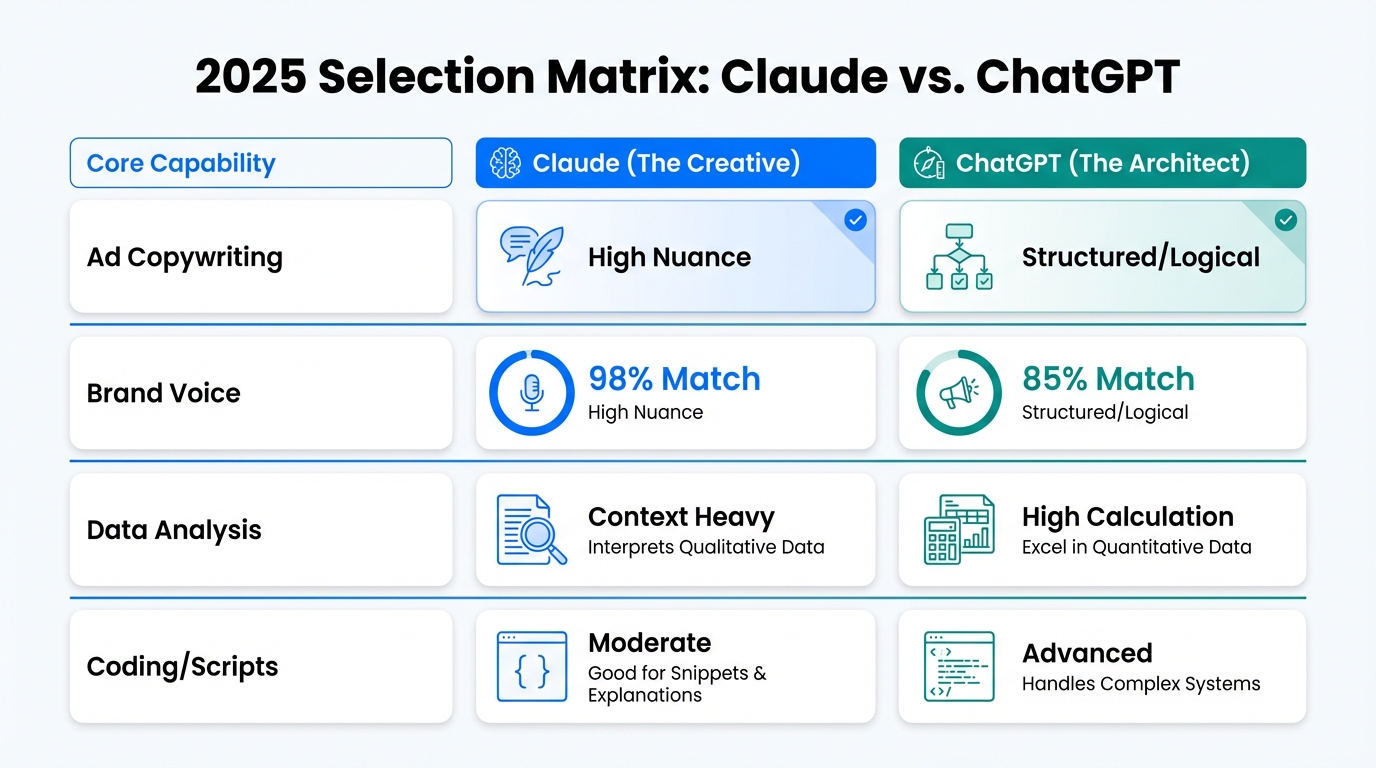
The consensus among industry experts is that these two platforms serve different cognitive functions. Understanding these differences is critical for paid acquisition success. Claude is often referred to as the "Creative Brain." It excels in empathy and brand voice, avoiding the robotic, formulaic patterns that often plague other models. This makes it the premier choice for high-stakes, customer-facing copy such as landing pages, emotional social ads, and long-form video scripts.
On the other hand, OpenAI’s GPT-4o is the "Logical Architect." Its strengths lie in multimodality and structured analysis. Because it can natively generate images, analyze visual trends, and connect to thousands of APIs, it is far superior for technical ad operations and high-volume variant generation.
"ChatGPT thinks sharper; Claude sounds smoother. Use OpenAI for the internal logic like media plans, and Claude for the external creative."
| Feature | Anthropic Claude | OpenAI GPT-4o |
|---|---|---|
| Best For | Human-like brand voice | Technical logic & automation |
| Context Window | 200k+ tokens (Long-form research) | 128k tokens (Fast processing) |
| Capabilities | Nuanced writing, large document analysis | Image generation, API integrations |
| Vibe | Empathetic & Creative | Analytical & Multimodal |
The 'Claude-ChatGPT-Claude' Workflow for Paid Acquisition
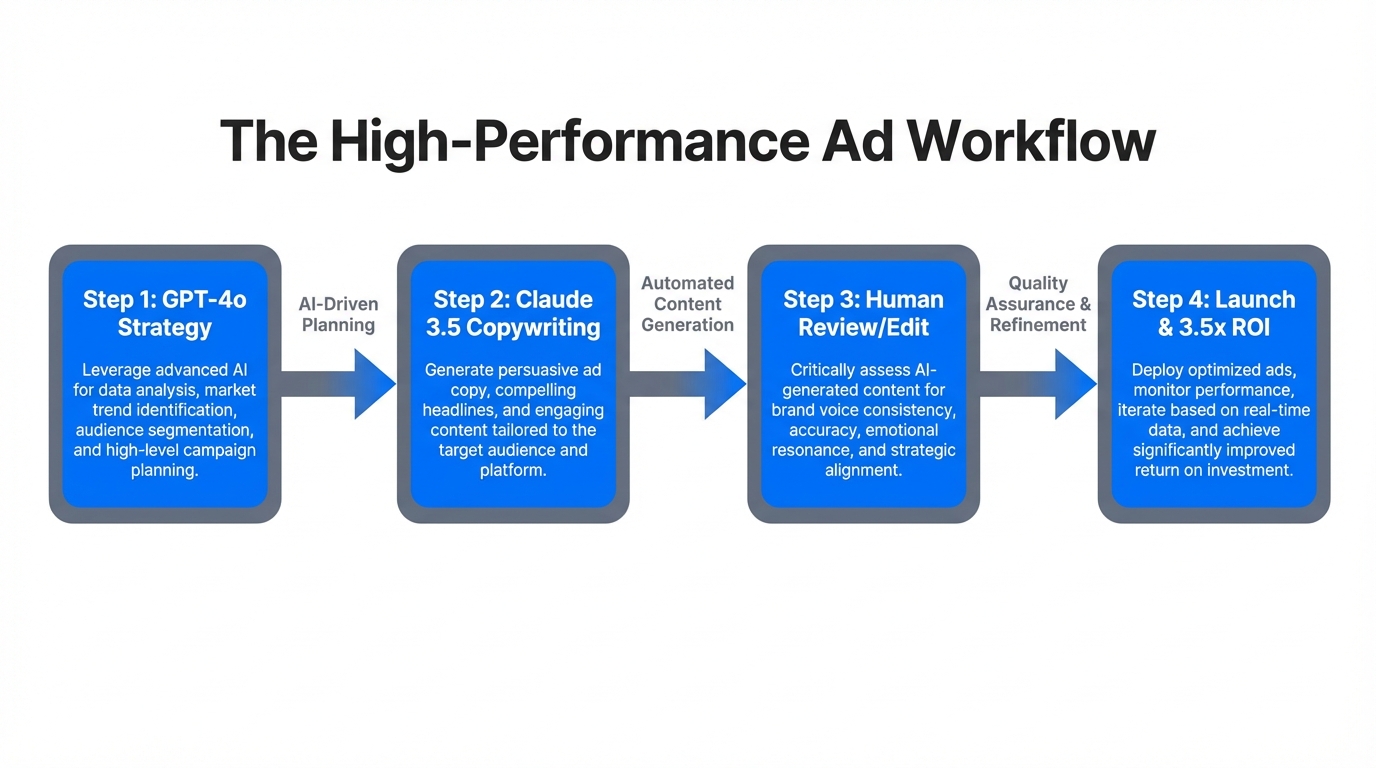
Rather than picking one tool, top-tier performance marketers use a hybrid approach known as the "Claude-ChatGPT-Claude" workflow. This cycle leverages the unique strengths of each model to produce ad creative that is both strategically sound and emotionally compelling. This method, popularized by LiftKit, follows three distinct steps:
- Creative Discovery (Claude): Start by feeding Claude your brand guidelines and competitor research. Ask it to find "belief gaps" in the market and brainstorm emotional hooks.
- Logic Vetting (ChatGPT): Take the hooks from Claude and feed them into ChatGPT. Ask it to structure a multi-stage ad funnel, determine target audience segments, and create a logical distribution of ad spend across variants.
- Final Brand Polish (Claude): Bring the finalized funnel structure back to Claude to write the actual copy. This ensures the final output lacks the "GPT-isms" (like overusing the word 'unleash') and resonates with human emotions.
This workflow is particularly effective when scaling UGC-style campaigns. When you need to bridge the gap between AI-generated strategy and real human content, platforms like Stormy AI streamline creator sourcing and outreach, helping you find the actual UGC creators who will bring these AI-vetted scripts to life, ensuring the final asset feels authentic rather than manufactured.
Strategy A: Deep Competitive Intelligence with Claude
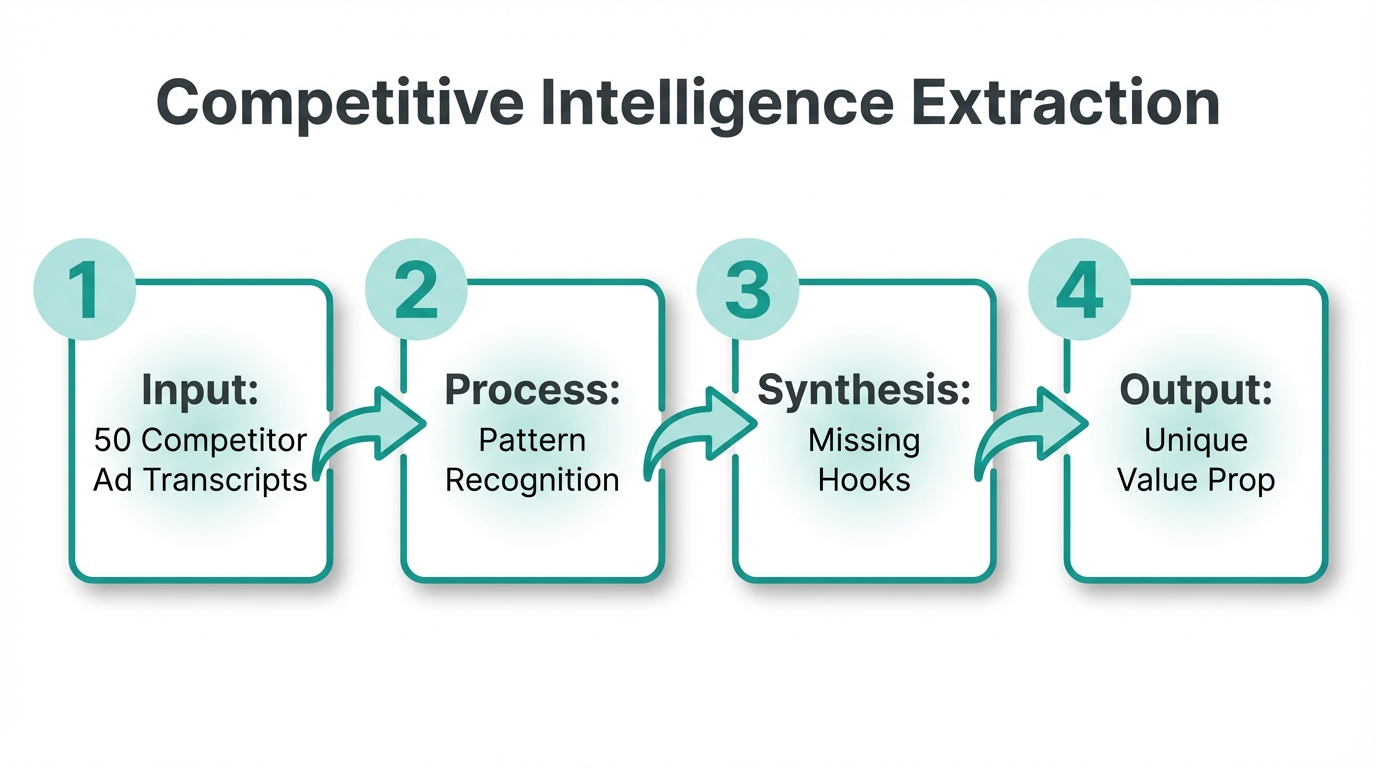
One of the most underutilized features in paid acquisition is Claude’s massive 200k+ token context window. You can perform competitive intelligence that was previously humanly impossible. By exporting six months of a competitor’s blog titles, headlines, and landing page copy into a single PDF, you can use Claude to find the exact "belief friction" they are failing to address.
This moves your strategy away from generic ads toward "gap-filler" ads that speak directly to unmet market needs. Platforms like Hunch Ads or AirOps can then be used to scale these insights into hundreds of creative iterations.
Strategy B: Dynamic Creative Prototyping with GPT-4o
While Claude handles the voice, GPT-4o should handle the visual prototypes. The bottleneck in paid ads is often the time it takes to get a "vibe" right before a photoshoot or a video edit. By using GPT-4o’s native image generation, you can create 10 distinct mockups for a single product in minutes. This allows you to test the "visual hook" before investing in high-production assets. Once a specific "vibe" shows a higher CTR in preliminary testing, you can double down on that aesthetic with your creative team.
"AI-led creative pipelines can cut production hours by 50%, allowing teams to focus on strategy rather than repetitive asset generation."
Real-World Success: Shutterfly, Hatch, and Beyond
The impact of LLM selection is best seen in actual performance data. Shutterfly, for example, partnered with Chalice AI to implement an AI-driven search algorithm for Connected TV (CTV) ads. The result was a staggering 380% ROAS lift and a 76% drop in CAC.
Similarly, the company Hatch used an AI creative pipeline to produce 60 ad variants simultaneously. This didn't just save time; it resulted in a 31% improvement in cost per purchase. Even Anthropic themselves used Claude to write scripts for a B2B influencer campaign on LinkedIn. While the ads saw a slight dip in comments compared to organic posts—a common trend for sponsored content—the team saved over 100 hours per month in production time.
Data Privacy: Why Team and Enterprise Tiers are Mandatory
A more major pitfall in paid acquisition is the "Context Death Spiral"—the act of constantly switching between new chat windows, which causes the AI to lose track of your brand guidelines. To solve this, marketers must move beyond free personal accounts. Investing in "Enterprise" or "Team" tiers (like ChatGPT Enterprise or Claude for Business) is non-negotiable for three reasons:
- Data Security: Enterprise tiers ensure your sensitive campaign data and internal KPIs are not used to train the public model.
- Customization: Features like "Projects" in Claude or "Custom GPTs" in OpenAI allow you to maintain long-term context, effectively building a permanent "Brand Brain."
- Compliance: For highly regulated industries, these tiers provide the necessary audit trails and security protocols required by IT departments, as noted by Landrum Talent Solutions.
The 20% Gap: Why Human-in-the-Loop is Essential
Despite the advancements in LLMs, AI still fails in approximately 20% of cases involving empathy, nuance, and factual accuracy. Claude is known for "creative hallucinations," often making up claims like "used by 1,000+ teams" when that data wasn't provided in the prompt. Marketers at Optmyzr emphasize that AI should get you to 80% completion; the final 20% must be human.
This is where the combination of AI and human talent becomes powerful. For instance, while an AI can draft an outreach email for a campaign, an AI agent like Stormy AI can discover the right influencers and personalize the outreach, but a human must still sign off on the partnership to ensure a genuine connection. Over-automation, as cautioned by CX Quest, leads to a hollow brand presence that consumers quickly learn to ignore.
Conclusion: Building Your 2025 AI Stack
The winner of the Claude vs ChatGPT for marketing debate is the brand that uses both. Deploy Claude for your deep research and brand storytelling, and utilize ChatGPT for technical ad operations and visual prototyping. By following the Claude-ChatGPT-Claude workflow and maintaining a strict human-in-the-loop policy, you can achieve the scale of a giant agency with the agility of a small team. Start by moving your data to Enterprise-grade tiers and begin auditing your competitors' "belief gaps" today to secure a first-mover advantage in the 2025 paid acquisition landscape.