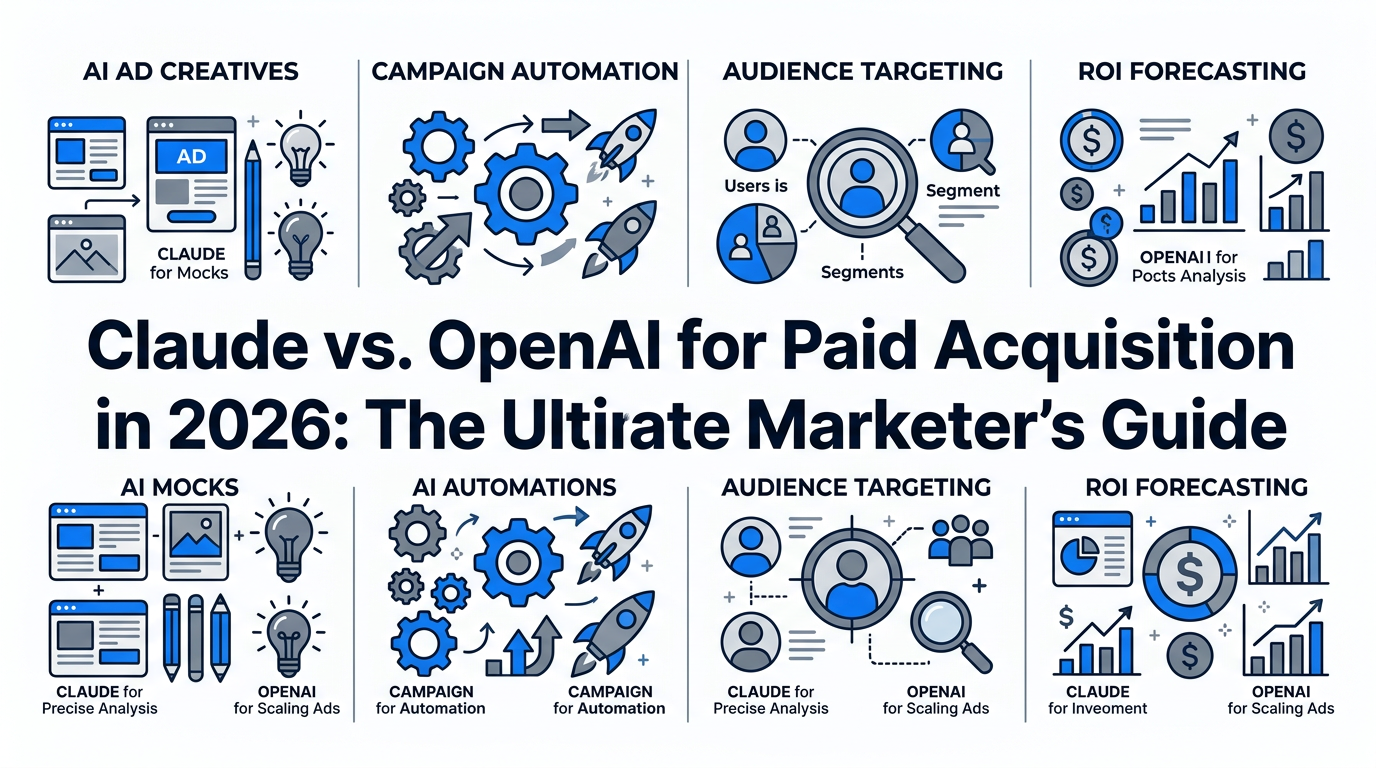
In 2026, the era of using artificial intelligence simply to "write better headlines" has officially ended. Performance marketing has evolved into a paradigm of Agentic Performance Marketing, where autonomous systems handle everything from multivariate creative testing to real-time bidding adjustments. For marketers deciding between Anthropic’s Claude and OpenAI’s GPT-5, the choice is no longer about which model is "smarter," but which architecture aligns with your specific growth goals. Teams integrating these specialized workflows are already seeing an average 30% higher ROI and a 27% improvement in campaign performance within just six months, according to the latest research from Stormy AI.
The 'Ad Divide': Contextual Targeting vs. Professional Neutrality
As of February 2026, a massive rift has opened in how these two giants approach the marketing ecosystem. OpenAI has pivoted toward monetization by displaying contextually targeted ads within ChatGPT’s free tiers, effectively becoming an ad network itself. Conversely, Anthropic has doubled down on its "No Ads, Ever" positioning, framing Claude as a premium, neutral professional tool that won't compete for your audience's attention. This distinction is critical for performance marketers who need to know if their primary strategy tool is also a potential competitor for digital real estate, a point highlighted by AI Agents Plus.
This market shift is reflected in enterprise adoption. While OpenAI remains the volume leader, Claude has surged to a 32% enterprise market share in 2026—up from 15% just two years ago—largely due to its superior brand consistency and massive context windows that allow for deeper account audits. Data from market researchers suggests that professional brands are increasingly moving their creative logic to Claude to avoid the "robotic fluff" often associated with legacy AI models.
The Logical Architect vs. The Creative Strategist
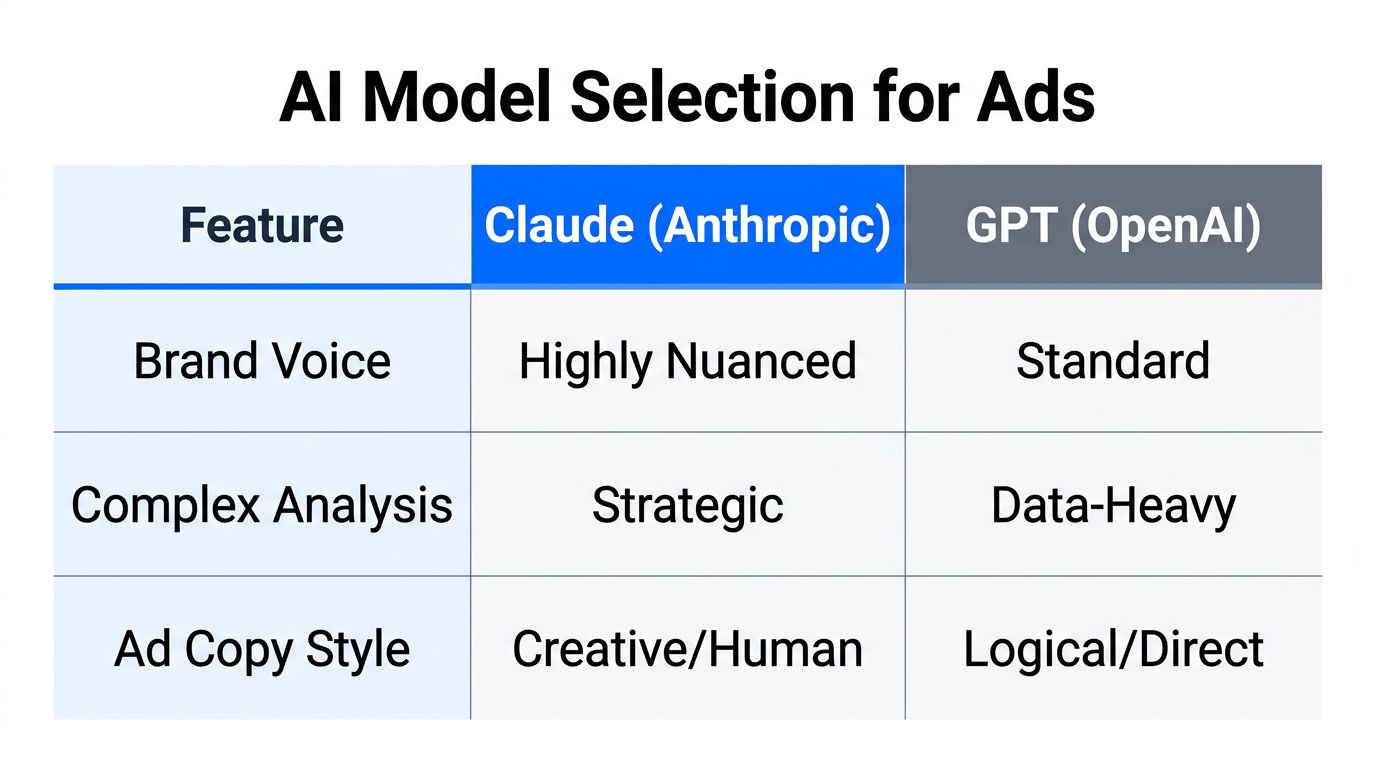
To maximize your GPT-5 for paid acquisition strategy, you must understand the cognitive profiles of each model. Performance marketers often refer to OpenAI as "The Logical Architect" and Claude as "The Creative Strategist." When building complex automation scripts for Meta Ads Manager or running Python-based bid simulations, OpenAI’s raw processing power is unmatched. However, when it comes to long-form landing pages and nuance-heavy ad copy, Claude’s 200K+ token context window allows it to maintain a brand’s unique "voice" with much higher fidelity.
| Feature | OpenAI (GPT-5) | Claude (3.5 Sonnet / 4.5) |
|---|---|---|
| Primary Role | The "Logical Architect" | The "Creative Strategist" |
| Best For | Data analysis, automation scripts | Brand voice, deep audits, UX copy |
| Visuals | Native DALL-E 4 integration | Visual creative briefing (Expert) |
| Context Window | 128K - 400K tokens | 200K - 1M tokens (Beta) |
| Market Vibe | Mass-market / Fast iteration | Premium / Brand-safe |
According to experts at UseGrowthOS, the biggest mistake marketers make is using one model for everything. High-growth teams use OpenAI for the "math" of ads and Claude for the "psychology" of the creative. This hybrid approach is what allows AI-influenced digital ad spend to reach $81.6 billion by 2033, per Stormy AI reports.
"The future of performance marketing isn't AI doing the work; it's AI models acting as specialized departments—one for data, one for brand—orchestrated by a human strategist."
The 'Claude-ChatGPT-Claude' Hybrid Workflow
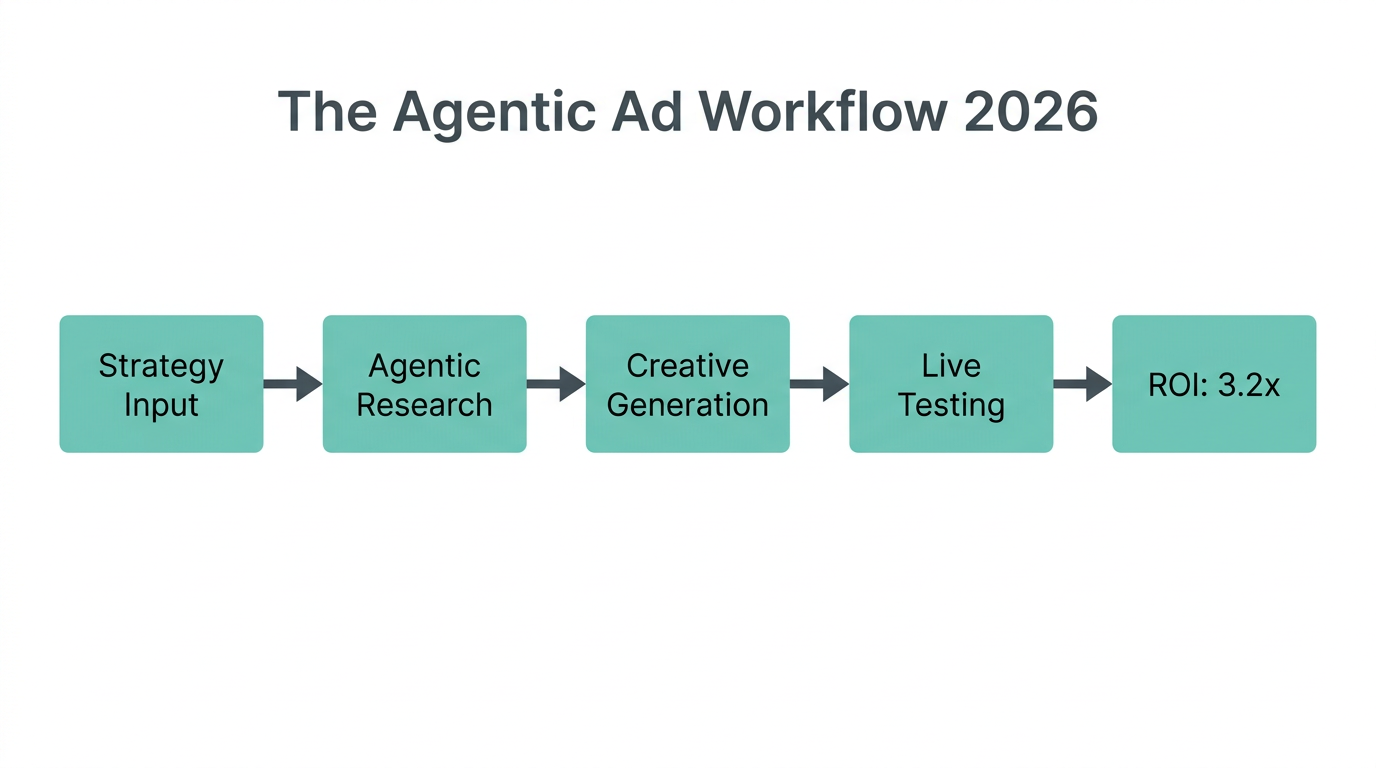
Top-tier agencies like LiftKit have pioneered a specific workflow that extracts the best from both platforms. By chaining these models together, you can create a creative pipeline that is both data-driven and emotionally resonant. This is particularly effective for AI performance marketing in 2026, where creative fatigue happens faster than ever before.
- Step 1: Creative Discovery (Claude): Upload six months of competitor ad screenshots and historical performance data. Use Claude’s massive context to identify "belief friction"—the specific psychological barriers preventing your customers from converting.
- Step 2: Logic Vetting (OpenAI): Feed those specific hooks into GPT-5 to generate 50+ multivariate ad variations. Use OpenAI to ensure these variations are optimized for specific platform algorithms like Google’s PMax.
- Step 3: Final Polish (Claude): Pass those variations back to Claude. Ask it to apply your specific brand style guide to ensure the copy doesn't sound like a machine.
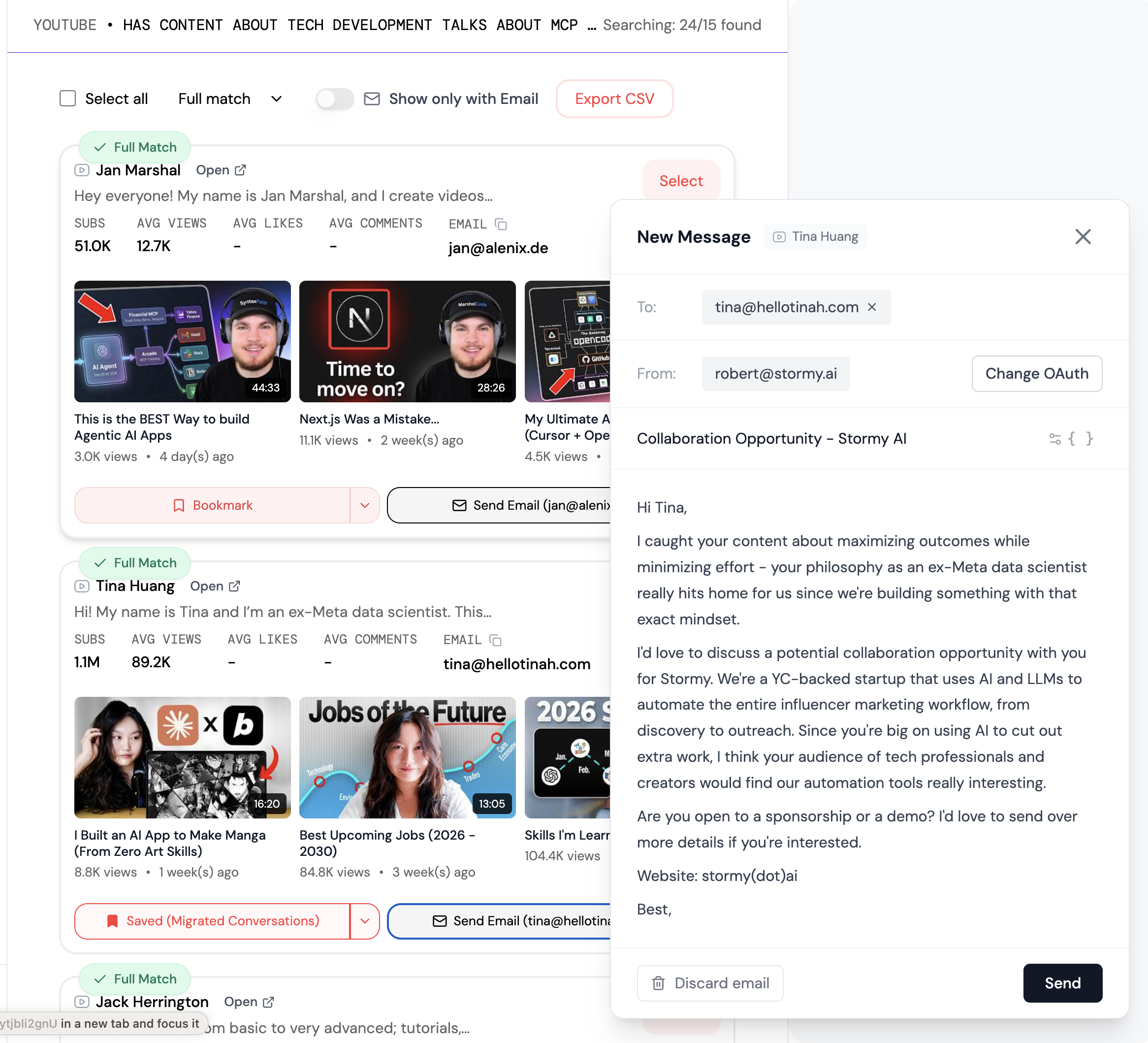
When implementing these workflows, many teams find that sourcing the right creative talent or influencers to execute these AI-generated briefs is the next bottleneck. Platforms like Stormy AI streamline this by using their own AI search engines to find the exact creators who fit the niche Claude identified during Step 1.

Deep Competitive Intelligence: Claude's Secret Weapon
One of the most powerful uses for Anthropic for marketing in 2026 is "humanly impossible" research. Because Claude can process 50-page PDFs or entire website structures in seconds, it can perform competitive audits that would take a human team weeks. You can export a competitor's entire Meta Ad Library history and ask Claude to identify emotional triggers they are missing. This allows you to position your product as the specific solution to an unaddressed customer pain point, a strategy highlighted in Stormy AI's guide to paid ads.
Furthermore, teams are now using Claude Code and OpenAI Operator to build autonomous agents. These agents can monitor your Google Ads accounts while you sleep, rebalancing budgets between LinkedIn and Meta based on real-time ROAS fluctuations and flagging "creative fatigue" the moment CTR begins to decay.
"The 32% market share shift toward Claude isn't just a trend; it's a statement that brands value their unique voice over generic AI speed."
Case Studies: The AI Multiplier in Action
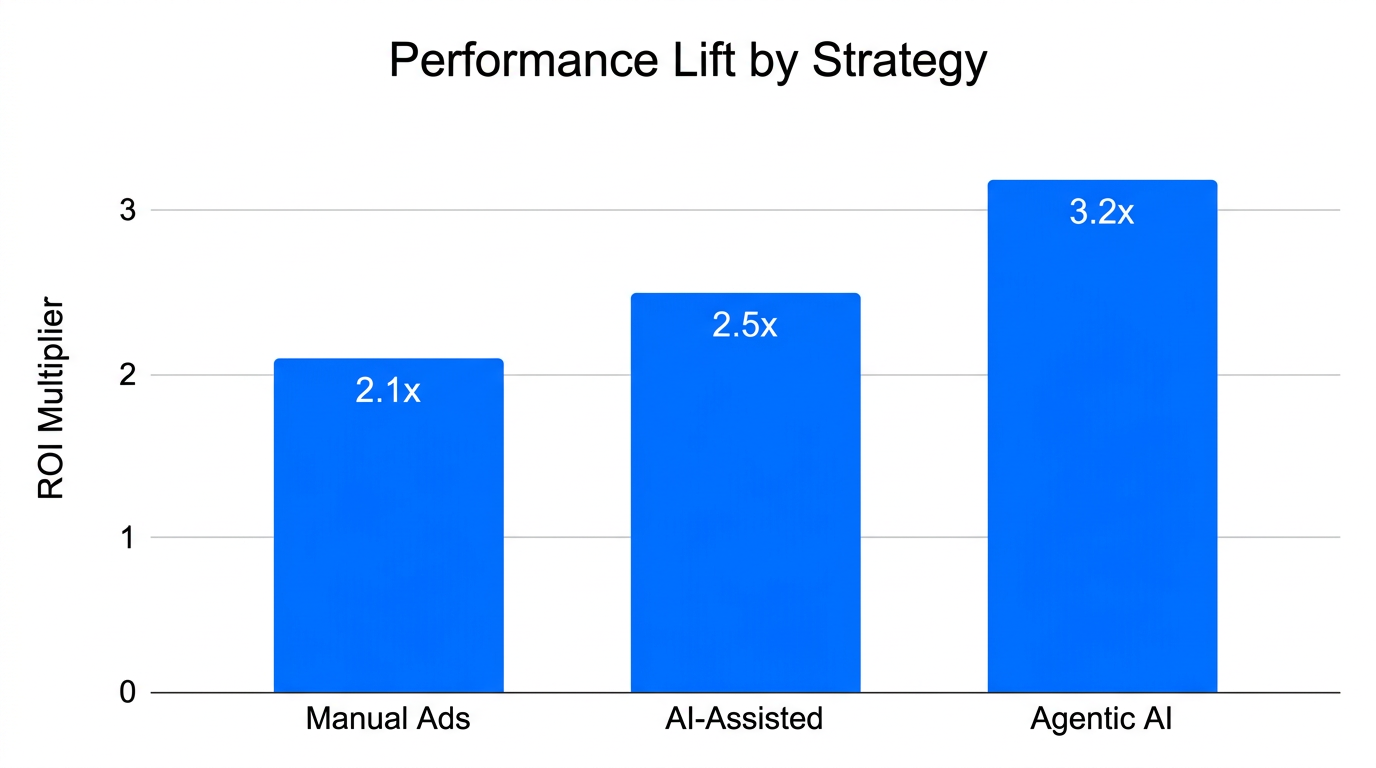
The impact of these tools is best seen in the enterprise sector. For example, TELUS utilized Claude to build over 13,000 internal tools, saving 500,000 manual hours and generating $90 million in benefits. Much of this saved capital was reinvested directly into aggressive customer acquisition campaigns. Similarly, the fintech giant Brex integrated Claude via Amazon Bedrock to automate 75% of their transaction processing, freeing up significant marketing budget for paid growth, as detailed by Stormy AI's analysis.
Agencies like Monks (formerly Media.Monks) have also demonstrated that AI-led creative pipelines can reduce production hours by 50% while slashing creative costs by up to 97%. This efficiency allows brands to test ten times more creative variations without increasing their overhead, making the Claude vs OpenAI for ads debate a central pillar of any modern marketing stack.
Common Mistakes to Avoid in 2026
Despite the power of these tools, many marketers still fall into legacy traps. One of the most common is the "Set and Forget" trap. Failing to monitor AI-driven bidding can lead to "hallucinated" spend patterns. Experts recommend maintaining a 20% "human-in-the-loop" gap for strategic oversight to prevent budgets from spiraling out of control, a warning echoed by Stormy AI.
- Generic Prompting: Using simple prompts like "write a Facebook ad" results in low-CTR content. Use Role-Based Prompting instead (e.g., "You are a senior direct-response copywriter specializing in B2B SaaS"), a technique suggested by Thinking Loop.
- Treating AI as Strategy: AI is a tool, not a strategist. Using AI to generate high volumes of traffic without a conversion-led plan often results in clicks without intent, according to Primotech.
- Neglecting Data Hygiene: Feeding poor customer data into OpenAI's data analysis tools leads to flawed targeting. Accurate conversion tracking remains the "fuel" for AI success, as noted by Hashmeta.
Conclusion: How to Allocate Your Budget
For maximum growth efficiency in 2026, your AI budget should be as diversified as your ad spend. Use OpenAI for high-volume multivariate testing and technical automation via Zapier. Use Claude for brand positioning, competitive intelligence, and high-converting landing pages. By combining the 'Logical Architect' with the 'Creative Strategist', you can build a marketing engine that doesn't just spend money—it scales growth. To take your acquisition to the next level, consider how Stormy AI can help you discover and manage the creators who will bring your AI-generated strategies to life.