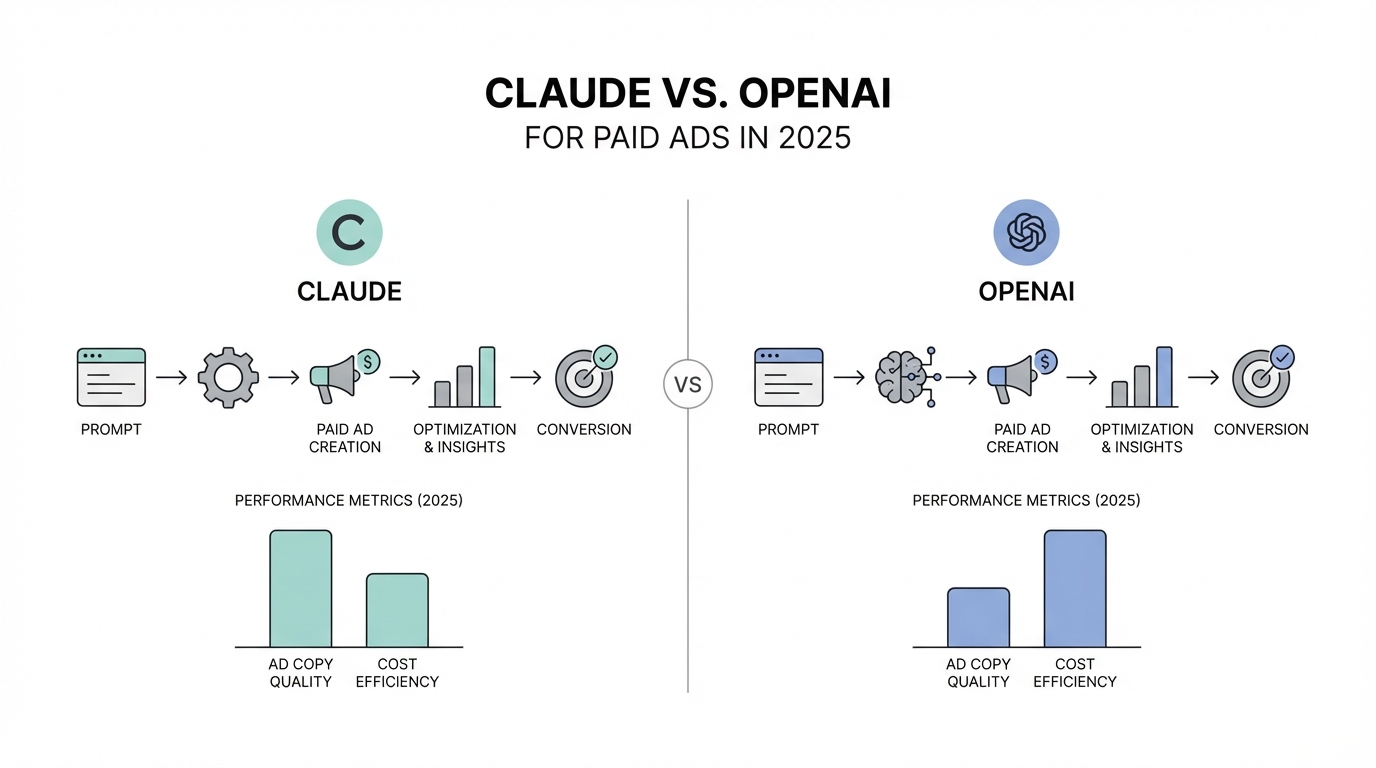
In 2025, the debate over Claude vs OpenAI for marketing has moved beyond simple chat interfaces and into the realm of fully autonomous, agentic workflows. For performance marketing teams, the question is no longer which bot is smarter, but which model integrates most effectively into a high-scale media buying engine. With AI-influenced digital ad spend projected to reach a staggering $81.6 billion by 2033, the stakes for Growth Leads and CMOs have never been higher. Transitioning from manual keyword bidding to AI-driven automation is no longer a luxury; it is the baseline for survival in a fragmented digital landscape.
The Rise of Agentic Performance Marketing
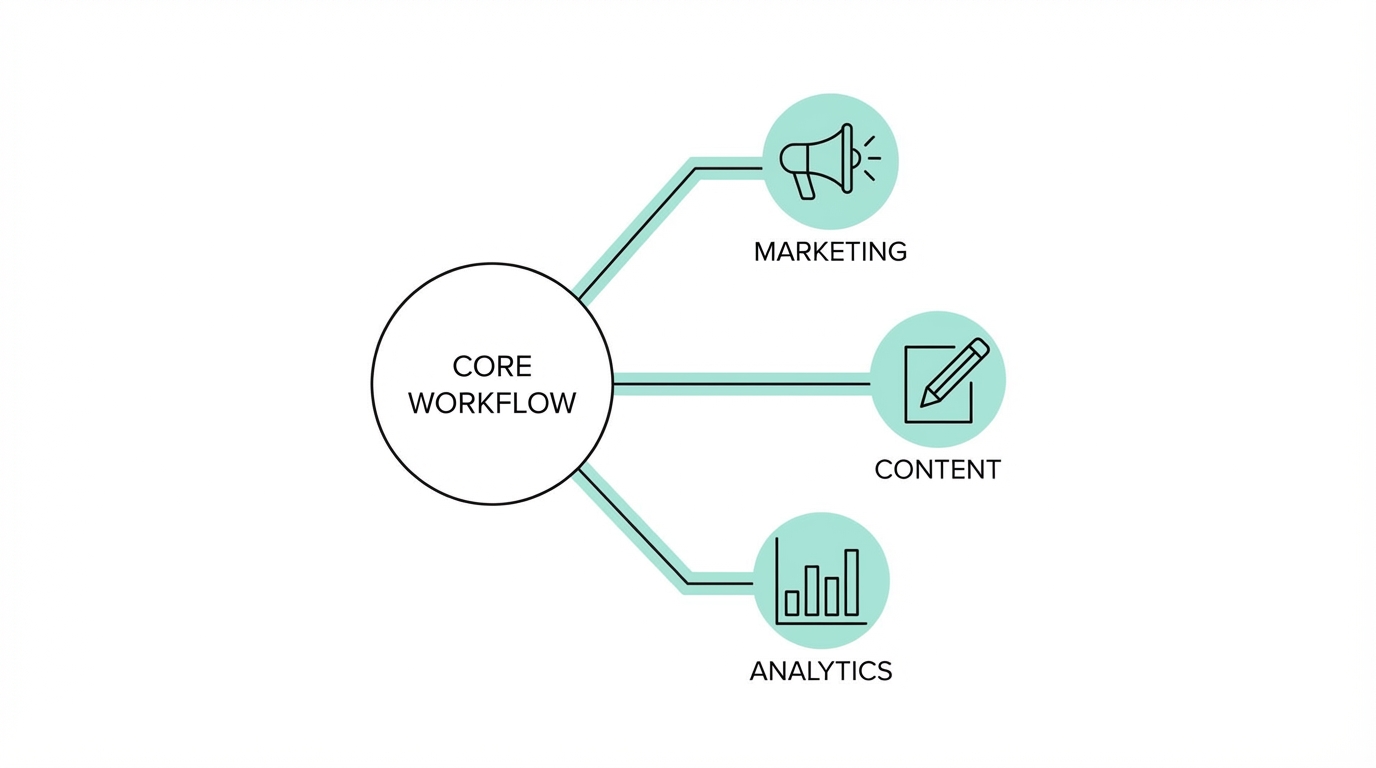
We have officially entered the era of the "agentic layer." This shift marks the transition from marketers asking questions to AI agents executing multi-step sequences. According to recent data from IAB Europe, roughly 69.1% of marketers have already integrated AI into their core strategies, with 85% leveraging it for content generation. However, the most successful teams are those using AI to automate complex, cross-platform budget rebalancing and creative audits.
This evolution is reflected in the performance metrics. Marketers using advanced AI tools report a 45% increase in campaign effectiveness and a 25% faster completion rate for creative tasks. By delegating the heavy lifting of data analysis and creative iteration to specialized models, growth teams can focus on high-level strategy and unit economics.
OpenAI: The Data and Automation Powerhouse
OpenAI remains the industry leader for technical execution and data-heavy processing. When it comes to AI for paid acquisition, ChatGPT (specifically the GPT-4o and o3 models) excels at tasks that require mathematical precision and code generation. For instance, performance marketers frequently use OpenAI to write complex Google Ads scripts that manage bid adjustments based on real-time weather data or stock levels.
As noted by experts at Optmyzr, ChatGPT is widely considered a "superior math and data analyzer." If you need to upload a 50MB CSV of historical ad spend and ask for a cohort analysis or a projection of customer lifetime value (LTV), OpenAI is the go-to tool. Its native integration with DALL-E 3 also makes it a viable choice for generating rapid storyboard concepts for video ads, even if the final production still requires a human touch.
"OpenAI’s code-generation capabilities are the secret weapon for technical marketers looking to automate the mundane aspects of account management."
However, OpenAI is also entering the media space directly. The company has begun testing ads within the ChatGPT interface to monetize its 900 million weekly active users, as reported by AI Magazine. This move suggests that OpenAI aims to be both the tool you use to build ads and the platform where those ads are shown.
Claude: The Creative Strategist and Brand Guardian
While OpenAI dominates data, Anthropic’s Claude has become the preferred "thinking partner" for creative strategy. Claude 3.5 Sonnet and the newer 4.5 models have seen their share of enterprise workloads jump from 15% to 32%, according to data from Menlo Ventures. This growth is driven by Claude's superior ability to mirror a brand’s unique voice and handle massive amounts of context.
Claude’s context window—ranging from 200K to 1M tokens—is a game-changer for full-account audits. A marketer can upload an entire year’s worth of ad copy, customer feedback, and brand guidelines, and Claude will maintain perfect continuity. This makes it the best AI for digital advertising creative, as it avoids the "robotic fluff" and repetitive patterns often associated with GPT-generated text.
Using features like Claude Projects, brands can build a centralized "Brand Hub." By uploading top-performing ad variants, Claude can analyze the underlying psychological triggers and generate 50+ unique headlines for a Meta Advantage+ campaign in minutes. This process, as detailed by QuickLeap, allows a solo growth marketer to accomplish what used to take an entire creative team several days.
The Multi-Model Marketing Stack Playbook
The debate isn't about which model is better in a vacuum, but how to orchestrate them together. Leading performance marketing teams are now building "multi-model stacks" where different LLMs handle specialized tasks. Here is a playbook for a balanced AI marketing stack in 2025:
Step 1: Creative Analysis with Claude
Upload your style guide and past winning ads to Claude. Ask it to identify the "hook" patterns that drive the highest click-through rate (CTR). Use these insights to draft hyper-personalized ad copy that resonates with specific buyer personas.
Step 2: Technical Automation with OpenAI
Use the OpenAI Platform to generate Python or JavaScript snippets. For example, you can prompt ChatGPT to "Write a Google Ads script that pauses any campaign where the Target CPA is 50% higher than the daily budget for three consecutive days." This ensures your budget is never wasted on underperforming segments.
Step 3: Integration and Orchestration
Connect these models using no-code tools like Make or Zapier. A typical workflow involves triggering a script when a new Google Ads report is generated, sending that data to Claude for a narrative performance summary, and then alerting the team in Slack with specific creative recommendations, a process outlined by automation agency 9x.
"The future of marketing isn't one model to rule them all; it's an ensemble of AI agents working in a coordinated symphony."
To feed these AI models with high-quality visual data and social proof, brands are increasingly relying on User-Generated Content (UGC). Platforms like Stormy AI streamline creator sourcing and outreach, helping growth teams discover UGC creators at scale. By using Stormy's AI search engine to find creators who align with the brand voice identified by Claude, marketers can ensure their AI-optimized ad copy is paired with authentic, high-converting visuals.

Real-World Case Studies: AI Marketing ROI 2025
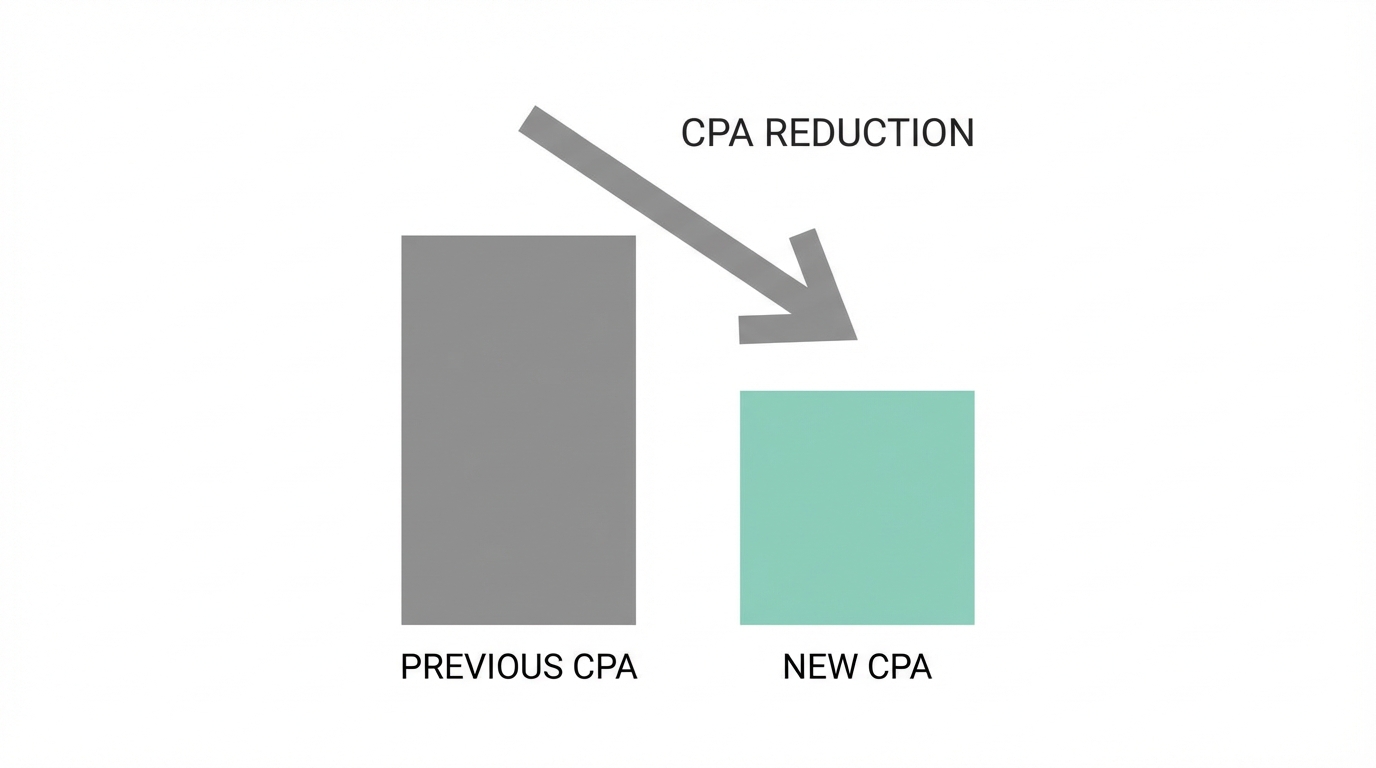
Large enterprises are already seeing massive returns from these strategies. For example, TELUS leveraged Claude to build over 13,000 internal AI tools, resulting in $90 million in benefits and saving over 500,000 hours of manual labor. Similarly, Brex integrated Claude via Amazon Bedrock to automate 75% of their transaction processing and compliance tasks, which directly freed up their marketing budget for more aggressive acquisition.
On a smaller scale, growth marketers are reporting that tasks which previously took 2.5 hours per week—such as drafting dozens of ad variants—can now be completed in under 30 minutes using "chained" prompts that link research, outlining, and drafting phases. This efficiency is a core driver of AI marketing ROI in 2025.
Common Pitfalls and Mistakes to Avoid
Despite the power of these models, there are significant risks for teams that over-automate without human oversight. Here are the most common mistakes performance marketers make:
- The "Set-and-Forget" Mentality: AI lacks empathy and cultural context. As noted by AdGPT, over-automation often leads to generic ads that suffer from rapid audience fatigue. Always maintain a "Human-in-the-loop" (the 80/20 rule).
- Data Hallucinations: Claude can occasionally misinterpret data in complex spreadsheets. Experts at Shared Physics recommend a "Double-Check" method: use OpenAI for the math and Claude for the narrative summary.
- Premature Automated Bidding: Moving to Google or Meta’s automated bidding too early (before reaching 30-50 historical conversions) will cause the AI to optimize for "garbage" traffic, according to Visible Factors.
- Inconsistent Voice: Using different models for different ad groups within the same campaign can create a disjointed brand experience. Ensure you have a unified brand prompt that all models reference, a strategy suggested by SizeIM.
"The most dangerous phrase in AI marketing is 'the model said so.' Verification is just as important as generation."
Conclusion: Building Your 2025 AI Stack
In the showdown of Claude vs OpenAI for marketing, the winner is the marketer who refuses to choose just one. OpenAI is your mathematical architect and automation engineer; Claude is your creative director and brand strategist. By combining OpenAI's technical precision with Claude's contextual intelligence, performance marketing teams can achieve a level of scale and efficiency that was impossible even twelve months ago.
As you build your stack, remember to ground your AI's creativity in real human data. Whether it's using Stormy AI to find the right UGC creators or using OpenAI to script your bidding logic, the goal is the same: reduce your CPA, increase your CTR, and drive sustainable growth in an AI-first world.