By mid-2026, the marketing landscape has undergone a tectonic shift. We are no longer in the era of "prompt engineering"; we have entered the age of agentic orchestration. According to recent market data from Statista, the global AI marketing market has surged to $128 billion, and marketing teams are now allocating nearly 20% of their total budgets specifically to AI-native infrastructure. For CMOs and Growth Leads, the primary question is no longer if they should use AI, but which ecosystem will anchor their 2026 strategy: Anthropic’s Claude 4.6 or Google’s Gemini 3.1?
Choosing between Claude and Gemini isn't just about picking a chatbot; it's about choosing the foundation for your brand’s autonomous workflows. While Claude offers unparalleled creative nuance and complex reasoning, Gemini provides a massive 1M+ token context window and native integration into the Google Ads ecosystem. This guide breaks down the performance, ROI, and technical setups of both platforms to help you build a "win-faster" stack this year.
The 2026 Landscape: From Chatting to Doing
As of 2026, research from Salesforce suggests that 78.4% of marketers use AI tools daily, up from 61% just two years ago. The focus has moved toward autonomous agentic workflows, where AI models aren't just writing copy—they are building apps, auditing competitors, and managing ad spend in real-time. Tools like Stormy AI have emerged as critical execution layers, allowing brands to automate the discovery and outreach of creators while Claude or Gemini handle the high-level strategy.
"The core strategy for marketers is no longer just prompting; it's orchestration—using AI to build, test, and deploy entire campaigns in minutes rather than weeks."
Claude 4.6 vs Gemini 3.1: Reasoning vs. Scale
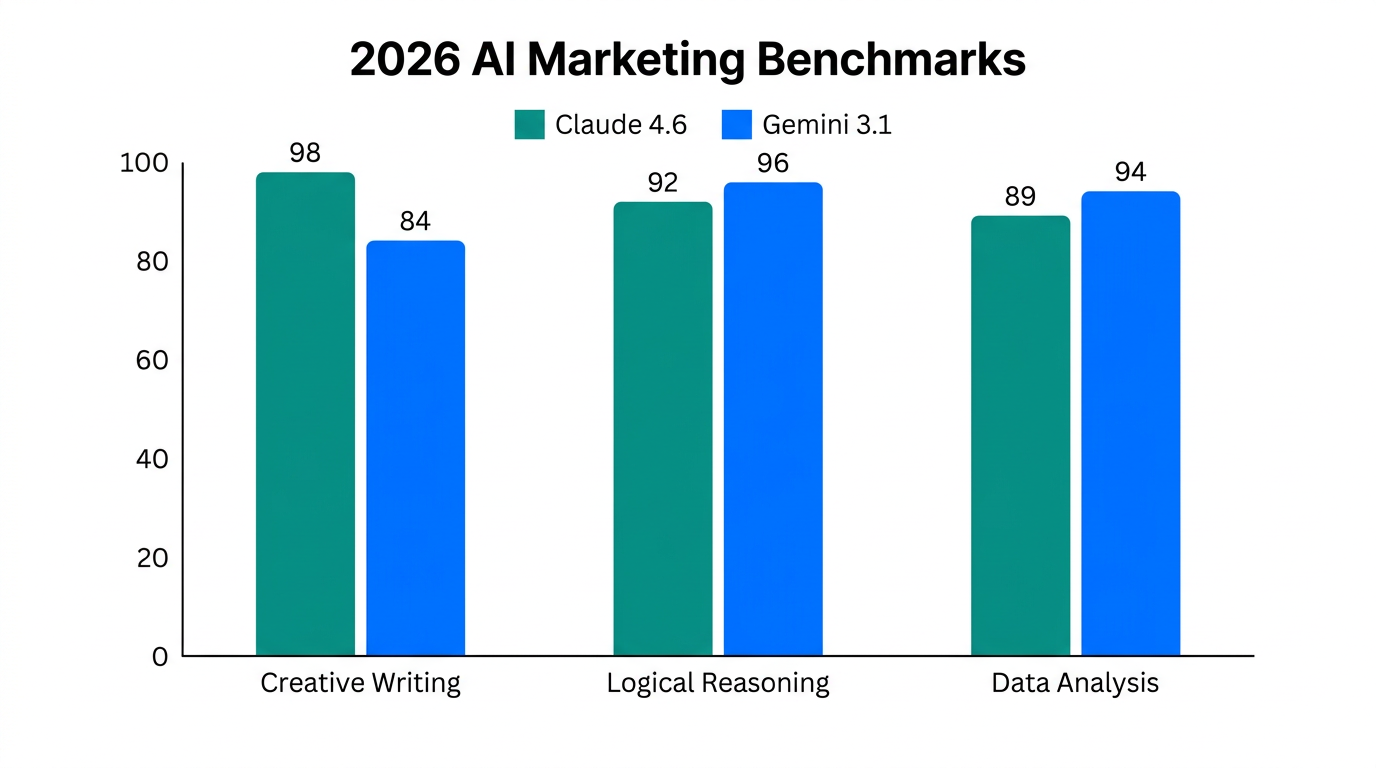
The technical gap between Claude 4.6 and Gemini 3.1 is defined by the trade-off between logic and volume. Claude remains the gold standard for reasoning and natural prose. It is widely regarded by marketers as the more "human" writer, making it ideal for high-stakes whitepapers, complex strategic documents, and Vibe Coding—the 2026 trend of building micro-apps using plain English via Claude Code.
Gemini 3.1, however, wins on brute force and context. With a context window exceeding 1 million tokens, Gemini can ingest a brand's entire 10-year content archive, hundreds of PDFs, and hours of video meetings to find a single needle-in-a-haystack insight. For massive data analysis and real-time search research, Gemini is virtually unbeatable. While Gemini’s prose can sometimes feel "functional" or "serviceable," its ability to process entire codebases and vast data sets makes it the ultimate research assistant.
| Feature | Claude 4.6 (Anthropic) | Gemini 3.1 (Google) |
|---|---|---|
| Best For | Creative Reasoning & Nuance | Massive Scale & Real-time Data | Writing Style | Human-like, Strategic | Functional, Analytical | Context Window | 128K - 200K Tokens | 1M - 2M+ Tokens | Agent Capabilities | High (Self-correcting code) | Moderate (Integration-heavy) | Primary Winner | Claude (for ROI & Logic) | Gemini (for Ecosystem depth) |
The Integration War: Google Ecosystem vs. Claude’s MCP
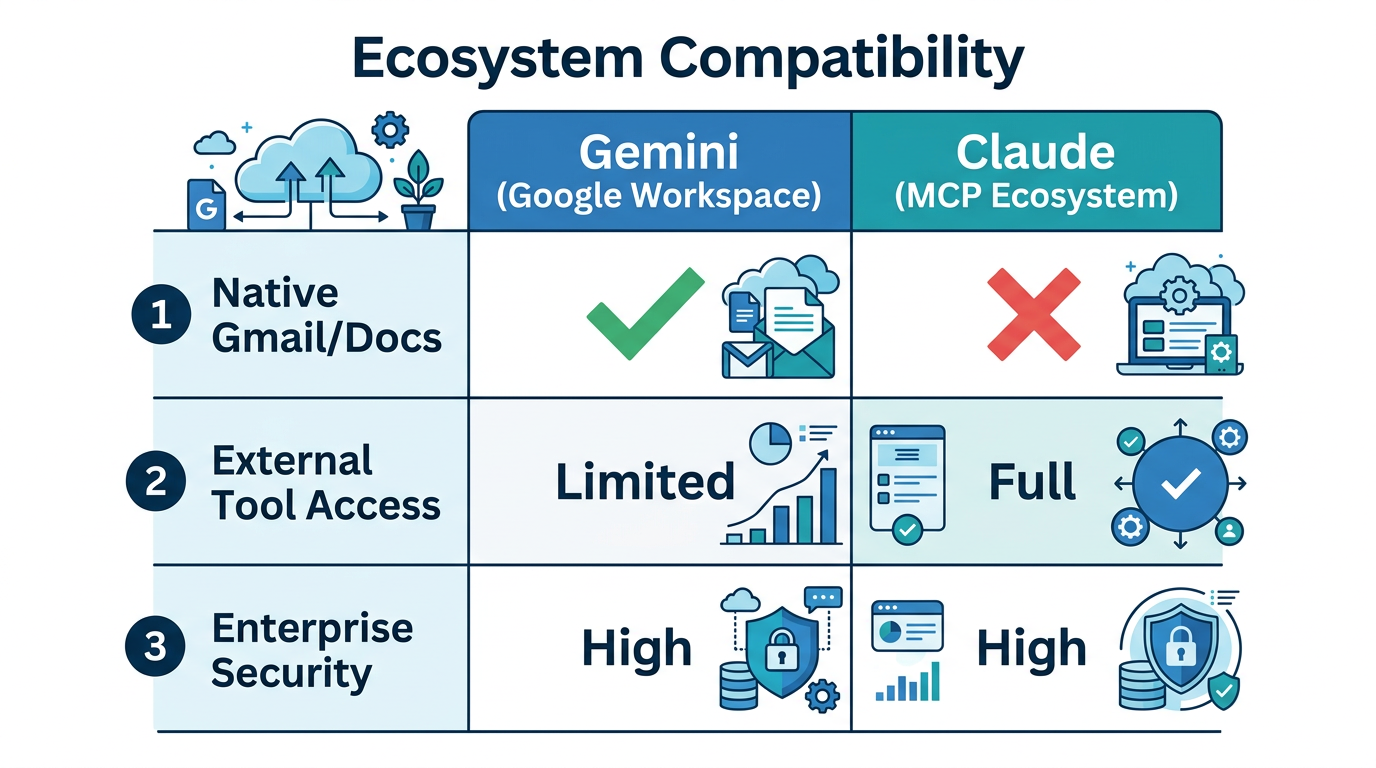
In 2026, the "walled garden" versus "open standard" debate has reached a fever pitch. Gemini 3.1 is natively built into Google Workspace, Google Ads, and Search Console. This means a growth lead can ask Gemini to "analyze my underperforming PMax campaigns and draft three new headlines in Google Docs," and the AI can execute those steps within seconds. This deep integration is a significant advantage for teams already heavily invested in the Google stack.
Claude takes a more flexible approach using the Model Context Protocol (MCP). Think of MCP as the "USB-C for AI." It allows non-technical marketers to connect Claude directly to tools like Slack, Zapier, or WordPress without complex API coding. By using MCP servers, a marketer can allow a Claude-powered agent to "see" their CRM or ad data, making it an incredibly versatile hub for a multi-platform strategy. When compared to the manual discovery workflows of the past, Stormy AI uses a similar agentic logic to connect your creator search directly to an automated outreach engine.

ROI Analysis: Benchmarking Marketing Performance
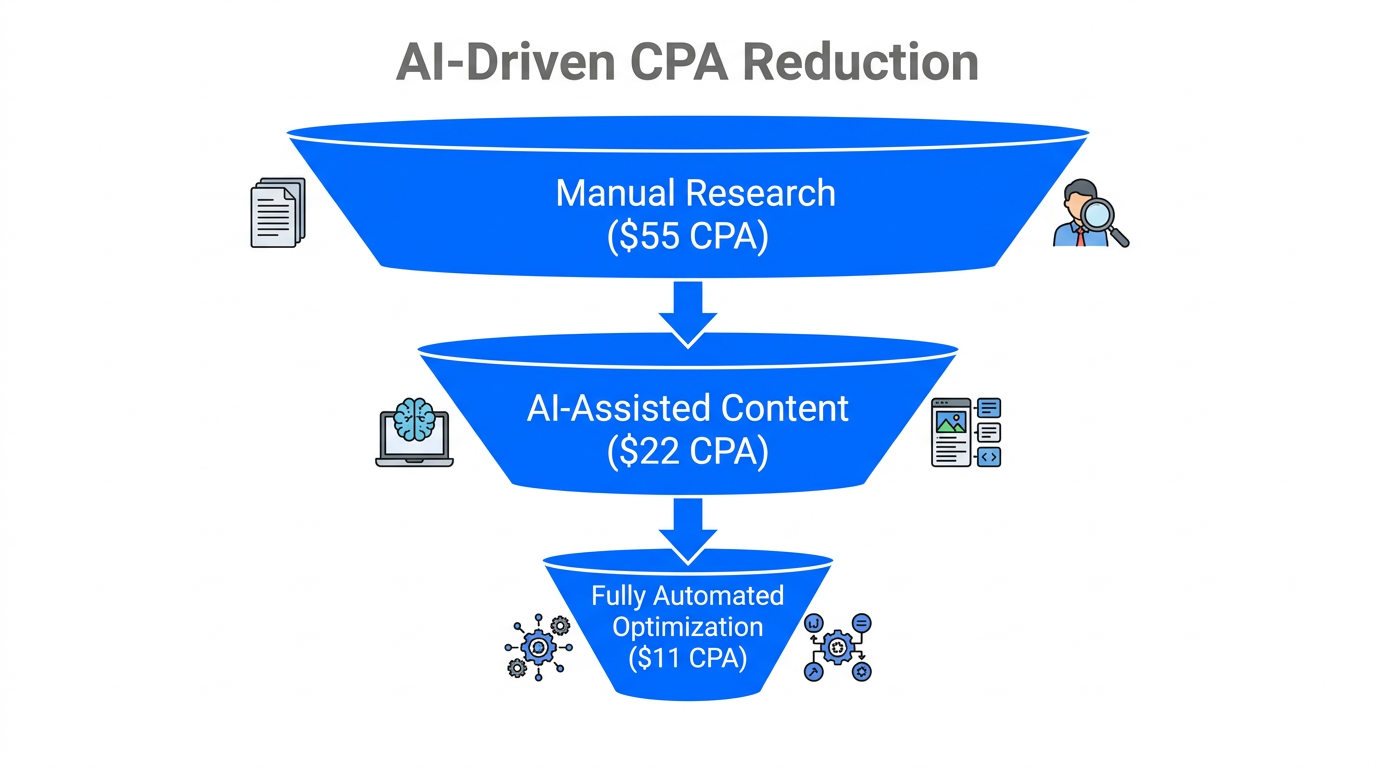
Marketing teams aren't just using AI for convenience anymore; they are using it to drive a massive $10.30 ROI for every $1 spent in high-maturity environments according to McKinsey. According to benchmarks from performance agencies, AI-optimized creative variants and bidding strategies are delivering a 23% reduction in Cost-Per-Acquisition (CPA) on Meta Ads and a 15% lift in conversion rates on Google Ads.
Claude 4.6 has proven particularly effective in reducing CPAs by generating higher-quality ad copy that bypasses the "AI slop" backlash. Since audiences in 2026 are increasingly rejecting generic, too-perfect AI visuals, Claude’s ability to inject human-like nuance helps brands maintain trust. On the other hand, Gemini 3.1’s performance excels in Generative Engine Optimization (GEO)—the practice of optimizing content to be cited by AI search engines like Perplexity rather than just ranking #1 on a traditional SERP.
"While the average ROI for GenAI in marketing is $3.70, those who embrace agentic orchestration see returns as high as $10.30 per dollar spent."
Pricing Breakdown: Navigating the 2026 Models
Pricing for AI in 2026 has shifted heavily toward usage-based models. While both Claude and Gemini offer a standard $20/month tier, serious marketing teams are opting for "Max" tiers to handle high-volume sub-agents. Claude Max tiers range from $100 to $200 per month, providing the token capacity needed to run constant audits and multi-variant tests across an entire product catalog.
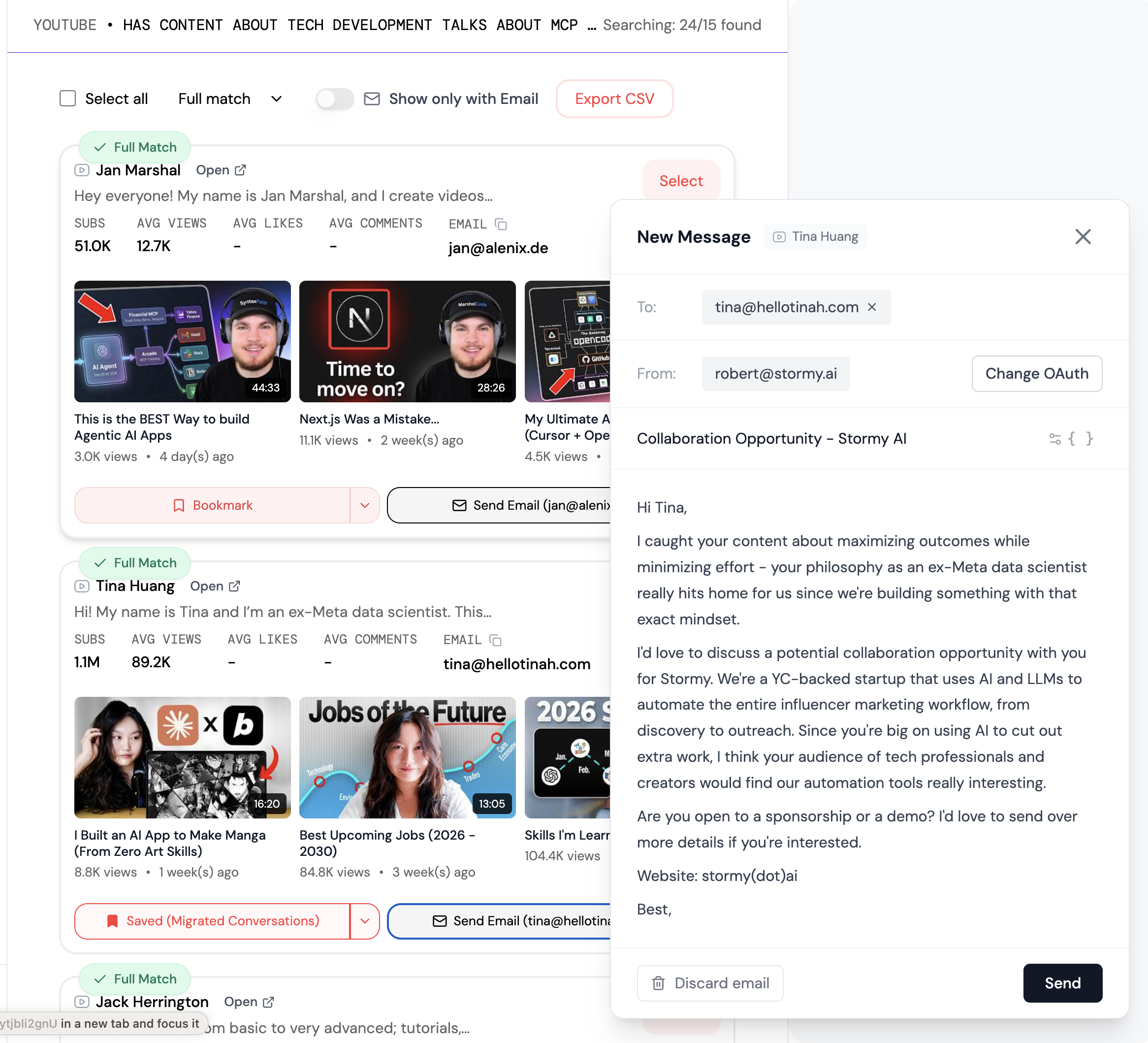
Google’s Gemini Advanced sits at approximately $19.99/month, often bundled with Google One storage, making it the more cost-effective choice for small businesses. However, enterprise teams usually require the Gemini API for bulk processing, where costs are determined by million-token increments. In comparison, a specialized tool like Stormy AI provides a consolidated cost for search, vetting, and outreach, often saving teams the expense of hiring separate agencies for creator management.
The Hybrid Approach: The 'Build-Test-Win' Cycle
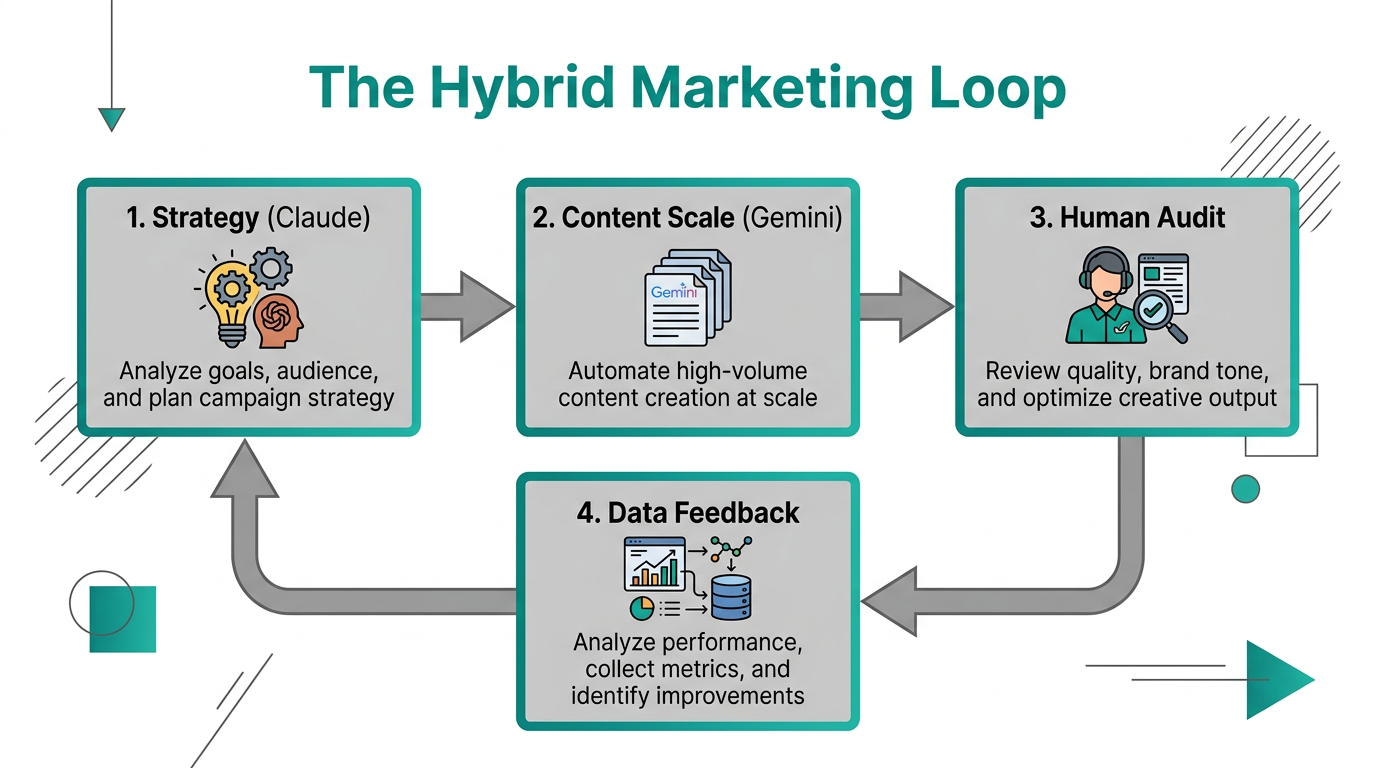
Interestingly, 78% of top marketers don't choose just one; they use a multi-model stack. They might use Gemini 3.1 to ingest and analyze a year's worth of competitor YouTube videos, then pass those insights into Claude 4.6 to draft the ultimate response campaign. This "Build-Test-Win" cycle is what separates high-growth startups from the rest of the pack.
By using the Model Context Protocol (MCP), you can effectively use Claude as your strategic "brain" and Gemini as your data-gathering "hands." For those looking to implement this, here is the 2026 playbook for a high-performance AI team:
The 18-Minute AI Team Playbook
- Initialize: Use Claude Code CLI to set up a marketing environment (`claude init`) and define your brand voice guidelines.
- Connect: Link your stack using MCP Servers to allow the AI to "see" your live TikTok Ads Manager and Google Search Console.
- Deploy Agents: Use specific commands to run autonomous creator discovery on Stormy AI while simultaneously running SEO audits via Surfer SEO.
- Analyze: Feed the results into Gemini 3.1 Pro to cross-reference real-time search trends and adjust landing page headlines every 24 hours.
This hybrid orchestration has allowed brands like Unilever to reduce content costs by 30% while maintaining a 50% faster campaign turnaround time. The key is to avoid "prompt wrangling" and focus on building workflows that run while you sleep.
Conclusion: Which AI Should You Choose?
The choice between Claude and Gemini ultimately depends on your team's specific pain points. If your marketing strategy relies on high-quality long-form content, complex strategic reasoning, and custom-built micro-tools, Claude 4.6 is your clear winner. Its ability to self-correct code and produce natural prose makes it the superior choice for "brand-first" growth teams.
However, if your team is data-heavy, manages massive Google Ads accounts, and needs to analyze huge volumes of existing content or real-time search data, Gemini 3.1 provides an ecosystem advantage that is hard to ignore. Its native integration into Google Workspace makes it a frictionless "force multiplier" for established enterprises.
For influencer marketing and UGC sourcing—one of the highest-growth channels in 2026—neither general model replaces the specialized power of Stormy AI. By combining the strategic logic of Claude with the execution speed of Stormy’s AI agents, you can build a marketing engine that not only finds the right creators but engages them autonomously, driving the 23% CPA reductions seen by today’s top performers.