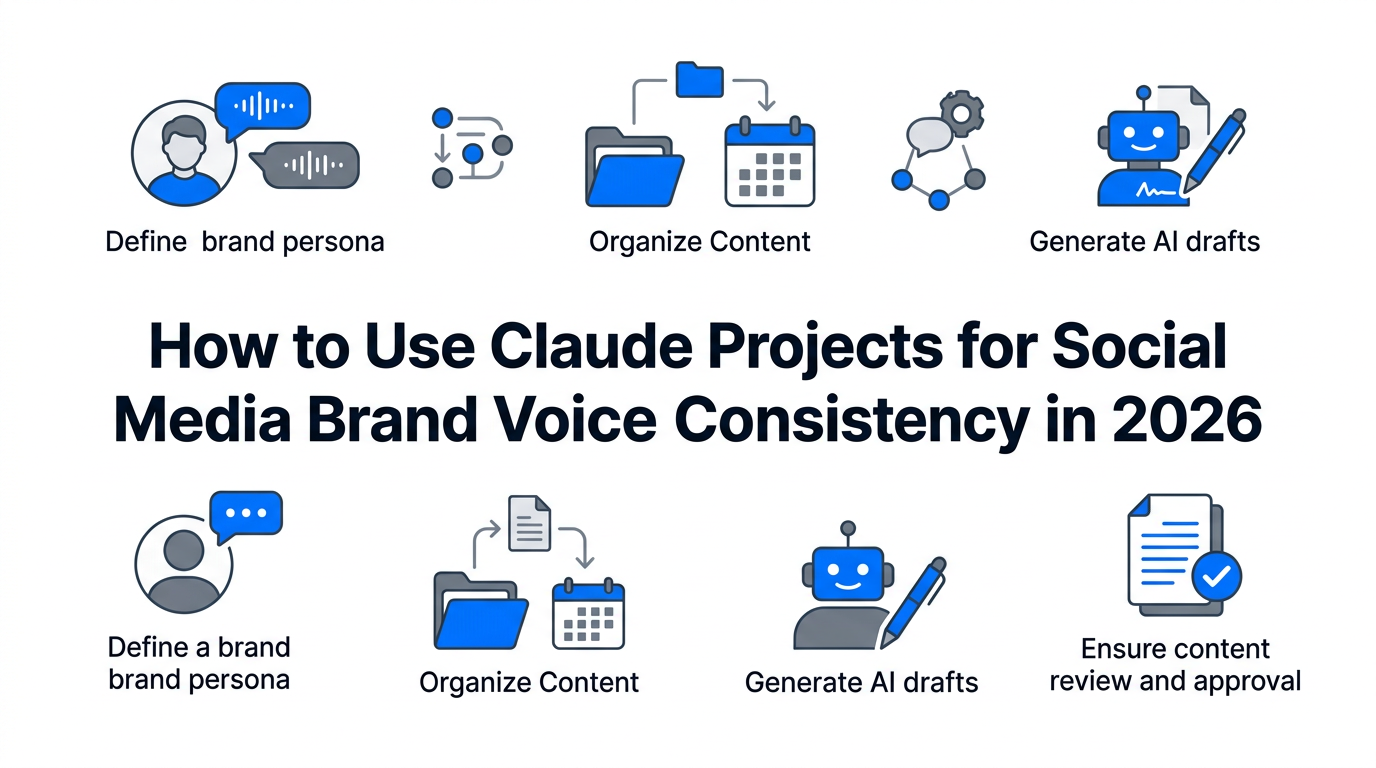
In 2026, the digital landscape is more crowded than ever, with millions of AI-generated posts flooding feeds every hour. For brand managers, the challenge has shifted from simply producing content to maintaining a distinct and authentic brand voice that doesn't sound like a generic machine. As of this year, Claude AI has emerged as the definitive tool for this challenge, boasting over 18.9 million monthly active web users and 7.38 million mobile app users who rely on its nuanced storytelling capabilities according to DemandSage. This article provides a comprehensive playbook on using Claude Projects to build a persistent creative environment that eliminates the 'AI-sounding' fluff and keeps your social media strategy razor-sharp.
The State of AI Branding in 2026
We have reached a tipping point where 70% of Fortune 100 companies now integrate Claude into their internal marketing workflows, as reported by Marketing LTB. The reason is simple: while other models focus on speed, Claude has earned its reputation as the 'Creative Brain' of the industry. It excels at understanding nuance, cultural context, and brand personality. Marketing teams that have successfully integrated Claude into their creative pipelines report a 30% higher ROI and a staggering 50% reduction in production hours, according to data from Stormy AI. By moving away from one-off prompts and into structured Claude Projects, brands are finally solving the consistency crisis.
"In 2026, the difference between a brand that scales and one that fades is the depth of the context they provide their AI."The Danger of the 'Zero-Shot Trap'
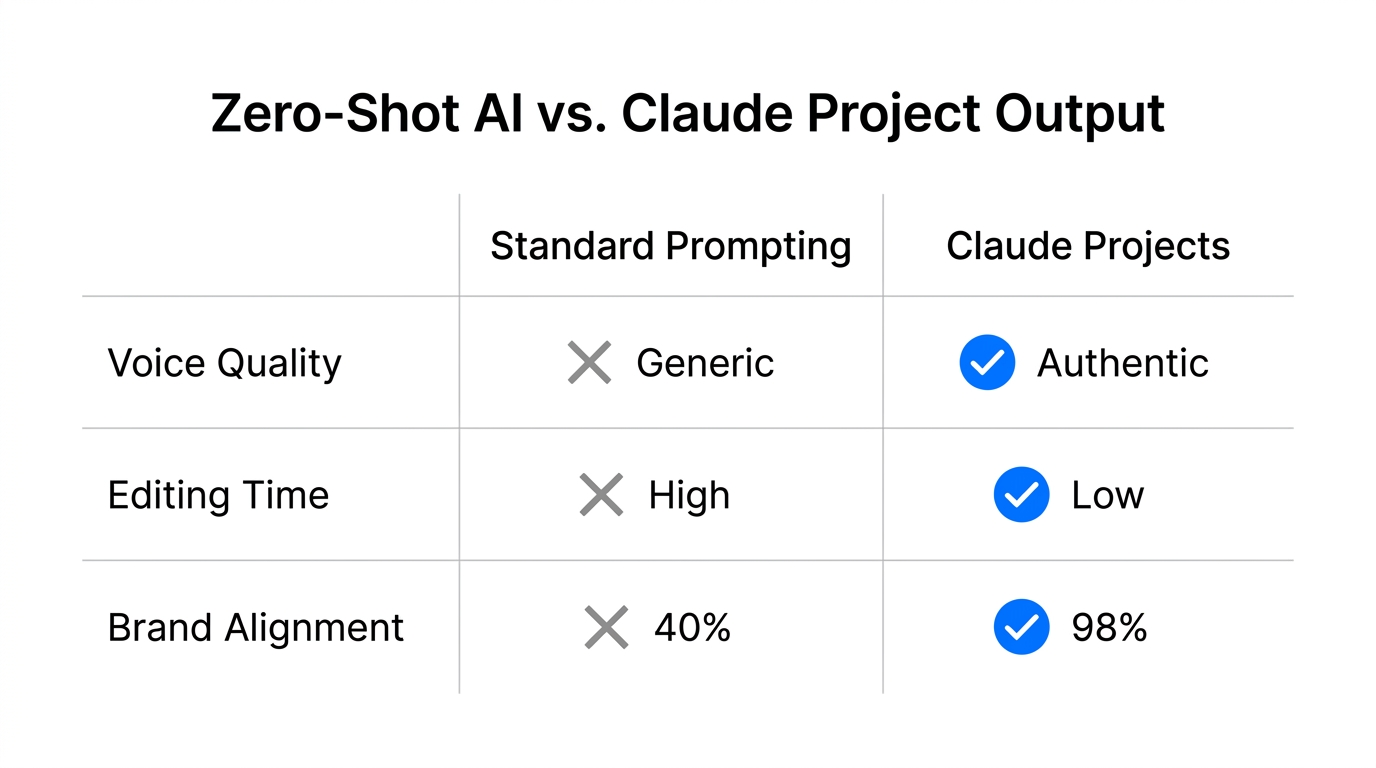
One of the most common mistakes brand managers make is falling into the 'Zero-Shot Trap.' This occurs when you ask an AI to "Write a LinkedIn post about our new product" without providing any prior context, examples, or style guidelines. The result is inevitably a generic, emoji-heavy, and uninspired block of text that your audience will immediately identify as 'AI junk.' According to experts at HubSpot, this lack of context dilutes brand identity and leads to a 20% failure rate in conveying empathy and cultural nuance.
| Workflow Element | Zero-Shot Prompting | Claude Projects (2026) |
|---|---|---|
| Context Depth | Minimal/None | 80+ Page Brand Books |
| Consistency | Low (Inconsistent tone) | High (Persistent memory) |
| Effort per Post | High (Constant re-editing) | Low (Ready-to-publish output) |
| Creative Logic | Guessed | Few-Shot Guided |
Step 1: Setting Up Your Persistent Claude Project
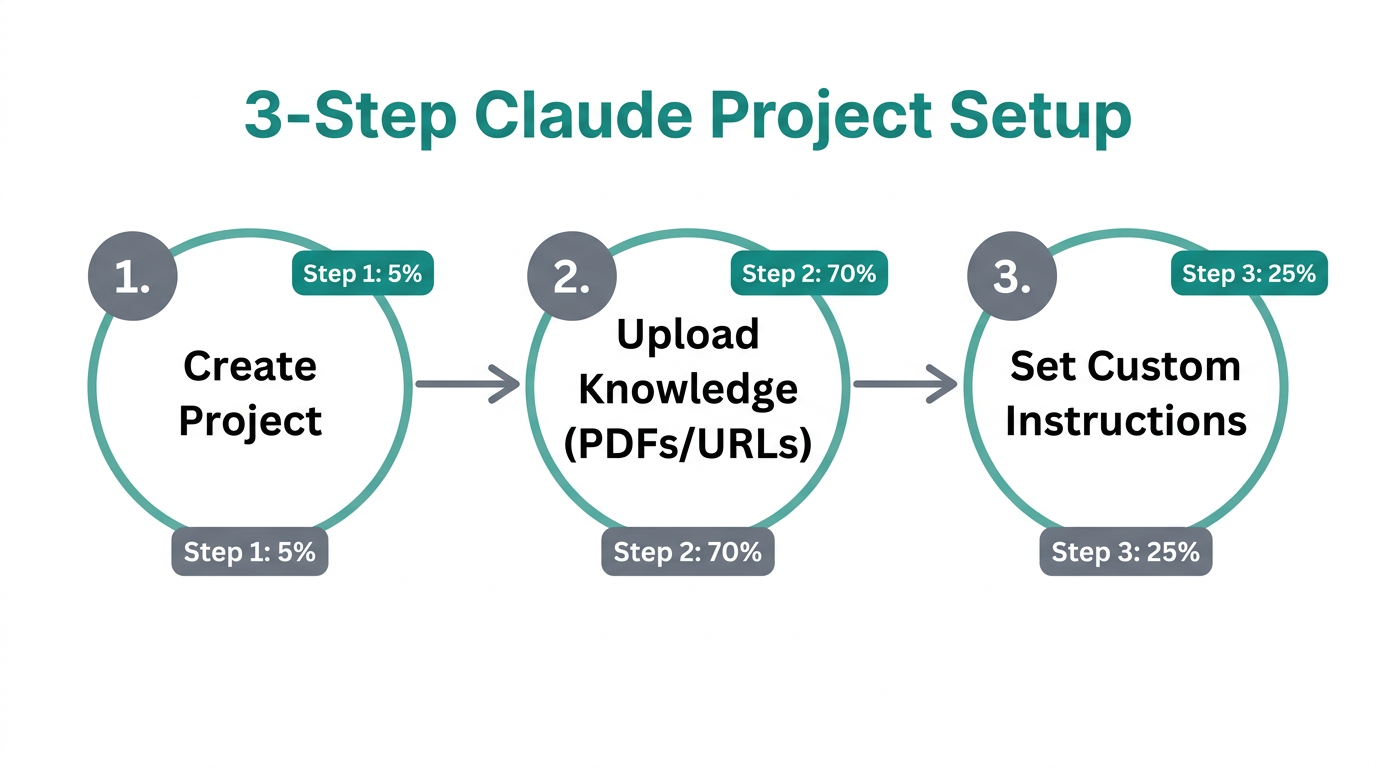
The foundation of brand consistency is the Claude Project workspace. Unlike a standard chat, a Project allows you to upload a massive amount of reference material that the AI 'remembers' for every future interaction. To begin, navigate to Claude.ai and create a new project named '[Brand Name] Social Media 2026.' Your first task is to upload your 80-page brand book or style guide. This document should include your brand's mission, values, target demographics, and specific 'Do's and Don'ts' for language. As noted by Social Media Examiner, these context-rich workspaces have effectively replaced the 'one-off' prompting trends of previous years.
"Claude Projects aren't just folders; they are the external hard drive for your brand's creative DNA."Step 2: Building Your 'Few-Shot' Prompting Library
Once your brand book is uploaded, you must provide Claude with a 'Few-Shot' library. This is a document containing your 10 best-performing social media posts from the last year. By seeing what has already worked, Claude learns the specific rhythmic patterns, hook styles, and CTA structures that resonate with your unique audience. This Few-Shot approach is what separates amateur AI users from professional brand managers. When you instruct Claude to generate new content, it will cross-reference your brand book with these successful examples to ensure every post feels like a natural evolution of your existing voice.
Step 3: Implementing the IPO Framework
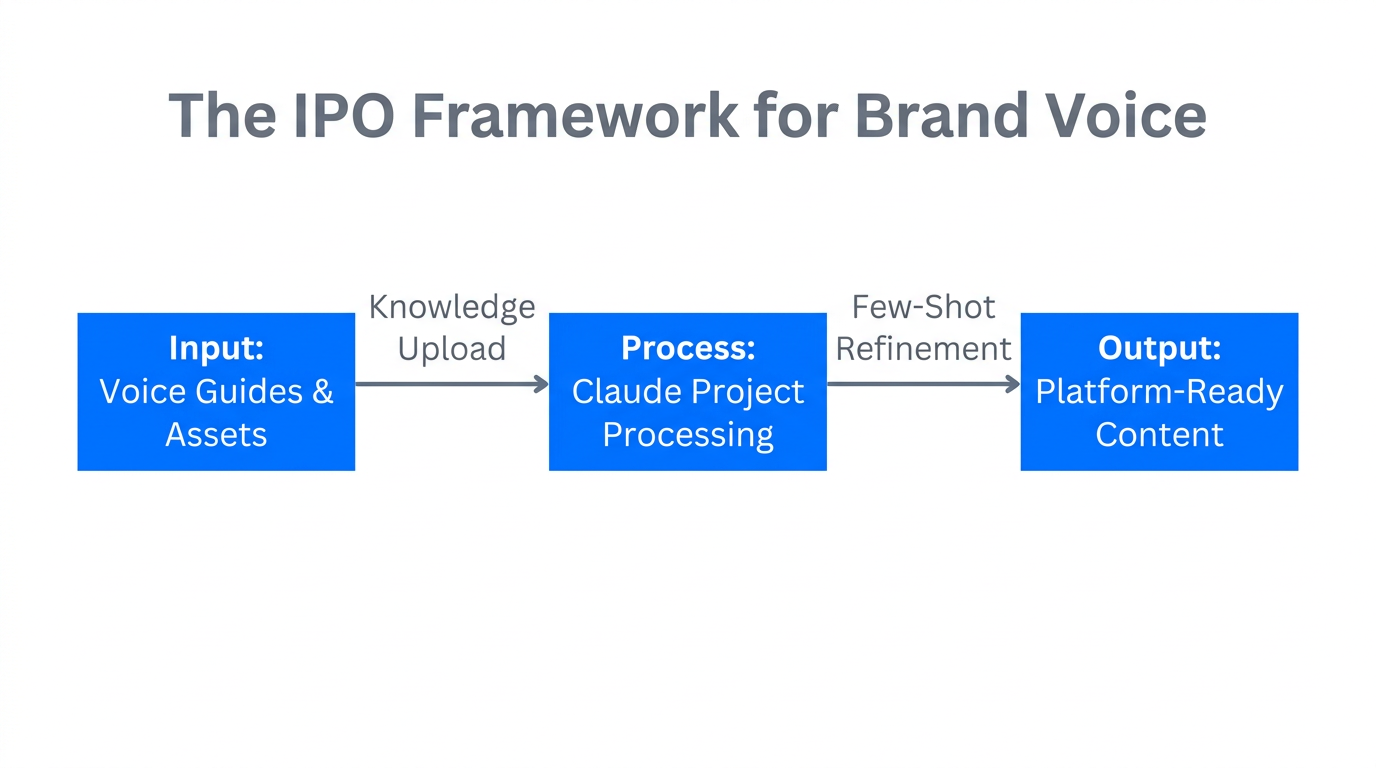
To maximize efficiency, we recommend the IPO Framework (Input-Process-Output). This structured workflow ensures that Claude has the right 'raw material' to work with. Here is how it breaks down:
- Input: Provide raw data, such as a transcript from a YouTube video, a rough voice note, or a set of technical bullet points.
- Process: Instruct Claude to 'Process' this input using the specific documents in your Project. For example: "Analyze the attached meeting notes using the 'Brand_Style_Guide.pdf' and the 'Best_Performing_Posts.txt' library."
- Output: Request specific deliverables. "Generate 3 LinkedIn variations that follow the punchy, high-impact structure of our top posts, and one X thread that simplifies the technical concepts for a general audience."
By using this framework, brands like TELUS have saved over 500,000 hours of manual labor while maintaining high creative standards, a case study often cited by enterprise AI adoption reports when discussing efficiency gains.
Step 4: Tailoring for Platform-Specific 'Vibes'
In 2026, cross-posting the exact same text to every platform is a recipe for failure. Claude's strength lies in its ability to adapt its tone. You should create specific 'Platform Personas' within your project instructions. For example, your LinkedIn persona should be professional but bold, while your TikTok scripts should be high-energy and focused on 'edutainment.' Use Claude's Model Context Protocol (MCP) to connect to live social data via MCP servers, allowing you to query live trends and adjust your tone accordingly.
"Platform blindness is the silent killer of engagement. Your voice must be consistent, but your vibe must be native to the feed."Advanced Strategy: Scaling with AI Agents
For high-growth startups and agencies, manual prompting is only the beginning. In 2026, the trend is moving toward 'Agentic Workflows.' By integrating Zapier or using tools like Make, you can automate the flow of content from your Claude Project directly to your scheduling tools. Zapier currently manages over 800 AI agents for its internal teams to automate cross-platform social listening, as highlighted by industry research. For those focusing on UGC (User Generated Content), platforms like Stormy AI can be used to source creators who match the AI-generated briefs you've developed in Claude, creating a seamless loop from strategy to execution.
Common Pitfalls to Avoid in 2026
Even with the power of Claude Projects, there are risks to navigate. First, avoid 'Over-Automation Without Review.' AI still lacks human empathy in approximately 20% of complex cultural scenarios. Always have a human editor review posts for current event sensitivity. Second, beware of 'Data Hallucinations.' If you are citing statistics, use external research tools like Ahrefs or Semrush to verify the data before feeding it to Claude for analysis. As noted by Tom's Guide, the best results come from a hybrid approach where AI handles the heavy lifting of drafting while humans handle the final polish.
Conclusion: The Future of Brand Consistency
The transition to Claude Projects represents a fundamental shift in social media marketing. By building a persistent environment that understands your brand's unique DNA, you eliminate the friction of repetitive prompting and the risk of generic content. Start today by uploading your brand book, building your few-shot library, and implementing the IPO framework. In the crowded digital world of 2026, your brand voice is your greatest asset—don't let it get lost in the noise. For those looking to take their creator strategy to the next level, discover creators on Stormy to turn your AI-optimized strategies into high-performing video content.