By early 2025, the digital advertising landscape has undergone a seismic shift, with Pinterest emerging as a primary battleground for performance-oriented brands. No longer just a digital scrapbooking site, Pinterest has evolved into a sophisticated full-funnel engine, boasting over 578 million monthly active users globally according to DataReportal. For marketing directors and founders, the challenge is no longer just being present on the platform—it is about scaling distribution through agentic advertising. The introduction of the Model Context Protocol (MCP) by Anthropic has fundamentally changed how we interact with ad data, moving us away from manual spreadsheets toward live, AI-driven decision-making environments.
The Evolution of Pinterest into a Full-Funnel Performance Engine
In 2025, the traditional boundaries between awareness and conversion have blurred. Pinterest's investment in its Performance+ suite has yielded massive dividends for early adopters, with the platform reporting a 10%+ improvement in CPA for conversion campaigns. This shift is driven by a move toward agentic advertising, where AI models like Claude do not just suggest strategies but execute them via live API connections.
Benchmark data for 2025 suggests that the average CPC on the platform sits between $0.50 and $1.00, while visual-heavy sectors like beauty and retail are seeing click-through rates (CTR) climb toward the 1.0% mark as detailed by AdBacklog. This efficiency is largely credited to generative AI creative tools that transform basic product images into lifestyle content that resonates with the Pinterest aesthetic.
| Metric | 2024 Average | 2025 Target (AI-Optimized) |
|---|---|---|
| Monthly Active Users | 522 Million | 578 Million |
| Average CPC | $0.85 - $1.20 | $0.50 - $1.00 |
| Typical CTR | 0.4% - 0.6% | 0.8% - 1.0% |
| CPA Improvement | Baseline | +10% Reduction |
Understanding Agentic Advertising via Claude MCP
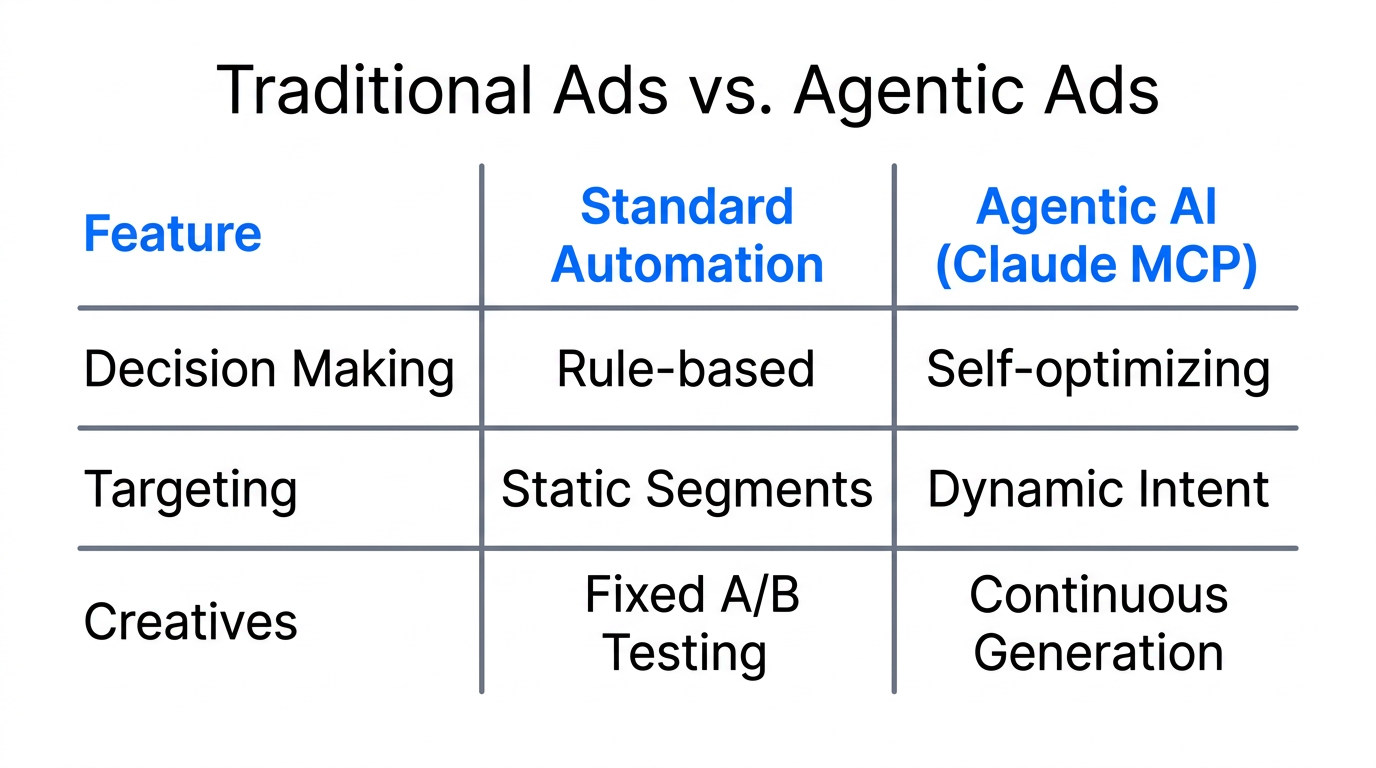
The core of a modern Pinterest GTM strategy lies in the Model Context Protocol (MCP). This open-source standard allows Claude to connect directly to external APIs—like your Pinterest Ads Manager—without the need for cumbersome manual data exports. Instead of downloading a CSV and asking Claude for insights, you are now creating a live feedback loop where the AI can query live performance data, identify trends, and even draft campaign adjustments in real-time.
"Agentic advertising isn't about the AI telling you what to do; it's about the AI having the tools to see what is happening and preparing the execution layer for you."By using the Model Context Protocol, brands can leverage "text-to-SQL" capabilities. This allows marketers to ask complex questions in plain English—such as, "Show me which ad groups had a ROAS below 2.0 last week and suggest targeting shifts based on Dutch auction dynamics"—and receive a data-backed response instantly. This mirrors internal tools used by Pinterest Engineering to democratize data access.
Step-by-Step Configuration: Setting up the Agentic Workflow
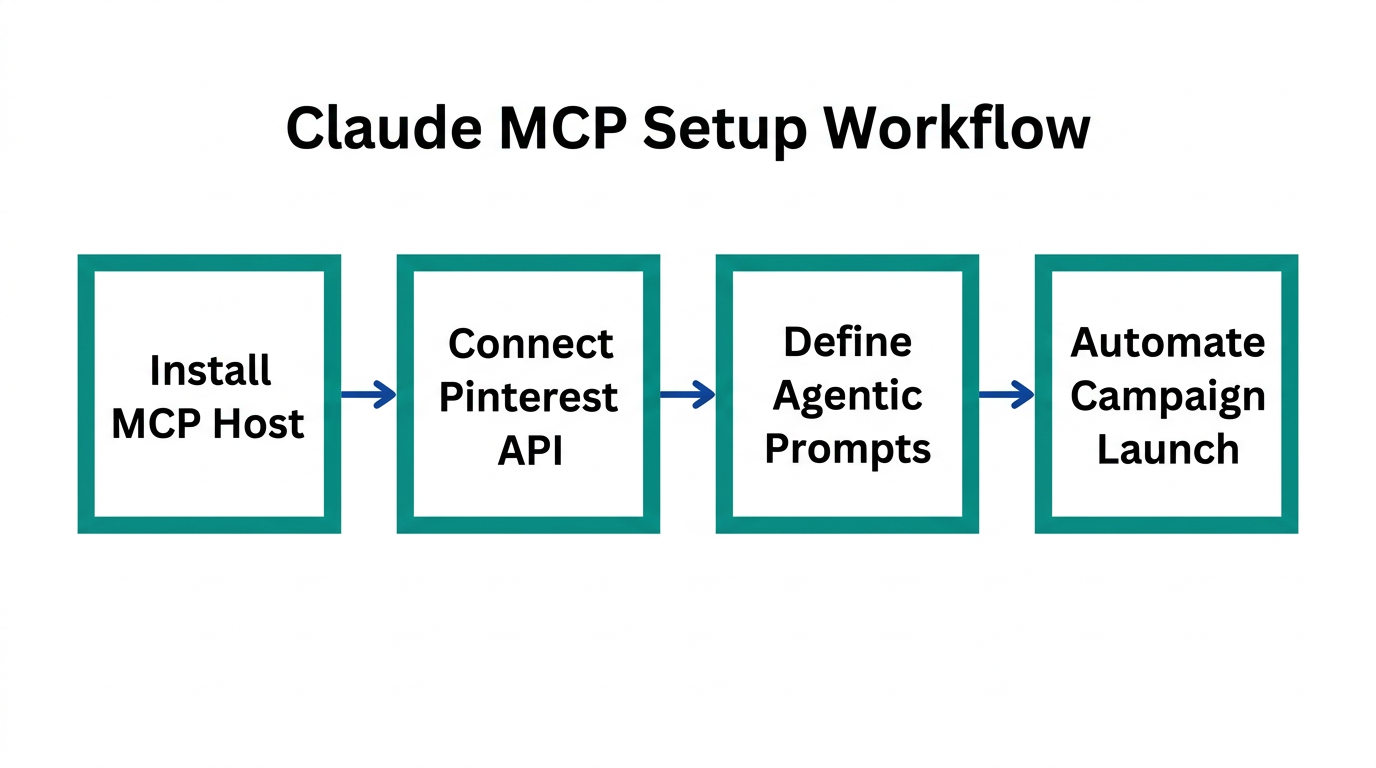
To implement AI marketing automation in 2025, you must configure your local Claude environment to speak to Pinterest. This requires setting up an MCP server that acts as the bridge between the LLM and the Ads API.
Step 1: Install the MCP Environment
Begin by ensuring you have the Claude Desktop application or Claude Code installed. You will need to locate and edit your claude_desktop_config.json file to include the necessary tools for Pinterest integration.
Step 2: Connect to Specialized MCP Servers
You don't have to build these connectors from scratch. Several providers offer verified MCP servers for ad management:
- Insightful Pipe: Use the Pinterest Ads MCP to pull performance metrics and generate automated optimization reports.
- Adzviser: This Remote MCP connector allows you to manage multi-platform data (Google, Meta, and Pinterest) within a single Claude session.
- viaSocket: Specifically for lead generation, the Pinterest Lead Ads server manages form data and automation triggers.
Step 3: Establish the Live Feedback Loop
Once connected, you can prompt Claude to perform a Performance Audit. Instead of static reporting, Claude can now analyze live impressions, CTR, and ROAS. This allows for rapid iteration of a full-funnel distribution strategy that matches the pace of modern mobile consumers.
Scaling Lead Generation with viaSocket and Claude
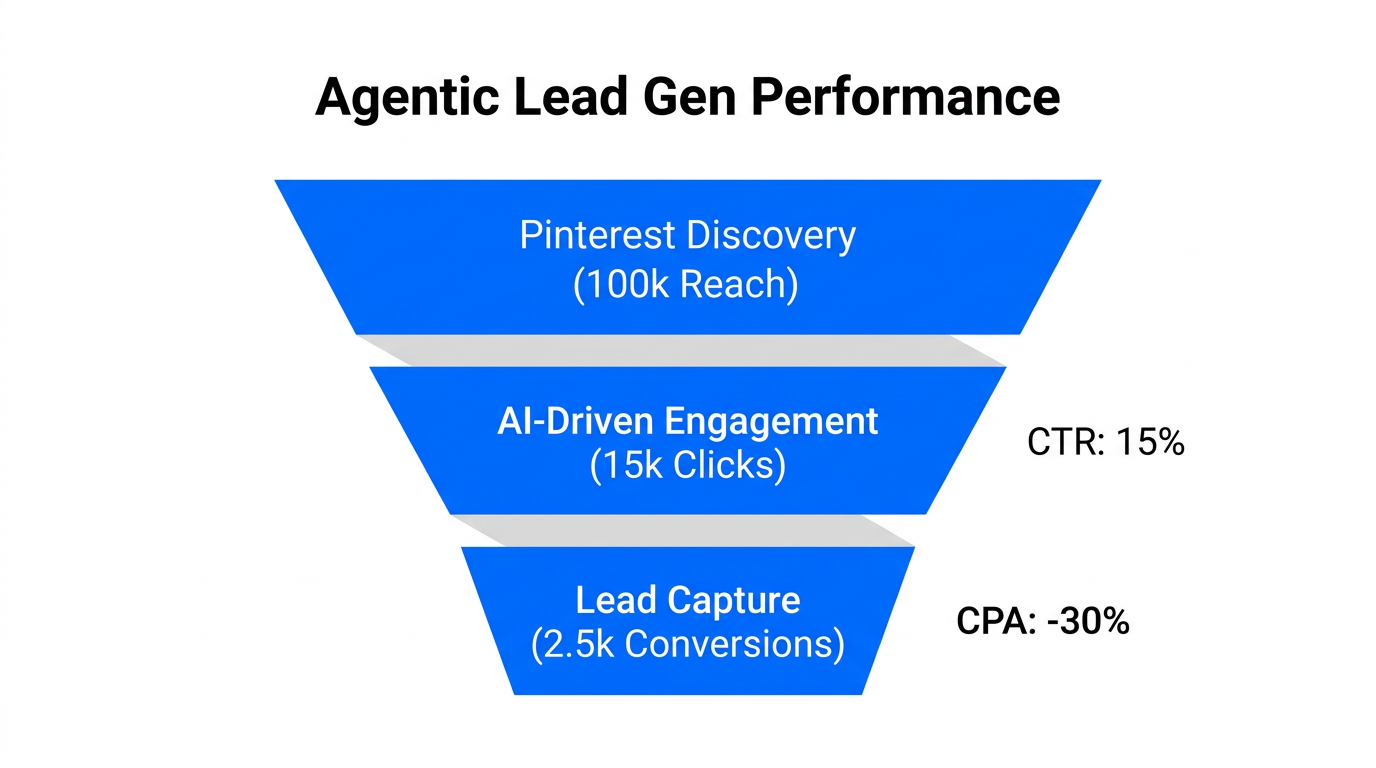
For B2B or high-ticket B2C brands, Pinterest lead ads have become a goldmine. Using Claude MCP business use cases, you can automate the entire lead enrichment process. When a user fills out a lead form on Pinterest, the data can be instantly queried by Claude via viaSocket, allowing the AI to categorize the lead, draft a personalized follow-up email in Klaviyo, and update your HubSpot CRM.
This level of automation allows you to scale Pinterest ads without linearly increasing your headcount. The AI handles the repetitive data entry and initial vetting, leaving your team to focus on closing deals. For brands heavily invested in user-generated content, platforms like Stormy AI can help source the raw creator material that fuels these high-converting lead ads, ensuring your creative stays fresh and authentic.
The Creative Revolution: Generative AI as Your Visual "Sous-Chef"
The visual nature of Pinterest means that creative fatigue is your biggest enemy. In 2025, successful brands are using AI as a creative sous-chef. According to Pinterest's own data, using generative AI to create lifestyle backgrounds for product pins resulted in a 55% higher CTR compared to standard images.
"AI should be your creative sous-chef—preparing the ingredients, generating the variants, and cleaning up the data, while you remain the head chef directing the brand strategy."Brands like Prada have already seen a 64% decrease in CPA by utilizing these AI-powered suites to turn static catalogs into Gen Z-friendly lifestyle scenes. The workflow involves using Claude to analyze which pin formats (static vs. video) are hitting lower CPAs, then prompting the model to generate dozens of SEO-optimized descriptions based on trending terms found via the Pinterest Trends API.
| Asset Type | Traditional Performance | AI-Enriched Performance |
|---|---|---|
| Product on White | Baseline (0.4% CTR) | N/A |
| Lifestyle Scene | +20% Engagement | +55% CTR |
| Auto-Collage | +15% CTR | +30% Conversion Rate |
Data Security and Privacy in the Age of Agentic AI
As you connect Claude to your brand's ad accounts via MCP, security must be a non-negotiable priority. Connecting to untrusted or unverified servers can expose personally identifiable information (PII) or sensitive campaign spend data. It is critical to follow the Anthropic security advisory when configuring your MCP setup.
Always use sandboxed environments for testing new MCP servers and ensure that the permissions granted to the Pinterest Ads API are restricted to the minimum required for reporting and creative drafting. To manage these complex creator relationships and the data they generate, a robust CRM can help maintain a centralized record of your campaigns, ensuring that your agentic AI has a clean, secure data source to pull from.
Avoid the "AI Slop" Trap: Common Pitfalls in Pinterest GTM
While the efficiency of AI is undeniable, over-reliance can lead to what industry experts call "AI slop." Pinterest users value authenticity and inspiration; if your generative images feel "uncanny valley" or disconnected from reality, users will flag them as low quality. Recent reports from Seeking Alpha suggest that brands relying too heavily on uncurated AI content face heightened risk of account suppression.
Another common mistake is neglecting the technical foundation. AI analysis is only as effective as the data it receives. If you haven't properly installed the Pinterest Tag or API for Conversions, your Claude sessions will suffer from "garbage in, garbage out" syndrome, leading to flawed strategy recommendations.
Conclusion: Your 2025 Pinterest Growth Roadmap
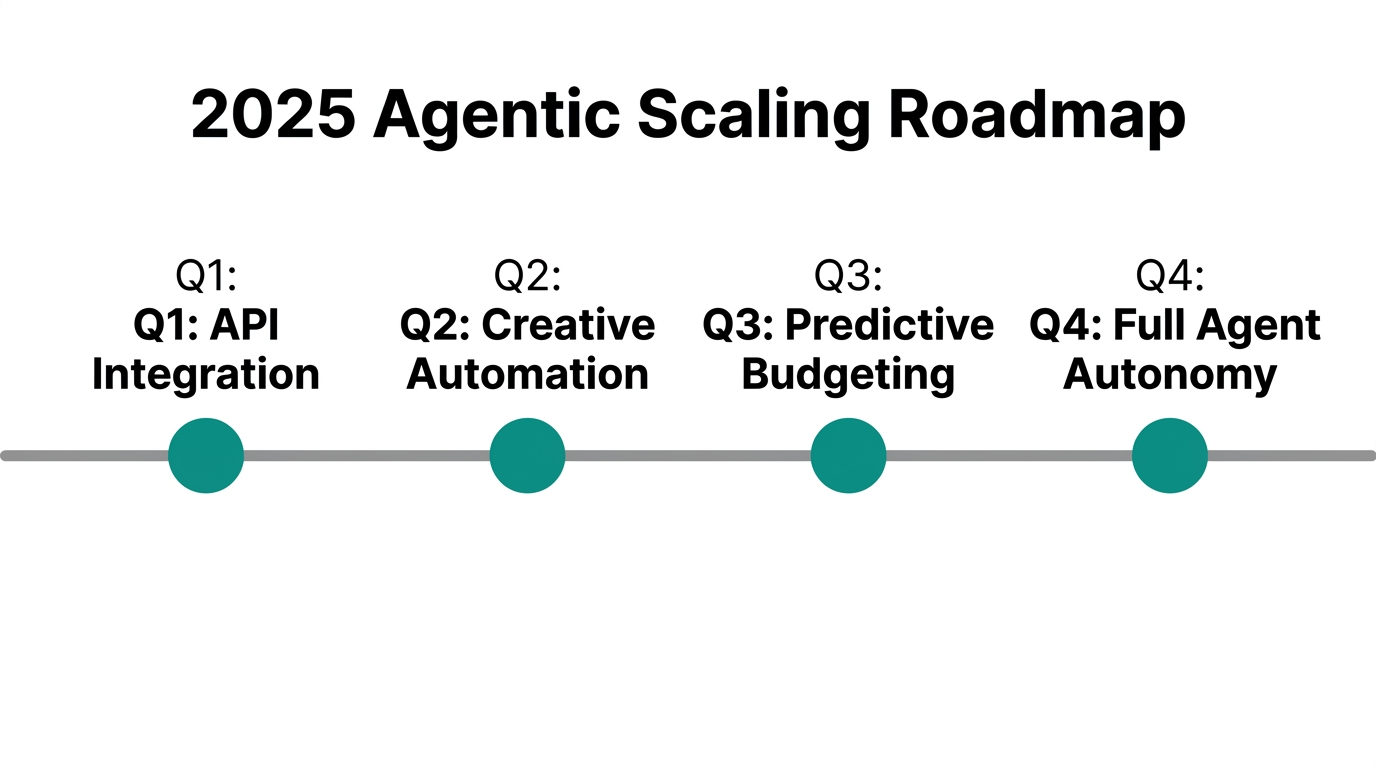
The 2025 playbook for scaling Pinterest distribution is clear: integrate, automate, and curate. By leveraging the power of Claude MCP and agentic advertising, brands can move from reactive reporting to proactive growth. Start by establishing your live API connections with tools like Insightful Pipe and Adzviser, use AI to enrich your visual assets, and maintain a rigorous human-in-the-loop system to ensure brand integrity.
For those looking to dominate the Pinterest feed, the secret lies in the symbiosis of data and creativity. Use Stormy AI to source the high-quality creator content that provides the human touch, then use your agentic AI stack to distribute that content with surgical precision. The future of Pinterest advertising belongs to the marketers who spend less time in spreadsheets and more time in high-level strategic orchestration.