As we move into 2025, the stakes for efficiency have never been higher. While Meta’s Q2 2024 data shows that AI-powered Advantage+ features are driving a 22% increase in ROAS, the cost of customer acquisition is rising for those who leave their accounts on autopilot. This playbook provides a step-by-step tactical manual for using Claude AI to lower your CPA, audit frequency spikes, and regain control over your ad creative performance.
The Model Context Protocol Advantage: Why it Matters for Meta Ads
Before diving into the tactics, it is essential to understand the underlying technology. The Model Context Protocol solves what Anthropic calls the "M x N problem"— the technical nightmare of trying to connect every AI model (M) to every external tool (N). By using an MCP server as a bridge, Claude can securely access the Meta Ads Manager data without requiring you to manually upload data sets. This allows for real-time analysis and execution that traditional tools simply cannot match.
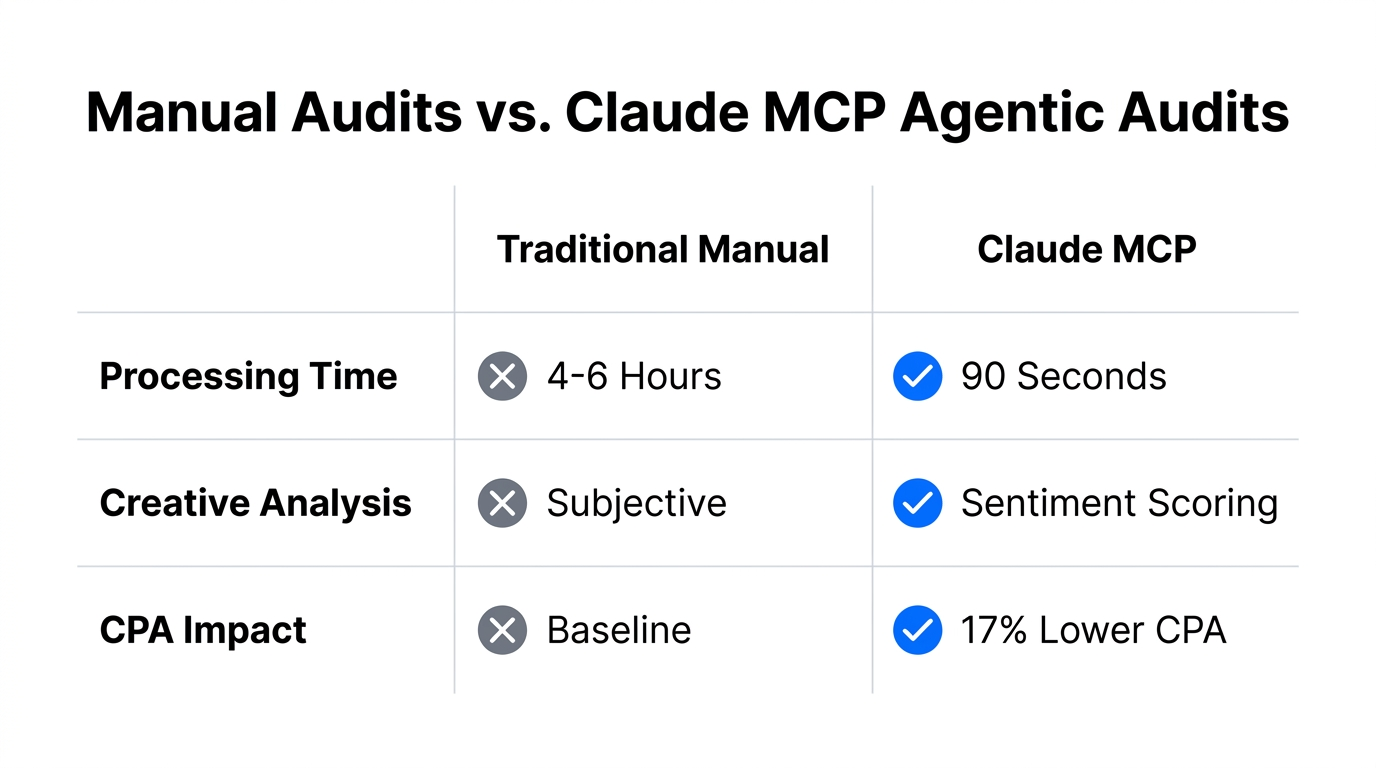
"MCP is the missing link that transforms Claude from a content generator into a high-level growth engineer capable of auditing million-dollar ad spends in seconds."According to research from AdAmigo.ai, AI-driven campaigns are delivering an average of $4.52 for every $1 spent in 2024. However, the true value of Claude MCP lies in the 17% lower Cost Per Acquisition (CPA) seen in Advantage+ shopping campaigns when paired with human-led AI oversight, as noted by OmniFunnel. Without this oversight, Wicked Reports warns that acquisition costs can actually double if AI is left entirely unmanaged.
Step 1: The Setup Guide – Implementation Options
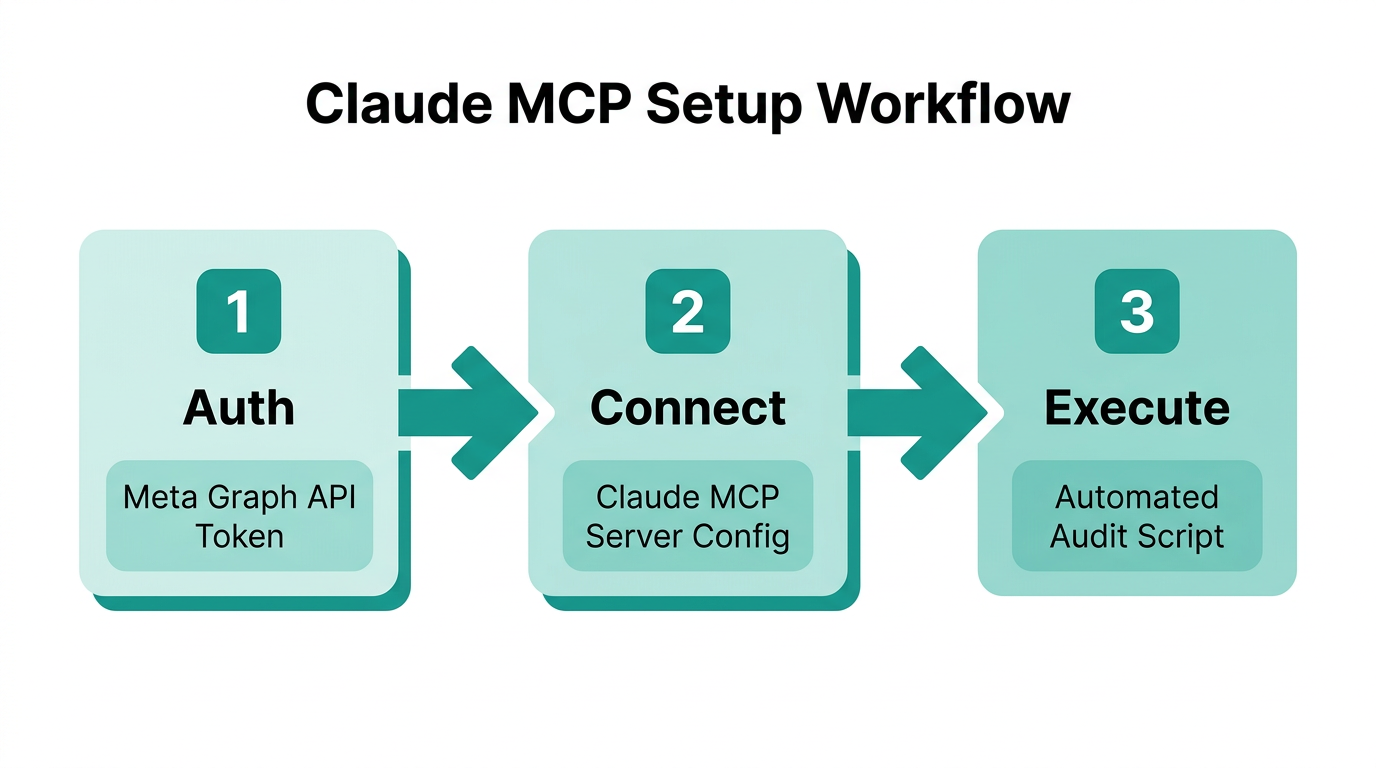
There are two primary ways to connect Claude to your Meta Ads account. Your choice depends on your technical comfort level and whether you prefer a managed service or a self-hosted environment. Regardless of the path, we strongly recommend starting with "Read-Only" permissions to ensure you can perform audits without the risk of accidental budget spikes.
| Method | Target User | Tools Required | Primary Benefit |
|---|---|---|---|
| No-Code / Hosted | Startups & Agencies | Adzviser or Pipeboard | Instant setup; no coding required. |
| Self-Hosted / Technical | Growth Engineers | Meta Ads MCP (GitHub) | Maximum data privacy and customization. |
| E-commerce Specialized | Shopify Brands | Madgicx | Pre-built e-commerce optimization prompts. |
If you are a growth engineer, you might use the Cursor IDE to manage ad scripts alongside Claude. For most performance marketers, a connector like Pipeboard offers a hosted Meta Ads MCP server for a monthly fee, removing the technical overhead of server maintenance, while specialized platforms like Stormy AI can help you source the high-quality creator content needed to refresh these campaigns once ad fatigue sets in.
Step 2: The Frequency Audit Playbook (Targeting CPA Reduction)
One of the quickest ways to waste spend is through ad fatigue. When a small audience sees the same ad too many times, your CPA inevitably climbs. Manually checking frequency across dozens of ad sets is tedious; with Claude MCP, it takes one prompt.
How to identify high-frequency ad sets:
- Query the Data: Use a prompt like: "List all active ad sets from the last 7 days where the frequency is greater than 3.0 and the CPA is 20% above our account average."
- Analyze the Trend: Ask Claude to cross-reference this with your Google Analytics data to see if conversion lag is a factor.
- Execute the Fix: If using a "Write" enabled server, you can instruct: "Pause ad sets [ID-1] and [ID-2] and redistribute their budget to the top-performing 'Prospecting' campaign."
Marketers on platforms like Reddit have reported up to a 30% reduction in ad costs in a single week by implementing this exact frequency cap logic. By catching these spikes daily rather than weekly, you prevent the algorithm from overspending on tired assets, a level of oversight that platforms like Stormy AI also provide for vetting and tracking influencer-led content strategies.