The era of marketing automation is undergoing a seismic shift. For the past two years, growth leads have focused on generative AI—using tools to write copy, generate images, and iterate on creative assets. However, as we look toward a competitive Meta Ads strategy in 2025, the focus is shifting from AI that talks to AI that acts. The introduction of the Model Context Protocol (MCP) by Anthropic has unlocked a new frontier: agentic marketing workflows. Instead of manually pulling CSVs and squinting at dashboards, marketers can now empower Claude AI to directly interface with the Meta Marketing API, creating a closed-loop system for real-time optimization and exponential growth.
The Shift from Generative to Agentic: Why It Matters for ROAS
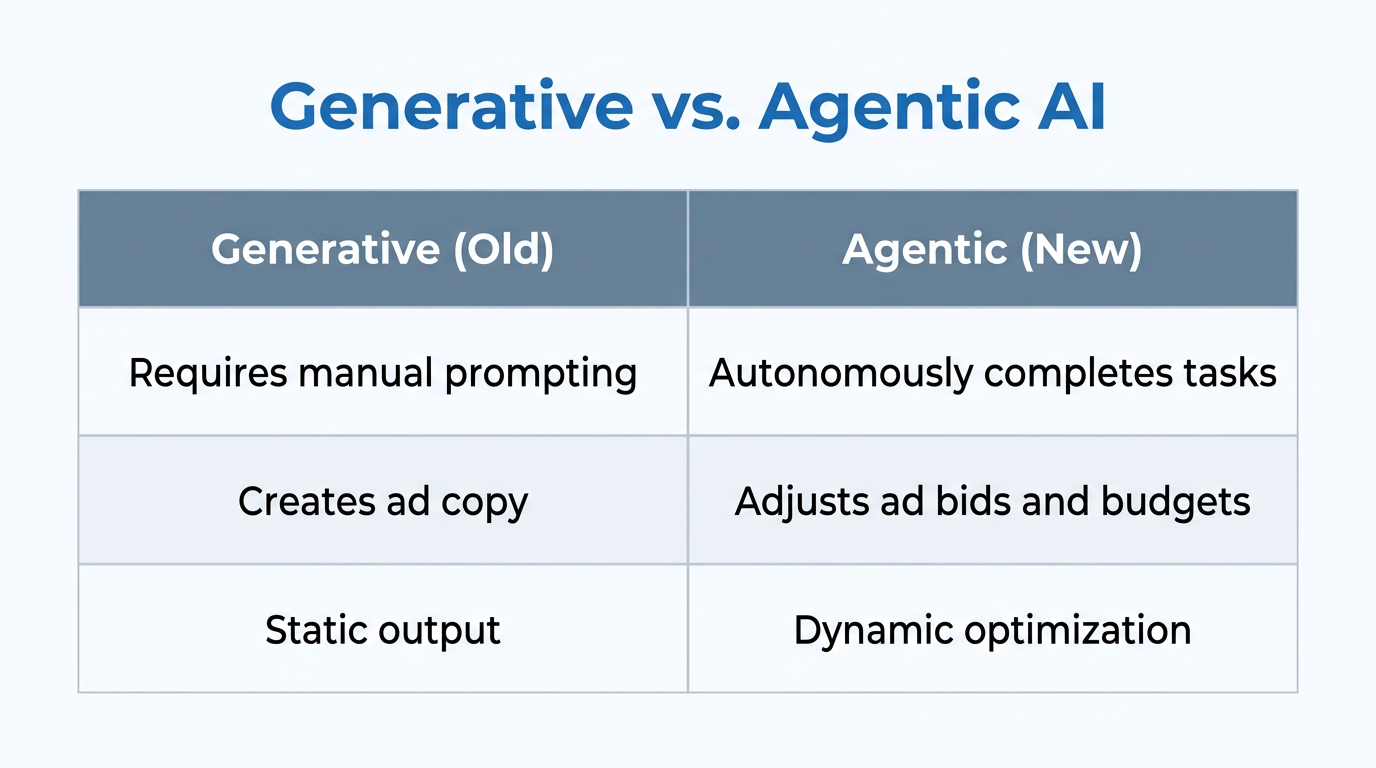
In 2024, the primary hurdle for most performance marketers wasn't a lack of data; it was the latency in acting upon it. Generative AI helped us create more, but it didn't help us manage more. According to IAB Europe, 85% of companies are already using AI for content generation and targeting. To find an edge, brands must move into agentic AI marketing.
An agentic workflow involves an AI model that can use tools. By connecting Claude AI to your ad account via MCP, you are essentially giving your smartest analyst the ability to execute changes. This protocol acts as a universal "USB-C port" for AI, allowing it to securely fetch metrics, analyze performance, and even adjust budgets without human intervention for every minor tweak. This transition is critical because, as data from AdAmigo.ai suggests, AI-driven campaigns are delivering an average of $4.52 for every $1 spent in the current landscape.
Solving the "M×N Problem" with Claude MCP
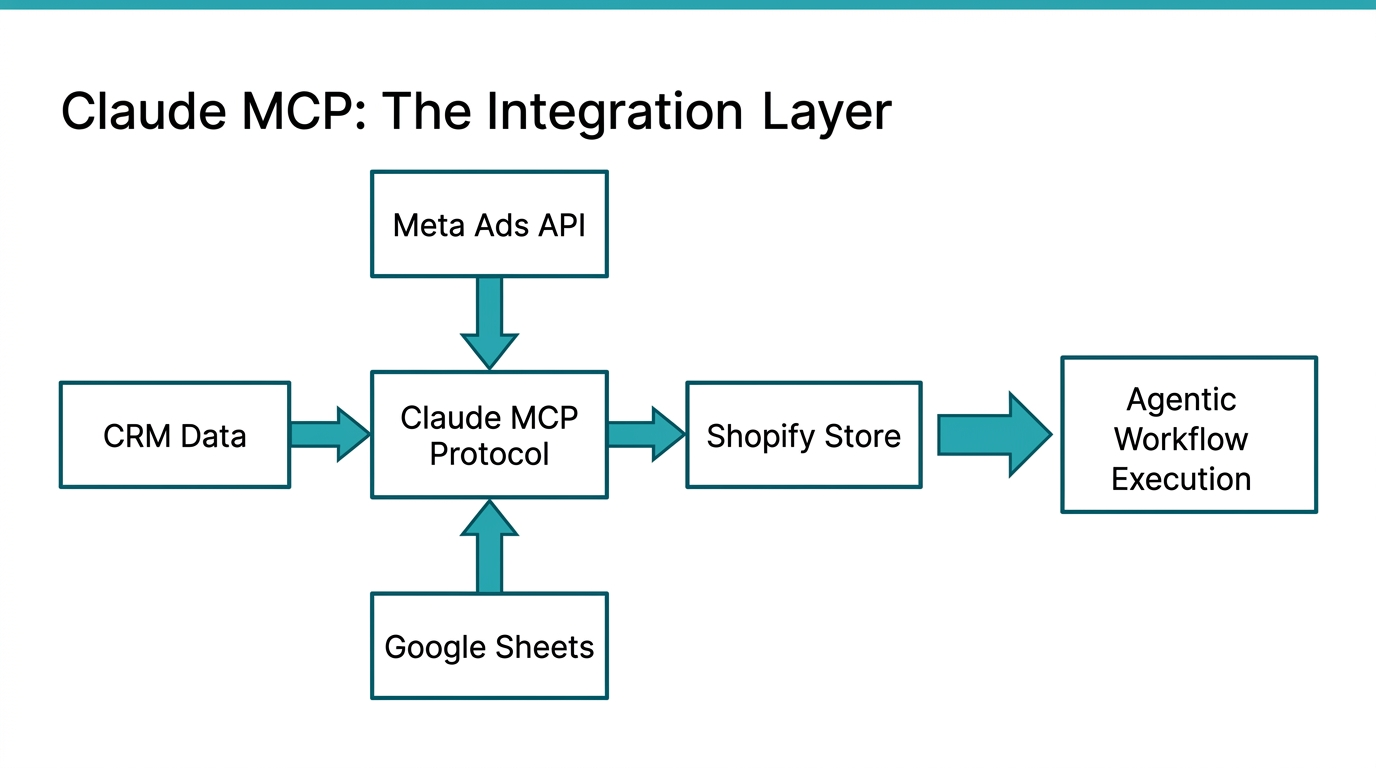
Anthropic describes the current state of software integration as the "M×N problem." This refers to the technical nightmare where M different AI models must be individually integrated into N different tools. For a growth lead, this usually means your Meta Ads data is trapped in one silo, your Google Analytics in another, and your CRM in a third.
The Model Context Protocol provides a universal standard. When you run a Claude Desktop instance connected to a Meta Ads MCP server, Claude can "reason" across these platforms simultaneously. It can see that a specific creative is driving high engagement on Instagram but failing to convert on your Shopify store, allowing for AI for ROAS optimization that is truly cross-channel.
"The Model Context Protocol solves the technical friction of the M×N problem, turning Claude into a universal connector for the modern marketing stack."
Leveraging Meta Advantage+ with Claude Reasoning
Meta has already lean-in heavily on automation. Advertisers using Advantage+ features have seen a 22% increase in ROAS compared to traditional manual targeting, according to Meta's recent earnings reports. Furthermore, OmniFunnel notes that Advantage+ Shopping Campaigns often result in a 17% lower Cost Per Acquisition (CPA).
However, the downside of Meta’s native automation is that it can be a "black box." This is where Claude MCP becomes a competitive advantage. You can use Claude to audit Meta's automated decisions. For example, you can ask Claude to:
- Identify ad sets where the frequency has climbed above 4.0 and pause them automatically.
- Compare creative sentiment in the comments section with actual conversion rates to find the "why" behind the numbers.
- Detect if Meta is "over-spending" on retargeting at the expense of top-of-funnel prospecting.
| Workflow Type | Manual Management | Agentic Claude MCP Workflow |
|---|---|---|
| Data Analysis | Weekly CSV exports and manual pivot tables. | Real-time natural language queries (e.g., "What's my best CPA?"). |
| Budget Optimization | Periodic manual adjustments based on feel. | Automated budget shifts based on statistical significance. |
| Creative Auditing | Subjective review of ad creative. | Sentiment analysis of ad comments via API. |
| ROAS Lift | Standard industry benchmarks. | Significant lift (often 20%+) through precision timing. |
The Growth Lead’s Playbook for Implementation
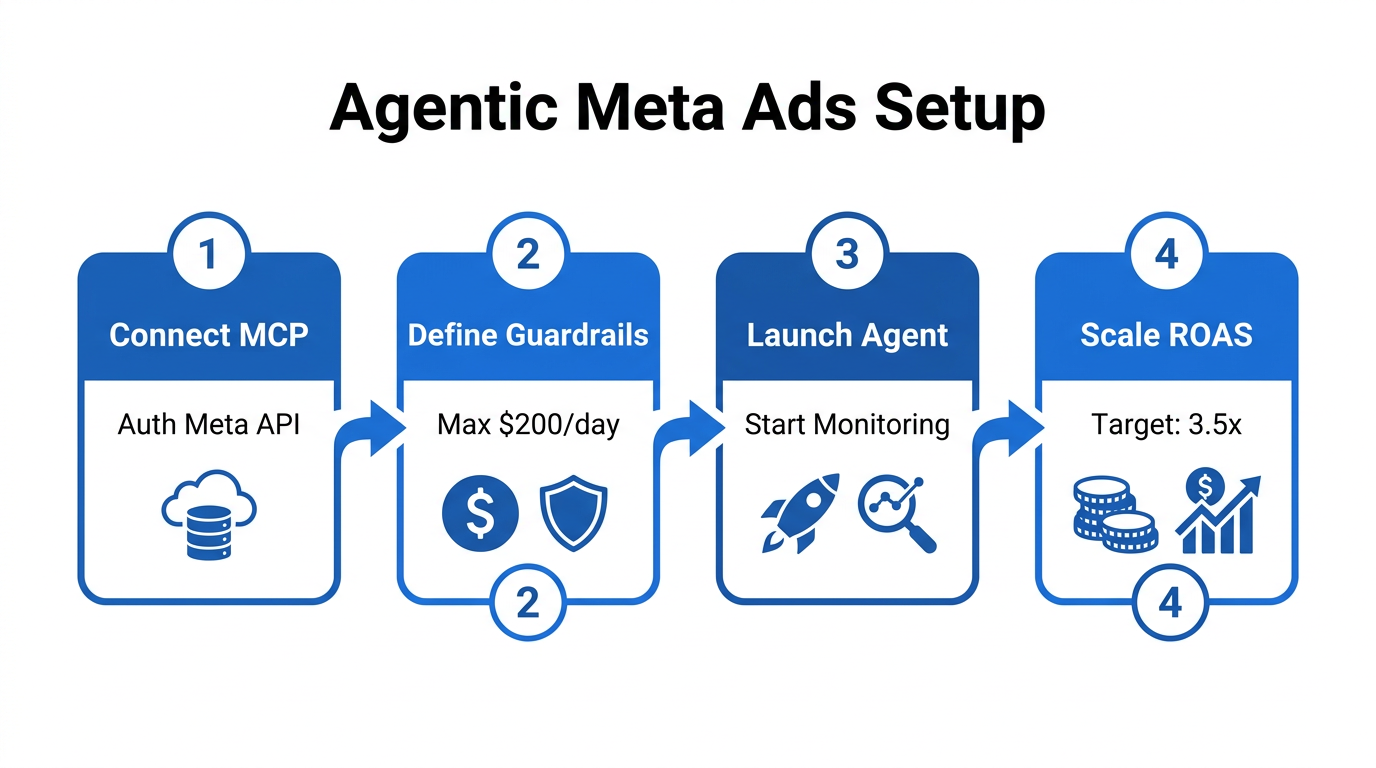
To move toward an agentic AI marketing structure, you need to choose between a hosted or a self-hosted setup. For most growth teams, the "no-code" or "low-code" route is the fastest path to value.
Step 1: Choose Your Connector
Tools like Adzviser or Pipeboard offer hosted MCP servers that connect Meta Ads to Claude for a monthly fee. These platforms handle the API authentication and data mapping so you can start chatting with your ad account in minutes. If you have a dedicated growth engineer, they might prefer using the open-source Meta Ads MCP and running it through the Cursor IDE.
Step 2: Establish the "Single Pane of Glass"
Once connected, use Claude as your primary interface. Instead of logging into five different dashboards, you can prompt Claude to "Summarize performance across all client accounts and flag any campaign with a CPA 20% higher than the 30-day average." This saves hours of manual labor and allows for faster pivots.
Step 3: Source High-Performance Creative
Agentic workflows can only optimize what you give them. To feed the Meta algorithm, you need a constant stream of high-quality UGC and influencer content. Managing these creators at scale is the next bottleneck. Platforms like Stormy AI streamline creator sourcing and outreach, ensuring your agentic workflows always have fresh creative to test and optimize.
The "Human + Claude" Hybrid: Avoiding the Pitfalls of Over-Automation
While the goal is automation, total "autopilot" can be dangerous. Data from Wicked Reports suggests that New Customer Acquisition Costs (nCAC) can actually double if AI is left entirely unmanaged, as the algorithm might prioritize easy-to-get "vanity" clicks over high-intent buyers.
The solution is a hybrid approach. Use Claude to monitor and suggest, but maintain human guardrails on significant budget shifts. You should also provide Claude with business context that an API cannot see—such as upcoming holidays, inventory stock-outs, or shifts in brand positioning. Without this context, an AI might try to optimize a campaign for a product that is no longer in stock.
"AI lacks 'business empathy.' It can find the cheapest click, but only a human knows if that click aligns with the long-term brand strategy."
Scaling Beyond Meta: The Future of Agentic Growth
As you master AI for ROAS optimization on Meta, the next logical step is to expand the MCP framework to other channels. The beauty of the Model Context Protocol is that it isn't limited to one platform. You can eventually connect your Google Ads, TikTok Ads Manager, and even your PostHog or Mixpanel data to the same Claude instance.
To maintain this velocity, you must streamline your creator operations. Tools like Stormy AI provide the necessary infrastructure to discover and vet influencers across TikTok and Instagram, providing the "fuel" for the agentic "engine" you've built with Claude. By pairing high-velocity creator discovery with AI-powered ad management, growth leads can finally step away from the spreadsheets and focus on high-level strategy.
The 2025 Growth Imperative
The Meta Ads strategy for 2025 is clear: those who can bridge the gap between creative production and agentic execution will win. By leveraging Claude MCP, you move from being a reactive marketer to a proactive growth architect. Start by implementing a simple frequency cap audit or a sentiment analysis workflow. Once you see the efficiency gains, scale your agentic workflows to handle the heavy lifting of daily optimization. The technology is no longer a bottleneck; the only limit is how effectively you can integrate these AI agents into your existing team structure.