In the high-stakes landscape of 2026, the traditional distinction between "marketing operations" and "software engineering" has finally dissolved. For years, founders and growth teams relied on a fragile web of no-code connectors to power their Go-To-Market (GTM) engines. But as we move deeper into this year, the limitations of rigid, drag-and-drop automation have become a bottleneck for scale. Enter Claude Code, Anthropic’s agentic CLI, which is spearheading a shift toward the Agentic GTM Mesh—a code-first approach that eliminates the "Ops Debt" of the past decade.
As Gartner reports, global spend on MarTech and SalesTech reached $132 billion in 2025, but the real story in 2026 is the 18% of that budget now flowing into "Composable GTM" tools. Companies are no longer buying monolithic SaaS; they are building intelligent pipelines. If your growth strategy still lives and dies by a complex Zapier dashboard, you aren't just behind—you're likely paying a massive hidden tax in the form of broken syncs and lost lead data.
"The GTM Mesh is no longer a concept; it’s the requirement. If your sales team is waiting for a batch sync from Marketing, you’ve already lost." — Sangram Vajre, CEO of GTM Partners
The Death of the "Zapier Trap": Why No-Code is Failing in 2026
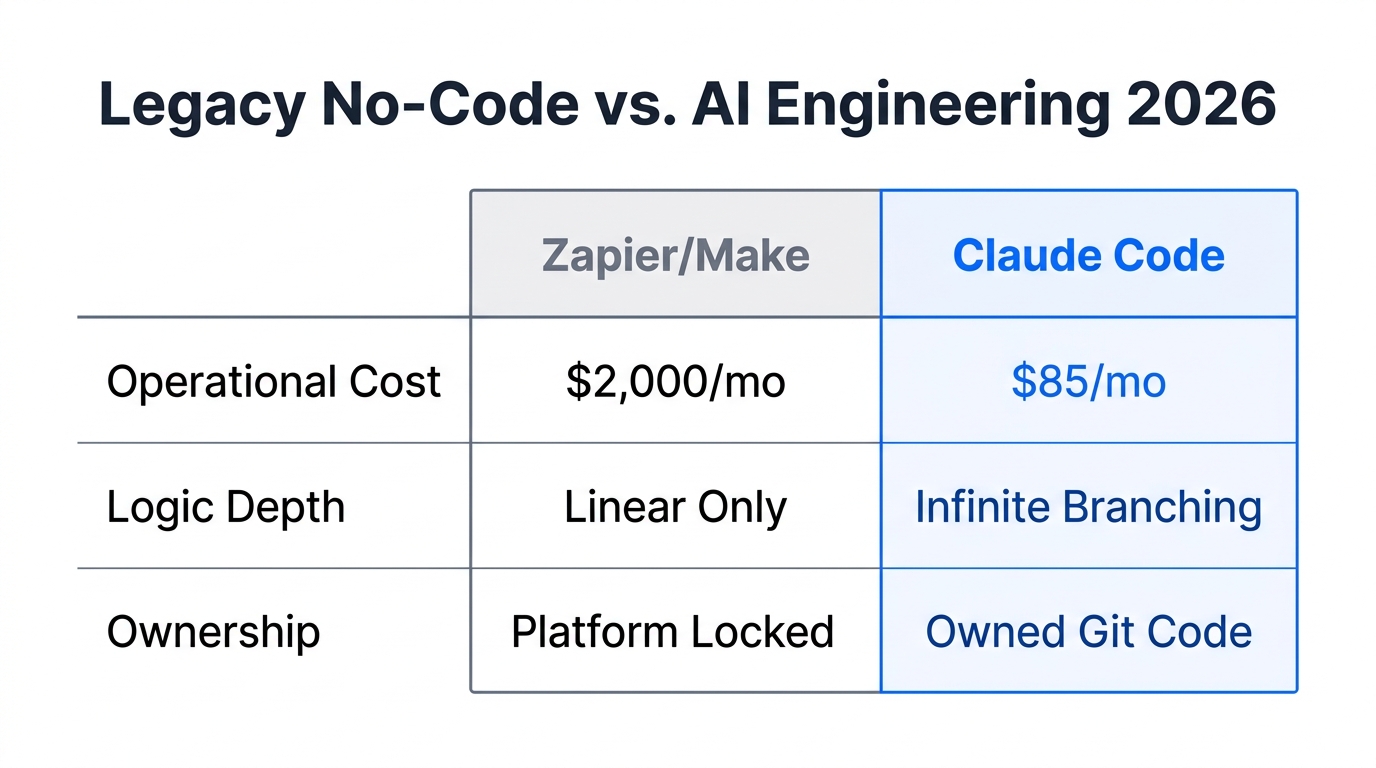
For a long time, Zapier and Make were the undisputed kings of GTM automation. They allowed non-technical marketers to connect apps with ease. However, as identity resolution and multi-step lead routing have grown more complex, these tools have hit a wall. In 2026, a standard lead signal might involve checking a user's GitHub activity, cross-referencing their LinkedIn via the Clay API, and checking internal Snowflake tables—all before deciding whether to trigger a Slack alert.
Doing this in a no-code environment requires dozens of branching steps that are impossible to version control and nightmarish to debug. This is what we call "Ops Debt." In contrast, Claude Code vs Zapier isn't just a choice of tools; it's a choice between rigid logic and agentic flexibility. Claude Code allows RevOps teams to write custom Python functions that handle this logic in a fraction of the space, reducing the time spent fixing broken connections by an average of 45%, according to data from GTM Partners.
| Feature | Claude Code (Agentic CLI) | Zapier / Make |
|---|---|---|
| Logic Depth | Extremely High (Complex scripts) | Low/Medium (Pre-set steps) |
| Maintenance | AI-assisted "Auto-fixing" | Manual Troubleshooting |
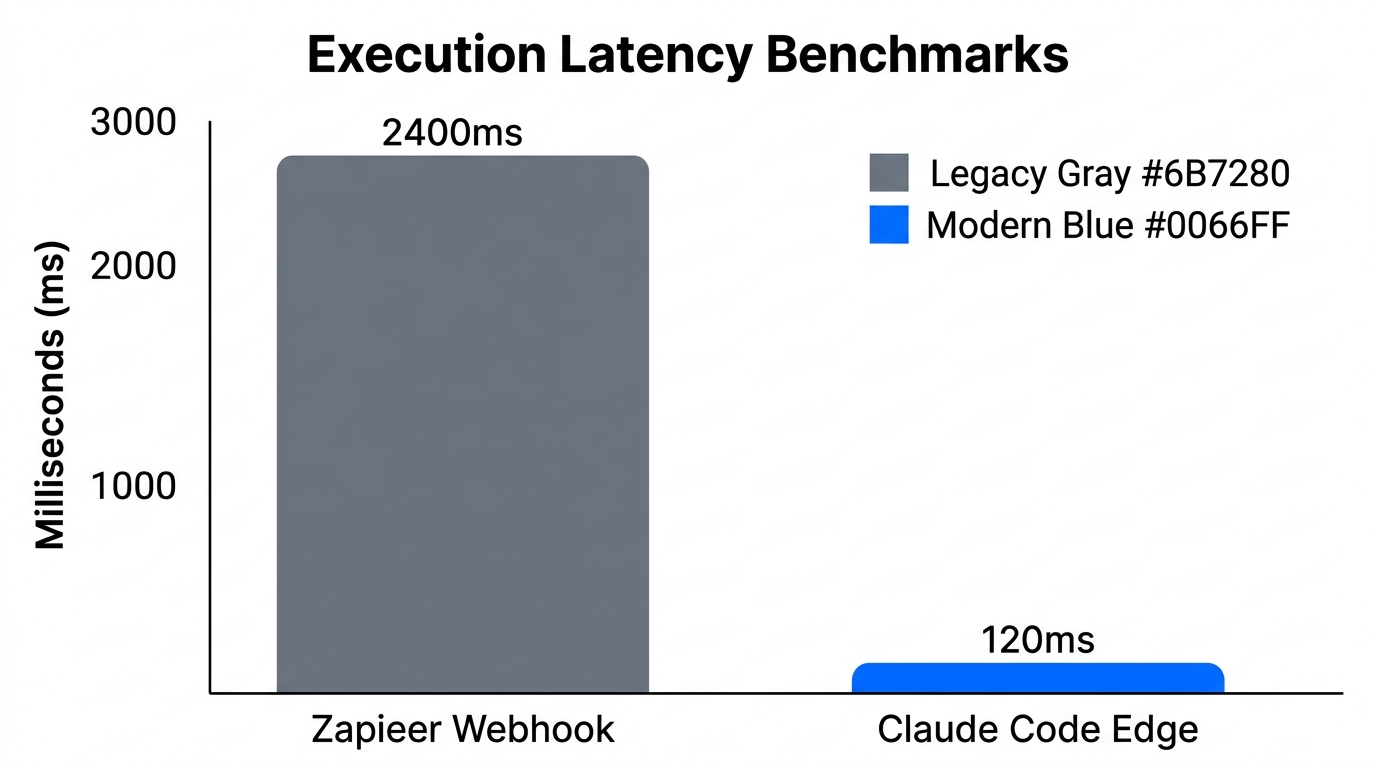
| Latency | < 5 Minutes (Real-time mesh) | 1-15 Minutes (Polling intervals) |
| Scalability | Unlimited (Cloud-native code) | Restricted by task counts/tier |
Headless GTM Ops: Bypassing the CRM UI
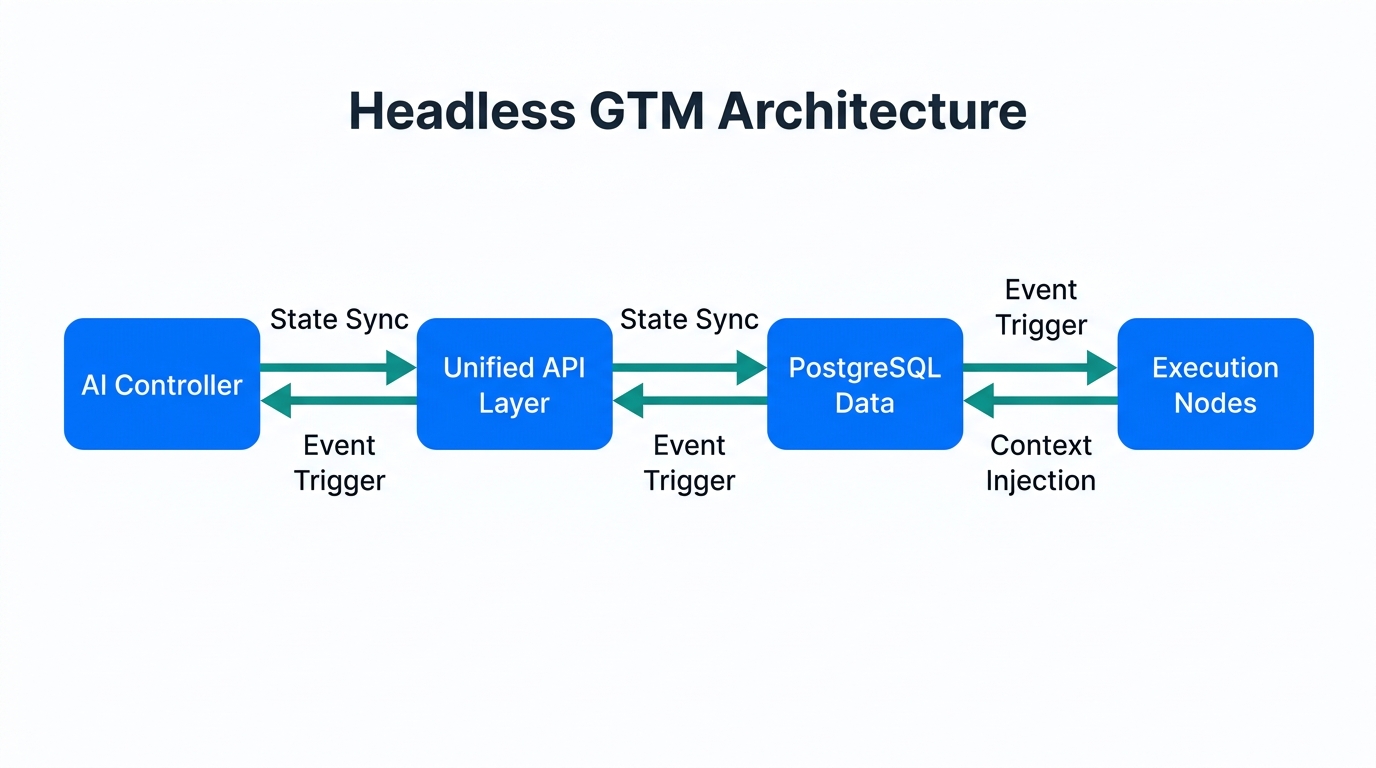
One of the most significant trends this year is the rise of headless CRM strategy. High-growth companies are increasingly viewing their CRM (like Salesforce or HubSpot) not as a workspace, but as a database. Instead of sales reps spending hours inside a UI, Claude Code is used to build "headless" workflows that pull data directly from the warehouse and push actionable intelligence to Slack or email.
By using the Model Context Protocol (MCP) to connect Claude Code directly to platforms like Segment or Snowflake, growth engineers can build "Just-in-Time" infrastructure. For example, rather than maintaining a permanent integration, you can prompt Claude to "Write a script to monitor our 'Product_Signals' table for users who hit 'Export' 5+ times in 24 hours, then notify the account owner."
Building Ephemeral Infrastructure for High-Impact Campaigns
In 2026, growth is about speed. Custom GTM data orchestration shouldn't be a months-long project. With Claude Code, we are seeing the rise of "ephemeral infrastructure"—data scrapers and enrichment pipelines built specifically for a one-week marketing campaign and then discarded. When a brand needs to source 500 relevant creators for a viral push, they can use Stormy AI to discover the right influencers and then use Claude Code to instantly build a custom outreach sequence that syncs with their CRM.
This agility is why tools like Cursor and Claude Code are becoming staples in the RevOps toolkit. While Cursor provides a visual IDE for building complex GTM apps, Claude Code's agentic CLI is superior for the rapid-fire scripting required in modern AI marketing automation 2026. This was evidenced by companies like Vanta, which used Claude Code to reduce their "customer churn risk" notification time by 60%, as cited in their recent GTM audit.
"Tools like Claude Code are designed to shorten the distance between a business logic idea and a functional deployment." — Dario Amodei, CEO of Anthropic
Technical Benchmarks: The Economics of Claude Code in 2026
From a financial perspective, the shift to code-based GTM is no longer just about performance—it's about the bottom line. The Claude Code Max plan, priced at roughly $200/mo, is rapidly replacing the need for a dedicated "Engineering-for-Sales" hire that could cost $150k+ per year. But the real savings come from prefix caching.
According to analysis on Medium, Claude Code’s architecture now sees a 92% prefix reuse rate for GTM tasks. This means that a massive task requiring 2 million tokens—which would have cost $6.00 in 2024—now costs roughly $1.15 because the AI remembers your CRM schema and coding rules between prompts. This efficiency allows RevOps engineers to burn through 1B+ tokens a month to refactor entire legacy codebases without breaking the bank.
The Claude Code GTM Mesh Playbook
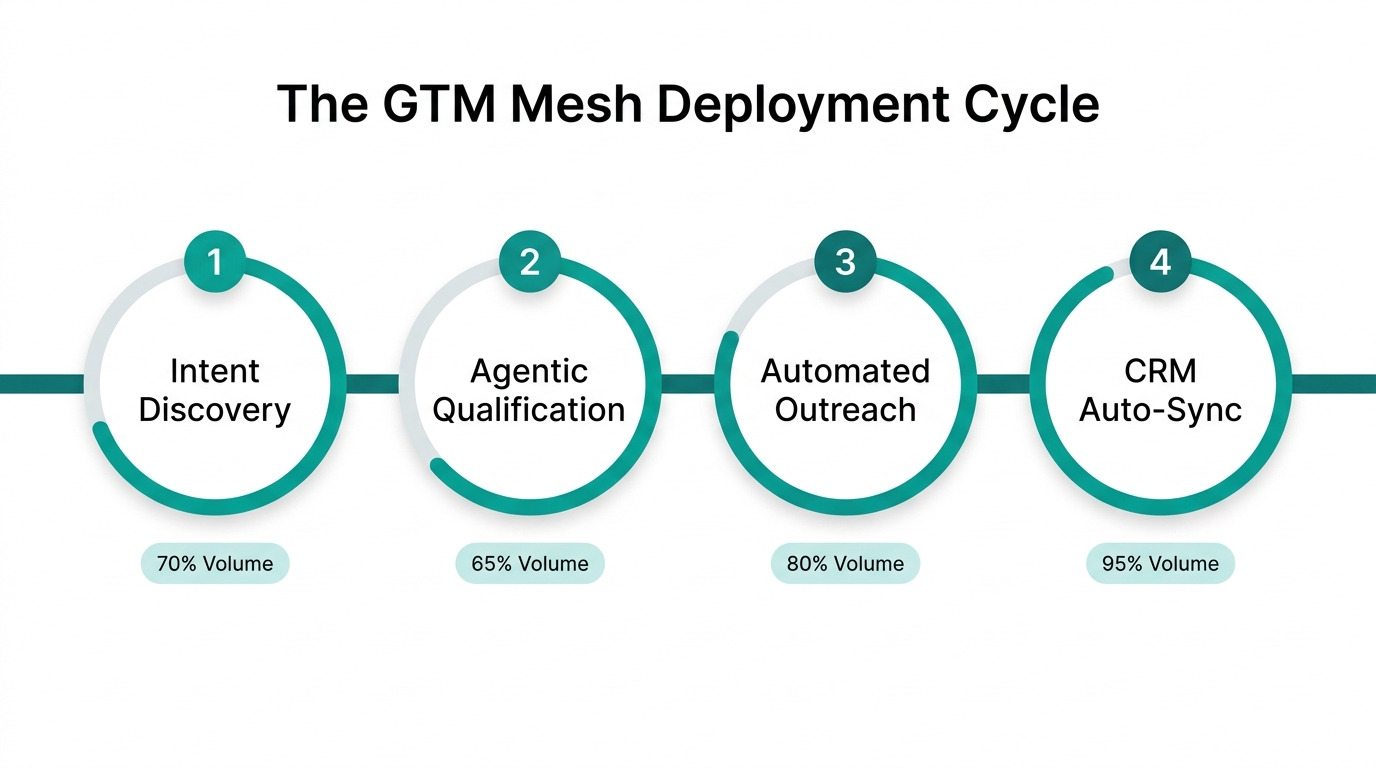
If you are looking to transition from messy no-code zaps to a clean, agentic mesh, follow this 2026 playbook used by top-tier RevOps engineering teams:
- Initialize your Environment: Run
claude codein your local repository. Ensure yourCLAUDE.mdfile contains your GTM stack's API documentation and routing rules. - Define the Signal: Use the
/mcpcommand to connect to your data warehouse (Snowflake/BigQuery). Prompt: "Monitor for users who have hit our 'Advanced Analytics' page 3 times today but aren't yet MQLs." - Build the Identity Mesh: Instruct Claude to resolve the identity using Common Room for "dark social" signals and Clay for professional enrichment.
- Deploy to GitHub Actions: Use the official GitHub Actions workflow to "auto-fix" the script whenever a vendor like HubSpot updates their API, ensuring your mesh never breaks.
While this approach is powerful, it is not without risks. Discussions on Reddit highlight the "Black Box" problem—where an AI-written script becomes unmaintainable if the original prompter leaves. To mitigate this, practitioners are using the /compact command and strict documentation rules in their /rules/ directory to ensure every AI-generated integration remains human-readable.
The Future of the Growth Engineer
By the end of 2026, the competitive advantage in growth won't come from having the best "tools," but from having the most responsive GTM Mesh. The transition from no-code to AI-code via Claude Code is allowing small teams to operate with the technical sophistication of an enterprise engineering department.
Whether you are building ephemeral scrapers, refactoring monolithic CRM logic, or using Stormy AI to feed your outbound engine with creator data, the goal remains the same: reducing the distance between a customer signal and a revenue-generating action. It’s time to pay off your Ops Debt and start building for the agentic era.